- Maurizio Puglisi
- All Artworks
- The Koi Nymph
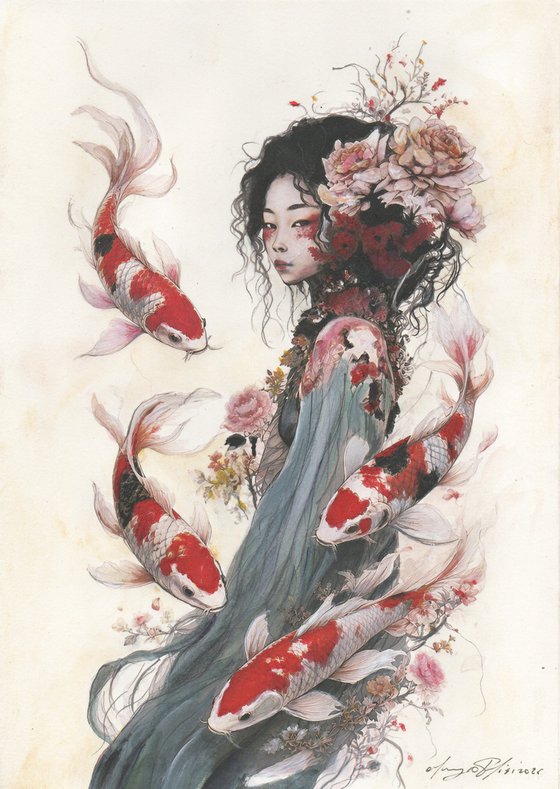
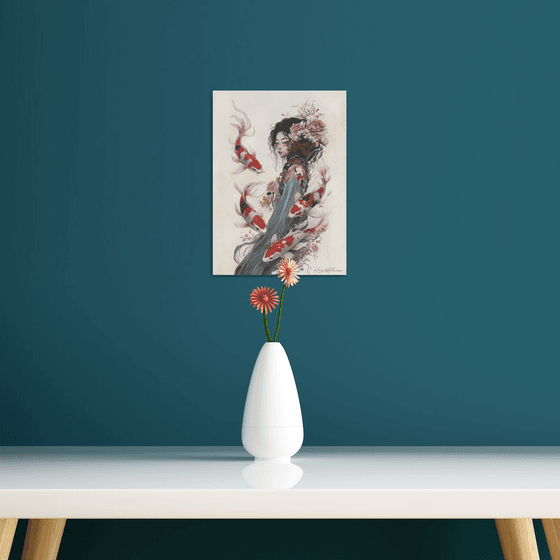
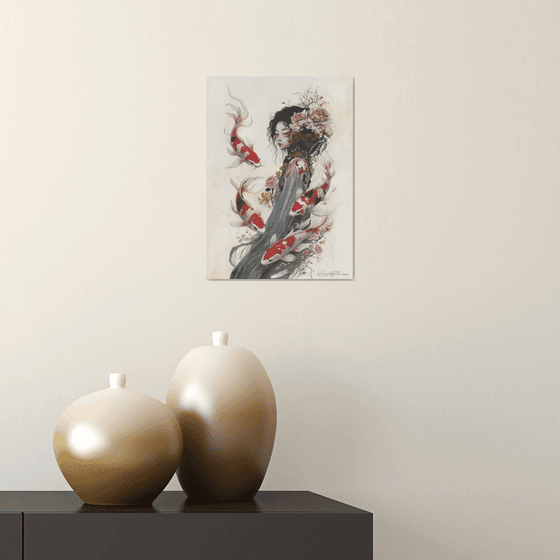
The Koi Nymph (2026) Original Drawing by Maurizio Puglisi
21 x 29 x 0.1cm (unframed)
£381.96
Original artwork description
inks ,brush pen , watercolor, pencils ,tempera on canson paper 250 g/m, matte varnish finish
In Japanese and broader East Asian traditions, there is no exact equivalent to the Greek naiads; however, there are female figures closely linked to water—such as suijin (water kami), spirits of ponds and streams, or deities like Benzaiten (goddess of water, music, and good fortune).
In a contemporary work inspired by Japanese themes, the "nymph" thus represents a nature spirit—an ethereal female presence inhabiting the pond or the fluid world of the koi.
She symbolizes: the beauty and purity of water
the divine or animated presence of nature (Shintoist perspective)
femininity linked to flow, transformation, and life
a liminal being existing between the human and spiritual worlds
With her East Asian features, dark hair adorned with flowers, and a body that seems to merge with the fish, the figure appears as the very soul of the pond or as a guardian of the koi. The koi fish remain the strongest and most quintessentially Japanese symbolic element: Perseverance and courage—the ability to swim against the current.
The legend of the Dragon Gate (the carp that ascends the waterfall to become a dragon) represents inner evolution and the attainment of a higher state of being.
Love: the word koi also means "love."
Good fortune, prosperity, and longevity.
The dominant colors (red, white, and traces of black) reinforce the message: Red → passion, vital energy, love, strength
White → purity and new beginnings
Black → overcoming trials and transformation
The nymph-koi union: The nymph is not separate from the fish; she embraces them and is embraced by them.
This creates an image of total symbiosis. The female figure can be interpreted as: the spirit that animates and protects the koi; a creature in transformation (much like the koi themselves as they evolve into dragons); and the embodiment of feminine beauty and inner strength, deeply connected to water and the Japanese natural world.
The artwork does not merely juxtapose two different cultures; rather, it delves into a singular Eastern vision in which spirit, water, and fish merge into one living reality. Supplementary elements—such as the flowers in her hair (evoking peonies or blooms characteristic of Japanese aesthetics)—add layers of meaning related to flourishing beauty, prosperity, honor, and the cyclical nature of life.
The light, ethereal atmosphere typical of watercolor painting reinforces a sense of inner vision and a dreamlike, spiritual realm—qualities often found in art inspired by Japanese aesthetic sensibilities. The Koi Nymph celebrates the harmony between the feminine spirit of nature and some of Japanese culture’s most potent symbols.
Together, the nymph and the koi embody: inner transformation; quiet, persevering strength; beauty born of union with water and the flow of life; and a spiritual vision in which the human being (or spirit) and nature are not separate, but fused in a single dance.
Thus, the artwork becomes an image of elevation and balance, deeply rooted in East Asian imagery.
shipping in a cardboard box
-The artwork listed are unique, original drawings and not prints, signed and dated by the artist.
Drawings is signed and dated by the artist as well as accompanied by a Certificate of Authenticity.
Multiple purchases of the same size will be shipped together, where possible, and any excess shipping costs will be refunded after purchase
Materials used:
ink,brushpen,watercolor,pencil,tempera
Details:
- Drawing on Paper
- One of a kind artwork
- Size: 21 x 29 x 0.1cm (unframed)
- Signed certificate of authenticity
- Style: Impressionistic
- Subject: People and portraits
 Free returns
14 day money back guaranteeLearn more
Original artwork description
inks ,brush pen , watercolor, pencils ,tempera on canson paper 250 g/m, matte varnish finish
In Japanese and broader East Asian traditions, there is no exact equivalent to the Greek naiads; however, there are female figures closely linked to water—such as suijin (water kami), spirits of ponds and streams, or deities like Benzaiten (goddess of water, music, and good fortune).
In a contemporary work inspired by Japanese themes, the "nymph" thus represents a nature spirit—an ethereal female presence inhabiting the pond or the fluid world of the koi.
She symbolizes: the beauty and purity of water
the divine or animated presence of nature (Shintoist perspective)
femininity linked to flow, transformation, and life
a liminal being existing between the human and spiritual worlds
With her East Asian features, dark hair adorned with flowers, and a body that seems to merge with the fish, the figure appears as the very soul of the pond or as a guardian of the koi. The koi fish remain the strongest and most quintessentially Japanese symbolic element: Perseverance and courage—the ability to swim against the current.
The legend of the Dragon Gate (the carp that ascends the waterfall to become a dragon) represents inner evolution and the attainment of a higher state of being.
Love: the word koi also means "love."
Good fortune, prosperity, and longevity.
The dominant colors (red, white, and traces of black) reinforce the message: Red → passion, vital energy, love, strength
White → purity and new beginnings
Black → overcoming trials and transformation
The nymph-koi union: The nymph is not separate from the fish; she embraces them and is embraced by them.
This creates an image of total symbiosis. The female figure can be interpreted as: the spirit that animates and protects the koi; a creature in transformation (much like the koi themselves as they evolve into dragons); and the embodiment of feminine beauty and inner strength, deeply connected to water and the Japanese natural world.
The artwork does not merely juxtapose two different cultures; rather, it delves into a singular Eastern vision in which spirit, water, and fish merge into one living reality. Supplementary elements—such as the flowers in her hair (evoking peonies or blooms characteristic of Japanese aesthetics)—add layers of meaning related to flourishing beauty, prosperity, honor, and the cyclical nature of life.
The light, ethereal atmosphere typical of watercolor painting reinforces a sense of inner vision and a dreamlike, spiritual realm—qualities often found in art inspired by Japanese aesthetic sensibilities. The Koi Nymph celebrates the harmony between the feminine spirit of nature and some of Japanese culture’s most potent symbols.
Together, the nymph and the koi embody: inner transformation; quiet, persevering strength; beauty born of union with water and the flow of life; and a spiritual vision in which the human being (or spirit) and nature are not separate, but fused in a single dance.
Thus, the artwork becomes an image of elevation and balance, deeply rooted in East Asian imagery.
shipping in a cardboard box
-The artwork listed are unique, original drawings and not prints, signed and dated by the artist.
Drawings is signed and dated by the artist as well as accompanied by a Certificate of Authenticity.
Multiple purchases of the same size will be shipped together, where possible, and any excess shipping costs will be refunded after purchase
Materials used:
ink,brushpen,watercolor,pencil,tempera
Details:
- Drawing on Paper
- One of a kind artwork
- Size: 21 x 29 x 0.1cm (unframed)
- Signed certificate of authenticity
- Style: Impressionistic
- Subject: People and portraits

Maurizio Puglisi
Italy
About
Maurizio Puglisi, I was born in 1994, I started a painting in 1994, attracted by the power of the oil technique over the years I have perfected my style lately... Read more