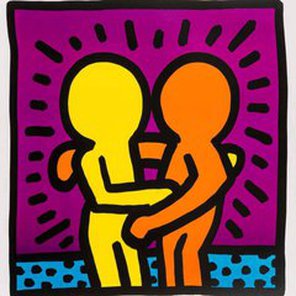
Working in thick black outline, Keith Haring filled walls, canvases and public murals with barking dogs and dancing figures, using entertaining and accessible forms to reach people who would never set foot in a museum. Trained at New York’s School of Visual Arts, Haring moved in the same downtown scene as Jean-Michel Basquiat and Kenny Scharf, using his medium to speak about sexuality, AIDS activism and social justice. He died in 1990, aged only 31, having reshaped what public art could do for its citizens.
Summary
Working in thick black outline, Keith Haring filled walls, canvases and public murals with barking dogs and dancing figures, using entertaining and accessible forms to reach people who would never set foot in a museum. Trained at New York’s School of Visual Arts, Haring moved in the same downtown scene as Jean-Michel Basquiat and Kenny Scharf, using his medium to speak about sexuality, AIDS activism and social justice. He died in 1990, aged only 31, having reshaped what public art could do for its citizens.
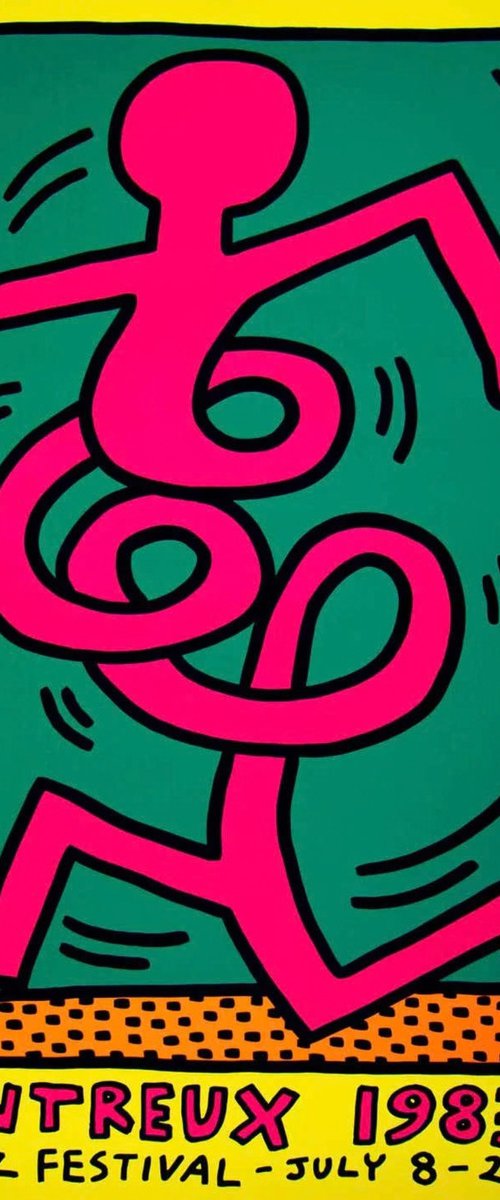
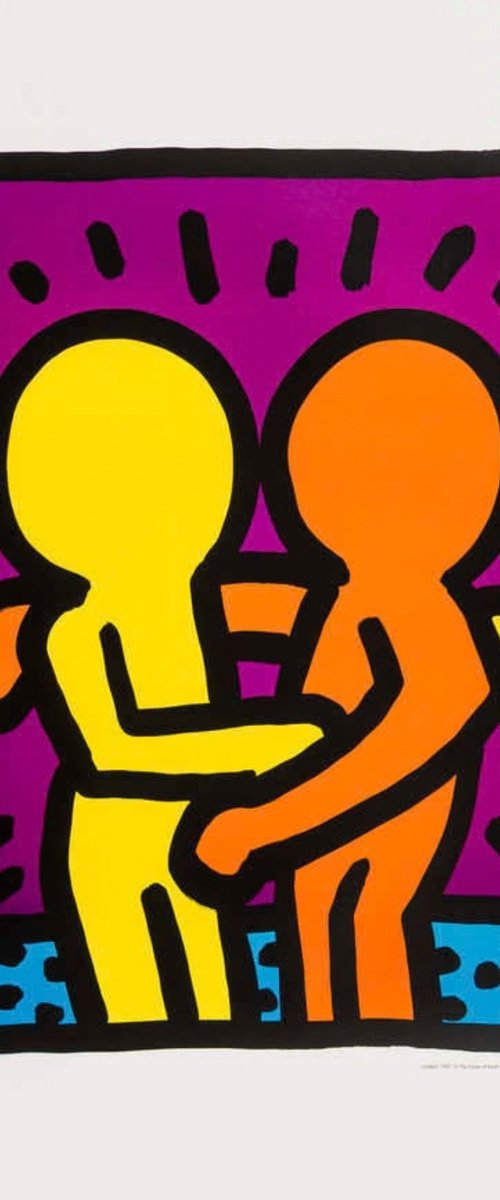
Artworks by Keith Haring


About Keith Haring
Biography
About Keith Haring
Haring was born in 1958 in Pennsylvania, where he spent hours drawing alongside his father, an engineer who cartooned as a hobby. After a brief spell at the Ivy School of Art in Pittsburgh, he moved to New York City in 1978 to study at the School of Visual Arts. Drawn to the city’s downtown clubs and street-art scene, he found kindred spirits in fellow emerging artists, Jean-Michel Basquiat and Kenny Scharf.
Drawing in the dark
Haring began using chalk to draw directly onto the blank black advertising panels of the New York subway. Over the next few years, he developed his technique to the point where he could finish a piece between trains — bold, simple figures that could be seen by commuters passing at speed. He called the subway his favourite place to work, valuing its mix of people more than any gallery.
Public art, activism and legacy
As his reputation grew, Haring moved into creating large-scale murals, many painted for free for hospitals, schools and community centres around the world. In 1986, he opened the Pop Shop in New York, selling t-shirts, posters and toys carrying his imagery at accessible prices, a deliberate rejection of the idea that art should only exist for collectors. His later work turned openly toward activism, addressing safe sex, the crack epidemic and apartheid. In 1989, he founded the Keith Haring Foundation to fund AIDS organisations and children’s charities. At only 31 years old, Haring died of AIDS-related complications; today, his foundation continues to shine a light on his work and legacy.