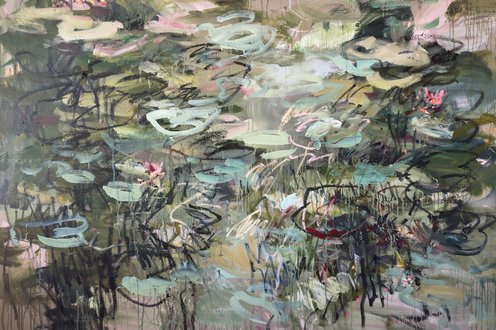
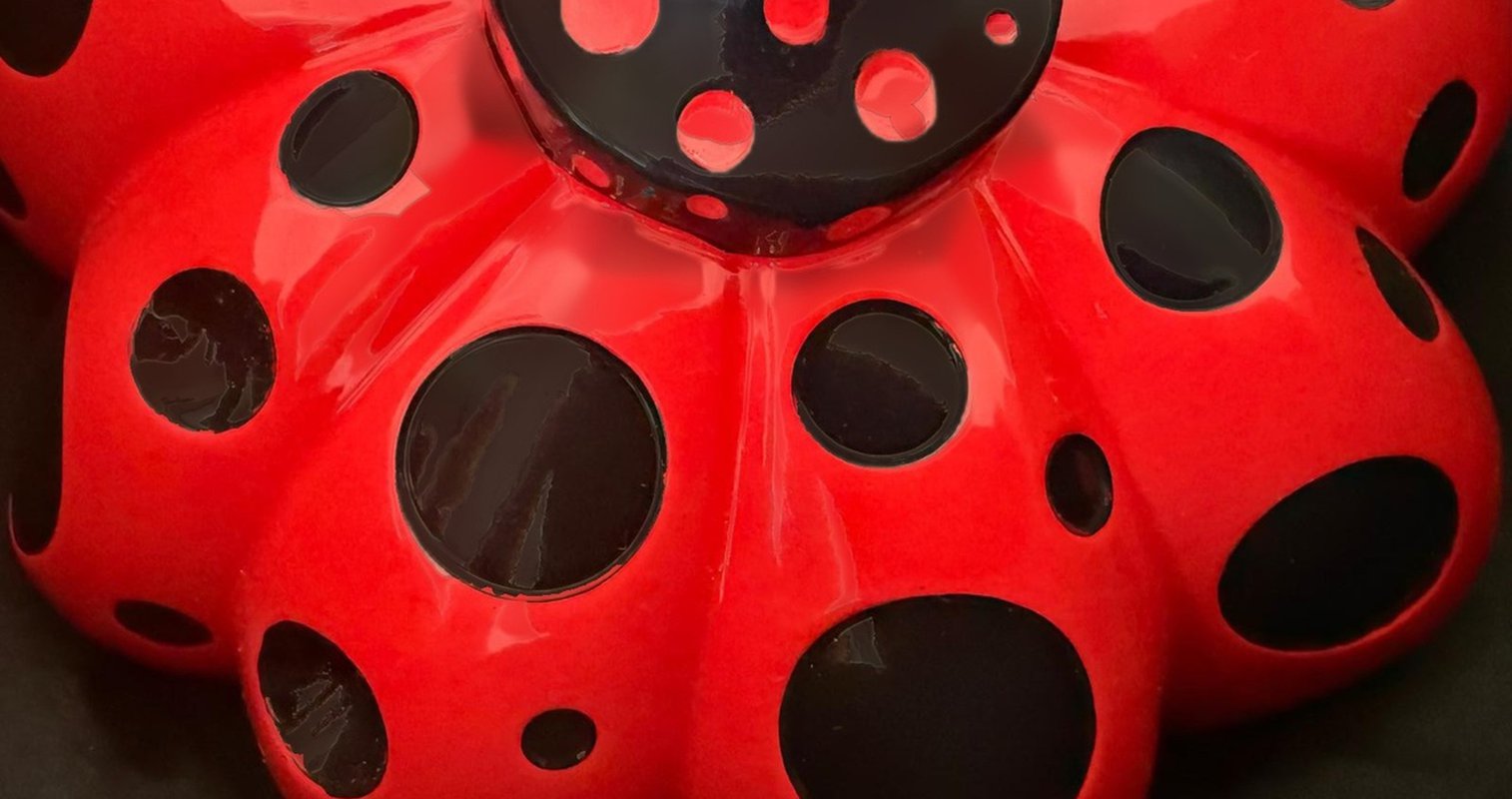
Yayoi Kusama, was a Japanese painter, sculptor and installation artist, whose obsessive polka dots and mirrored rooms reshaped how audiences experience contemporary art. Working for more than 70 years, she built a visual language rooted in repetition, pattern and what she called ‘self-obliteration’ — the dissolving of the individual self into an endless field of form. From her early Infinity Net paintings in New York to her celebrated pumpkin sculptures, she was one of the most celebrated contemporary artists of our time.
Summary
Yayoi Kusama, was a Japanese painter, sculptor and installation artist, whose obsessive polka dots and mirrored rooms reshaped how audiences experience contemporary art. Working for more than 70 years, she built a visual language rooted in repetition, pattern and what she called ‘self-obliteration’ — the dissolving of the individual self into an endless field of form. From her early Infinity Net paintings in New York to her celebrated pumpkin sculptures, she was one of the most celebrated contemporary artists of our time.
Artworks by Yayoi Kusama
About Yayoi Kusama
Biography
About Yayoi Kusama
Kusama was born in 1929 in a farming town in the mountains of Nagano, Japan. For more than seven decades, she became one of the defining figures of postwar and contemporary art. Known for her use of dots, nets and mirrors, Kusama reshaped how we think about scale, repetition and the boundaries of the self.
Early life
Kusama began drawing as a child and studied traditional Japanese Nihonga painting at the Kyoto City Specialist School of Arts, before a correspondence with American painter, Georgia O’Keeffe, encouraged her to move to the US in 1957. There, she spent a decade at the centre of the city’s avant-garde, showing her ‘Infinity Net’ paintings which featured vast canvases built from thousands of small, looping brushstrokes.
Signature work and legacy
Kusama moved fluidly between painting, sculpture, performance, film and immersive installation. Her work returns again and again to the same source: an obsessive repetition of dots and nets that she described as ‘self-obliteration’.
This idea found its fullest expression in the 1960s through her Infinity Mirrored Room series, which have now become something of a cultural phenomenon: the touring retrospective Infinity Mirrors, which stopped at the Hirshhorn Museum, the Broad and other major institutions, drew record-breaking crowds and hours-long queues just to spend a few minutes inside each room.
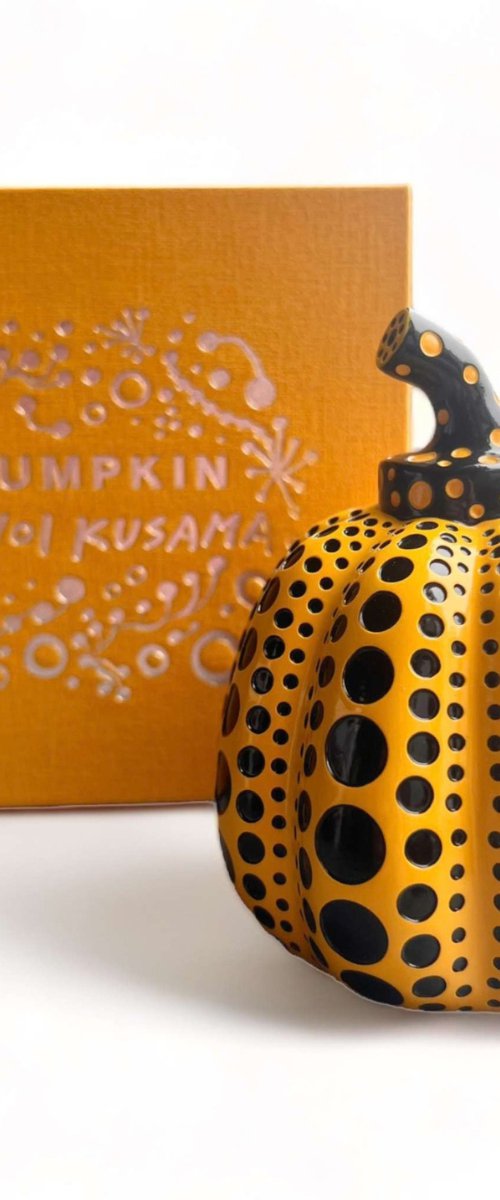
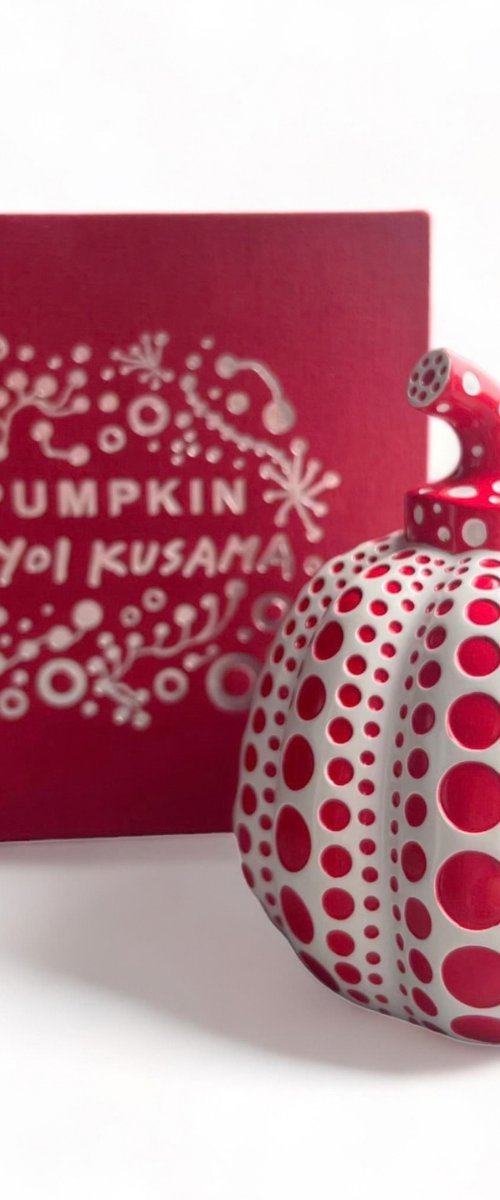
Her large-scale pumpkin sculptures, which draw on memories of seed farming in her childhood, have also become permanent public landmarks, including on Naoshima island in Japan, extending her work well beyond gallery walls.
She returned to Japan in 1973 and lived in Tokyo for the rest of her life. In the late 1970s, Kusama’s work evolved into lithography, etching and screenprinting, translating her Infinity Nets and polka-dot motifs onto paper. Her work entered major public collections, including the Museum of Modern Art in New York and Tate in London, as well as representing Japan at the 1993 Venice Biennale. In 2016, she received Japan’s Order of Culture and in the following year, the Yayoi Kusama Museum opened in Tokyo, dedicated entirely to her work. Kusama continued to paint and exhibit until her death in 2026.