Artworks by Michelangelo
About Michelangelo
Biography
Michelangelo carved David and the Pietà, painted the ceiling of the Sistine Chapel and served as an architect of St Peter’s Basilica. His work across sculpture, painting and architecture led his contemporaries to call him ‘Il Divino’ (‘the divine one’). His powerful, muscular figures helped give rise to ‘Mannerism’ and shaped European art for centuries, alongside the work of his elder rival, Leonardo da Vinci.
You don’t need to crane your neck in the Sistine Chapel to appreciate Michelangelo. A print of his frescoes will bring a piece of the High Renaissance to your own wall.
Michelangelo di Lodovico Buonarroti Simoni was born in 1475 in the Republic of Florence. At 13, he was apprenticed to the painter Domenico Ghirlandaio. From 1490 to 1492, he attended the Platonic Academy in Florence, working alongside the sculptor, Bertoldo di Giovanni. He copied the frescoes of Giotto and Masaccio, while dissecting corpses to understand anatomy.
In 1496, Michelangelo moved to Rome, where he carved the Pietà (the Virgin Mary cradling the dead Christ) for St Peter’s Basilica. Back in Florence, he created David, a colossal marble figure of the young hero, now in the Galleria dell’Accademia. His Moses, carved for the tomb of Pope Julius II, stands in the church of San Pietro in Vincoli in Rome.
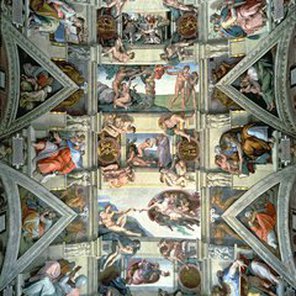
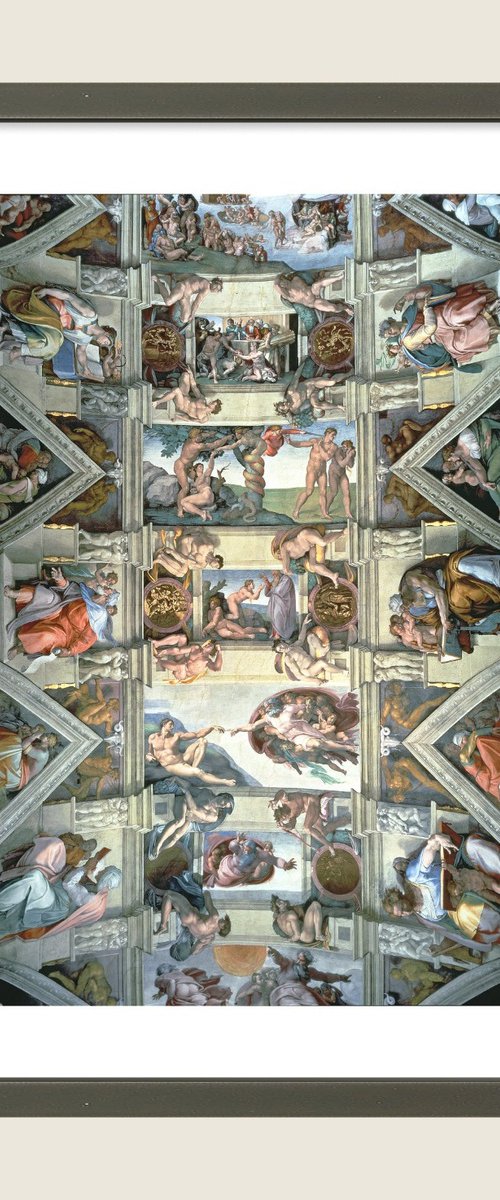
In 1508, Michelangelo was commissioned to paint the ceiling of the Sistine Chapel. Working in fresco until 1512, he covered it with scenes from the Book of Genesis, surrounded by prophets and sibyls. Decades later, he returned to paint The Last Judgment across the chapel’s altar wall.
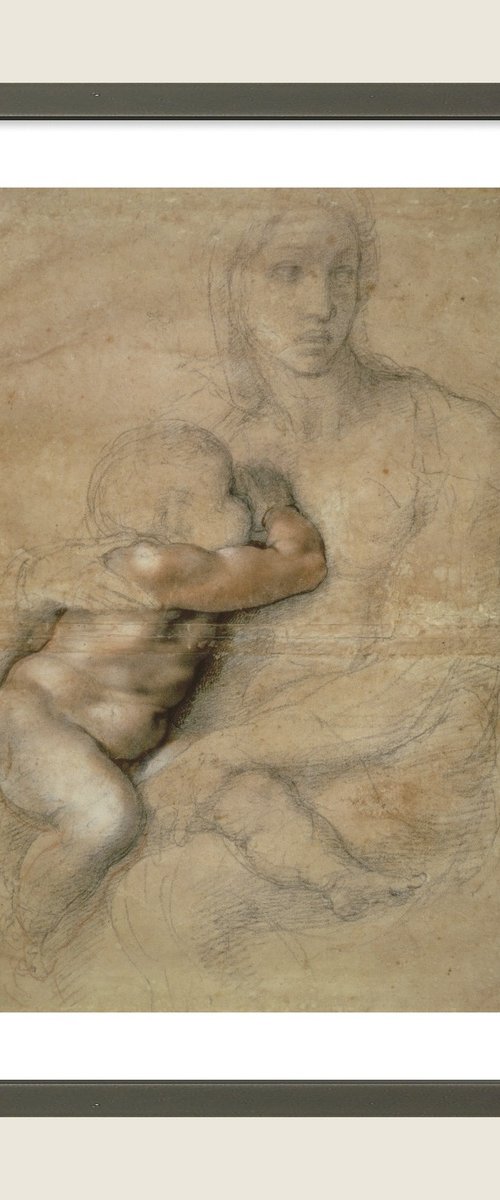
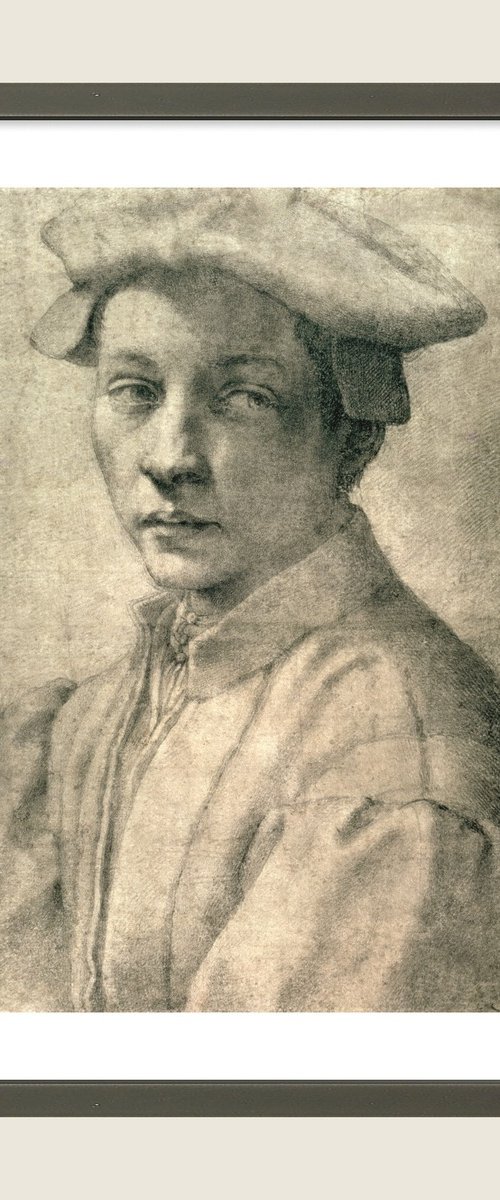
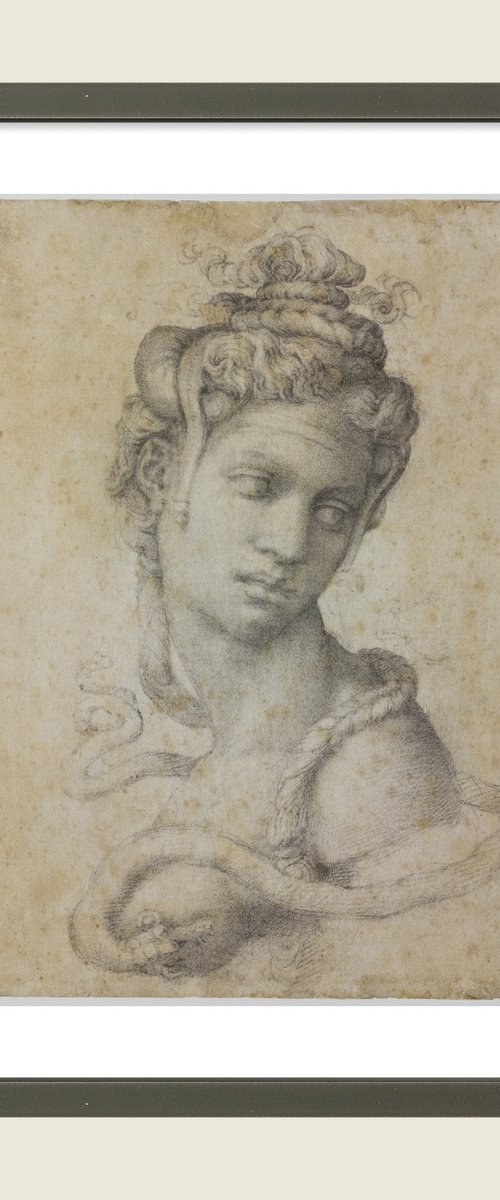
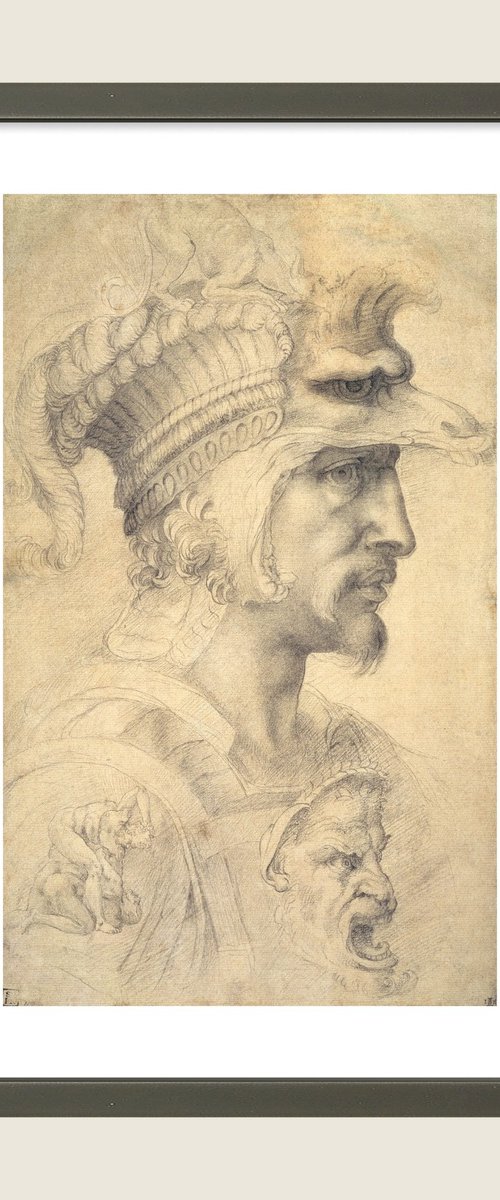
He took up the post of architect of St Peter’s Basilica in January 1547 and kept working into old age. He also wrote poetry and his chalk and charcoal drawings are prized in their own right. He died in Rome in 1564, aged 88.
You don’t need to crane your neck in the Sistine Chapel to appreciate Michelangelo. A print of his frescoes will bring a piece of the High Renaissance to your own wall.
Michelangelo artwork for sale
About Michelangelo
Michelangelo di Lodovico Buonarroti Simoni was born in 1475 in the Republic of Florence. At 13, he was apprenticed to the painter Domenico Ghirlandaio. From 1490 to 1492, he attended the Platonic Academy in Florence, working alongside the sculptor, Bertoldo di Giovanni. He copied the frescoes of Giotto and Masaccio, while dissecting corpses to understand anatomy.
Marble made human
In 1496, Michelangelo moved to Rome, where he carved the Pietà (the Virgin Mary cradling the dead Christ) for St Peter’s Basilica. Back in Florence, he created David, a colossal marble figure of the young hero, now in the Galleria dell’Accademia. His Moses, carved for the tomb of Pope Julius II, stands in the church of San Pietro in Vincoli in Rome.
The Sistine Chapel and St Peter’s
In 1508, Michelangelo was commissioned to paint the ceiling of the Sistine Chapel. Working in fresco until 1512, he covered it with scenes from the Book of Genesis, surrounded by prophets and sibyls. Decades later, he returned to paint The Last Judgment across the chapel’s altar wall.
He took up the post of architect of St Peter’s Basilica in January 1547 and kept working into old age. He also wrote poetry and his chalk and charcoal drawings are prized in their own right. He died in Rome in 1564, aged 88.