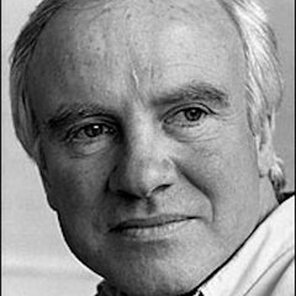
Artworks by Patrick Caulfield
About Patrick Caulfield
Biography
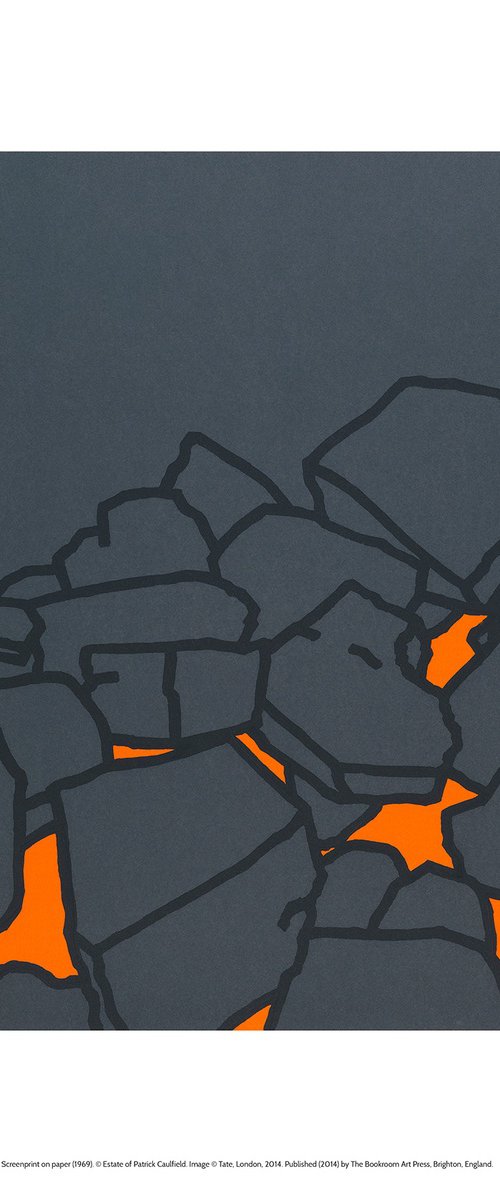
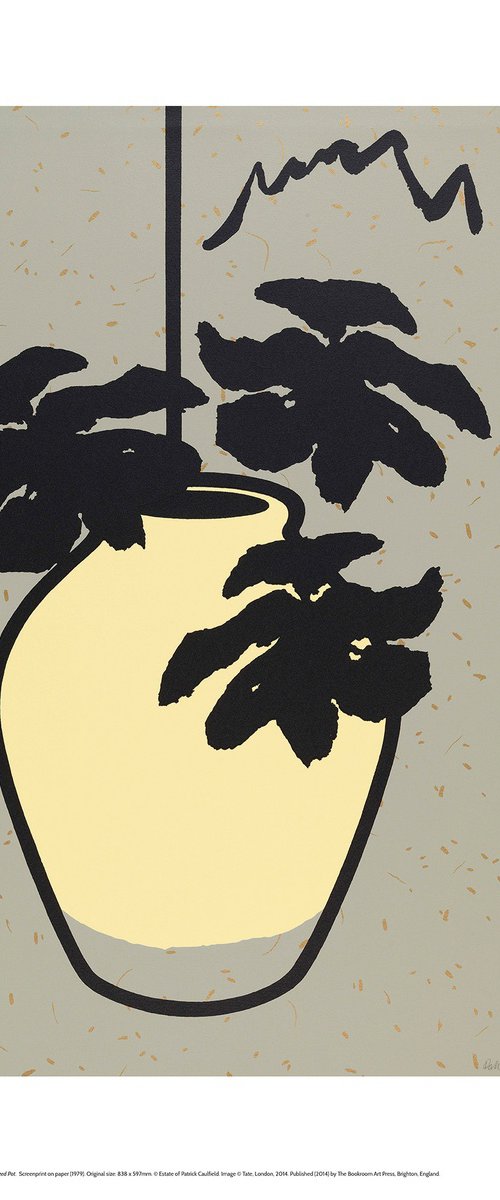
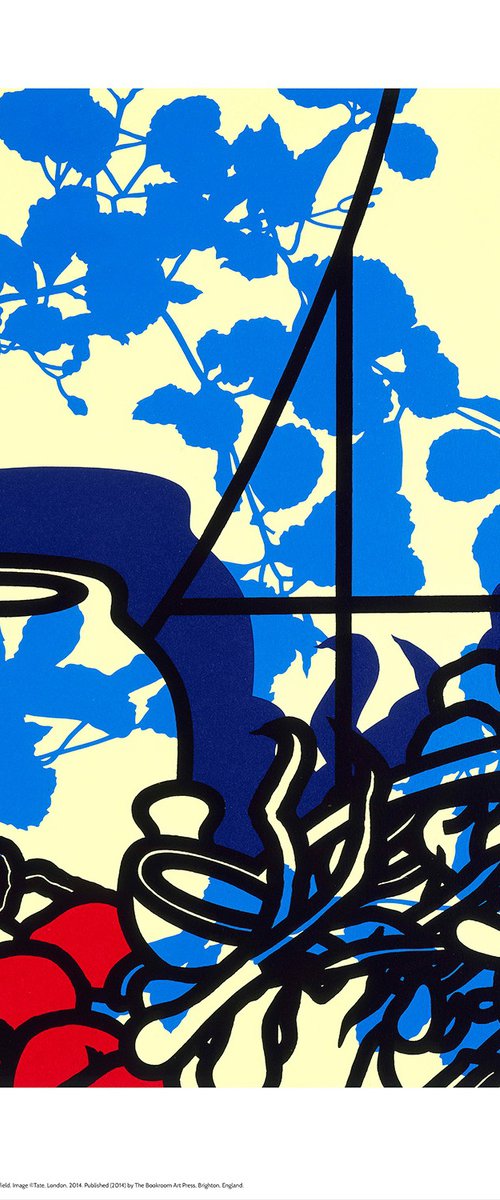
“I was aiming at reducing the means by which one described things”. Patrick Caulfield’s paintings and prints are characterized by this descriptive reductionism: a few simple lines are enough, a handful of objects in an interior, their contours outlined in black, their interiors filled-in with flat monochrome.
Born in London (1936) Caulfield studied first at Chelsea Art School (1956-1959) and then at the Royal College of Art (1960-1963) where his fellow students included David Hockney and Peter Blake. He participated in the New Generation Exhibition at the Whitechapel Gallery (1964) which showcased work by John Hoyland, David Hockney and Bridget Riley – all associated in their way with the beginnings of pop art in the 1950s – and Caulfield’s name became linked, therefore, with pop art. But Caulfield resisted the link. Whilst his paintings of the 1960s shared pop art’s interest in the everyday, he was less interested in mass consumerism and advertising which characterizes pop art – particularly as it was developed by Andy Warhol and Roy Lichtenstein in 1960s America – and more in conventional everyday details. His paintings are full of pots and vases, lamps and chairs – he painted still lives and interiors. But he painted these in new and modern ways.
Instead of comparing him to luminaries in the pop art movement, Caulfield should be compared to earlier artists such as Juan Gris (1887-1927) and Fernand Léger (1881-1955) – both forerunners of the Pop Art Movement. Caulfield taught at Chelsea School of Art from 1963-1971. He was nominated for the Turner Prize in 1987 for his show The Artist’s Eye at the National Gallery, and awarded a CBE in 1996. Caulfield died in London in 2005.
Public collections holding works by Patrick Caulfield include Tate (London), Manchester City Art Gallery, the Victoria and Albert Museum (London), the Dallas Museum of Art (Texas) and the Harry N. Abrams Collection (New York).
Born in London (1936) Caulfield studied first at Chelsea Art School (1956-1959) and then at the Royal College of Art (1960-1963) where his fellow students included David Hockney and Peter Blake. He participated in the New Generation Exhibition at the Whitechapel Gallery (1964) which showcased work by John Hoyland, David Hockney and Bridget Riley – all associated in their way with the beginnings of pop art in the 1950s – and Caulfield’s name became linked, therefore, with pop art. But Caulfield resisted the link. Whilst his paintings of the 1960s shared pop art’s interest in the everyday, he was less interested in mass consumerism and advertising which characterizes pop art – particularly as it was developed by Andy Warhol and Roy Lichtenstein in 1960s America – and more in conventional everyday details. His paintings are full of pots and vases, lamps and chairs – he painted still lives and interiors. But he painted these in new and modern ways.
Instead of comparing him to luminaries in the pop art movement, Caulfield should be compared to earlier artists such as Juan Gris (1887-1927) and Fernand Léger (1881-1955) – both forerunners of the Pop Art Movement. Caulfield taught at Chelsea School of Art from 1963-1971. He was nominated for the Turner Prize in 1987 for his show The Artist’s Eye at the National Gallery, and awarded a CBE in 1996. Caulfield died in London in 2005.
Public collections
Public collections holding works by Patrick Caulfield include Tate (London), Manchester City Art Gallery, the Victoria and Albert Museum (London), the Dallas Museum of Art (Texas) and the Harry N. Abrams Collection (New York).
Biography
“I was aiming at reducing the means by which one described things”. Patrick Caulfield’s paintings and prints are characterized by this descriptive reductionism: a few simple lines are enough, a handful of objects in an interior, their contours outlined in black, their interiors filled-in with flat monochrome.
Born in London (1936) Caulfield studied first at Chelsea Art School (1956-1959) and then at the Royal College of Art (1960-1963) where his fellow students included David Hockney and Peter Blake. He participated in the New Generation Exhibition at the Whitechapel Gallery (1964) which showcased work by John Hoyland, David Hockney and Bridget Riley – all associated in their way with the beginnings of pop art in the 1950s – and Caulfield’s name became linked, therefore, with pop art. But Caulfield resisted the link. Whilst his paintings of the 1960s shared pop art’s interest in the everyday, he was less interested in mass consumerism and advertising which characterizes pop art – particularly as it was developed by Andy Warhol and Roy Lichtenstein in 1960s America – and more in conventional everyday details. His paintings are full of pots and vases, lamps and chairs – he painted still lives and interiors. But he painted these in new and modern ways.
Instead of comparing him to luminaries in the pop art movement, Caulfield should be compared to earlier artists such as Juan Gris (1887-1927) and Fernand Léger (1881-1955) – both forerunners of the Pop Art Movement. Caulfield taught at Chelsea School of Art from 1963-1971. He was nominated for the Turner Prize in 1987 for his show The Artist’s Eye at the National Gallery, and awarded a CBE in 1996. Caulfield died in London in 2005.
Public collections holding works by Patrick Caulfield include Tate (London), Manchester City Art Gallery, the Victoria and Albert Museum (London), the Dallas Museum of Art (Texas) and the Harry N. Abrams Collection (New York).
Born in London (1936) Caulfield studied first at Chelsea Art School (1956-1959) and then at the Royal College of Art (1960-1963) where his fellow students included David Hockney and Peter Blake. He participated in the New Generation Exhibition at the Whitechapel Gallery (1964) which showcased work by John Hoyland, David Hockney and Bridget Riley – all associated in their way with the beginnings of pop art in the 1950s – and Caulfield’s name became linked, therefore, with pop art. But Caulfield resisted the link. Whilst his paintings of the 1960s shared pop art’s interest in the everyday, he was less interested in mass consumerism and advertising which characterizes pop art – particularly as it was developed by Andy Warhol and Roy Lichtenstein in 1960s America – and more in conventional everyday details. His paintings are full of pots and vases, lamps and chairs – he painted still lives and interiors. But he painted these in new and modern ways.
Instead of comparing him to luminaries in the pop art movement, Caulfield should be compared to earlier artists such as Juan Gris (1887-1927) and Fernand Léger (1881-1955) – both forerunners of the Pop Art Movement. Caulfield taught at Chelsea School of Art from 1963-1971. He was nominated for the Turner Prize in 1987 for his show The Artist’s Eye at the National Gallery, and awarded a CBE in 1996. Caulfield died in London in 2005.
Public collections
Public collections holding works by Patrick Caulfield include Tate (London), Manchester City Art Gallery, the Victoria and Albert Museum (London), the Dallas Museum of Art (Texas) and the Harry N. Abrams Collection (New York).