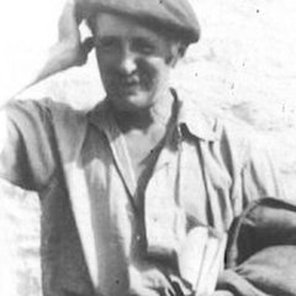
Artworks by Claude Flight
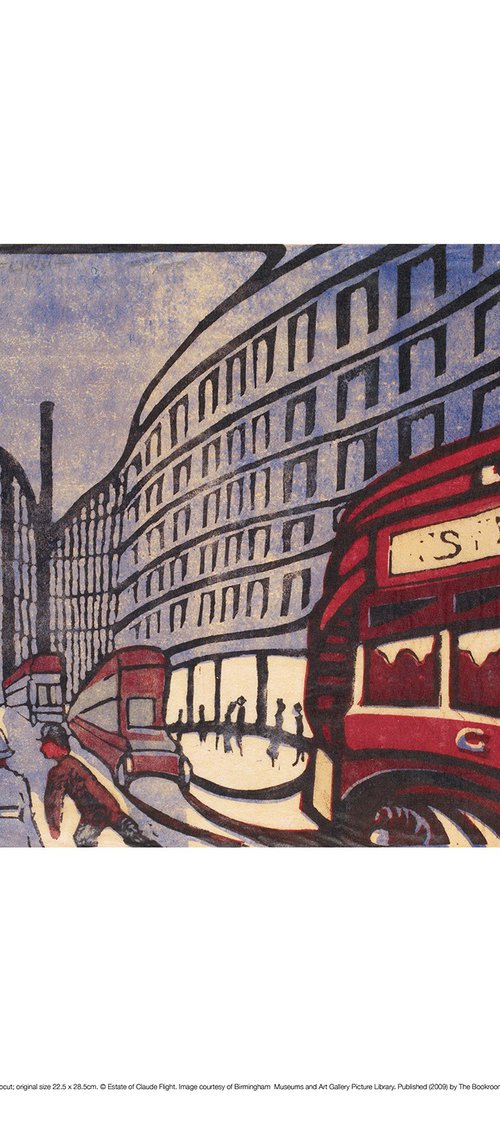
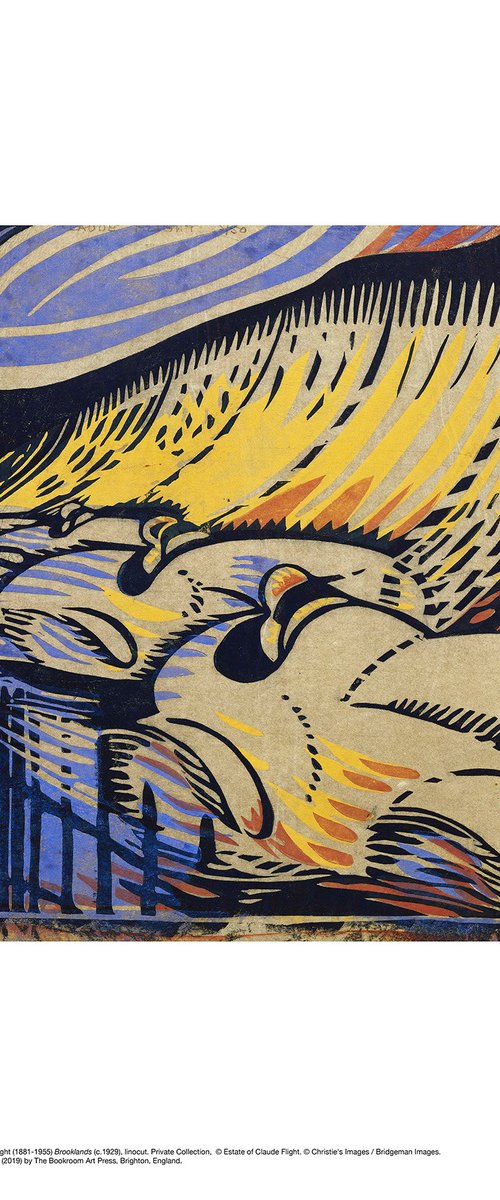
About Claude Flight
Biography
There was an extraordinary confluence of artistic trends in the years 1910-14, just before the First World War. It was a period of transition from an established old order aesthetic to a new and largely imported one. In 1910 and 1912 respectively, the critic Roger Fry (see Vanessa Bell [LINK]) set up the incendiary (mainly French) Post-Impressionist exhibitions; and in 1912 and 1914 the two (mainly Italian) Futurist exhibitions took place. These were seminal in introducing the British art viewing public to Continental Modernism; but it was at this point, too, in 1912, that Claude Flight, aged thirty-one, decided to enroll as a student at Heatherley School of Fine Art, London.
Walter Claude Flight (1881-1955) was born in London to Dr. Walter Flight FRS (1841-1885) a mineralogist and authority on meteorites, and his wife Katherine Fell. Before starting at Heatherley’s he had had a desultory career: for a few years he had worked in an engineer’s office, then briefly as a librarian, and then for a longer period (1905-1912) as a farmer and bee-keeper – neighbour, in fact, to Rudyard Kipling – at Little Bines, Burwash, Sussex.
At Heatherley’s School of Fine Art Flight met and married (1915) Clare James and they had two daughters. With the arrival of the First World War he departed for France where he became a captain in the Army Service Corps and soon a committed Francophile. Whilst in France he also acquired, for 300 francs, a Neolithic chalk cave dug deep into the banks of the Seine at Chantemesle, near Paris. This cave would become his regular summer abode, and a place of invitation and retreat for his future art students.
The marriage with Clare James did not last and Flight returned to London. In 1922 he married Edith Lawrence who was by this time herself a relatively established and well-regarded artist. Lawrence worked in various media – as a textile designer, for example – but she also worked with linoleum to make linocuts. Before meeting her Flight had worked little with the linocut, preferring to practise as an oil and watercolour painter. But, in part encouraged by Lawrence, Flight began to explore the possibilities of the linocut, and it is very much this medium for which Flight is now associated.
The linocut, Flight thought, was the perfect medium to express the new artistic concerns he first encountered at Heatherley’s – especially those as championed by Marinetti and the Italian Futurists.
The Futurists – F. T. Marinetti, Giacomo Balla, Umberto Boccioni and Gino Severini amongst them – conceived of the world as in a permanent state of flux and change; they celebrated this dynamism with imagery derived very much from the urban world, a world of the machine, of speed and of locomotion. In form their works would shun the conventional in favour of new methods: Marinetti would write his poetry not in lines on the page, but rather as designs – wild ‘words-in-freedom’ he dubbed them. He would also loudly declaim the poetry he wrote with drum beat as accompanying background. And the paintings the Futurists produced would dispense with rationally constructed space. Many of these painters had spent time in Paris and had admired the cubist works of Picasso and Braque, and there are clear influences which can be traced from cubist artists to the Futurists. But the Futurists took cubist preoccupations with abstracted blocks of colour, broke these down even further, and added elements suggestive of motion, dynamism and light (as for instance in Giacomo Balla’s watercolour Study of the Materiality of Light and Speed, 1913).
Inspired by both the Futurists’ concerns and their creativity of approach, Flight argued that the linocut was the medium of choice because it had no yoke of associated tradition, certainly no strictures upon content; and whilst there were certain traditions of form – at least to the extent that the linocut is similar and sometimes derivative of the woodcut – they were traditions which, Flight argued, his pupils need not follow.
He taught that it was important, to this end, to use just a few blocks in the creation of a linocut rather than several (as had been the case in the creation of colour woodcuts). He also suggested the abandonment of the ‘key-block’. Before Flight – and for Japanese woodblock prints, and most European woodcut colour prints – a key block was almost always used: it provided structure and a clear outline for the main content of the print. Flight came to think it unnecessary and obtrusive, and disruptive of the overall harmoniousness of the print (see Sybil Andrews [LINK]).
Flight taught these principles at the Grosvenor School, London, from 1926-30, and thereafter, until the late 1930s, at his cave in France to pupils now famous – amongst them Cyril Power [LINK], Lill Tschudi and Sybil Andrews [LINK].
Walter Claude Flight (1881-1955) was born in London to Dr. Walter Flight FRS (1841-1885) a mineralogist and authority on meteorites, and his wife Katherine Fell. Before starting at Heatherley’s he had had a desultory career: for a few years he had worked in an engineer’s office, then briefly as a librarian, and then for a longer period (1905-1912) as a farmer and bee-keeper – neighbour, in fact, to Rudyard Kipling – at Little Bines, Burwash, Sussex.
At Heatherley’s School of Fine Art Flight met and married (1915) Clare James and they had two daughters. With the arrival of the First World War he departed for France where he became a captain in the Army Service Corps and soon a committed Francophile. Whilst in France he also acquired, for 300 francs, a Neolithic chalk cave dug deep into the banks of the Seine at Chantemesle, near Paris. This cave would become his regular summer abode, and a place of invitation and retreat for his future art students.
The marriage with Clare James did not last and Flight returned to London. In 1922 he married Edith Lawrence who was by this time herself a relatively established and well-regarded artist. Lawrence worked in various media – as a textile designer, for example – but she also worked with linoleum to make linocuts. Before meeting her Flight had worked little with the linocut, preferring to practise as an oil and watercolour painter. But, in part encouraged by Lawrence, Flight began to explore the possibilities of the linocut, and it is very much this medium for which Flight is now associated.
The linocut, Flight thought, was the perfect medium to express the new artistic concerns he first encountered at Heatherley’s – especially those as championed by Marinetti and the Italian Futurists.
The Futurists – F. T. Marinetti, Giacomo Balla, Umberto Boccioni and Gino Severini amongst them – conceived of the world as in a permanent state of flux and change; they celebrated this dynamism with imagery derived very much from the urban world, a world of the machine, of speed and of locomotion. In form their works would shun the conventional in favour of new methods: Marinetti would write his poetry not in lines on the page, but rather as designs – wild ‘words-in-freedom’ he dubbed them. He would also loudly declaim the poetry he wrote with drum beat as accompanying background. And the paintings the Futurists produced would dispense with rationally constructed space. Many of these painters had spent time in Paris and had admired the cubist works of Picasso and Braque, and there are clear influences which can be traced from cubist artists to the Futurists. But the Futurists took cubist preoccupations with abstracted blocks of colour, broke these down even further, and added elements suggestive of motion, dynamism and light (as for instance in Giacomo Balla’s watercolour Study of the Materiality of Light and Speed, 1913).
Inspired by both the Futurists’ concerns and their creativity of approach, Flight argued that the linocut was the medium of choice because it had no yoke of associated tradition, certainly no strictures upon content; and whilst there were certain traditions of form – at least to the extent that the linocut is similar and sometimes derivative of the woodcut – they were traditions which, Flight argued, his pupils need not follow.
He taught that it was important, to this end, to use just a few blocks in the creation of a linocut rather than several (as had been the case in the creation of colour woodcuts). He also suggested the abandonment of the ‘key-block’. Before Flight – and for Japanese woodblock prints, and most European woodcut colour prints – a key block was almost always used: it provided structure and a clear outline for the main content of the print. Flight came to think it unnecessary and obtrusive, and disruptive of the overall harmoniousness of the print (see Sybil Andrews [LINK]).
Flight taught these principles at the Grosvenor School, London, from 1926-30, and thereafter, until the late 1930s, at his cave in France to pupils now famous – amongst them Cyril Power [LINK], Lill Tschudi and Sybil Andrews [LINK].
Biography
There was an extraordinary confluence of artistic trends in the years 1910-14, just before the First World War. It was a period of transition from an established old order aesthetic to a new and largely imported one. In 1910 and 1912 respectively, the critic Roger Fry (see Vanessa Bell [LINK]) set up the incendiary (mainly French) Post-Impressionist exhibitions; and in 1912 and 1914 the two (mainly Italian) Futurist exhibitions took place. These were seminal in introducing the British art viewing public to Continental Modernism; but it was at this point, too, in 1912, that Claude Flight, aged thirty-one, decided to enroll as a student at Heatherley School of Fine Art, London.
Walter Claude Flight (1881-1955) was born in London to Dr. Walter Flight FRS (1841-1885) a mineralogist and authority on meteorites, and his wife Katherine Fell. Before starting at Heatherley’s he had had a desultory career: for a few years he had worked in an engineer’s office, then briefly as a librarian, and then for a longer period (1905-1912) as a farmer and bee-keeper – neighbour, in fact, to Rudyard Kipling – at Little Bines, Burwash, Sussex.
At Heatherley’s School of Fine Art Flight met and married (1915) Clare James and they had two daughters. With the arrival of the First World War he departed for France where he became a captain in the Army Service Corps and soon a committed Francophile. Whilst in France he also acquired, for 300 francs, a Neolithic chalk cave dug deep into the banks of the Seine at Chantemesle, near Paris. This cave would become his regular summer abode, and a place of invitation and retreat for his future art students.
The marriage with Clare James did not last and Flight returned to London. In 1922 he married Edith Lawrence who was by this time herself a relatively established and well-regarded artist. Lawrence worked in various media – as a textile designer, for example – but she also worked with linoleum to make linocuts. Before meeting her Flight had worked little with the linocut, preferring to practise as an oil and watercolour painter. But, in part encouraged by Lawrence, Flight began to explore the possibilities of the linocut, and it is very much this medium for which Flight is now associated.
The linocut, Flight thought, was the perfect medium to express the new artistic concerns he first encountered at Heatherley’s – especially those as championed by Marinetti and the Italian Futurists.
The Futurists – F. T. Marinetti, Giacomo Balla, Umberto Boccioni and Gino Severini amongst them – conceived of the world as in a permanent state of flux and change; they celebrated this dynamism with imagery derived very much from the urban world, a world of the machine, of speed and of locomotion. In form their works would shun the conventional in favour of new methods: Marinetti would write his poetry not in lines on the page, but rather as designs – wild ‘words-in-freedom’ he dubbed them. He would also loudly declaim the poetry he wrote with drum beat as accompanying background. And the paintings the Futurists produced would dispense with rationally constructed space. Many of these painters had spent time in Paris and had admired the cubist works of Picasso and Braque, and there are clear influences which can be traced from cubist artists to the Futurists. But the Futurists took cubist preoccupations with abstracted blocks of colour, broke these down even further, and added elements suggestive of motion, dynamism and light (as for instance in Giacomo Balla’s watercolour Study of the Materiality of Light and Speed, 1913).
Inspired by both the Futurists’ concerns and their creativity of approach, Flight argued that the linocut was the medium of choice because it had no yoke of associated tradition, certainly no strictures upon content; and whilst there were certain traditions of form – at least to the extent that the linocut is similar and sometimes derivative of the woodcut – they were traditions which, Flight argued, his pupils need not follow.
He taught that it was important, to this end, to use just a few blocks in the creation of a linocut rather than several (as had been the case in the creation of colour woodcuts). He also suggested the abandonment of the ‘key-block’. Before Flight – and for Japanese woodblock prints, and most European woodcut colour prints – a key block was almost always used: it provided structure and a clear outline for the main content of the print. Flight came to think it unnecessary and obtrusive, and disruptive of the overall harmoniousness of the print (see Sybil Andrews [LINK]).
Flight taught these principles at the Grosvenor School, London, from 1926-30, and thereafter, until the late 1930s, at his cave in France to pupils now famous – amongst them Cyril Power [LINK], Lill Tschudi and Sybil Andrews [LINK].
Walter Claude Flight (1881-1955) was born in London to Dr. Walter Flight FRS (1841-1885) a mineralogist and authority on meteorites, and his wife Katherine Fell. Before starting at Heatherley’s he had had a desultory career: for a few years he had worked in an engineer’s office, then briefly as a librarian, and then for a longer period (1905-1912) as a farmer and bee-keeper – neighbour, in fact, to Rudyard Kipling – at Little Bines, Burwash, Sussex.
At Heatherley’s School of Fine Art Flight met and married (1915) Clare James and they had two daughters. With the arrival of the First World War he departed for France where he became a captain in the Army Service Corps and soon a committed Francophile. Whilst in France he also acquired, for 300 francs, a Neolithic chalk cave dug deep into the banks of the Seine at Chantemesle, near Paris. This cave would become his regular summer abode, and a place of invitation and retreat for his future art students.
The marriage with Clare James did not last and Flight returned to London. In 1922 he married Edith Lawrence who was by this time herself a relatively established and well-regarded artist. Lawrence worked in various media – as a textile designer, for example – but she also worked with linoleum to make linocuts. Before meeting her Flight had worked little with the linocut, preferring to practise as an oil and watercolour painter. But, in part encouraged by Lawrence, Flight began to explore the possibilities of the linocut, and it is very much this medium for which Flight is now associated.
The linocut, Flight thought, was the perfect medium to express the new artistic concerns he first encountered at Heatherley’s – especially those as championed by Marinetti and the Italian Futurists.
The Futurists – F. T. Marinetti, Giacomo Balla, Umberto Boccioni and Gino Severini amongst them – conceived of the world as in a permanent state of flux and change; they celebrated this dynamism with imagery derived very much from the urban world, a world of the machine, of speed and of locomotion. In form their works would shun the conventional in favour of new methods: Marinetti would write his poetry not in lines on the page, but rather as designs – wild ‘words-in-freedom’ he dubbed them. He would also loudly declaim the poetry he wrote with drum beat as accompanying background. And the paintings the Futurists produced would dispense with rationally constructed space. Many of these painters had spent time in Paris and had admired the cubist works of Picasso and Braque, and there are clear influences which can be traced from cubist artists to the Futurists. But the Futurists took cubist preoccupations with abstracted blocks of colour, broke these down even further, and added elements suggestive of motion, dynamism and light (as for instance in Giacomo Balla’s watercolour Study of the Materiality of Light and Speed, 1913).
Inspired by both the Futurists’ concerns and their creativity of approach, Flight argued that the linocut was the medium of choice because it had no yoke of associated tradition, certainly no strictures upon content; and whilst there were certain traditions of form – at least to the extent that the linocut is similar and sometimes derivative of the woodcut – they were traditions which, Flight argued, his pupils need not follow.
He taught that it was important, to this end, to use just a few blocks in the creation of a linocut rather than several (as had been the case in the creation of colour woodcuts). He also suggested the abandonment of the ‘key-block’. Before Flight – and for Japanese woodblock prints, and most European woodcut colour prints – a key block was almost always used: it provided structure and a clear outline for the main content of the print. Flight came to think it unnecessary and obtrusive, and disruptive of the overall harmoniousness of the print (see Sybil Andrews [LINK]).
Flight taught these principles at the Grosvenor School, London, from 1926-30, and thereafter, until the late 1930s, at his cave in France to pupils now famous – amongst them Cyril Power [LINK], Lill Tschudi and Sybil Andrews [LINK].