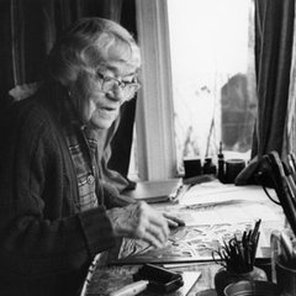
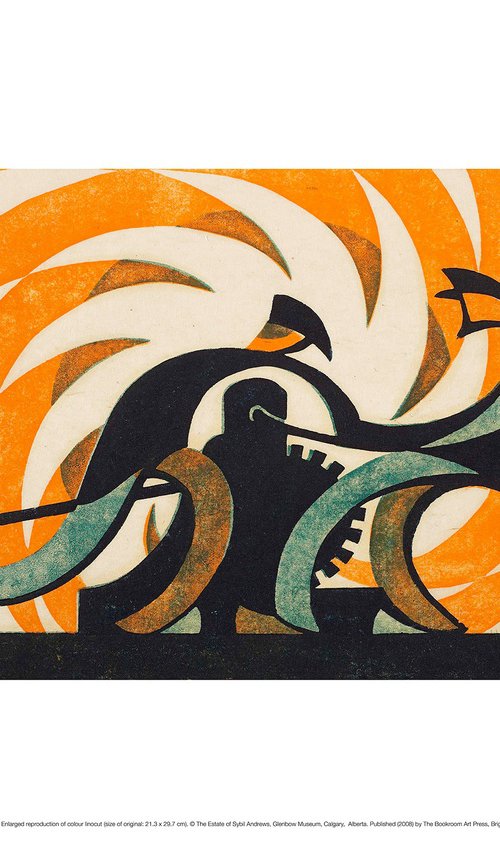
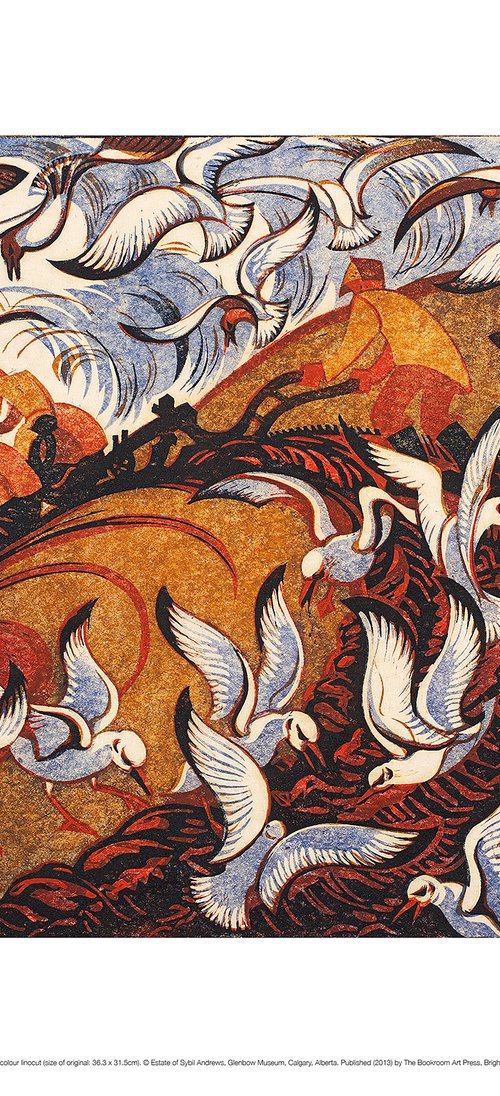
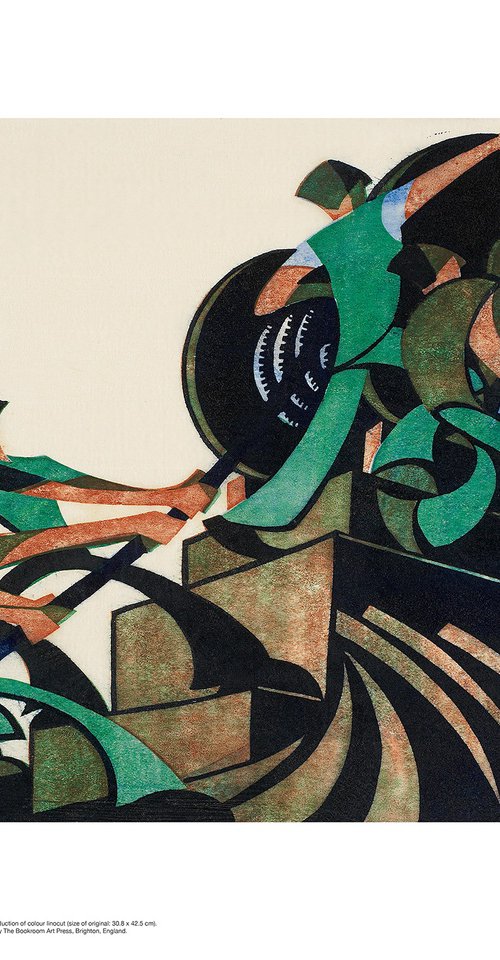
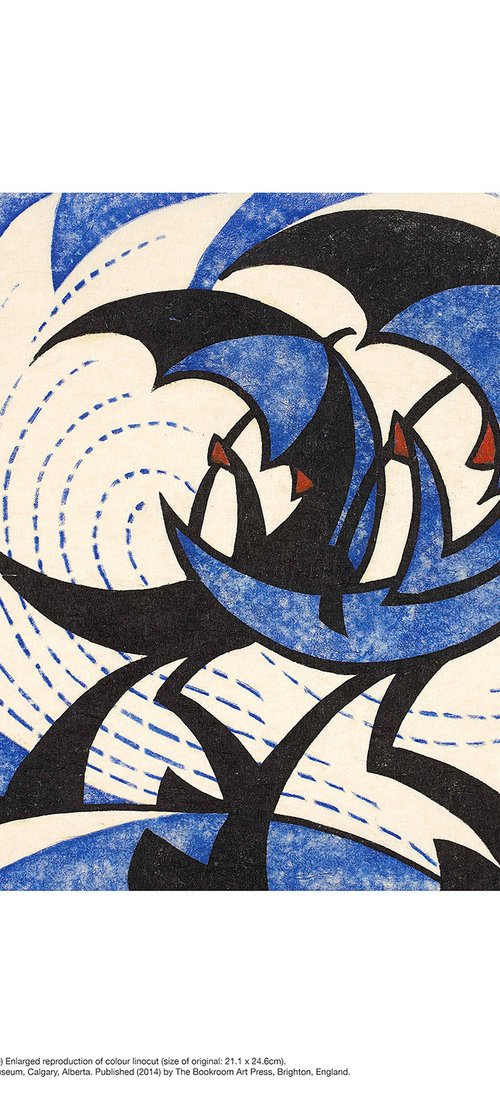
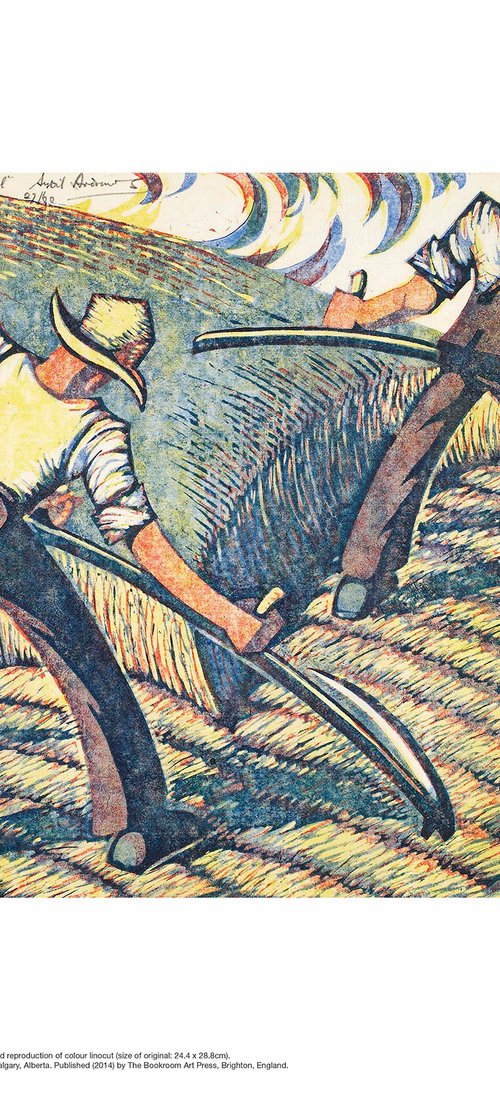
Sybil Andrews made colour linocuts charged with energy: speedway riders leaning into a bend, crowds pressing into a concert hall, farm workers bent over the soil. Her prints turn the human body at work and play into pure rhythm and force.
One of Claude Flight's most successful students at London's Grosvenor School of Modern Art, she later emigrated to Canada, where she kept making linocuts for another 40 years.
One of Claude Flight's most successful students at London's Grosvenor School of Modern Art, she later emigrated to Canada, where she kept making linocuts for another 40 years.
Summary
Sybil Andrews made colour linocuts charged with energy: speedway riders leaning into a bend, crowds pressing into a concert hall, farm workers bent over the soil. Her prints turn the human body at work and play into pure rhythm and force.
One of Claude Flight's most successful students at London's Grosvenor School of Modern Art, she later emigrated to Canada, where she kept making linocuts for another 40 years.
One of Claude Flight's most successful students at London's Grosvenor School of Modern Art, she later emigrated to Canada, where she kept making linocuts for another 40 years.
Artworks by Sybil Andrews
About Sybil Andrews
Biography
About Sybil Andrews
Sybil Andrews was born in 1898 in Bury St Edmunds, Suffolk, a town she returned to again and again in her work. During the First World War, she worked as a welder on aircrafts and took a correspondence course in drawing with the illustrator, John Hassall.
After the war, she returned to Bury St Edmunds to teach art where she met the architect and artist, Cyril Power. The two moved to London, where she studied at Heatherley's School of Fine Art. In 1925, she became the first secretary of the newly opened Grosvenor School of Modern Art.
Linocuts of the machine age
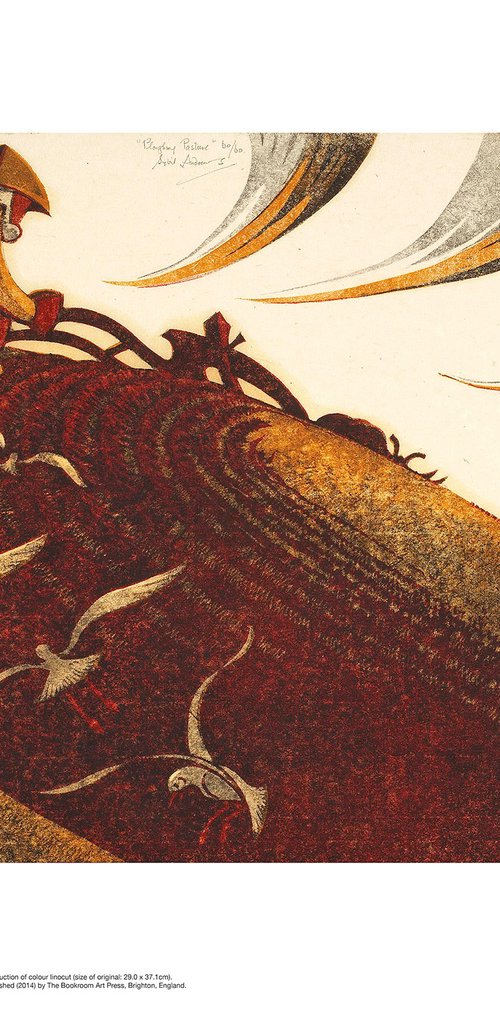
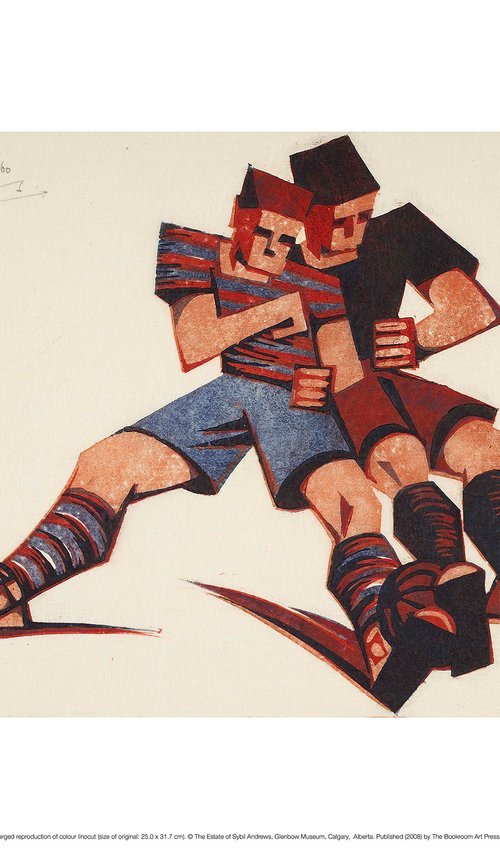
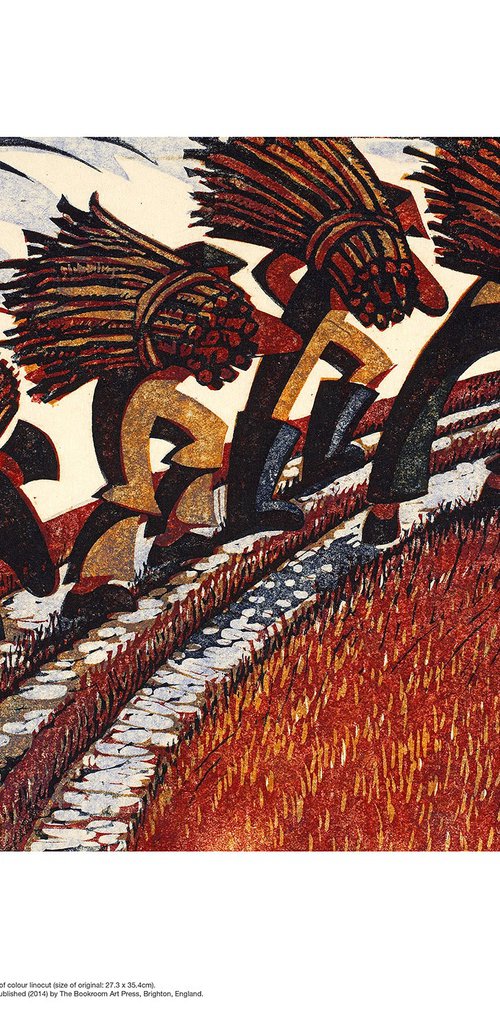
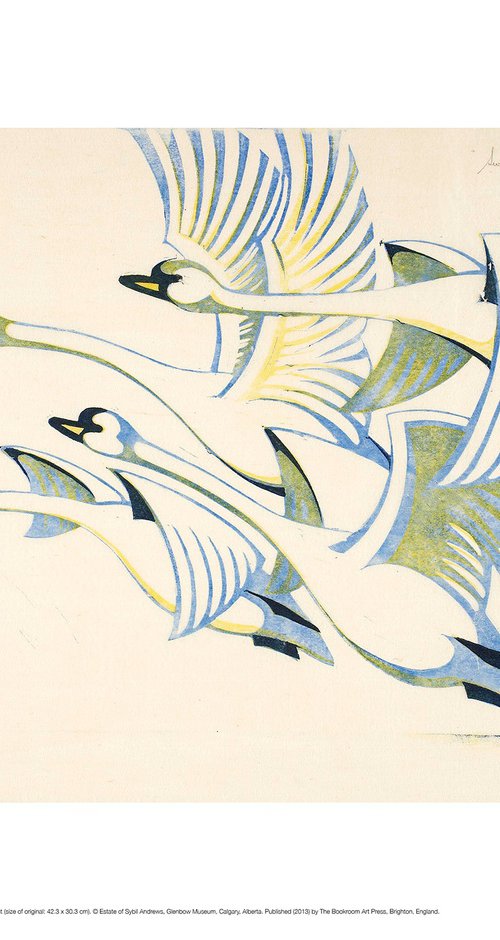
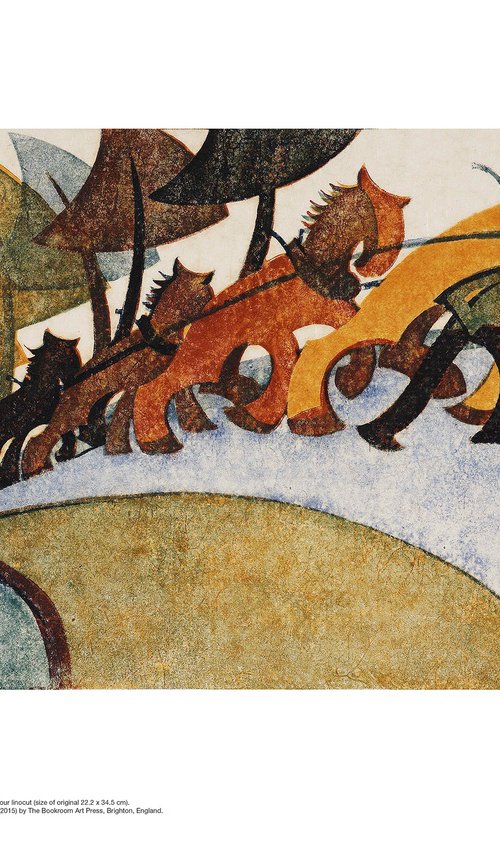
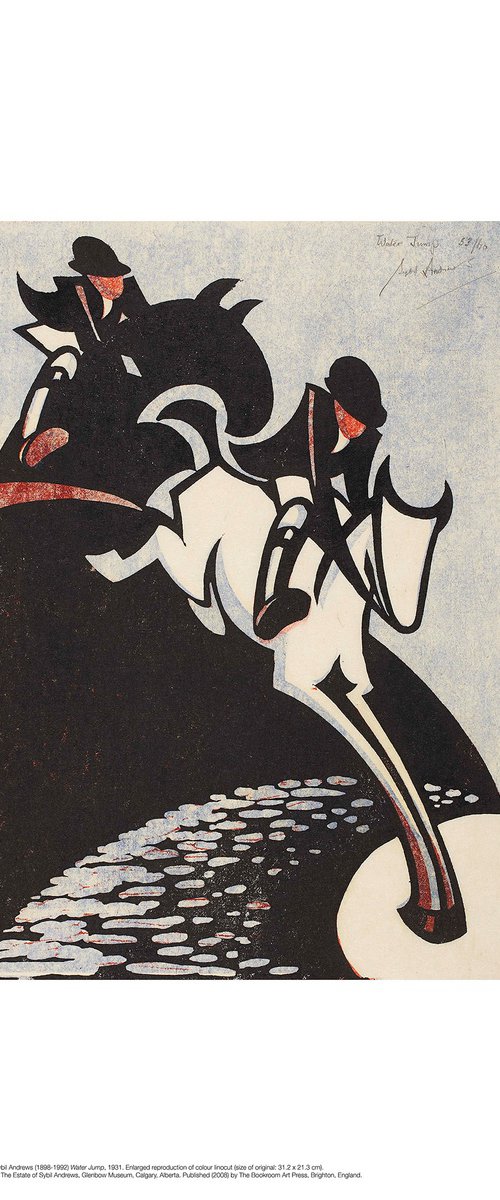
At the Grosvenor School, Andrews studied linocutting with Claude Flight, who introduced his students to the dynamism of Futurism. Her first linocuts, Concert Hall and Theatre date from 1929. Her prints, such as Rush Hour, Straphangers and Speedway, capture the crush and speed of modern city life. Her deepest interest though, was the rhythm of the body at work or play, from rowing and racing to Suffolk farm labour.
She shared a studio with Power in Hammersmith. Between 1929 and 1937, the pair designed posters for London Transport under the joint name ‘Andrew Power’. They gave up their studio in 1938.
A new life in Canada
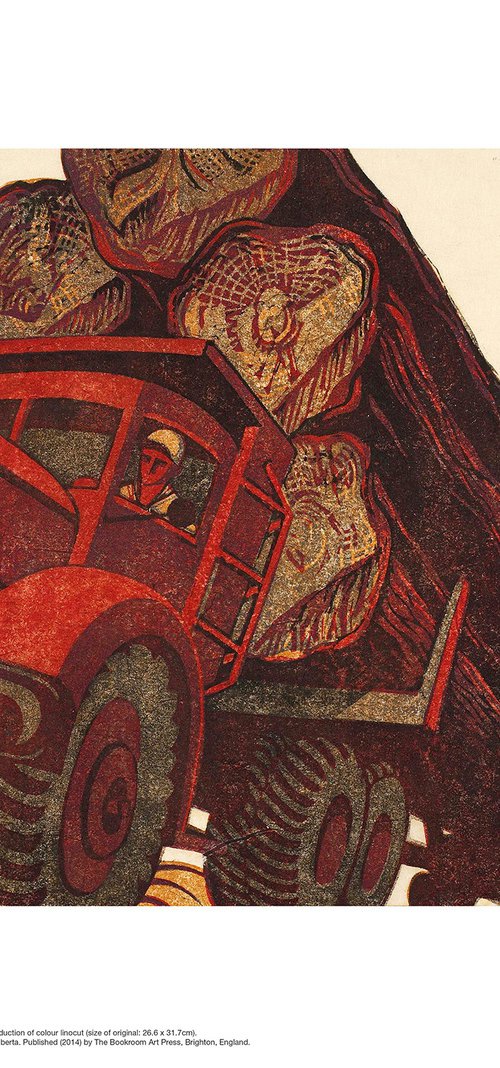
During the Second World War, Andrews returned to welding, this time in a shipyard, where she met her husband, Walter Morgan. They married in 1943 and in 1947 emigrated to a remote logging town on Vancouver Island, British Columbia. There, she taught art from her cottage and continued making linocuts, broadening her subjects to include the region's forests and lumber industry.
In total, she made around 80 linocuts, about half of them before 1939. She died in 1992, having given more than 500 works and the contents of her studio to the Glenbow Museum in Calgary, now the main centre for the study of her work. Her prints are also held by the British Museum, the Victoria and Albert Museum and the Metropolitan Museum of Art.