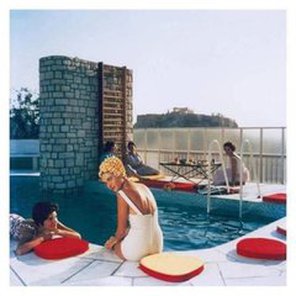
Slim Aarons spent 50 years photographing the world’s wealthiest people relaxing beside their own swimming pools. In doing so, he developed a whole new genre: portraits of postwar leisure. Born George Allen Aarons, he first came to photography as a combat photographer in WWII. Following the war, he set out to photograph “attractive people doing attractive things in attractive places”. Aarons’s sun-drenched portraits of Hollywood stars, European aristocrats and socialites are a unique outside look into the glamorous world of celebrity and fortune.
Summary
Slim Aarons spent 50 years photographing the world’s wealthiest people relaxing beside their own swimming pools. In doing so, he developed a whole new genre: portraits of postwar leisure. Born George Allen Aarons, he first came to photography as a combat photographer in WWII. Following the war, he set out to photograph “attractive people doing attractive things in attractive places”. Aarons’s sun-drenched portraits of Hollywood stars, European aristocrats and socialites are a unique outside look into the glamorous world of celebrity and fortune.
Artworks by Slim Aarons

About Slim Aarons
Biography
About Slim Aarons
Aarons was born in 1916 in New York City, and in his early 20s, enlisted in the US Army during the Second World War. He initially worked in the photography department at West Point before being sent overseas to cover the conflict for the military publication, Yank. Aarons was wounded during the Allied invasion of Anzio, Italy, an experience he later credited with reshaping his entire approach to photography.
From combat to poolside
Following being witness to the atrocities of war, Aarons set out to build a career photographing beauty and privilege. He moved to California and by the mid-1950s, was working as a freelance photographer for magazines including LIFE, Holiday and Town & Country.
Photographing the good life
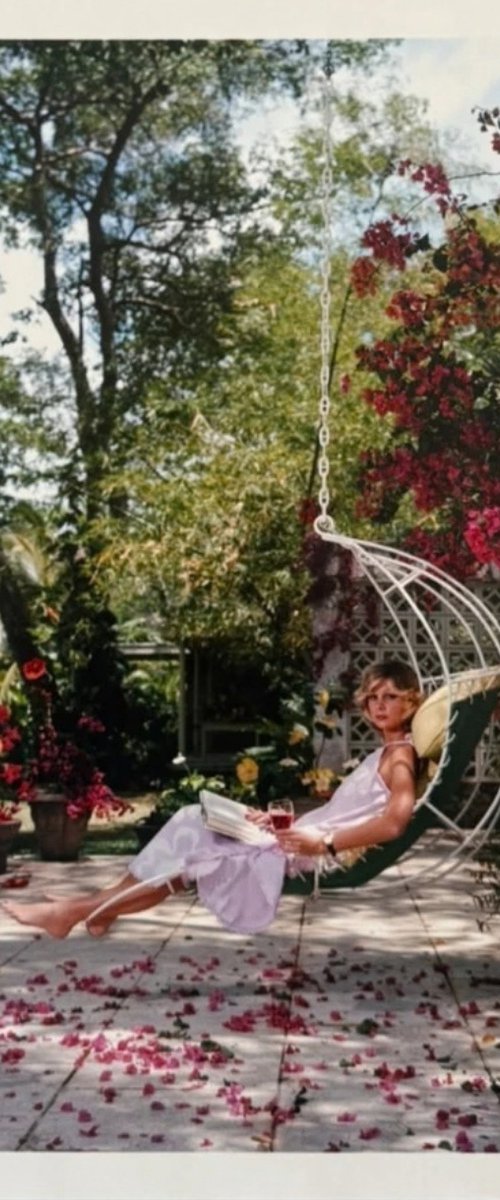
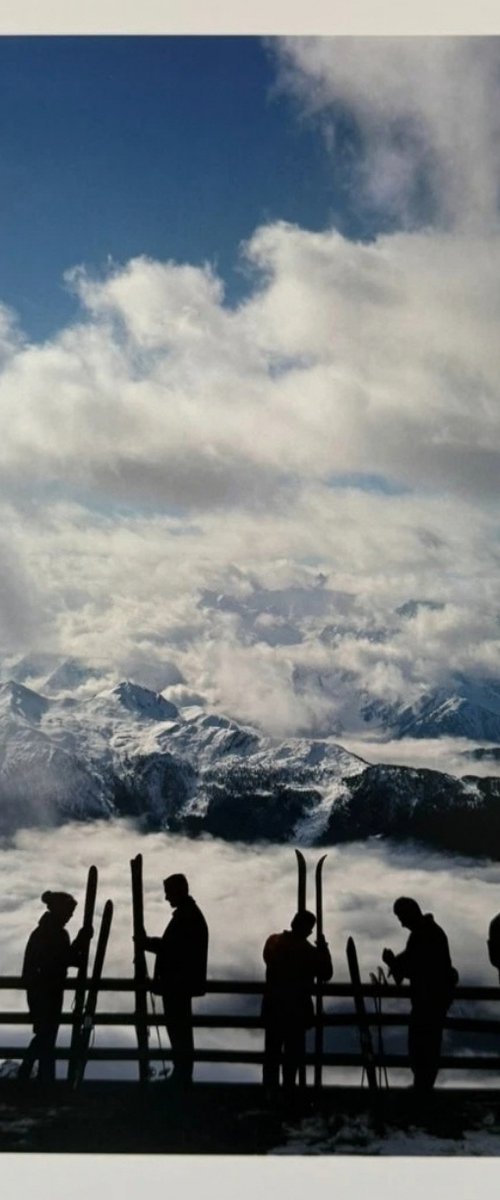
Over the next 30 years, Aarons chronicled a cast of Hollywood royalty, European aristocracy and international socialites in their own exclusive playgrounds. His technique was deliberately unfussy: a single camera and natural light, letting his subjects’ homes, gardens and poolsides do the work of a set.
His best-known image, The Kings of Hollywood, captured four leading actors (Clark Gable, Van Heflin, Gary Cooper, and Jimmy Stewart) together at a party in 1957. Another, Poolside Gossip, remains a defining picture of Palm Springs modernism. Both images are now sold as photographic prints in their own right, sharing the qualities that define Aarons's wider archive: bright, natural daylight, a single fixed camera position and subjects photographed at ease in their own homes rather than posed for the camera. It's this sun-soaked intimacy that collectors continue to respond to today.
Biography
About Slim Aarons
Aarons was born in 1916 in New York City, and in his early 20s, enlisted in the US Army during the Second World War. He initially worked in the photography department at West Point before being sent overseas to cover the conflict for the military publication, Yank. Aarons was wounded during the Allied invasion of Anzio, Italy, an experience he later credited with reshaping his entire approach to photography.
From combat to poolside
Following being witness to the atrocities of war, Aarons set out to build a career photographing beauty and privilege. He moved to California and by the mid-1950s, was working as a freelance photographer for magazines including LIFE, Holiday and Town & Country.
Photographing the good life
Over the next 30 years, Aarons chronicled a cast of Hollywood royalty, European aristocracy and international socialites in their own exclusive playgrounds. His technique was deliberately unfussy: a single camera and natural light, letting his subjects’ homes, gardens and poolsides do the work of a set.
His best-known image, The Kings of Hollywood, captured four leading actors (Clark Gable, Van Heflin, Gary Cooper, and Jimmy Stewart) together at a party in 1957. Another, Poolside Gossip, remains a defining picture of Palm Springs modernism. Both images are now sold as photographic prints in their own right, sharing the qualities that define Aarons's wider archive: bright, natural daylight, a single fixed camera position and subjects photographed at ease in their own homes rather than posed for the camera. It's this sun-soaked intimacy that collectors continue to respond to today.