Artworks by Edvard Munch
About Edvard Munch
Biography
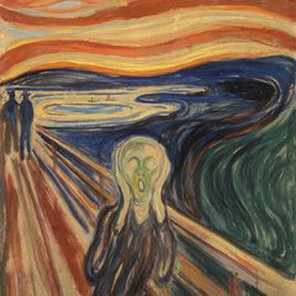
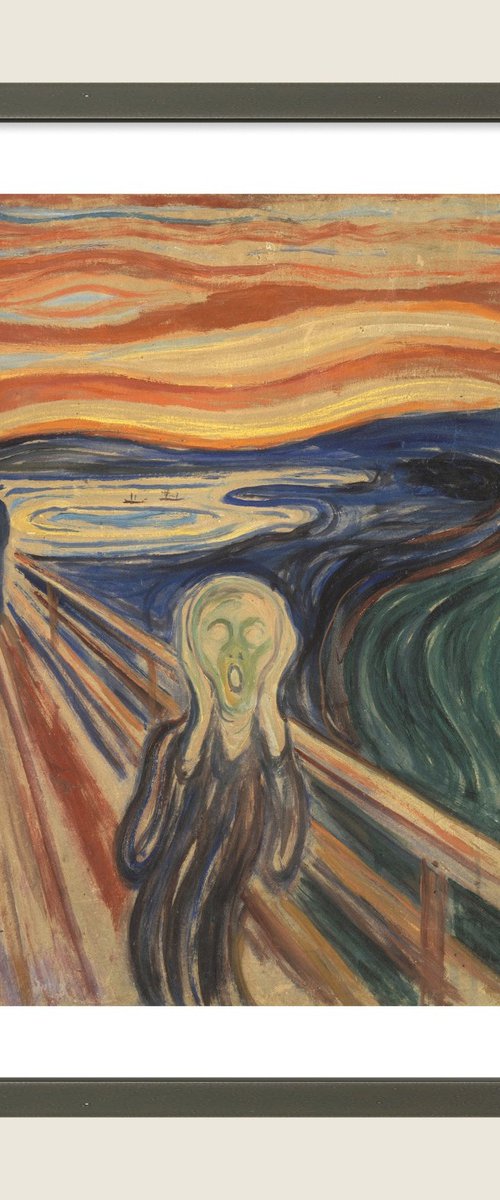
Edvard Munch painted anxiety, love, jealousy and grief with an intensity that helped shape Expressionism. His best known image, The Scream, shows a figure clutching its face beneath a blazing sky and is widely seen as a symbol of modern anxiety.
Drawing on painful experiences of illness and loss, Munch made emotion his subject. He was also a remarkably inventive printmaker, reworking his themes in etching, lithography and woodcut.
With a print of Munch’s paintings or woodcuts, you can bring home a piece of the art that helped shape Expressionism — raw feeling, rendered in colour and line.
Munch was born in 1863 in Norway. His childhood was marked by illness and death, including the loss of his sister Sophie, which would haunt his work. He studied at the Royal School of Art and Design in Kristiania (now Oslo), where his teachers included the painter Christian Krohg, though his formal training was limited. The writer Hans Jæger encouraged him to paint his own inner emotional life.
Munch called The Sick Child, drawn from Sophie’s death, his first ‘soul painting’. After studying in Paris on a state scholarship, he absorbed the influence of Vincent van Gogh, Paul Gauguin and Toulouse-Lautrec.
In 1892, Munch was invited on behalf of the Association of Berlin Artists to show at its November exhibition. It was the society’s first one-man show. Munch’s raw, emotionally charged paintings caused controversy, but the scandal, dubbed ‘the Munch Affair’, also exposed a rift among Berlin’s artists that helped lead to the founding of the Berlin Secession in 1898, a breakaway group that later exhibited his work.
Over the following years, Munch developed The Frieze of Life, a cycle of paintings on love, anxiety and death that included Madonna and The Scream. He made four colour versions of The Scream, two paintings and two drawings (one in pastel and one in crayon).
Largely self-taught as a printmaker, Munch made etchings and drypoints, produced lithographs of The Scream from 1895 and took up woodcut in 1896, using prints to rework the themes of his paintings in new forms.
Munch was made a Knight of the Order of St Olav in 1908, then returned to Norway in 1909. He died in Oslo in 1944, aged 80.
Drawing on painful experiences of illness and loss, Munch made emotion his subject. He was also a remarkably inventive printmaker, reworking his themes in etching, lithography and woodcut.
With a print of Munch’s paintings or woodcuts, you can bring home a piece of the art that helped shape Expressionism — raw feeling, rendered in colour and line.
Edvard Munch artwork for sale
About Edvard Munch
Munch was born in 1863 in Norway. His childhood was marked by illness and death, including the loss of his sister Sophie, which would haunt his work. He studied at the Royal School of Art and Design in Kristiania (now Oslo), where his teachers included the painter Christian Krohg, though his formal training was limited. The writer Hans Jæger encouraged him to paint his own inner emotional life.
The Frieze of Life
Munch called The Sick Child, drawn from Sophie’s death, his first ‘soul painting’. After studying in Paris on a state scholarship, he absorbed the influence of Vincent van Gogh, Paul Gauguin and Toulouse-Lautrec.
In 1892, Munch was invited on behalf of the Association of Berlin Artists to show at its November exhibition. It was the society’s first one-man show. Munch’s raw, emotionally charged paintings caused controversy, but the scandal, dubbed ‘the Munch Affair’, also exposed a rift among Berlin’s artists that helped lead to the founding of the Berlin Secession in 1898, a breakaway group that later exhibited his work.
Over the following years, Munch developed The Frieze of Life, a cycle of paintings on love, anxiety and death that included Madonna and The Scream. He made four colour versions of The Scream, two paintings and two drawings (one in pastel and one in crayon).
Etchings, lithographs and woodcuts
Largely self-taught as a printmaker, Munch made etchings and drypoints, produced lithographs of The Scream from 1895 and took up woodcut in 1896, using prints to rework the themes of his paintings in new forms.
Munch was made a Knight of the Order of St Olav in 1908, then returned to Norway in 1909. He died in Oslo in 1944, aged 80.