David Shrigley draws like nobody taught him to (on purpose). Working across drawing, sculpture, animation, photography and music, Shrigley satirises the small absurdities of everyday life: awkward conversations, minor humiliations, bureaucracy and mortality, all rendered in a loose, childlike style that resists any hint of technical polish. Shrigley has built his reputation on turning deliberately crude line drawings and deadpan one-liners into one of British art’s most recognisable voices.
Summary
David Shrigley draws like nobody taught him to (on purpose). Working across drawing, sculpture, animation, photography and music, Shrigley satirises the small absurdities of everyday life: awkward conversations, minor humiliations, bureaucracy and mortality, all rendered in a loose, childlike style that resists any hint of technical polish. Shrigley has built his reputation on turning deliberately crude line drawings and deadpan one-liners into one of British art’s most recognisable voices.
Artworks by David Shrigley
About David Shrigley
Biography
About David Shrigley
Born in 1968 in Cheshire, Shrigley completed an art and design foundation course at Leicester Polytechnic in 1987 before moving to Scotland to study Environmental Art at the Glasgow School of Art. He lived and worked in Glasgow for 27 years, a city he has credited in shaping his sense of dark humour.
From doodles to galleries
Shrigley first came to attention in the 1990s through self-published books of drawings that looked like they belonged on the fridge rather than a gallery. His quick, scratchy line work was paired with handwritten captions that were both whip-smart and outright absurd. He has described his own process as sitting somewhere between handwriting and drawing, less concerned with technical accuracy than with getting an idea across as directly as possible.
Beyond the page
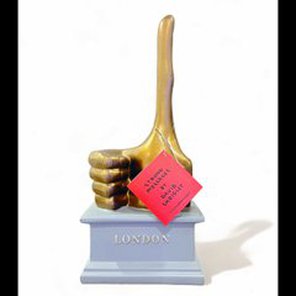
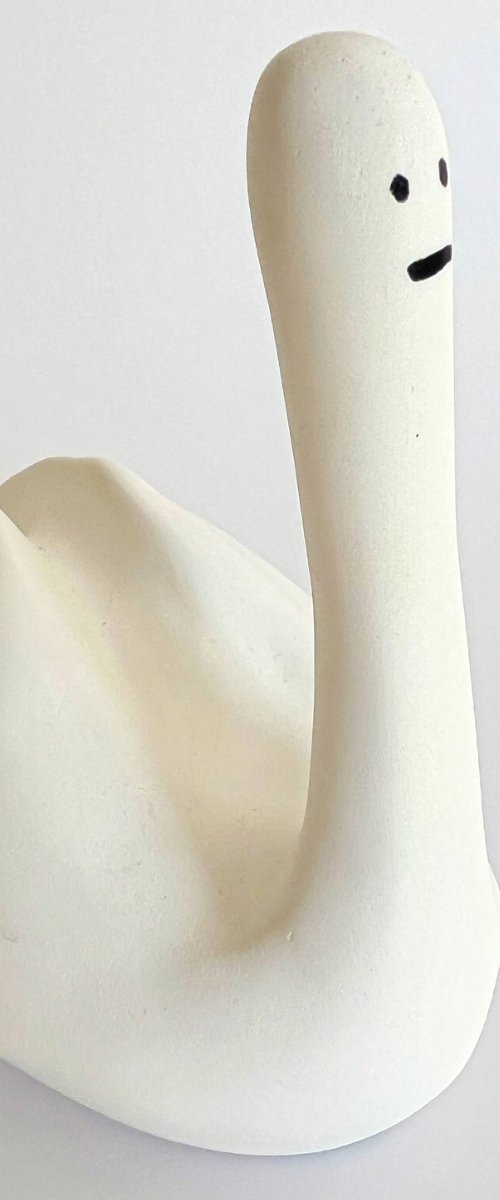
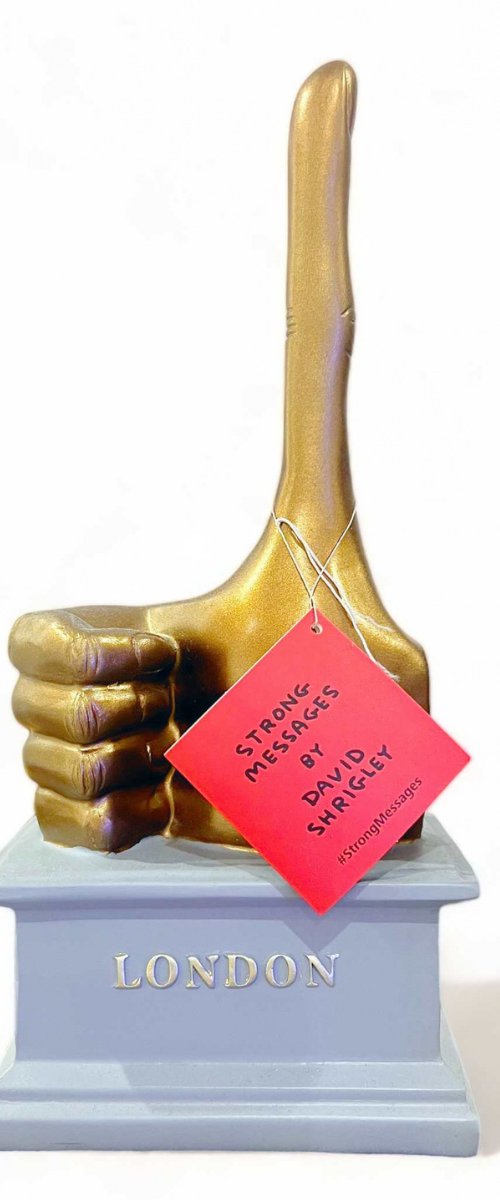
Alongside drawing, Shrigley works in sculpture, printmaking, taxidermy, photography, neon text, animation and music, often applying the same dry humour to each piece, no matter how big or small. His sculpture Really Good (an oversized hand with a terrifyingly large thumb giving a thumbs up) was displayed on Trafalgar Square’s Fourth Plinth in 2016. His retrospective, Brain Activity, was held at London’s Hayward Gallery in 2012, which led to his Turner Prize shortlisting the following year.
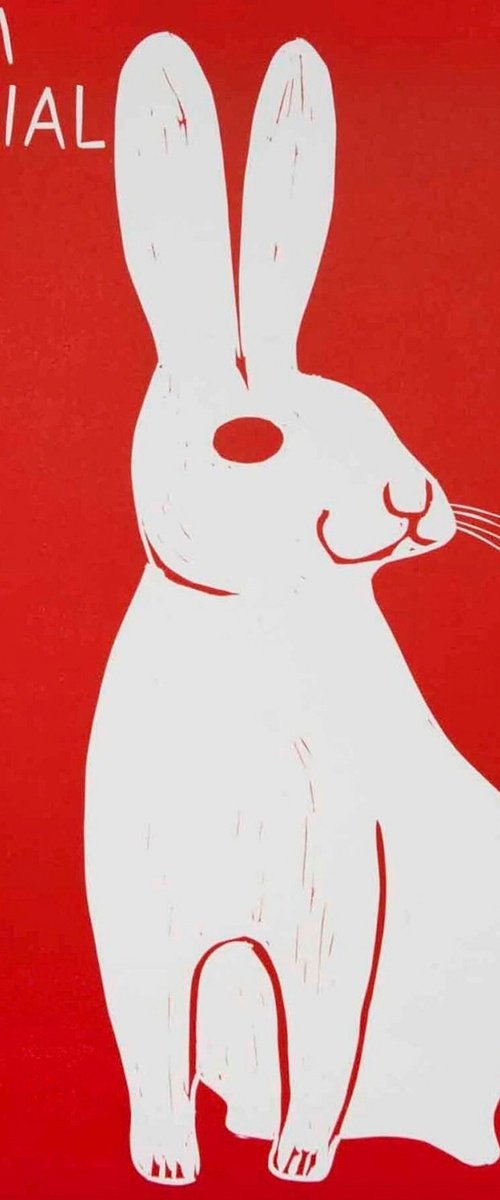
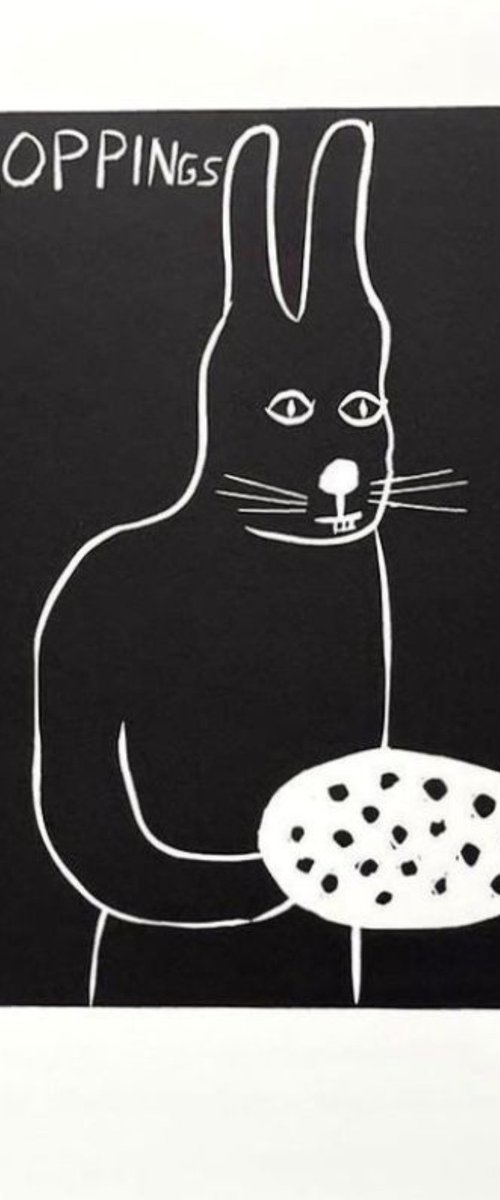
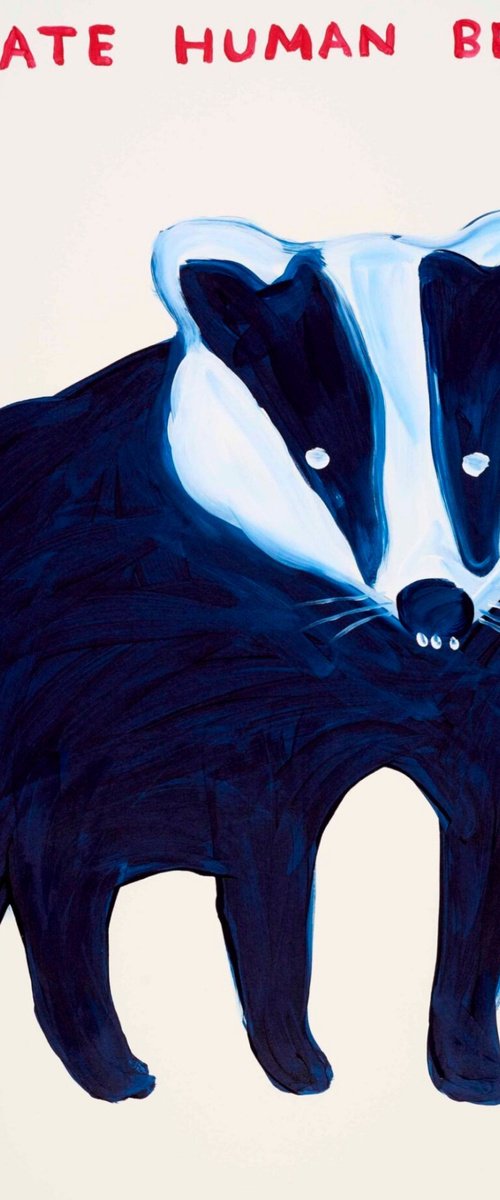
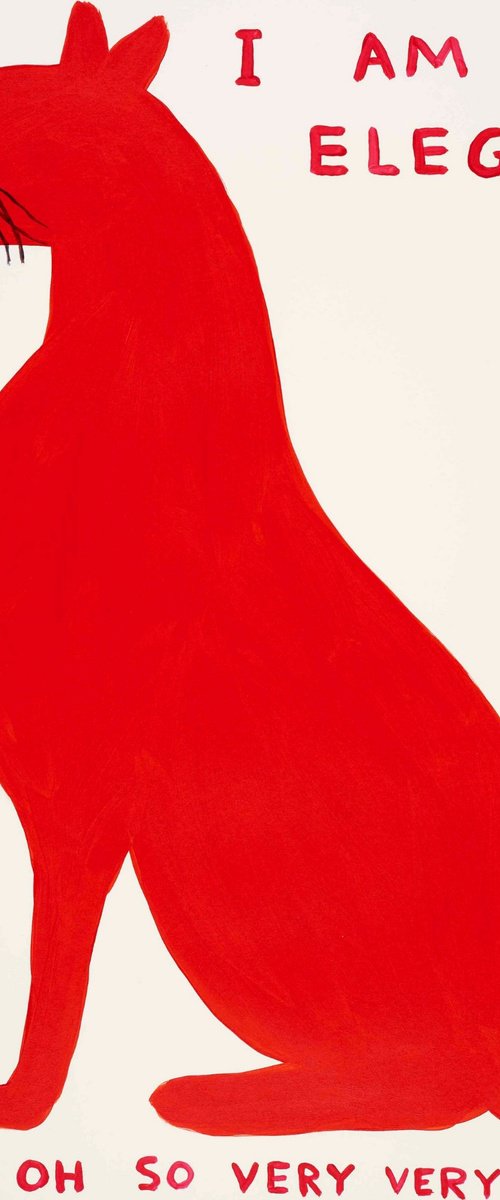
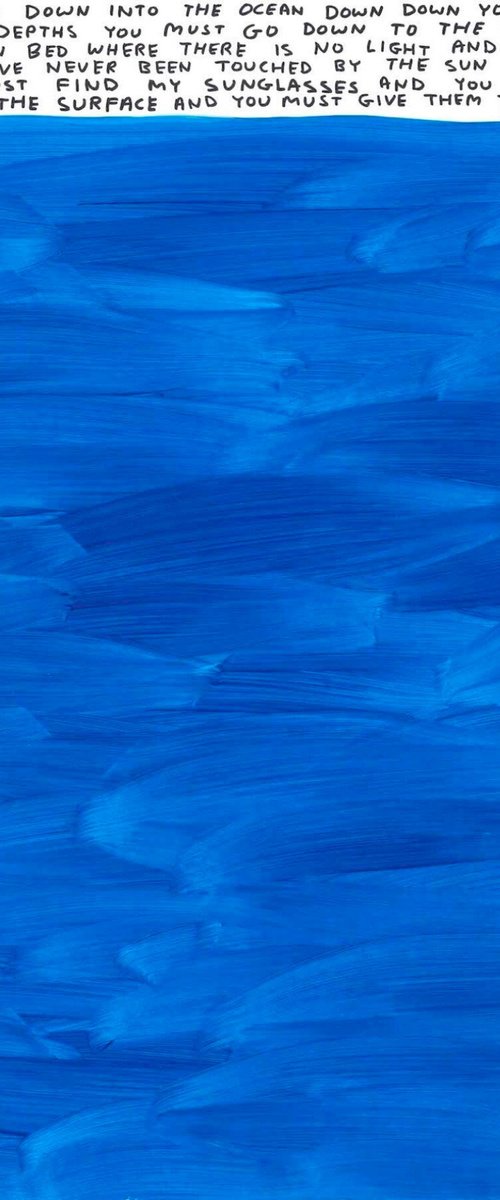
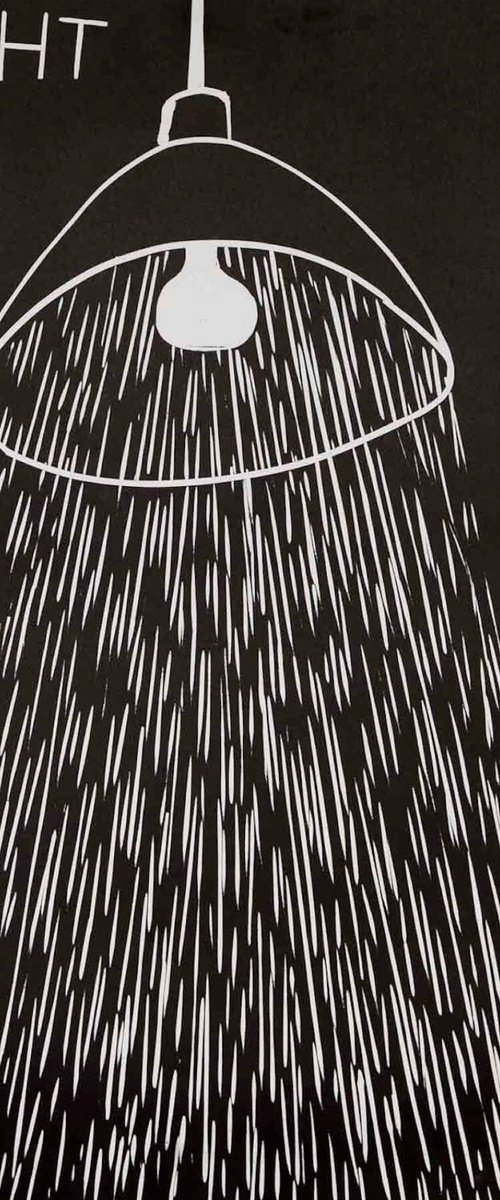
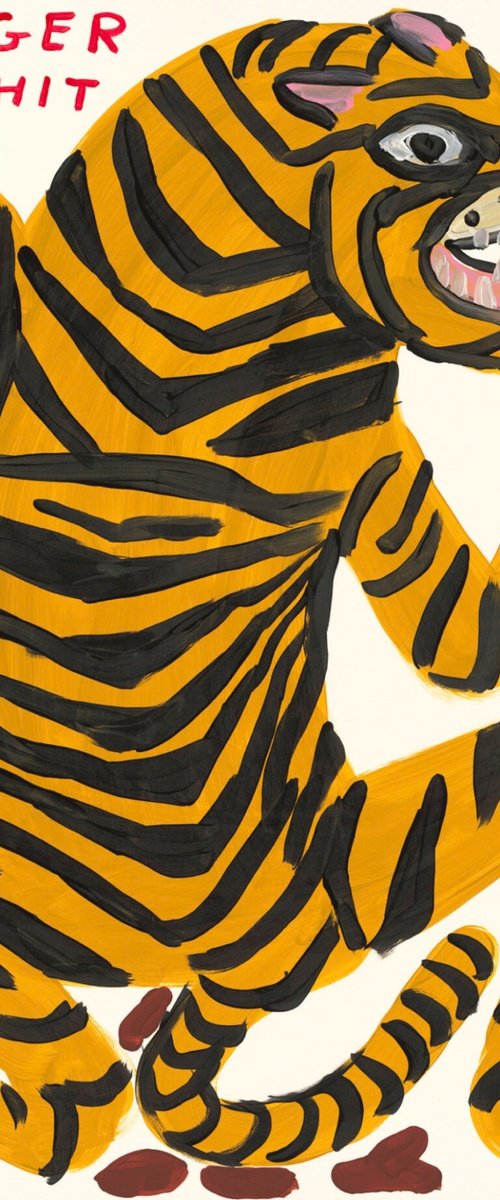
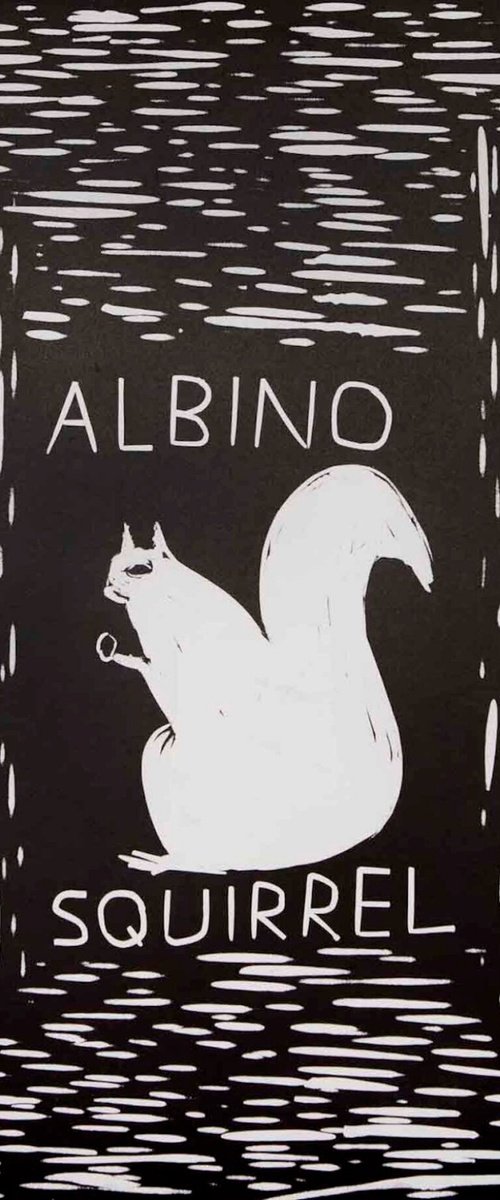
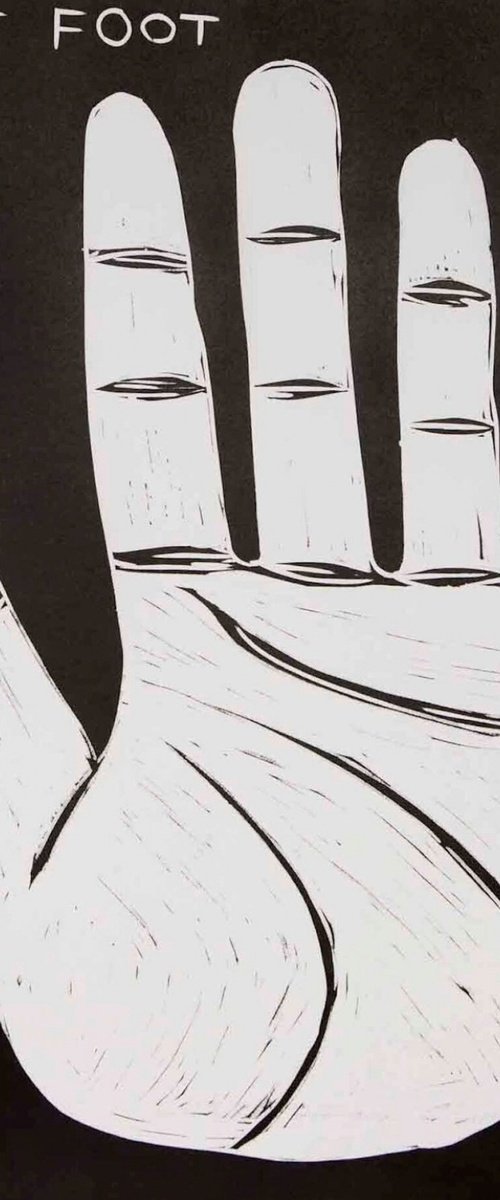
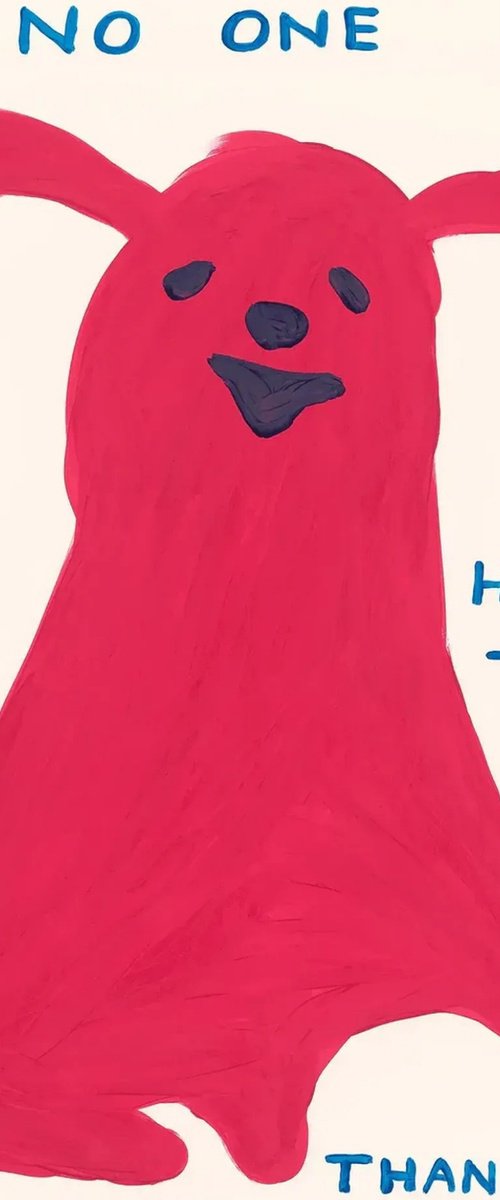
Shrigley's work has become highly accessible through his limited print runs: his handwritten statements, deadpan humour and everyday objects translate directly into bold, colourful editions. His gallery has described the medium as a natural extension of the same quick, direct mark-making that defines his drawings.
He was appointed an Officer of the Order of the British Empire (OBE) in 2020 and his work is held in many institutions, including the Museum of Modern Art, Tate and the Art Institute of Chicago.
Biography
About David Shrigley
Born in 1968 in Cheshire, Shrigley completed an art and design foundation course at Leicester Polytechnic in 1987 before moving to Scotland to study Environmental Art at the Glasgow School of Art. He lived and worked in Glasgow for 27 years, a city he has credited in shaping his sense of dark humour.
From doodles to galleries
Shrigley first came to attention in the 1990s through self-published books of drawings that looked like they belonged on the fridge rather than a gallery. His quick, scratchy line work was paired with handwritten captions that were both whip-smart and outright absurd. He has described his own process as sitting somewhere between handwriting and drawing, less concerned with technical accuracy than with getting an idea across as directly as possible.
Beyond the page
Alongside drawing, Shrigley works in sculpture, printmaking, taxidermy, photography, neon text, animation and music, often applying the same dry humour to each piece, no matter how big or small. His sculpture Really Good (an oversized hand with a terrifyingly large thumb giving a thumbs up) was displayed on Trafalgar Square’s Fourth Plinth in 2016. His retrospective, Brain Activity, was held at London’s Hayward Gallery in 2012, which led to his Turner Prize shortlisting the following year.
Shrigley's work has become highly accessible through his limited print runs: his handwritten statements, deadpan humour and everyday objects translate directly into bold, colourful editions. His gallery has described the medium as a natural extension of the same quick, direct mark-making that defines his drawings.
He was appointed an Officer of the Order of the British Empire (OBE) in 2020 and his work is held in many institutions, including the Museum of Modern Art, Tate and the Art Institute of Chicago.