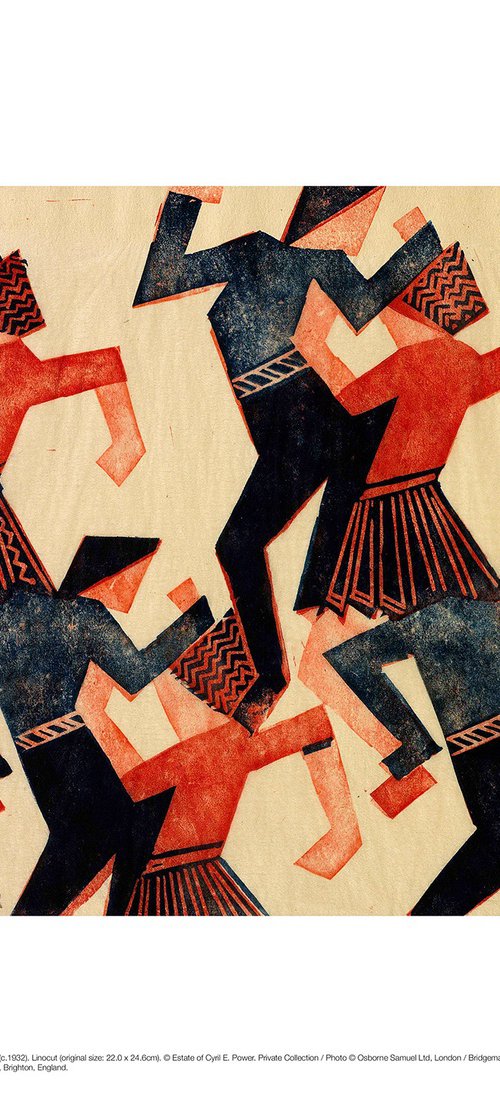
Cyril Power came to printmaking late, after two decades as an architect. He went on to make striking images of interwar London, featuring colour linocuts of Tube stations, rowing crews and speeding cars which capture the energy of the machine age in a few bold, interlocking shapes.
A central figure of the Grosvenor School of Modern Art, Power worked closely with the artist Sybil Andrews for almost 20 years. Together, they also designed posters for London Transport under the shared name ‘Andrew Power’.
A central figure of the Grosvenor School of Modern Art, Power worked closely with the artist Sybil Andrews for almost 20 years. Together, they also designed posters for London Transport under the shared name ‘Andrew Power’.
Summary
Cyril Power came to printmaking late, after two decades as an architect. He went on to make striking images of interwar London, featuring colour linocuts of Tube stations, rowing crews and speeding cars which capture the energy of the machine age in a few bold, interlocking shapes.
A central figure of the Grosvenor School of Modern Art, Power worked closely with the artist Sybil Andrews for almost 20 years. Together, they also designed posters for London Transport under the shared name ‘Andrew Power’.
A central figure of the Grosvenor School of Modern Art, Power worked closely with the artist Sybil Andrews for almost 20 years. Together, they also designed posters for London Transport under the shared name ‘Andrew Power’.
Artworks by Cyril Power
About Cyril Power
Biography
About Cyril Power
Cyril Edward Power was born in London in 1872 and trained as an architect. In 1900, he won the Soane Medallion from the Royal Institute of British Architects, going on to practise and lecture on architecture. During the First World War, he served with the Royal Flying Corps.
After the war, he met Sybil Andrews in Bury St Edmunds and the two moved to London, where Power studied at Heatherley's School of Fine Art. When the Grosvenor School of Modern Art opened in 1925, he was involved in setting it up and lectured there on architecture, while Andrews became its secretary.
Linocuts of the machine age
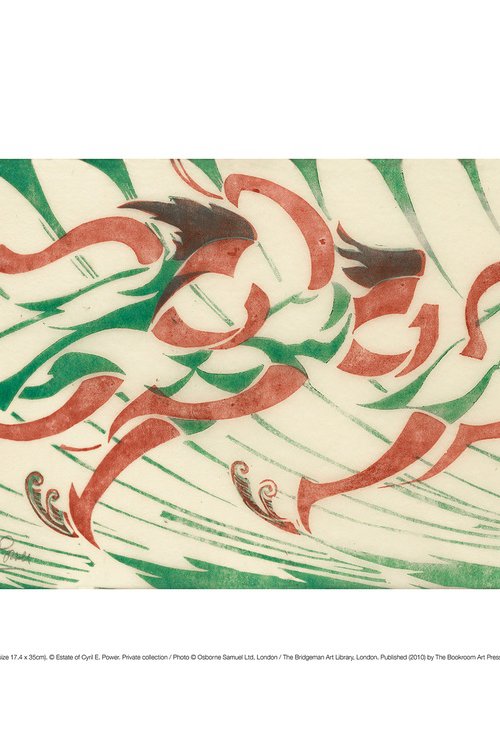
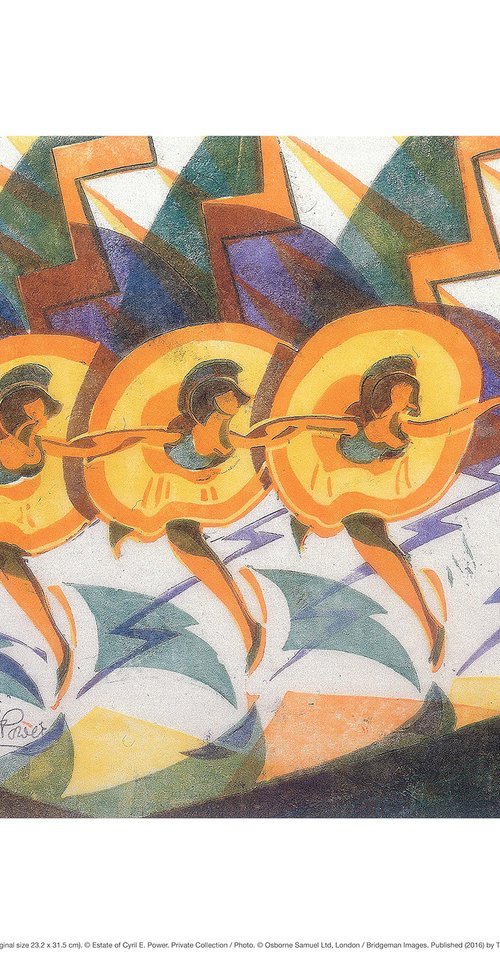
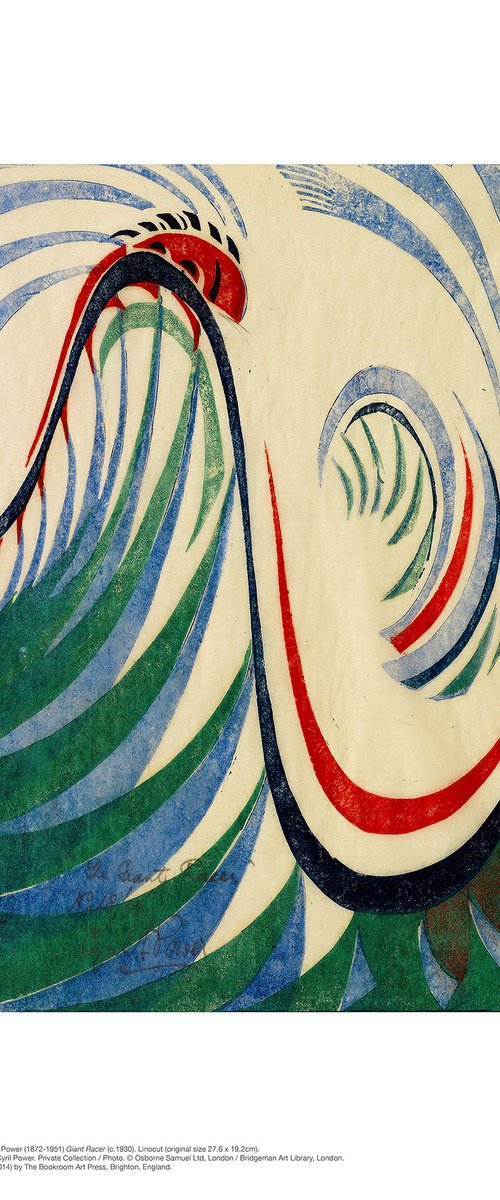
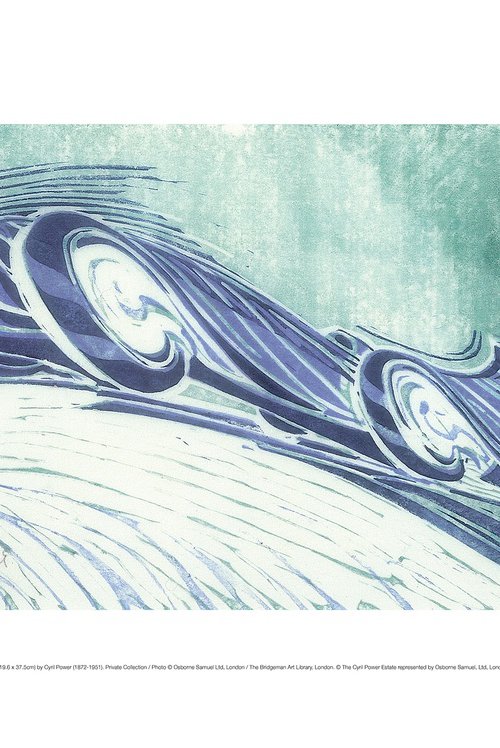
At the Grosvenor School, Power joined Claude Flight's linocut classes. Flight encouraged his students to capture the rhythm of modern life and Power, by then in his 50s, pushed the idea hard. His architect's eye gave his prints a strong sense of structure, while the influence of Futurism added speed and movement.
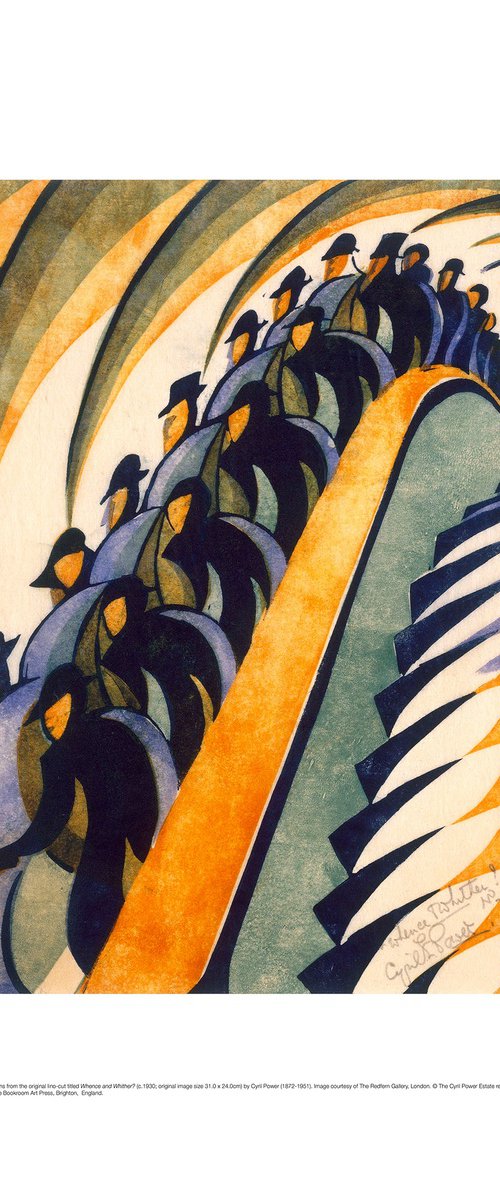
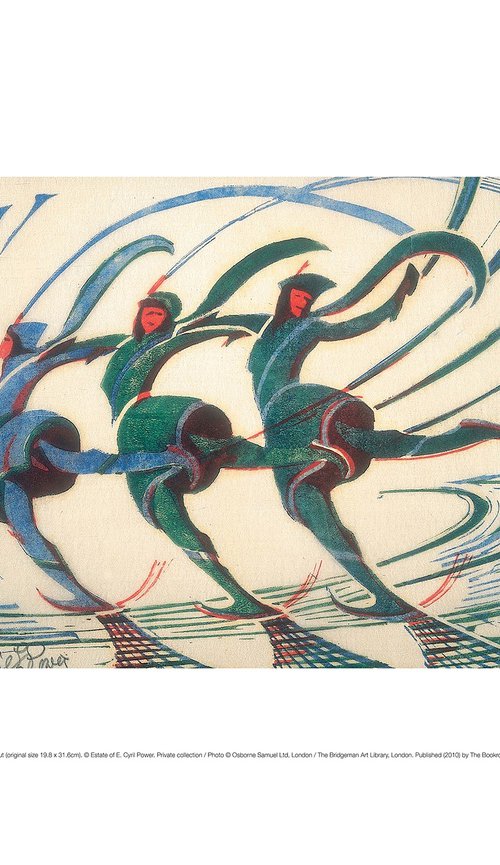
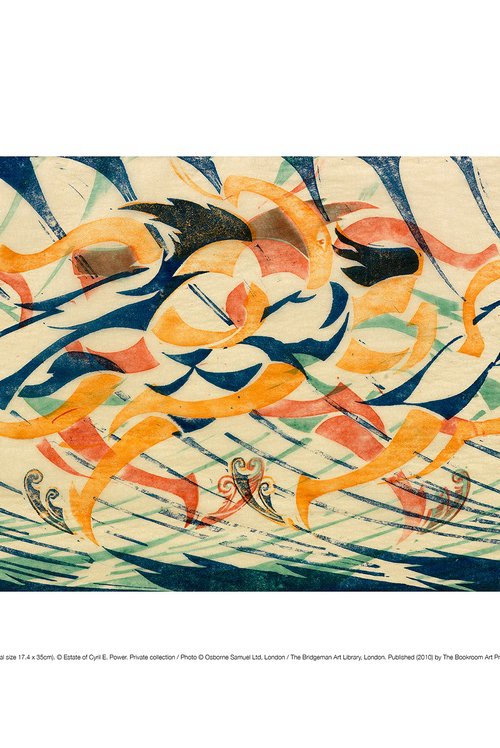
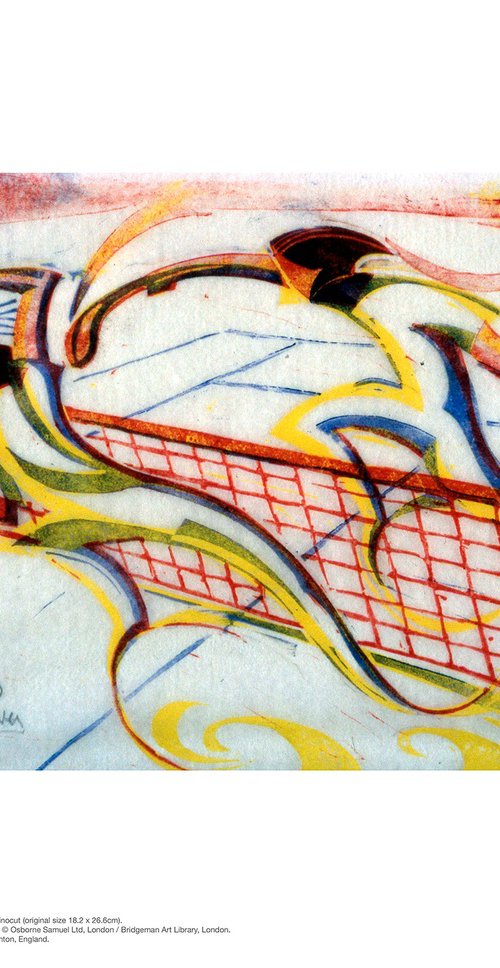
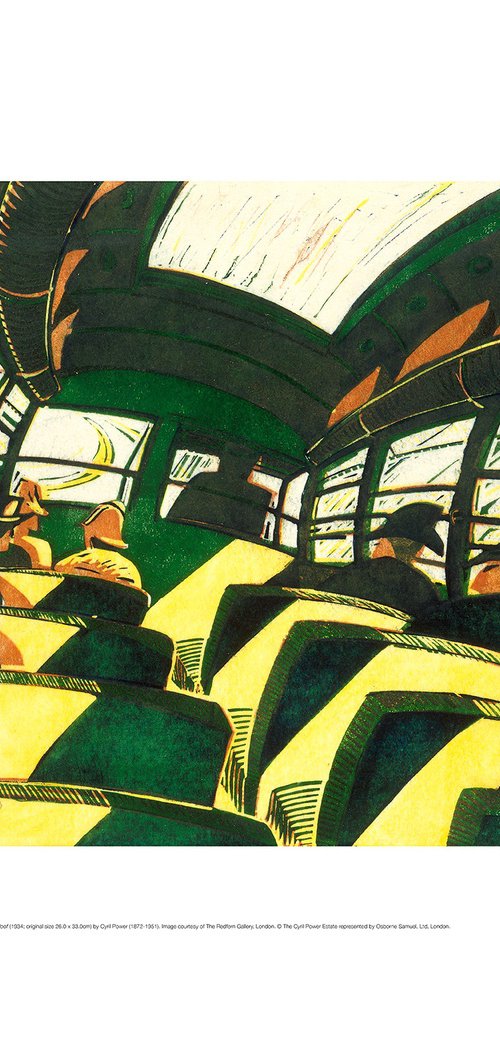
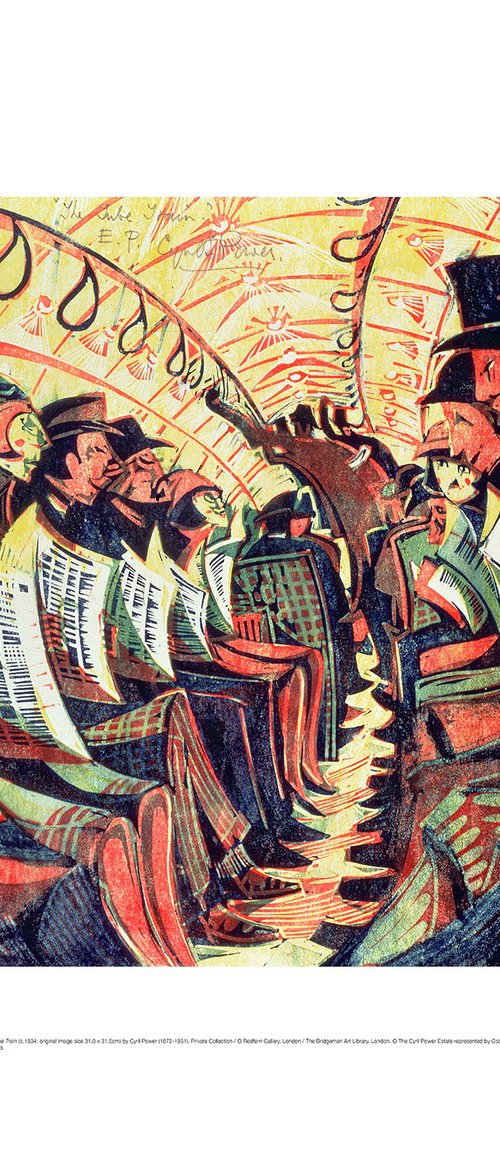
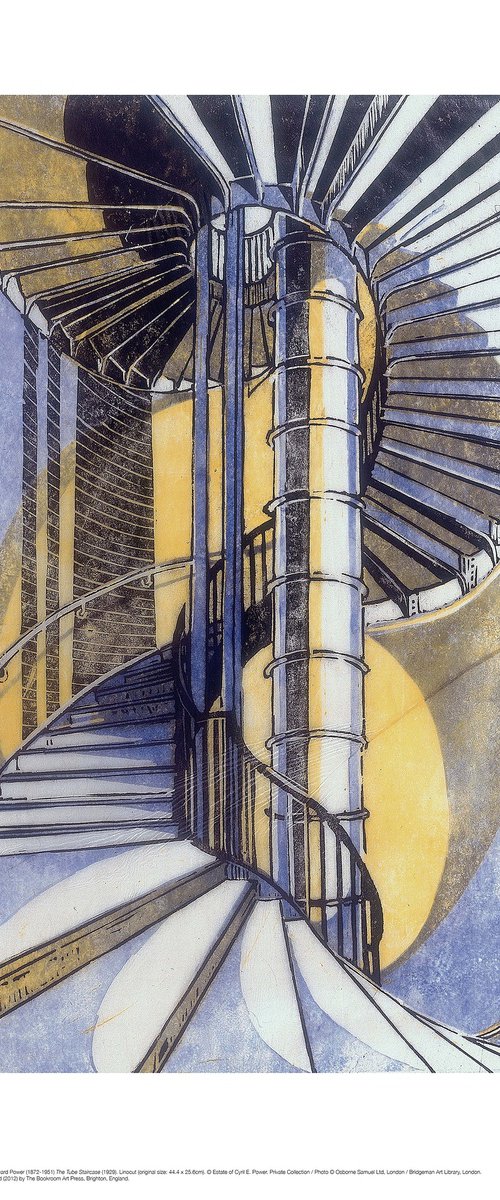
The Eight shows a rowing crew pulling hard on the Thames by Hammersmith Bridge, close to the studio he shared with Andrews at Brook Green. The Tube Station captures London's Underground, while Speed Trial draws on Malcolm Campbell's record breaking Bluebird racing car. The Concerto brings the same energy to music. His linocuts were printed by hand in small editions, often of around 60 impressions.
Partnership and later life
Power and Andrews worked side-by-side for nearly two decades. Between 1929 and 1937, they designed posters for London Transport under the name ‘Andrew Power’, advertising sporting events including Wimbledon and the racing at Epsom. It was their only formal collaboration, though each clearly influenced the other's work.
They gave up their shared studio in 1938 and Power returned to his family. In later life, he turned to painting in oils before dying in 1951. His linocuts are now held in museum collections internationally and are widely collected.