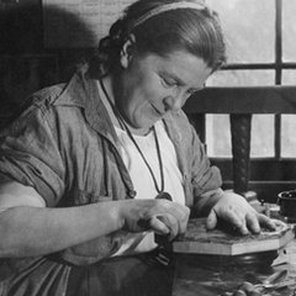
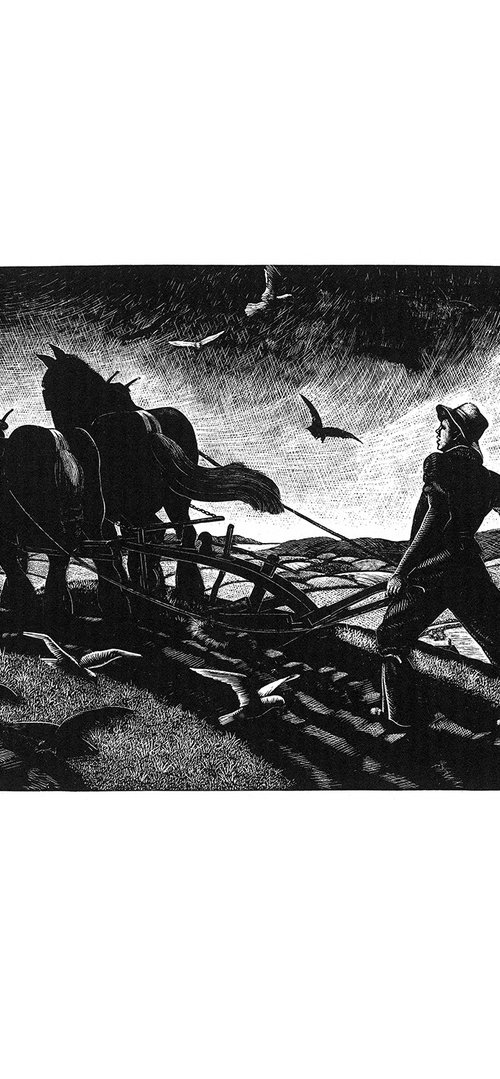
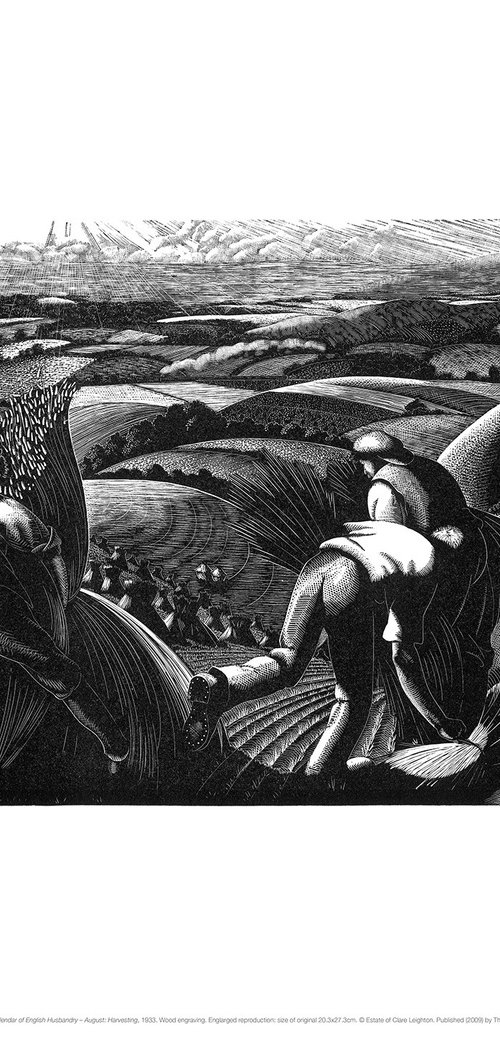
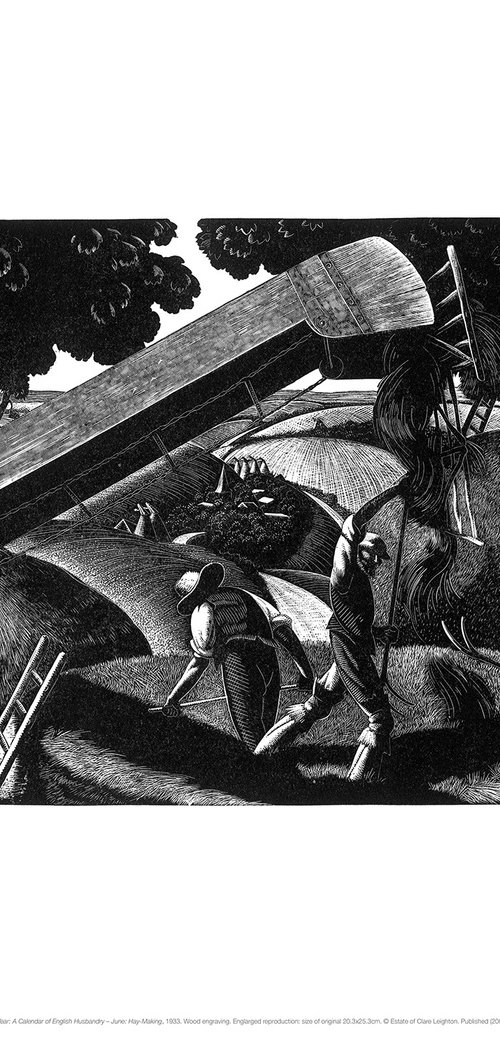
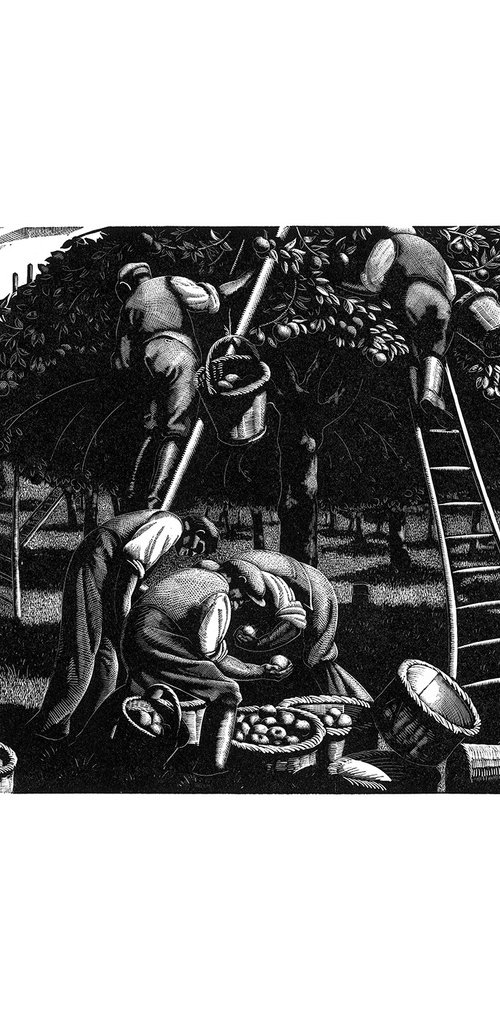
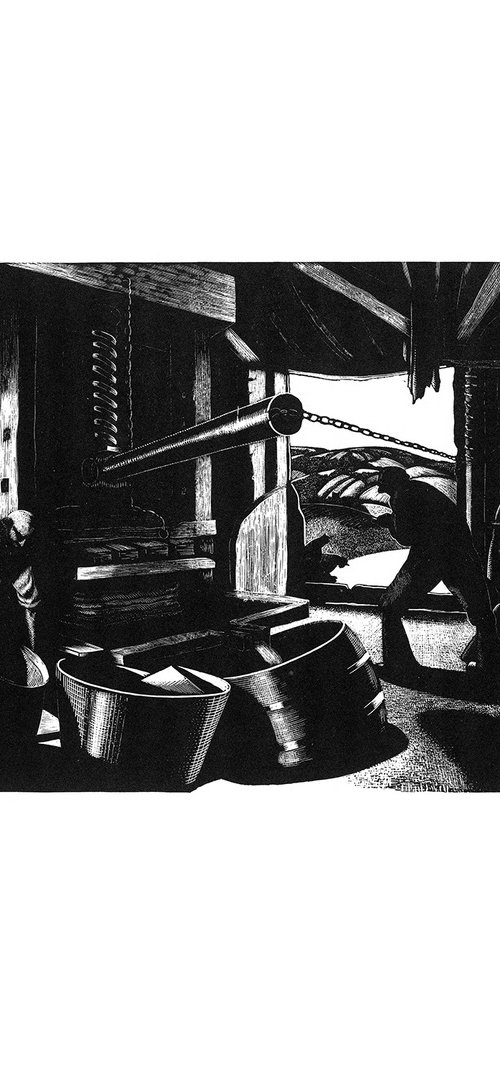
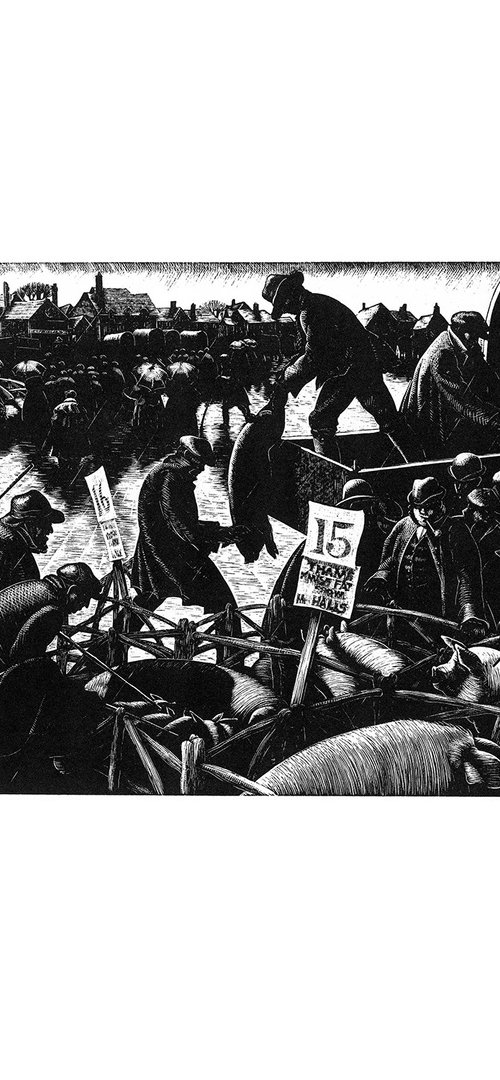
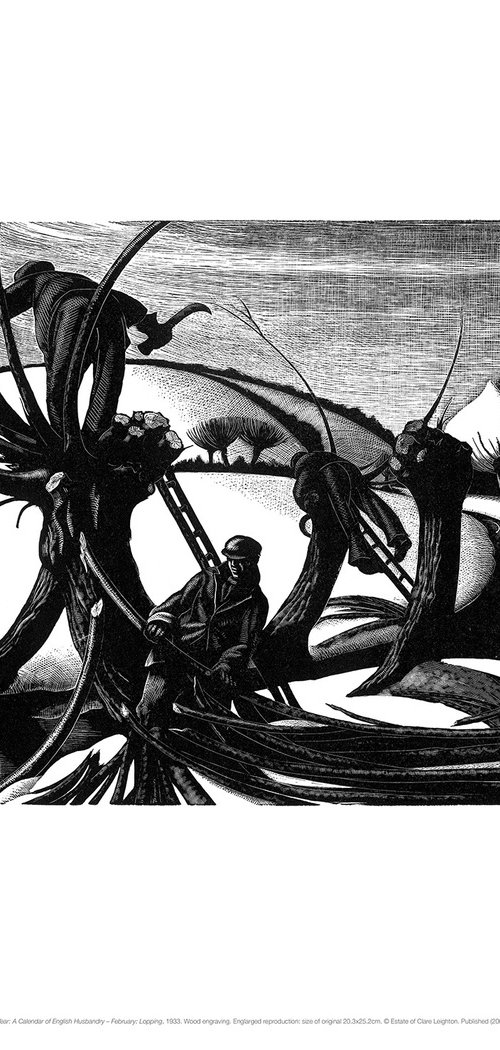
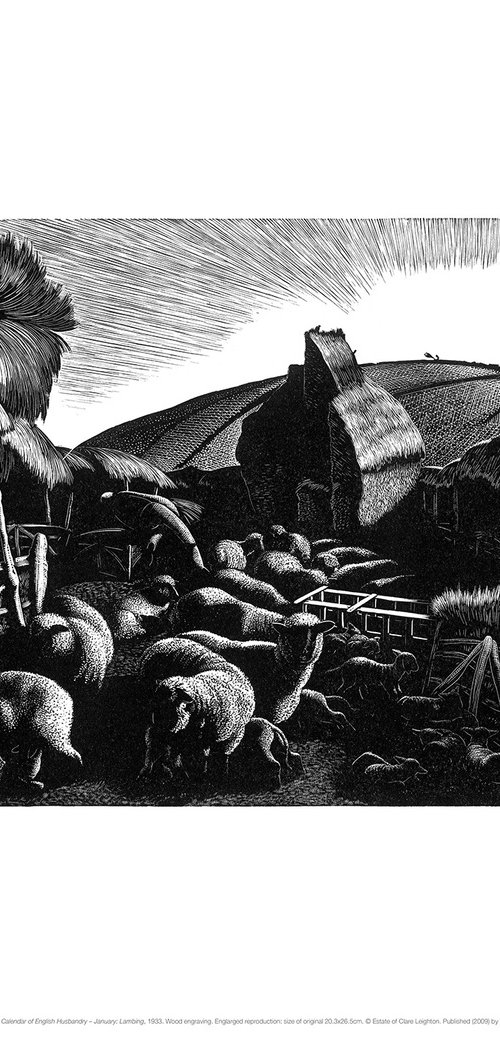
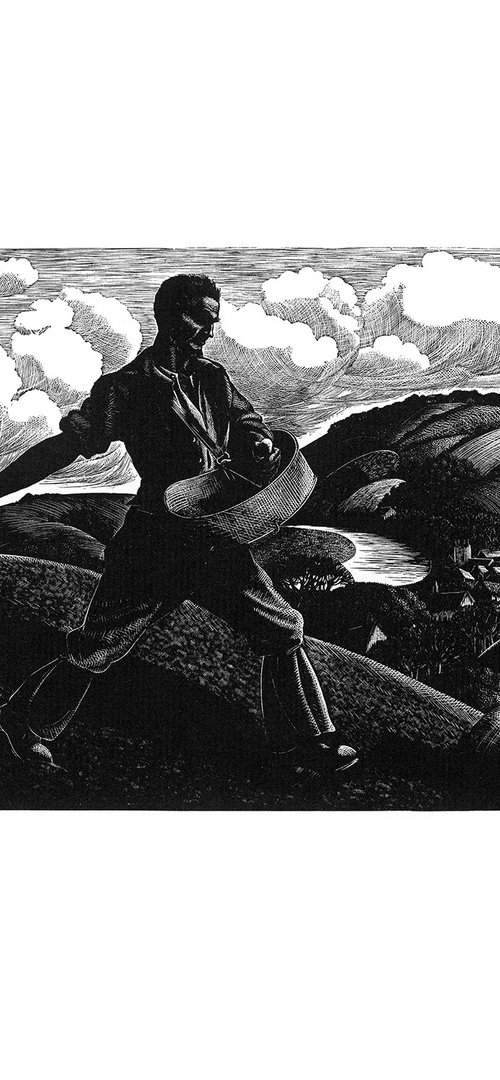
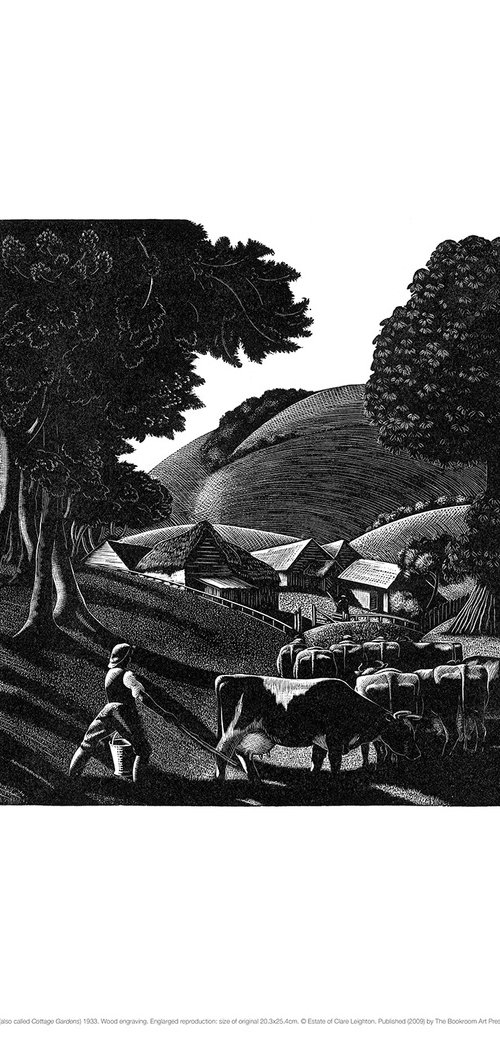
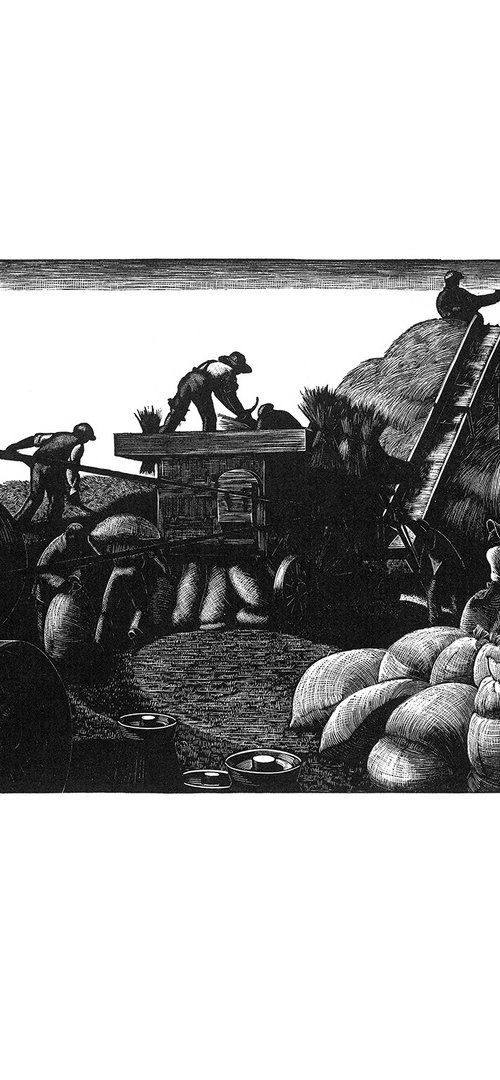
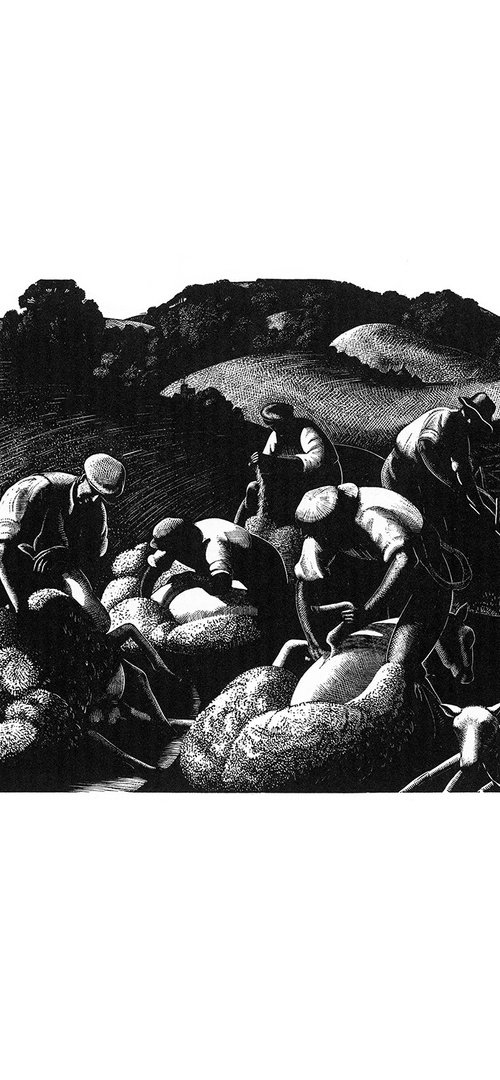
Clare Leighton made wood engravings that celebrate the people who work the land. Her images of ploughing, threshing, lambing and harvest carry the weight of the seasons in strong blacks and bright, cut-away whites.
A leading figure in the British wood engraving revival, she wrote and illustrated her own books, including The Farmer's Year, before emigrating to the United States in 1939, where she worked for another 50 years.
A leading figure in the British wood engraving revival, she wrote and illustrated her own books, including The Farmer's Year, before emigrating to the United States in 1939, where she worked for another 50 years.
Summary
Clare Leighton made wood engravings that celebrate the people who work the land. Her images of ploughing, threshing, lambing and harvest carry the weight of the seasons in strong blacks and bright, cut-away whites.
A leading figure in the British wood engraving revival, she wrote and illustrated her own books, including The Farmer's Year, before emigrating to the United States in 1939, where she worked for another 50 years.
A leading figure in the British wood engraving revival, she wrote and illustrated her own books, including The Farmer's Year, before emigrating to the United States in 1939, where she worked for another 50 years.
Artworks by Clare Leighton
About Clare Leighton
Biography
About Clare Leighton
Clare Leighton was born in London in 1898 into a family of writers. Her mother was a popular novelist and her father a journalist. She studied at Brighton School of Art, then painting at the Slade School of Fine Art from 1921 to 1923.
She found her medium soon after, in Noel Rooke's wood engraving classes at the Central School of Arts and Crafts. Rooke was a pioneer of the revival of wood engraving as a creative art and Leighton was drawn to the way the technique let her draw light out of a dark block.
The Farmer's Year and Four Hedges
Leighton's partner was the journalist Henry Noel Brailsford. In 1930, Leighton and Brailsford bought land in the Chiltern Hills, where they built their home, Four Hedges. There, she wrote and engraved her best known books. The Farmer's Year, a calendar of English rural work, features 12 large wood engravings, one for each month. Four Hedges chronicles the making of their garden from a meadow and Country Matters records English village life on the eve of war. She also published an influential manual, Wood-engraving and Woodcuts.
She won first prize at the International Exhibition of Engraving at the Art Institute of Chicago in 1930. She also represented Britain in wood engraving at an international exhibition in Venice in 1934.
A new life in America
After her relationship ended and with war approaching, Leighton moved permanently to the United States in 1939. She settled for a time in North Carolina, where she taught at Duke University and engraved scenes of the American South for Southern Harvest. Later, living in Connecticut, she designed for Wedgwood and created stained glass windows for churches in New England.
Over her career, she made more than 800 prints and illustrated more than 60 books. Her work is held by the British Museum, the Metropolitan Museum of Art and the Art Institute of Chicago, among others. She died in 1989.