- Kloska Ovidiu
- All Artworks
- I love to eat Bacon too 9
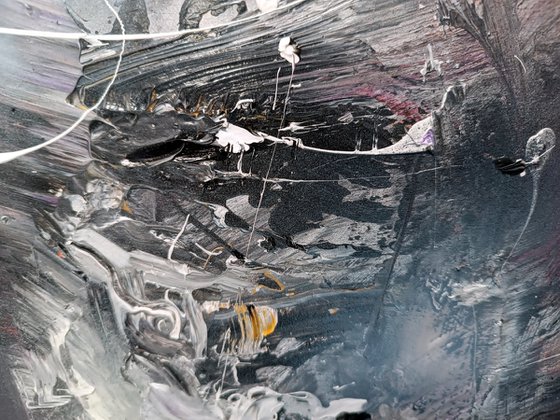
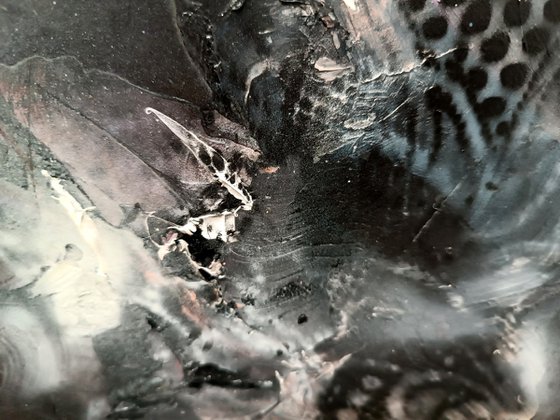
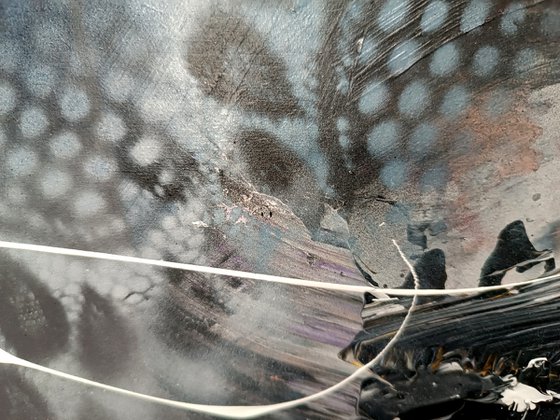
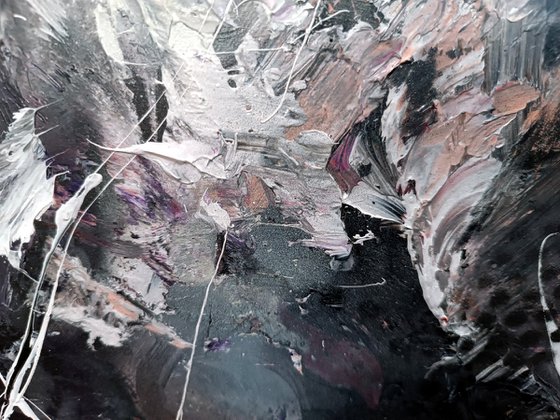
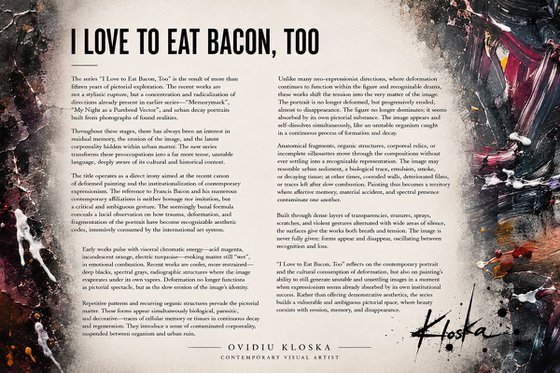
I love to eat Bacon too 9 (2026) Original Mixed-media Painting by Kloska Ovidiu
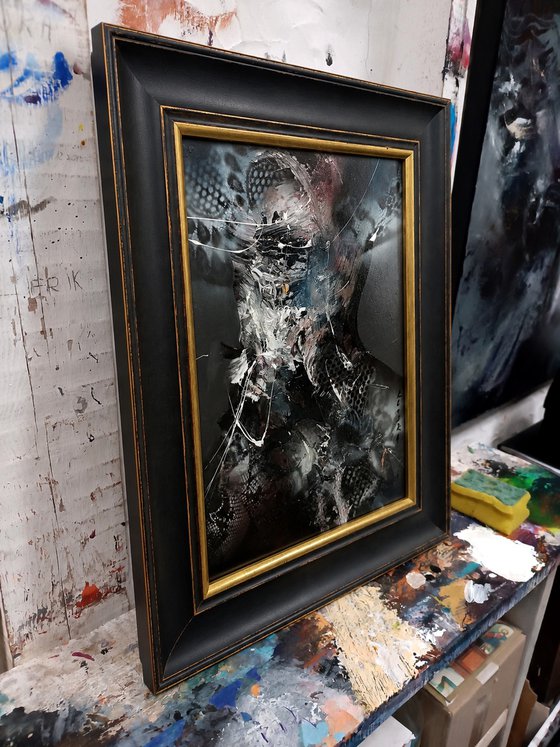
58 x 67 x 2cm (framed) / 40 x 50cm (actual image size)
£685.24
Original artwork description
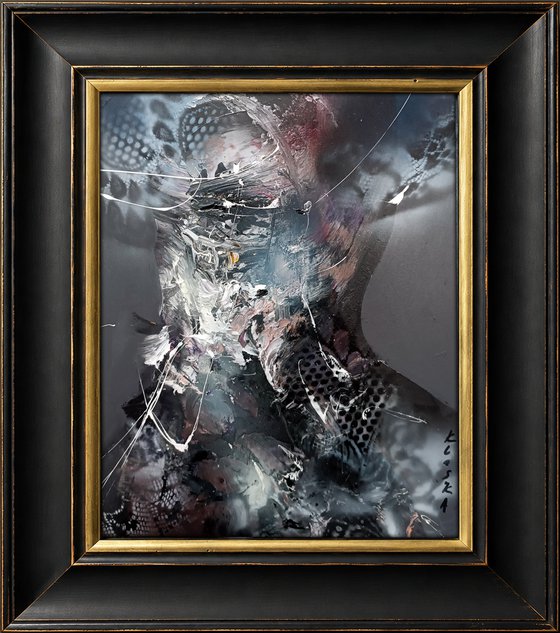
I Love to Eat Bacon, Too unfolds as a meditation on the instability of the contemporary portrait and on the exhaustion of deformation as a recognizable visual code within recent painting. The work belongs to a larger body of paintings developed through a long process of sedimentation, in which traces of earlier investigations into memory, urban erosion, material decay, and residual figuration gradually converge into a far more tense and self-aware pictorial language. Rather than functioning as a stylistic rupture, the painting radicalizes concerns already present throughout the artist’s previous series, transforming them into an unstable territory where image and matter continuously contaminate one another.
At the center of the composition, the figure appears only partially. It emerges from the surface like a damaged apparition, simultaneously forming and dissolving under the pressure of its own materiality. The portrait is no longer constructed through representation in the traditional sense, nor even through expressive distortion alone. Instead, the image undergoes a process of progressive erosion. Identity becomes fragile, uncertain, and unstable, as if the figure were being consumed from within by the very substance that produces it. The body survives merely as a residue — a spectral trace suspended between visibility and disappearance.
The title itself, I Love to Eat Bacon, Too, operates as an ironic and ambiguous gesture toward the overwhelming legacy of Francis Bacon and the institutional canonization of distorted figuration in contemporary art. Yet the work does not position itself as homage. On the contrary, it critically interrogates the transformation of trauma, anxiety, and bodily fragmentation into highly consumable aesthetic conventions within the international art system. The painting seems fully conscious of this historical burden and attempts to move beyond the theatricality of deformation that has become increasingly predictable within contemporary neo-expressionist painting.
What distinguishes the work is the relocation of tension away from expressive drama and into the very instability of the painted surface itself. The image behaves like a living, corroding organism. Anatomical fragments dissolve into atmospheric textures, while repetitive organic structures and cellular-like patterns invade the composition like parasitic forms or remnants of biological memory. At times, the surface resembles damaged photographic film, smoke, burned matter, or urban sediment accumulated over time. The painting becomes less an image to be read than a material field in constant transformation.
Dark tonalities, spectral greys, and bruised chromatic transitions create an atmosphere of emotional compression and visual silence. Abrupt white linear gestures cut violently across the surface, functioning almost like scars or electrical ruptures inside the image. Large areas of darkness operate not as empty space, but as zones of suspension and psychological pressure. The viewer is never granted complete access to the figure. Recognition remains unstable, oscillating continuously between apparition and loss.
In this sense, the painting resists the consumption of deformation as spectacle. Instead of offering expressive excess as visual performance, it proposes a vulnerable and ambiguous pictorial space where beauty coexists permanently with decay, memory, disappearance, and erosion. The work ultimately asks whether painting can still produce genuinely unsettling images at a moment when expressionism itself risks becoming absorbed by its own institutional success and aesthetic familiarity.
Materials used:
framed mixed tehnique on wooden panel varnished
Details:
- Mixed-media painting on Panel / Board / MDF
- One of a kind artwork
- Size: 58 x 67 x 2cm (framed) / 40 x 50cm (actual image size)
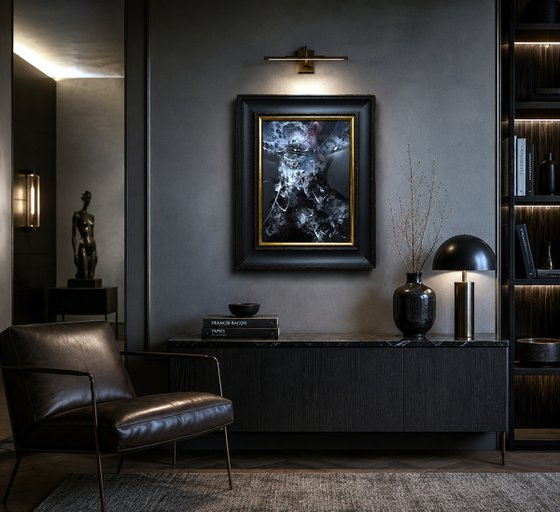
- Framed and ready to hang
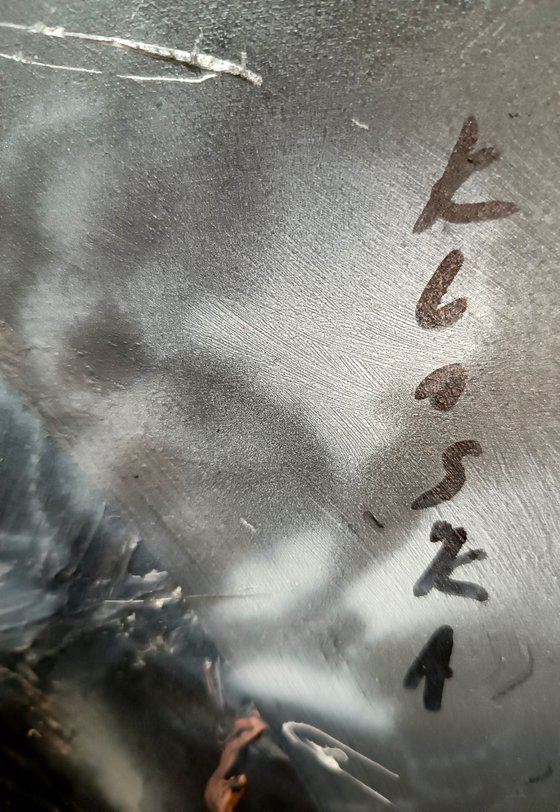
- Signed on the front
- Style: Expressive and gestural
- Subject: People and portraits
 Free returns
14 day money back guaranteeLearn more
Original artwork description
I Love to Eat Bacon, Too unfolds as a meditation on the instability of the contemporary portrait and on the exhaustion of deformation as a recognizable visual code within recent painting. The work belongs to a larger body of paintings developed through a long process of sedimentation, in which traces of earlier investigations into memory, urban erosion, material decay, and residual figuration gradually converge into a far more tense and self-aware pictorial language. Rather than functioning as a stylistic rupture, the painting radicalizes concerns already present throughout the artist’s previous series, transforming them into an unstable territory where image and matter continuously contaminate one another.
At the center of the composition, the figure appears only partially. It emerges from the surface like a damaged apparition, simultaneously forming and dissolving under the pressure of its own materiality. The portrait is no longer constructed through representation in the traditional sense, nor even through expressive distortion alone. Instead, the image undergoes a process of progressive erosion. Identity becomes fragile, uncertain, and unstable, as if the figure were being consumed from within by the very substance that produces it. The body survives merely as a residue — a spectral trace suspended between visibility and disappearance.
The title itself, I Love to Eat Bacon, Too, operates as an ironic and ambiguous gesture toward the overwhelming legacy of Francis Bacon and the institutional canonization of distorted figuration in contemporary art. Yet the work does not position itself as homage. On the contrary, it critically interrogates the transformation of trauma, anxiety, and bodily fragmentation into highly consumable aesthetic conventions within the international art system. The painting seems fully conscious of this historical burden and attempts to move beyond the theatricality of deformation that has become increasingly predictable within contemporary neo-expressionist painting.
What distinguishes the work is the relocation of tension away from expressive drama and into the very instability of the painted surface itself. The image behaves like a living, corroding organism. Anatomical fragments dissolve into atmospheric textures, while repetitive organic structures and cellular-like patterns invade the composition like parasitic forms or remnants of biological memory. At times, the surface resembles damaged photographic film, smoke, burned matter, or urban sediment accumulated over time. The painting becomes less an image to be read than a material field in constant transformation.
Dark tonalities, spectral greys, and bruised chromatic transitions create an atmosphere of emotional compression and visual silence. Abrupt white linear gestures cut violently across the surface, functioning almost like scars or electrical ruptures inside the image. Large areas of darkness operate not as empty space, but as zones of suspension and psychological pressure. The viewer is never granted complete access to the figure. Recognition remains unstable, oscillating continuously between apparition and loss.
In this sense, the painting resists the consumption of deformation as spectacle. Instead of offering expressive excess as visual performance, it proposes a vulnerable and ambiguous pictorial space where beauty coexists permanently with decay, memory, disappearance, and erosion. The work ultimately asks whether painting can still produce genuinely unsettling images at a moment when expressionism itself risks becoming absorbed by its own institutional success and aesthetic familiarity.
Materials used:
framed mixed tehnique on wooden panel varnished
Details:
- Mixed-media painting on Panel / Board / MDF
- One of a kind artwork
- Size: 58 x 67 x 2cm (framed) / 40 x 50cm (actual image size)
- Framed and ready to hang
- Signed on the front
- Style: Expressive and gestural
- Subject: People and portraits
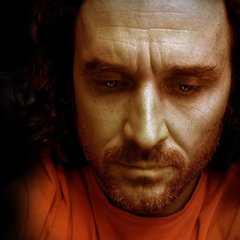
Kloska Ovidiu
Romania
About
Ovidiu Kloska – Biography & Curriculum Vitae
BiographyOvidiu Kloska (b. 1977, Romania) is a contemporary visual artist whose multidisciplinary practice spans painting, welded-steel sculpture, mixed media, and oniric conceptual photography. His... Read more