- Ryan Louder
- All Artworks
- In The Simulation
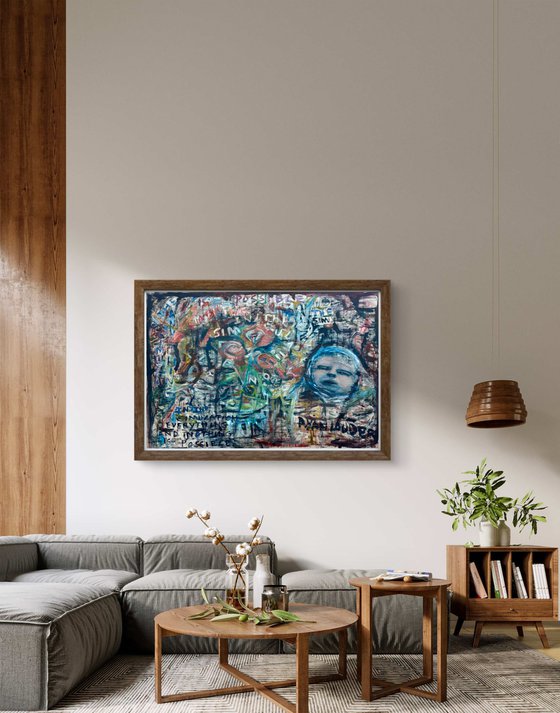
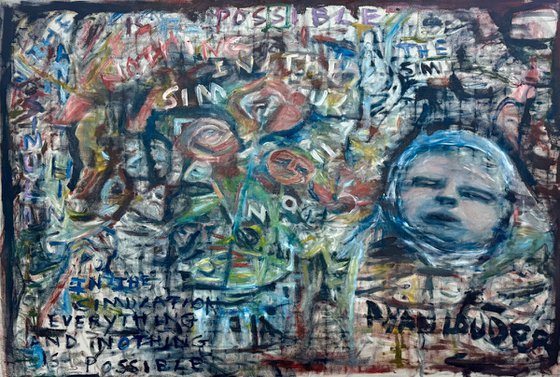
In The SimulationLimited edition print Paper Print
by Ryan Louder
£75.00
From an edition of 120
Size 22.86 x 30.48 cm (unframed)
Original artwork description
Signal Rating: 9/10 — Strong
Classification: Hallucinatory
This painting by Ryan Louder is part of a body of work shaped by his neurological condition — Narcolepsy with REM Intrusion Hallucinations, clinically confirmed via MSLT at Guy's Hospital, London. The work contains hallucinatory imagery — geometric form constants, phosphene-like patterns, and perceptual structures consistent with REM intrusion.
Neuroaesthetic markers identified: pareidolic embedding; Kluver form constants; boundary dissolution; identity fragmentation
These markers are not deliberate artistic techniques but direct visual recordings of what REM intrusion hallucinations look like. The imagery emerges from neurological experience, not metaphor. Ryan has painted over 2,000 works, with over 1,000 originals sold. Each painting in this collection has been subjected to neuroaesthetic forensic analysis to identify and catalogue the perceptual phenomena present.
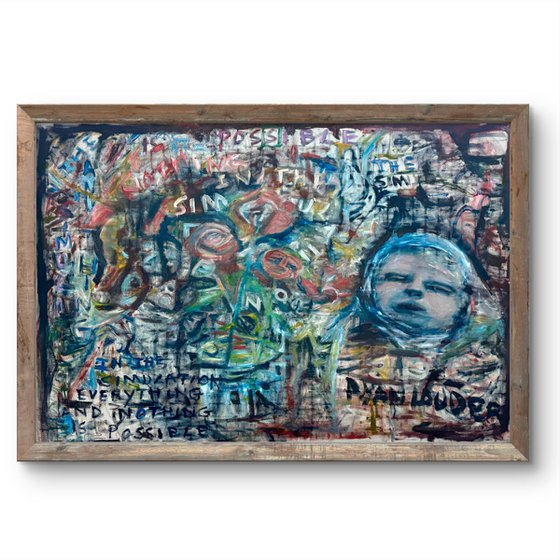
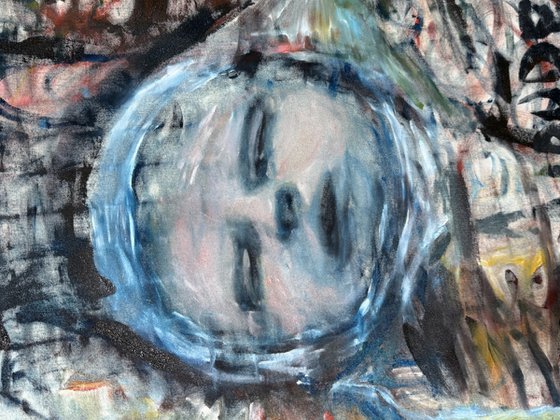
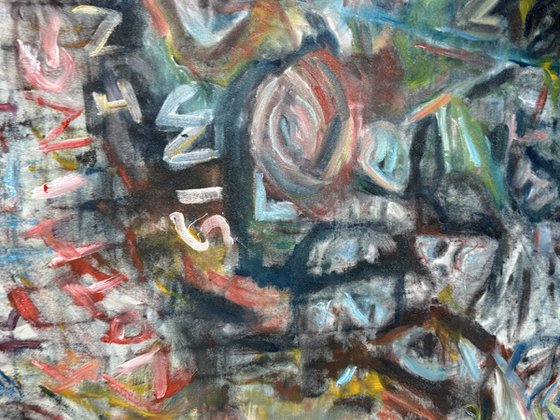
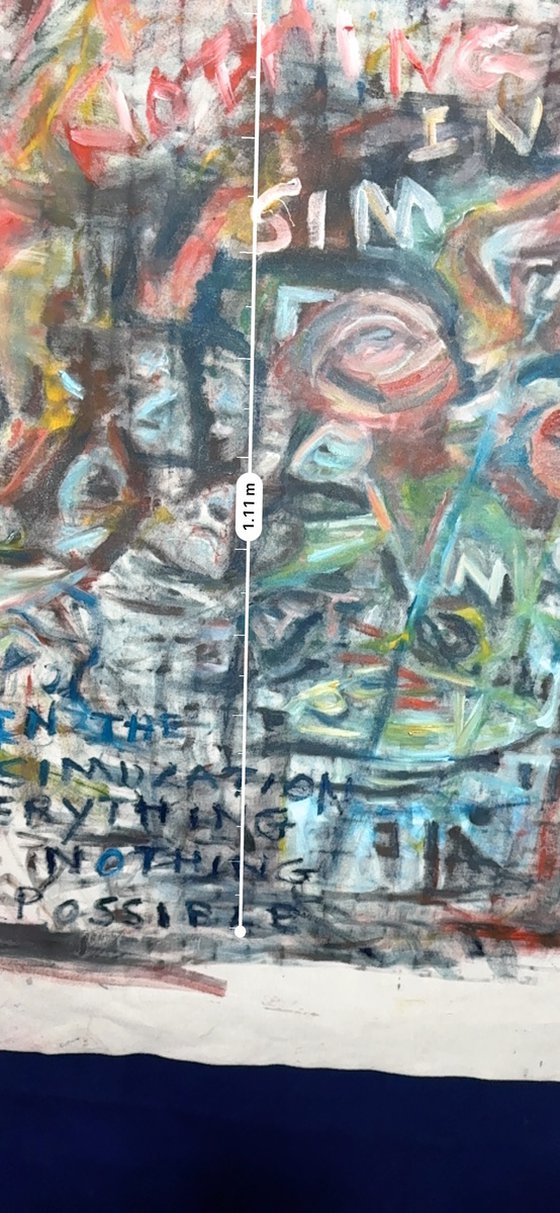
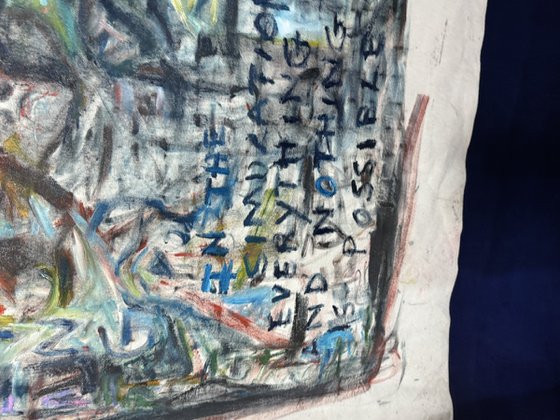
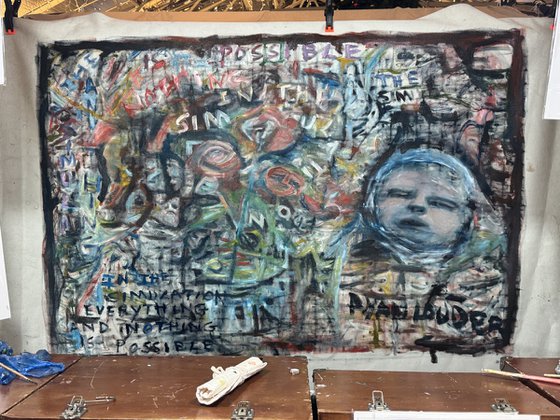
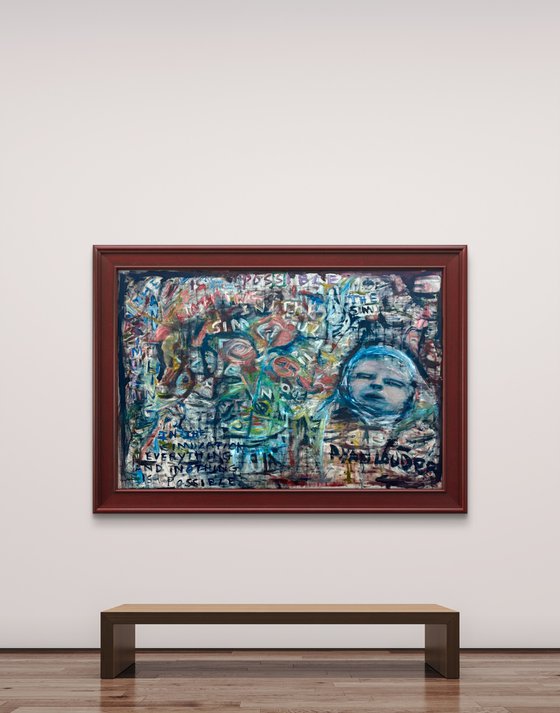
Text covers the canvas alongside paint — white chalky lettering reading fragments of 'in the simulation everything and nothing is possible,' distributed in multiple scales and orientations. The painted layer beneath consists of a reddish-ochre and grey base on which faces, partial figures, and abstract marks accumulate without resolving into coherent space. At the right, a blue circular form contains a clearly rendered face — bald, eyes closed, floated within it as if preserved. At the left, a larger face is partially absorbed into the field. The written text and painted content compete without hierarchy: neither serves as caption for the other; both are primary.
Materials used:
Oil
Details:
- Oil painting on Canvas
- One of a kind artwork
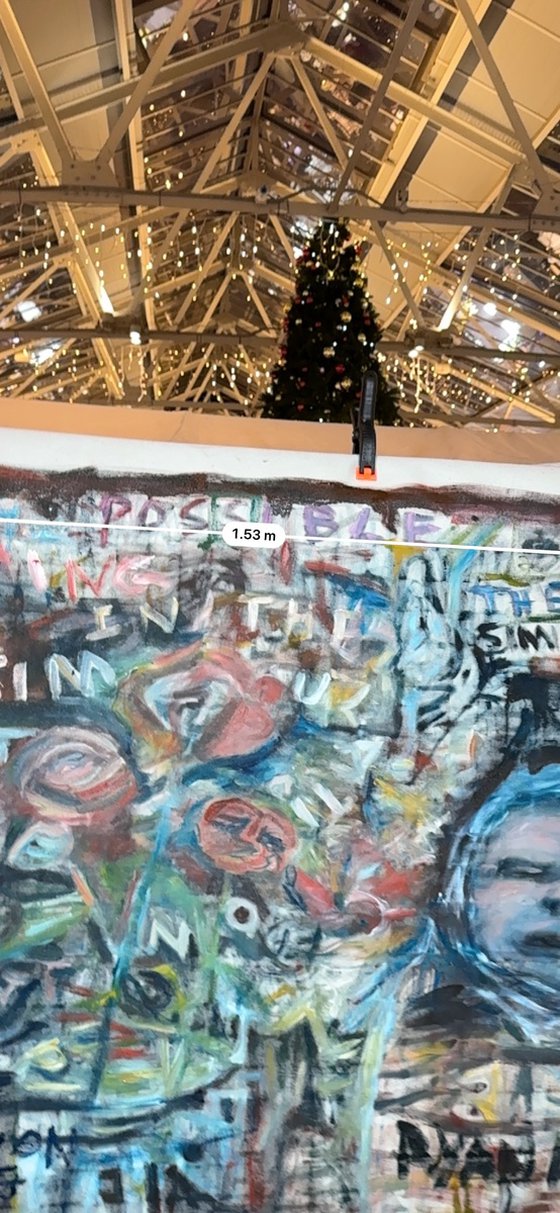
- Size: 153 x 110 x 0.2cm (unframed)
- Ready to hang
- Signed on the front
- Style: Expressive and gestural
- Subject: Abstract and non-figurative
 Free returns
14 day money back guaranteeLearn more
Original artwork description
Signal Rating: 9/10 — Strong
Classification: Hallucinatory
This painting by Ryan Louder is part of a body of work shaped by his neurological condition — Narcolepsy with REM Intrusion Hallucinations, clinically confirmed via MSLT at Guy's Hospital, London. The work contains hallucinatory imagery — geometric form constants, phosphene-like patterns, and perceptual structures consistent with REM intrusion.
Neuroaesthetic markers identified: pareidolic embedding; Kluver form constants; boundary dissolution; identity fragmentation
These markers are not deliberate artistic techniques but direct visual recordings of what REM intrusion hallucinations look like. The imagery emerges from neurological experience, not metaphor. Ryan has painted over 2,000 works, with over 1,000 originals sold. Each painting in this collection has been subjected to neuroaesthetic forensic analysis to identify and catalogue the perceptual phenomena present.
Text covers the canvas alongside paint — white chalky lettering reading fragments of 'in the simulation everything and nothing is possible,' distributed in multiple scales and orientations. The painted layer beneath consists of a reddish-ochre and grey base on which faces, partial figures, and abstract marks accumulate without resolving into coherent space. At the right, a blue circular form contains a clearly rendered face — bald, eyes closed, floated within it as if preserved. At the left, a larger face is partially absorbed into the field. The written text and painted content compete without hierarchy: neither serves as caption for the other; both are primary.
Materials used:
Oil
Details:
- Oil painting on Canvas
- One of a kind artwork
- Size: 153 x 110 x 0.2cm (unframed)
- Ready to hang
- Signed on the front
- Style: Expressive and gestural
- Subject: Abstract and non-figurative
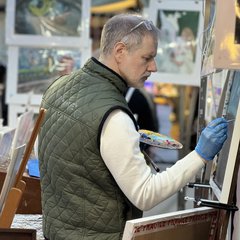
Ryan Louder
United Kingdom
About
Ryan Louder paints dreams in real time. Close to one thousand originals sold over a career spanning more than ten years. Independent forensic visual analysis of 873 of his paintings... Read more