- Kloska Ovidiu
- All Artworks
- I love to eat Bacon, too #7
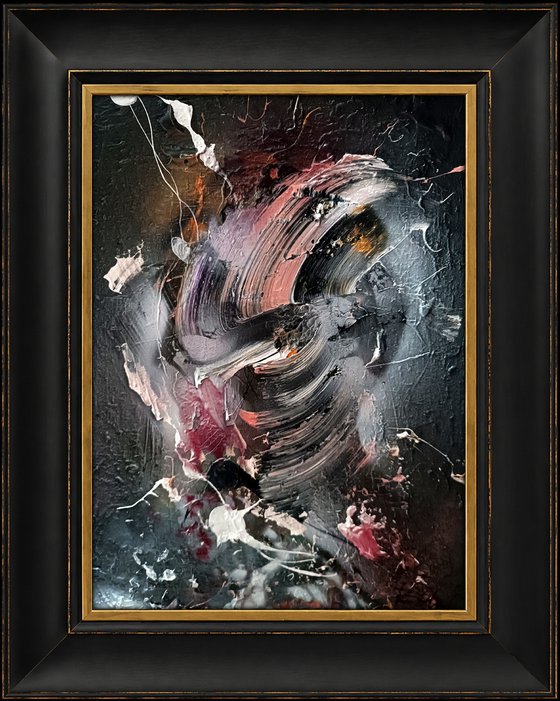
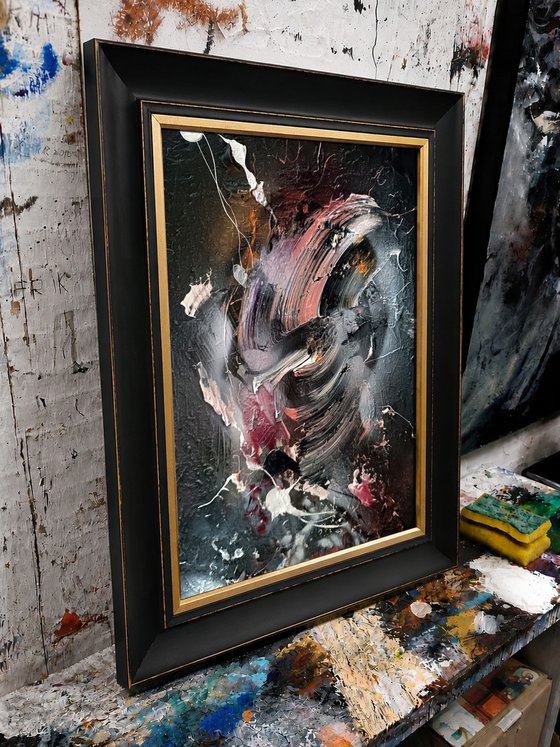
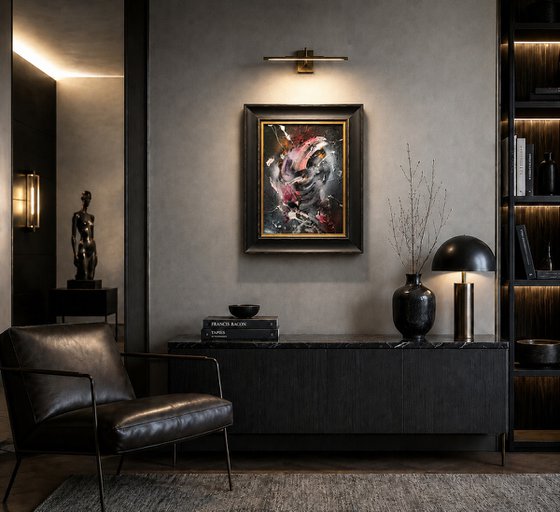
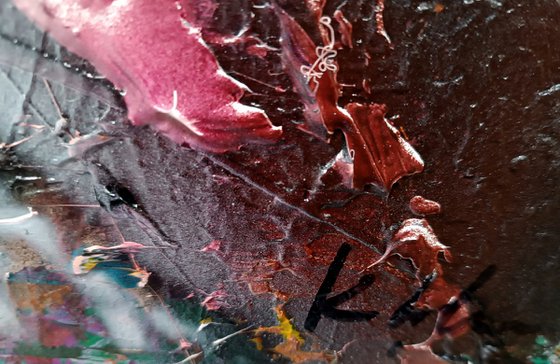
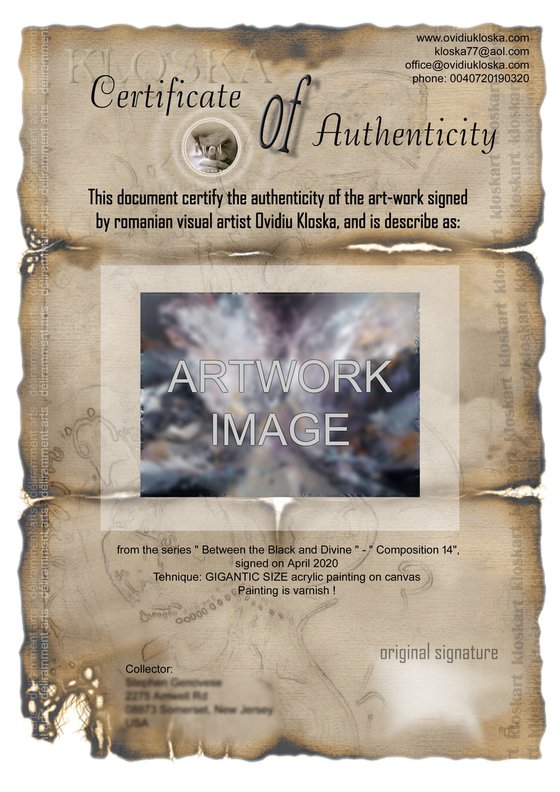
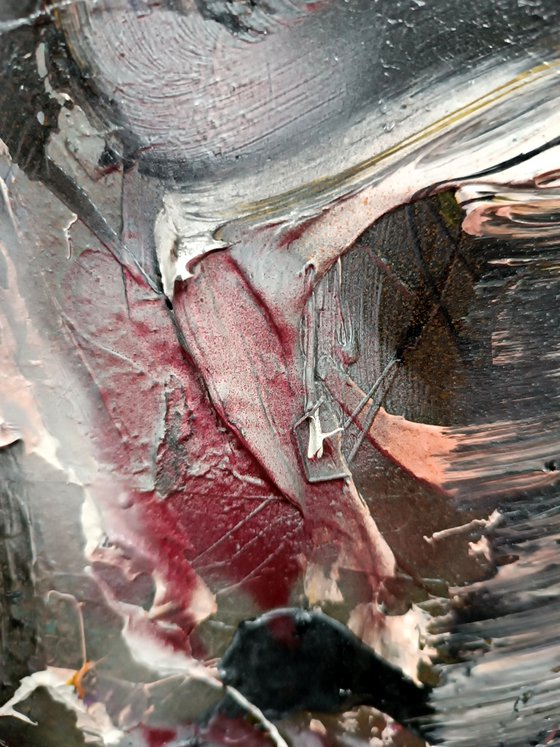
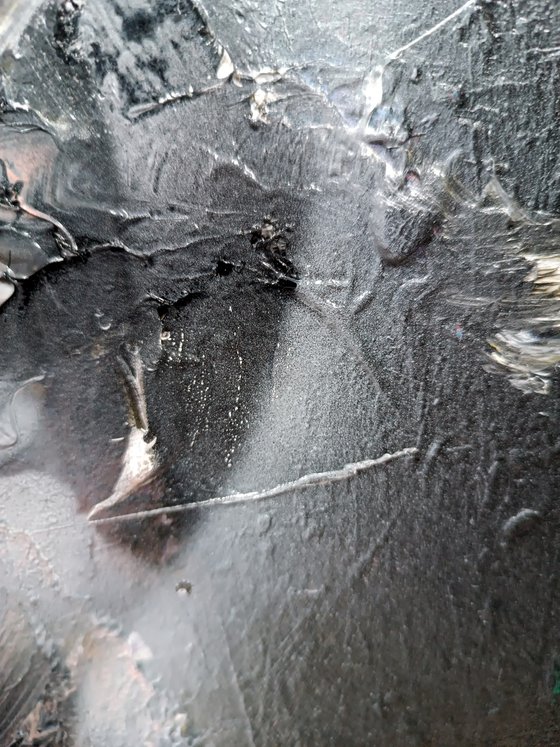
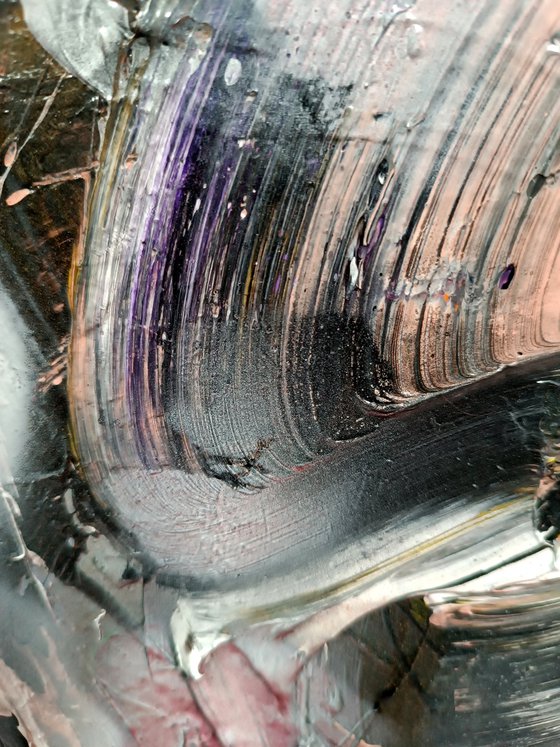
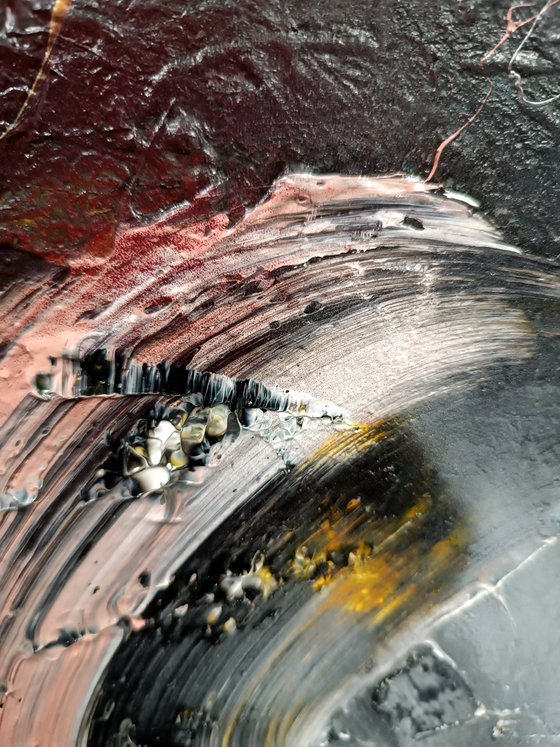
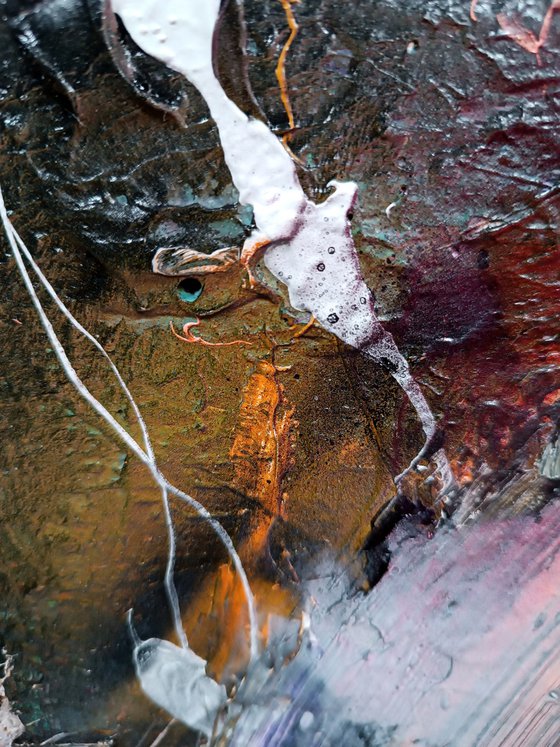
I love to eat Bacon, too #7 (2026) Original Mixed-media Painting by Kloska Ovidiu
50 x 62 x 2cm (framed) / 32 x 45cm (actual image size)
£1,618.9
Original artwork description
There are moments when the human figure ceases to exist as a body and becomes pure emotional residue. I Love to Eat Bacon Too #7 inhabits precisely this unstable territory — a place where identity collapses under the pressure of gesture, memory, and psychological fragmentation.
The portrait emerges violently from darkness, only to dissolve again into layers of smeared pigment, scratches, ruptures, and suspended marks. Nothing here feels fixed. The face appears as if caught in a state of perpetual mutation — neither fully constructed nor entirely erased. What remains is not likeness, but tension: the raw imprint of a presence resisting disappearance.
Unlike traditional portraiture, the work refuses anatomical certainty. The figure is distorted through sweeping gestures that carve through the surface with an almost surgical aggression. Thick movements of black, grey, pale flesh tones, and deep crimson create a vortex-like structure where the human image becomes unstable, haunted by its own transformation. The paint itself behaves like living matter — dragged, compressed, wounded, and reanimated across the panel.
The surrounding darkness plays a critical role. It does not function as background, but as psychological space: an absorbing void against which the fractured figure briefly surfaces before sinking back into obscurity. Splashes of white interrupt the composition like nervous impulses or fragmented memories, while subtle traces of warmth buried beneath the surface evoke something disturbingly human still struggling to survive.
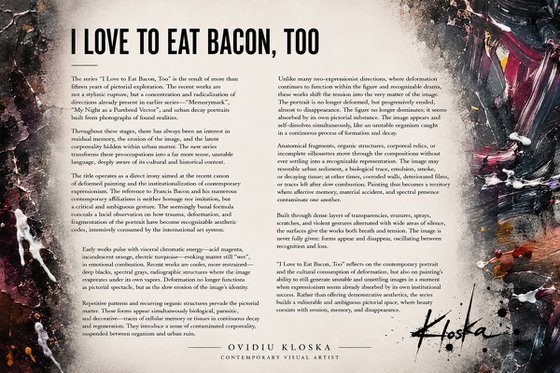
The series I Love to Eat Bacon Too does not reference consumption literally, but existentially. It explores the ways identity is consumed — by memory, violence, time, self-awareness, and the relentless pressure of being perceived. Echoes of psychological deformation and contemporary expressionism resonate throughout the work, yet the visual language remains deeply personal and instinctive.
More than a painting, #7 operates as a confrontation. It demands proximity. The closer the viewer moves toward the surface, the more the image destabilizes, oscillating between attraction and discomfort, intimacy and annihilation. In this ambiguity lies the core of the work’s power: the portrait no longer serves as representation, but as evidence — a visceral trace of human presence suspended on the edge of dissolution.
Materials used:
framed mixed on wooden panel varnished
Details:
- Mixed-media painting on Panel / Board / MDF
- One of a kind artwork
- Size: 50 x 62 x 2cm (framed) / 32 x 45cm (actual image size)
- Framed and ready to hang
- Signed on the front
- Style: Expressive and gestural
- Subject: People and portraits
 Free returns
14 day money back guaranteeLearn more
Original artwork description
There are moments when the human figure ceases to exist as a body and becomes pure emotional residue. I Love to Eat Bacon Too #7 inhabits precisely this unstable territory — a place where identity collapses under the pressure of gesture, memory, and psychological fragmentation.
The portrait emerges violently from darkness, only to dissolve again into layers of smeared pigment, scratches, ruptures, and suspended marks. Nothing here feels fixed. The face appears as if caught in a state of perpetual mutation — neither fully constructed nor entirely erased. What remains is not likeness, but tension: the raw imprint of a presence resisting disappearance.
Unlike traditional portraiture, the work refuses anatomical certainty. The figure is distorted through sweeping gestures that carve through the surface with an almost surgical aggression. Thick movements of black, grey, pale flesh tones, and deep crimson create a vortex-like structure where the human image becomes unstable, haunted by its own transformation. The paint itself behaves like living matter — dragged, compressed, wounded, and reanimated across the panel.
The surrounding darkness plays a critical role. It does not function as background, but as psychological space: an absorbing void against which the fractured figure briefly surfaces before sinking back into obscurity. Splashes of white interrupt the composition like nervous impulses or fragmented memories, while subtle traces of warmth buried beneath the surface evoke something disturbingly human still struggling to survive.
The series I Love to Eat Bacon Too does not reference consumption literally, but existentially. It explores the ways identity is consumed — by memory, violence, time, self-awareness, and the relentless pressure of being perceived. Echoes of psychological deformation and contemporary expressionism resonate throughout the work, yet the visual language remains deeply personal and instinctive.
More than a painting, #7 operates as a confrontation. It demands proximity. The closer the viewer moves toward the surface, the more the image destabilizes, oscillating between attraction and discomfort, intimacy and annihilation. In this ambiguity lies the core of the work’s power: the portrait no longer serves as representation, but as evidence — a visceral trace of human presence suspended on the edge of dissolution.
Materials used:
framed mixed on wooden panel varnished
Details:
- Mixed-media painting on Panel / Board / MDF
- One of a kind artwork
- Size: 50 x 62 x 2cm (framed) / 32 x 45cm (actual image size)
- Framed and ready to hang
- Signed on the front
- Style: Expressive and gestural
- Subject: People and portraits

Kloska Ovidiu
Romania
About
Ovidiu Kloska – Biography & Curriculum Vitae
BiographyOvidiu Kloska (b. 1977, Romania) is a contemporary visual artist whose multidisciplinary practice spans painting, welded-steel sculpture, mixed media, and oniric conceptual photography. His... Read more