- Kloska Ovidiu
- All Artworks
- I love to eat Bacon, Too #6
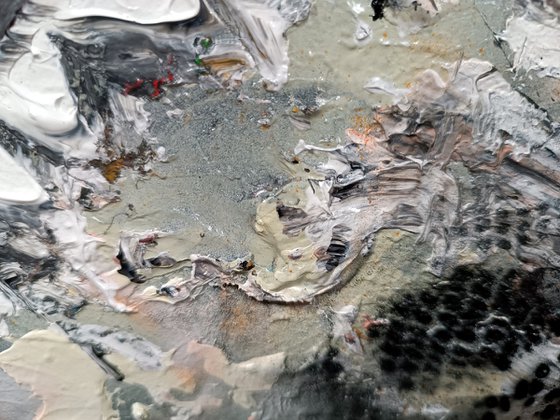
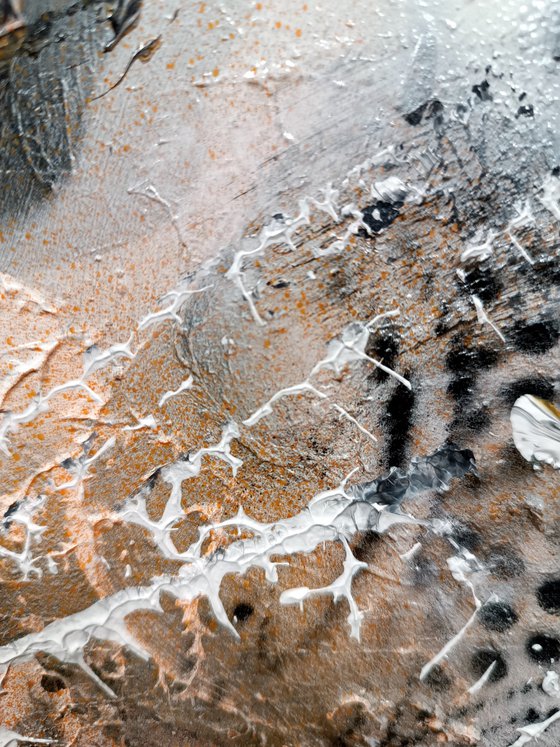
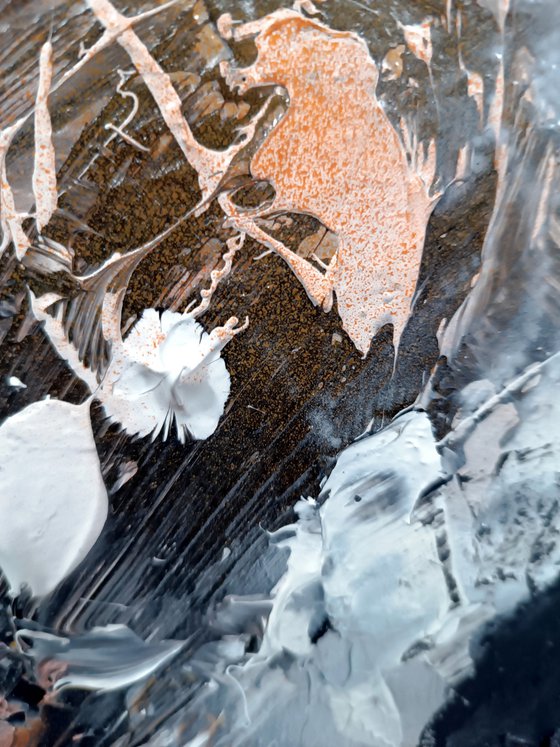
I love to eat Bacon, Too #6 (2026) Original Mixed-media Painting by Kloska Ovidiu
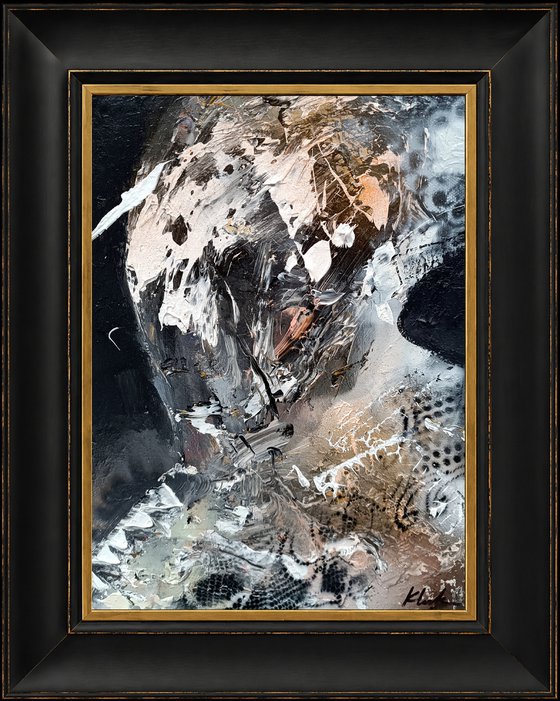
50 x 61 x 2cm (framed) / 32 x 45cm (actual image size)
Now £924.9£1,541.5
40% off sale. Sale ends in 21 days 9 hours
Original artwork description
I Love to Eat Bacon, Too #6
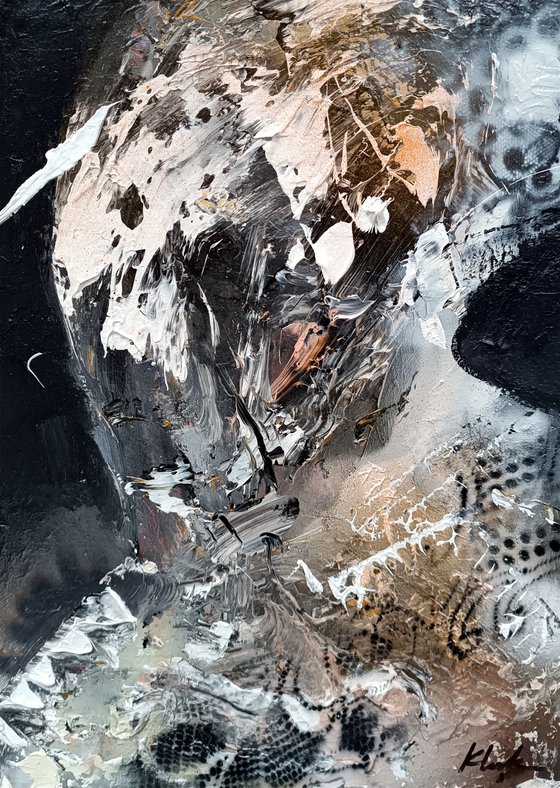
There are paintings that are constructed, and there are paintings that are discovered. I Love to Eat Bacon, Too #6 belongs to the latter category. The image does not seem painted in the traditional sense of the word; rather, it appears extracted from an accumulation of traces, textures, and fragments of visual memory. Behind this apparition lies, perhaps more than the influence of Francis Bacon, the experience of years spent observing the surfaces upon which time leaves its unmistakable signature.
The work retains something of the spirit of photographic explorations dedicated to urban decay, where peeling plaster, successive layers of paint, rust, and erosion become not merely signs of deterioration but genuine forms of beauty. Looking at this portrait, one has the impression that the figure is born not from drawing or anatomy, but from the very substance of time itself. The face seems unearthed from an old wall, from a surface shaped by rain, light, and years acting as anonymous artists.
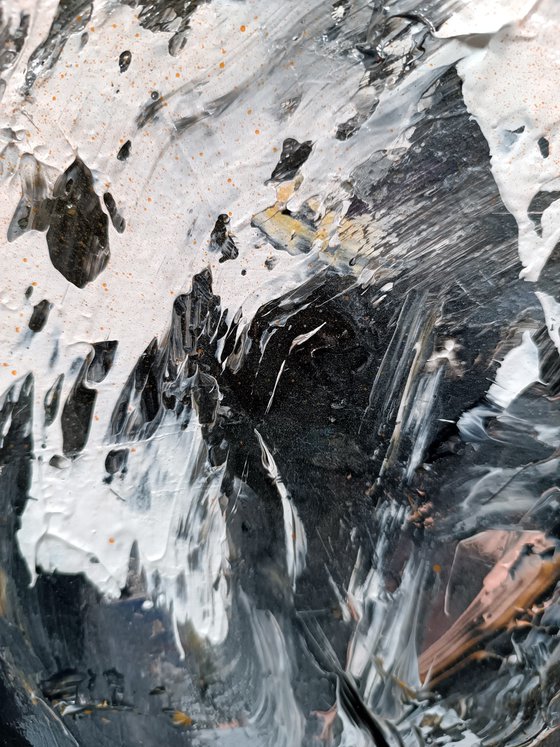
The figure appears and disappears simultaneously. A human profile begins to emerge through dense whites, mineral greys, and earthy tones, only to dissolve again into the flow of painterly matter. The eye searches for certainty, yet the image prefers ambiguity. At one moment we perceive a portrait; at the next, a mask, a relic, a ghostly presence, or even a geological formation. This instability does not weaken the image. On the contrary, it grants it a rare vitality, keeping it perpetually alive and open to interpretation.
The painted surface functions like an archaeological site. Each layer preserves the memory of another. Scratches, overlaps, and controlled accidents create the sensation that the image has been recovered rather than invented. There is something profoundly contemporary in the freedom of the gesture, yet something strangely ancient as well, as if the painting had already lived through its own history before arriving before the viewer.
The title introduces a note of irony and freedom. Bacon is no longer merely the name of one of the great innovators of modern portraiture; it becomes a playful cultural reference, absorbed and transformed. Influence is not quoted here—it is metabolized. It reappears in a personal form, filtered through experience, memory, and experimentation.
Yet what fundamentally distinguishes this work from the dramatic tension often associated with Bacon’s universe is its emotional tone. The figure does not appear torn apart, assaulted, or trapped within an existential conflict. Quite the opposite. It feels recovered. As though the image had been waiting, hidden within the layers of matter, for the right moment to return to the surface. There is an unexpected tenderness in this apparition, a luminous melancholy that transforms ruin into a place of revelation.
Perhaps the true subject of the painting is not the portrait itself, but the very emergence of an image. That mysterious moment when the mind begins to recognize a presence within a chaos of marks, stains, and fragments. Just as we discover faces in weathered walls, eroded surfaces, or clouds drifting across the sky, this figure seems to arise spontaneously from the material of the painting. The work activates one of the oldest mechanisms of human perception: the impulse to find presence where there appears to be only matter.
This ability to oscillate between abstraction and figuration, between accident and intention, between memory and discovery, gives the painting its distinctive power. The image does not exhaust its mystery at first glance. It continues to transform alongside the gaze of the viewer. With every return, new details emerge, new associations form, and new interpretations become possible.
Within the I Love to Eat Bacon, Too series, this work may be seen as a point of convergence. It brings together concerns cultivated over many years: an interest in surfaces marked by time, the experience of photography, a fascination with controlled chance, the relationship between abstraction and figuration, and a trust in the image’s ability to reveal itself. Nothing feels forced, nothing demonstrative. Everything retains the freshness of a discovery.
I Love to Eat Bacon, Too #6 is a celebration of accidental beauty and of the memory hidden within things. A portrait that seems to emerge from erosion, from time, and from the deeply human capacity to find meaning in fragments. Within the tension between appearance and disappearance, ruin and freshness, abstraction and figuration, the work discovers its poetic force. It is one of those rare images that seem to have existed before they were painted and that, for this very reason, continue to inhabit the viewer’s memory long after the encounter has ended.
Materials used:
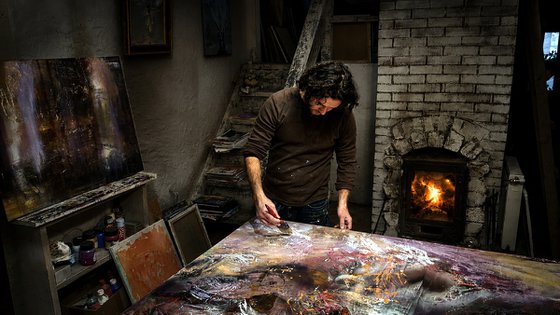
mixed tehnique on wooden panel framed varnished
Details:
- Mixed-media painting on Panel / Board / MDF
- One of a kind artwork
- Size: 50 x 61 x 2cm (framed) / 32 x 45cm (actual image size)
- Framed and ready to hang
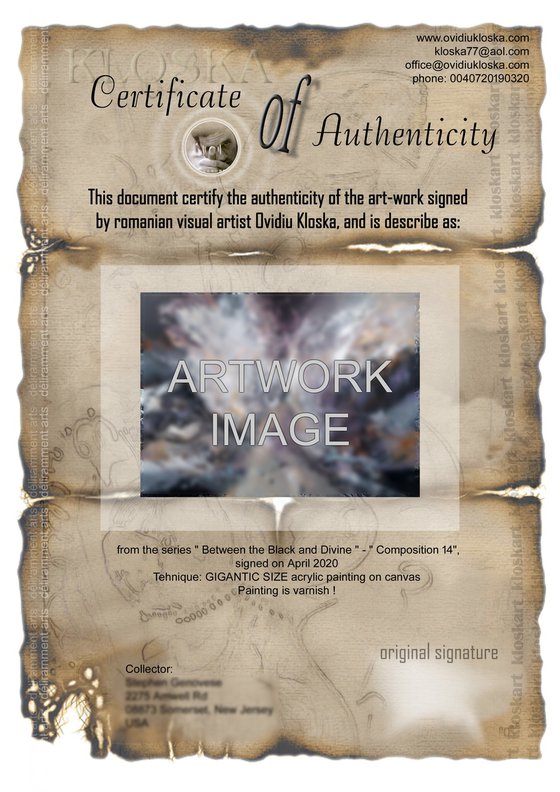
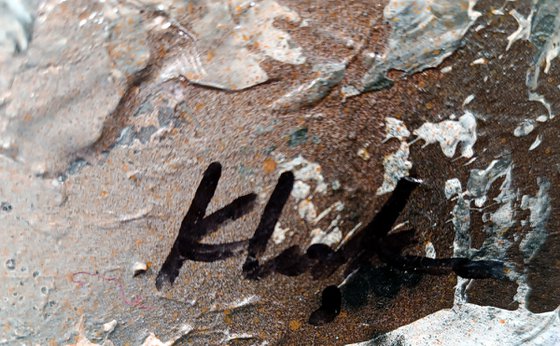
- Signed on the front
- Style: Expressive and gestural
- Subject: People and portraits
 Free returns
14 day money back guaranteeLearn more
Original artwork description
I Love to Eat Bacon, Too #6
There are paintings that are constructed, and there are paintings that are discovered. I Love to Eat Bacon, Too #6 belongs to the latter category. The image does not seem painted in the traditional sense of the word; rather, it appears extracted from an accumulation of traces, textures, and fragments of visual memory. Behind this apparition lies, perhaps more than the influence of Francis Bacon, the experience of years spent observing the surfaces upon which time leaves its unmistakable signature.
The work retains something of the spirit of photographic explorations dedicated to urban decay, where peeling plaster, successive layers of paint, rust, and erosion become not merely signs of deterioration but genuine forms of beauty. Looking at this portrait, one has the impression that the figure is born not from drawing or anatomy, but from the very substance of time itself. The face seems unearthed from an old wall, from a surface shaped by rain, light, and years acting as anonymous artists.
The figure appears and disappears simultaneously. A human profile begins to emerge through dense whites, mineral greys, and earthy tones, only to dissolve again into the flow of painterly matter. The eye searches for certainty, yet the image prefers ambiguity. At one moment we perceive a portrait; at the next, a mask, a relic, a ghostly presence, or even a geological formation. This instability does not weaken the image. On the contrary, it grants it a rare vitality, keeping it perpetually alive and open to interpretation.
The painted surface functions like an archaeological site. Each layer preserves the memory of another. Scratches, overlaps, and controlled accidents create the sensation that the image has been recovered rather than invented. There is something profoundly contemporary in the freedom of the gesture, yet something strangely ancient as well, as if the painting had already lived through its own history before arriving before the viewer.
The title introduces a note of irony and freedom. Bacon is no longer merely the name of one of the great innovators of modern portraiture; it becomes a playful cultural reference, absorbed and transformed. Influence is not quoted here—it is metabolized. It reappears in a personal form, filtered through experience, memory, and experimentation.
Yet what fundamentally distinguishes this work from the dramatic tension often associated with Bacon’s universe is its emotional tone. The figure does not appear torn apart, assaulted, or trapped within an existential conflict. Quite the opposite. It feels recovered. As though the image had been waiting, hidden within the layers of matter, for the right moment to return to the surface. There is an unexpected tenderness in this apparition, a luminous melancholy that transforms ruin into a place of revelation.
Perhaps the true subject of the painting is not the portrait itself, but the very emergence of an image. That mysterious moment when the mind begins to recognize a presence within a chaos of marks, stains, and fragments. Just as we discover faces in weathered walls, eroded surfaces, or clouds drifting across the sky, this figure seems to arise spontaneously from the material of the painting. The work activates one of the oldest mechanisms of human perception: the impulse to find presence where there appears to be only matter.
This ability to oscillate between abstraction and figuration, between accident and intention, between memory and discovery, gives the painting its distinctive power. The image does not exhaust its mystery at first glance. It continues to transform alongside the gaze of the viewer. With every return, new details emerge, new associations form, and new interpretations become possible.
Within the I Love to Eat Bacon, Too series, this work may be seen as a point of convergence. It brings together concerns cultivated over many years: an interest in surfaces marked by time, the experience of photography, a fascination with controlled chance, the relationship between abstraction and figuration, and a trust in the image’s ability to reveal itself. Nothing feels forced, nothing demonstrative. Everything retains the freshness of a discovery.
I Love to Eat Bacon, Too #6 is a celebration of accidental beauty and of the memory hidden within things. A portrait that seems to emerge from erosion, from time, and from the deeply human capacity to find meaning in fragments. Within the tension between appearance and disappearance, ruin and freshness, abstraction and figuration, the work discovers its poetic force. It is one of those rare images that seem to have existed before they were painted and that, for this very reason, continue to inhabit the viewer’s memory long after the encounter has ended.
Materials used:
mixed tehnique on wooden panel framed varnished
Details:
- Mixed-media painting on Panel / Board / MDF
- One of a kind artwork
- Size: 50 x 61 x 2cm (framed) / 32 x 45cm (actual image size)
- Framed and ready to hang
- Signed on the front
- Style: Expressive and gestural
- Subject: People and portraits

Kloska Ovidiu
Romania
About
Ovidiu Kloska – Biography & Curriculum Vitae
BiographyOvidiu Kloska (b. 1977, Romania) is a contemporary visual artist whose multidisciplinary practice spans painting, welded-steel sculpture, mixed media, and oniric conceptual photography. His... Read more