- Kloska Ovidiu
- All Artworks
- I love to eat Bacon, too #4
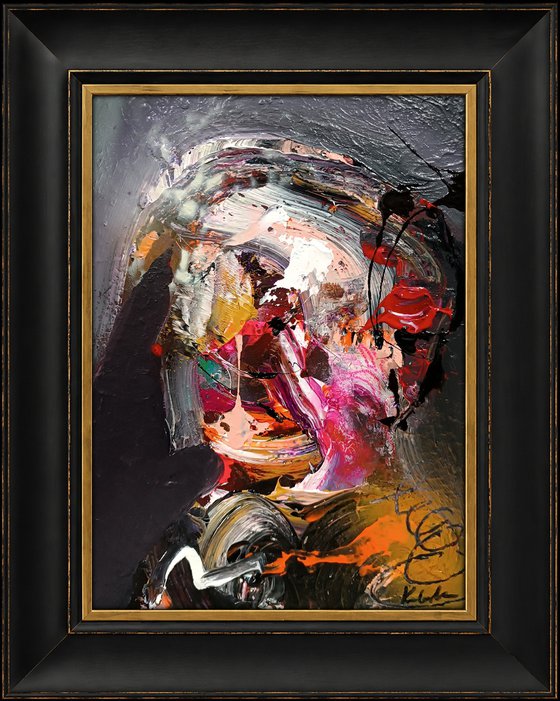
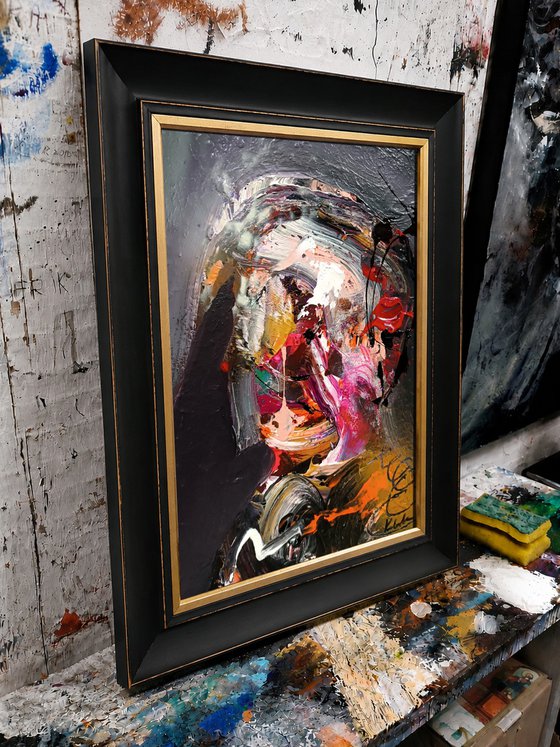
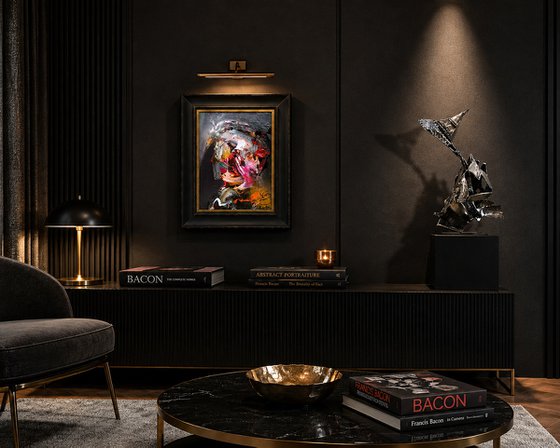
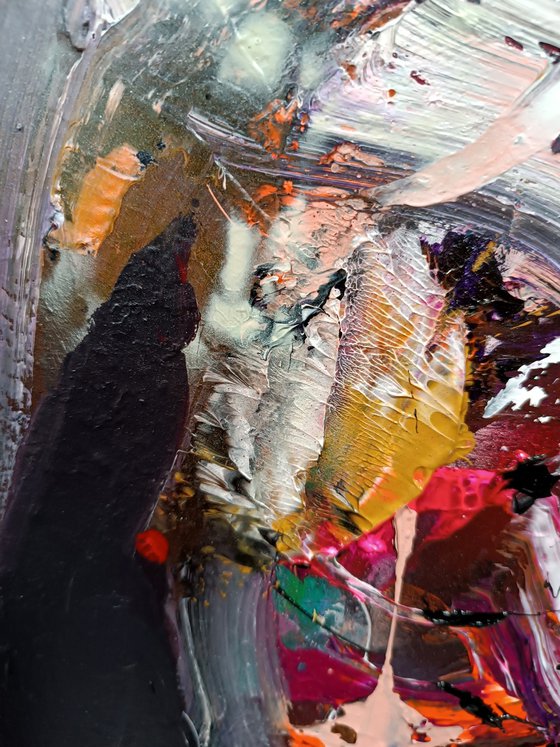
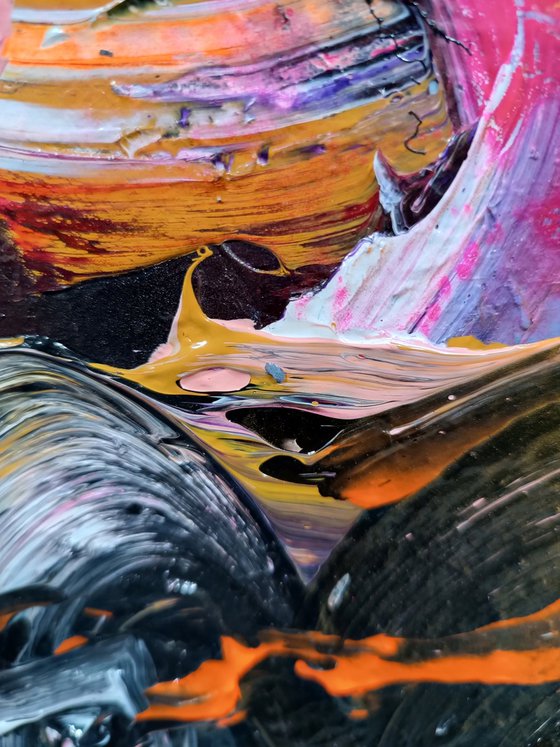
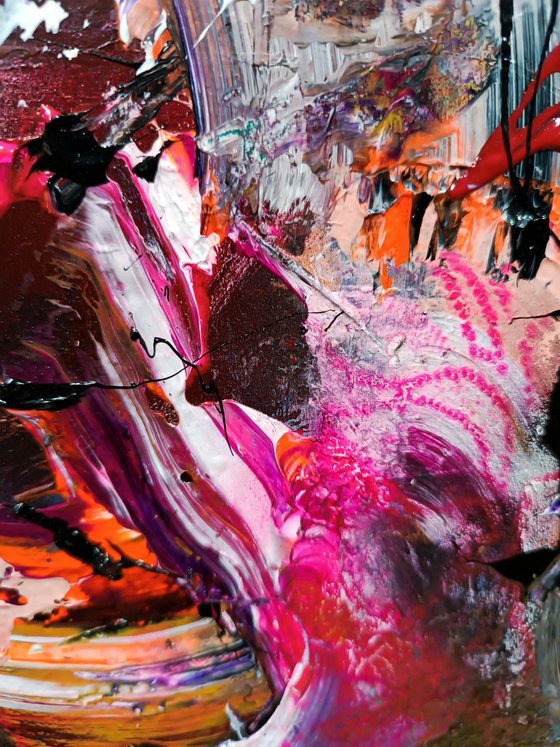
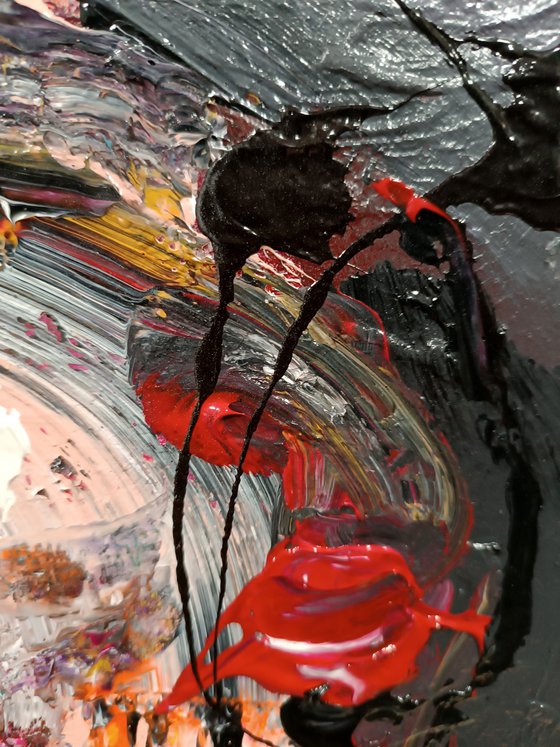
I love to eat Bacon, too #4 (2026) Original Mixed-media Painting by Kloska Ovidiu
50 x 62 x 2cm (framed) / 32 x 45cm (actual image size)
Now £769.95£1,283.25
40% off sale. Sale ends in 0 minutes
Original artwork description
I Love to Eat Bacon Too #4 operates within a rare territory: one in which portraiture no longer describes identity, but becomes its incandescent residue. The work rejects stable anatomy and transforms the figure into a field of psychological collisions, where the painted matter itself seems pushed to the limits of physical endurance. This is not a portrait in the traditional sense, but an unstable apparition suspended between memory, flesh, and accident.
Within this series, the reference to Francis Bacon does not function as stylistic homage, but rather as a point of departure for a contemporary renegotiation of violence within the image. If Bacon compressed the figure into tense existential spaces, here the face appears to erupt from within, absorbing gesture, incision, and chromatic sediment into a raw emotional topography. Paint does not merely cover the surface — it assaults it, fractures it, continuously reconstructs it. It is precisely this tension between control and collapse that gives the work its magnetic force.
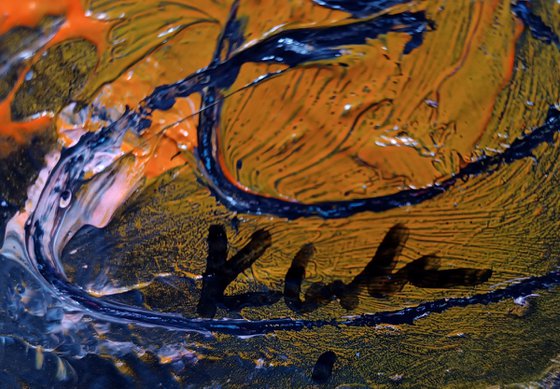
The relatively intimate scale of the painting paradoxically intensifies its visual impact. The viewer is compelled to move closer, entering into an almost uncomfortably personal relationship with the surface. From a distance, the composition pulses like an unstable organic mass; up close, it reveals micro-gestures of near calligraphic sophistication. The work operates simultaneously on two registers: visceral and cerebral.
The chromatic palette — where violent reds, incandescent pinks, and eruptive oranges collide with dense greys and nearly carbonized blacks — creates the sensation of an image caught in a perpetual process of emergence and self-destruction. The figure is not represented so much as brutally extracted from the chaos of painterly matter itself. It is precisely this instability that generates the emotional tension of the piece.
There is something profoundly contemporary at play here: the image no longer seeks faithful representation, but intensity. The series transforms portraiture into a fluid psychological territory where identity exists as matter in continuous combustion. In an era saturated with polished, instantly consumable imagery, these works reclaim the right to ambiguity, density, and fertile discomfort.
This enigmatic painting does not ask for passive contemplation. It demands involvement. Almost confrontation. And that is precisely why it lingers in the mind long after the gaze has turned away.
Materials used:
framed mixed media on wooden panel varnished
Details:
- Mixed-media painting on Panel / Board / MDF
- One of a kind artwork
- Size: 50 x 62 x 2cm (framed) / 32 x 45cm (actual image size)
- Framed and ready to hang
- Signed on the front
- Style: Expressive and gestural
- Subject: People and portraits
 Free returns
14 day money back guaranteeLearn more
Original artwork description
I Love to Eat Bacon Too #4 operates within a rare territory: one in which portraiture no longer describes identity, but becomes its incandescent residue. The work rejects stable anatomy and transforms the figure into a field of psychological collisions, where the painted matter itself seems pushed to the limits of physical endurance. This is not a portrait in the traditional sense, but an unstable apparition suspended between memory, flesh, and accident.
Within this series, the reference to Francis Bacon does not function as stylistic homage, but rather as a point of departure for a contemporary renegotiation of violence within the image. If Bacon compressed the figure into tense existential spaces, here the face appears to erupt from within, absorbing gesture, incision, and chromatic sediment into a raw emotional topography. Paint does not merely cover the surface — it assaults it, fractures it, continuously reconstructs it. It is precisely this tension between control and collapse that gives the work its magnetic force.
The relatively intimate scale of the painting paradoxically intensifies its visual impact. The viewer is compelled to move closer, entering into an almost uncomfortably personal relationship with the surface. From a distance, the composition pulses like an unstable organic mass; up close, it reveals micro-gestures of near calligraphic sophistication. The work operates simultaneously on two registers: visceral and cerebral.
The chromatic palette — where violent reds, incandescent pinks, and eruptive oranges collide with dense greys and nearly carbonized blacks — creates the sensation of an image caught in a perpetual process of emergence and self-destruction. The figure is not represented so much as brutally extracted from the chaos of painterly matter itself. It is precisely this instability that generates the emotional tension of the piece.
There is something profoundly contemporary at play here: the image no longer seeks faithful representation, but intensity. The series transforms portraiture into a fluid psychological territory where identity exists as matter in continuous combustion. In an era saturated with polished, instantly consumable imagery, these works reclaim the right to ambiguity, density, and fertile discomfort.
This enigmatic painting does not ask for passive contemplation. It demands involvement. Almost confrontation. And that is precisely why it lingers in the mind long after the gaze has turned away.
Materials used:
framed mixed media on wooden panel varnished
Details:
- Mixed-media painting on Panel / Board / MDF
- One of a kind artwork
- Size: 50 x 62 x 2cm (framed) / 32 x 45cm (actual image size)
- Framed and ready to hang
- Signed on the front
- Style: Expressive and gestural
- Subject: People and portraits

Kloska Ovidiu
Romania
About
Ovidiu Kloska – Biography & Curriculum Vitae
BiographyOvidiu Kloska (b. 1977, Romania) is a contemporary visual artist whose multidisciplinary practice spans painting, welded-steel sculpture, mixed media, and oniric conceptual photography. His... Read more