- Kloska Ovidiu
- All Artworks
- I love to eat Bacon, too 2
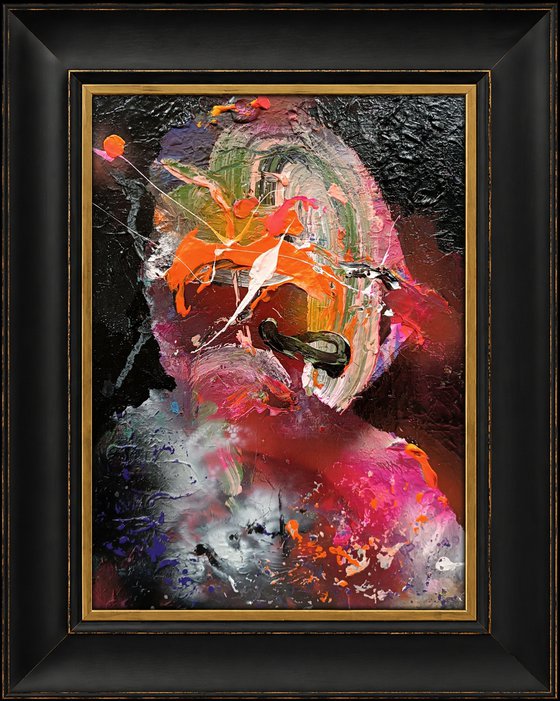
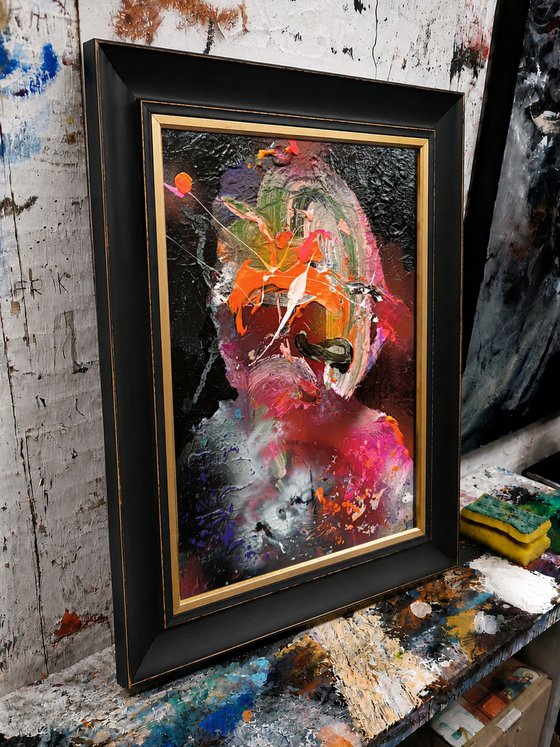
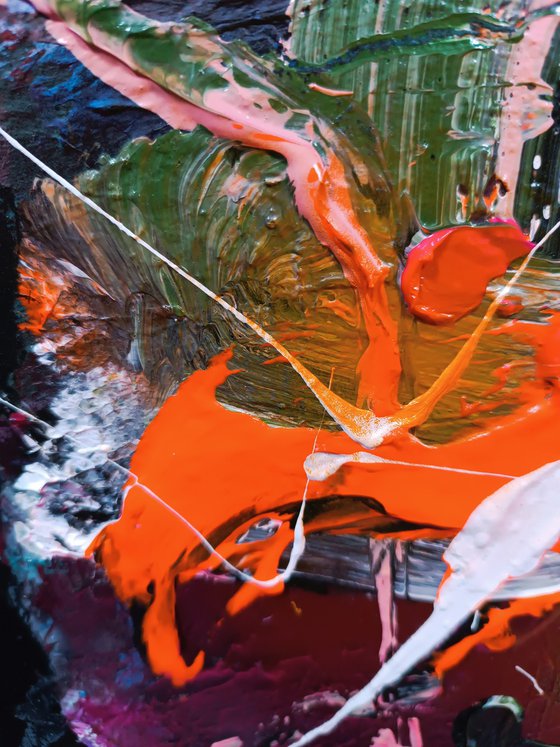
I love to eat Bacon, too 2 (2026) Original Mixed-media Painting by Kloska Ovidiu
50 x 62 x 2cm (framed) / 32 x 45cm (actual image size)
£2,068.8
Original artwork description
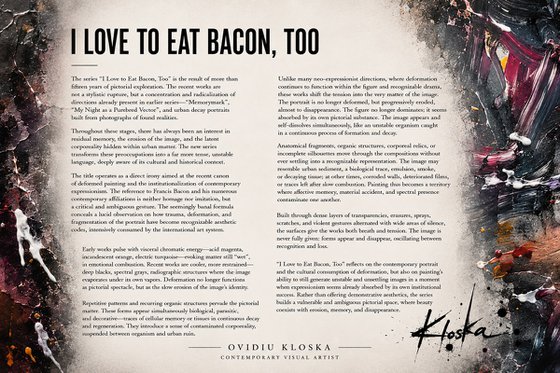
There are faces that cannot be painted frontally.
Faces that refuse clear anatomy, fixed identity, or the comfort of a stable outline. They emerge fragmented, like a violent memory suspended somewhere between lucidity and dissolution. In this work, the figure is not represented — it is excavated. Brought violently to the surface through gesture, accident, matter, and tension.
This series explores portraiture as an unstable psychological territory. There is no interest in resemblance, fidelity, or conventional beauty. The body becomes merely a pretext. What ultimately remains essential is the emotional residue: the internal impact of human presence when identity begins to fracture.
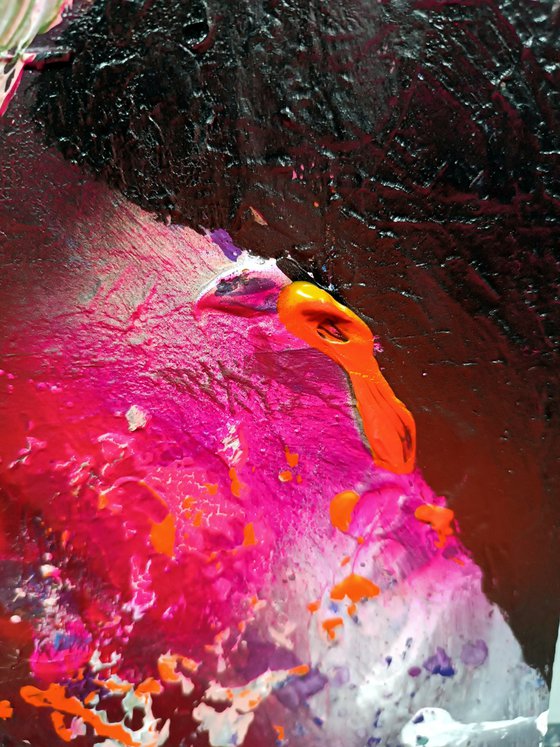
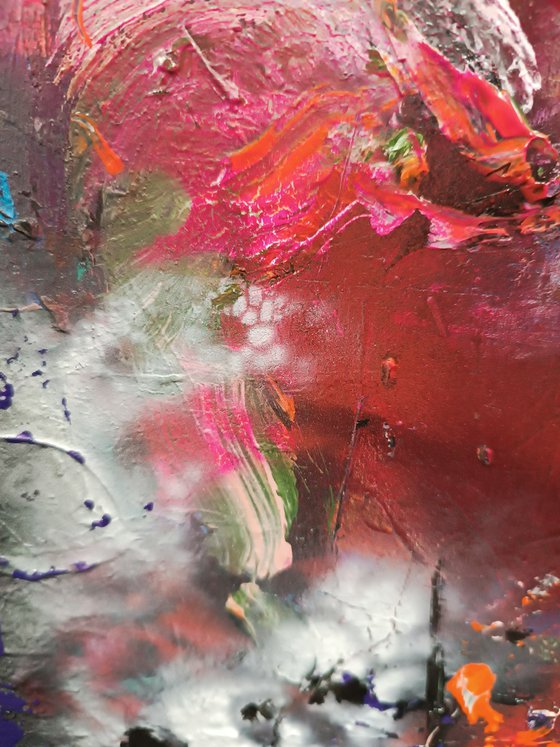
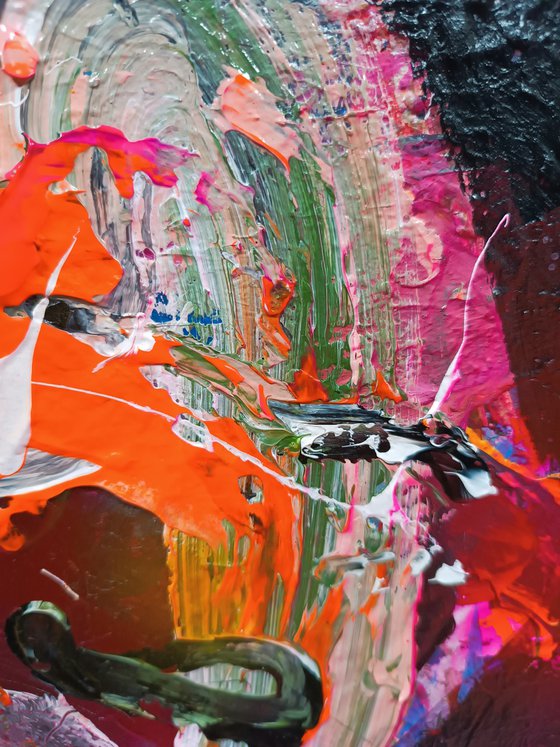
The dense layers of paint function like sediments of memory. Areas of black absorb the image almost to the point of disappearance, while eruptions of orange, crimson, and incandescent white provoke the viewer into reconstructing a face that continuously refuses to stabilize. The figure appears and withdraws simultaneously, suspended between emergence and destruction.
The work intentionally preserves traces of brutal gesture: thick accumulations of matter, scratches, drips, and interventions that verge on aggression. These are not decorative effects, but evidence of a direct confrontation with the surface itself. Painting becomes a space of conflict rather than representation — a place where the image is forced into existence.
Echoes of contemporary expressionism and psychological deformation may be subtly perceived, yet the visual language remains deeply personal. The human figure is no longer treated as a subject, but as an unstable phenomenon — vulnerable, visceral, and impossible to fully control.
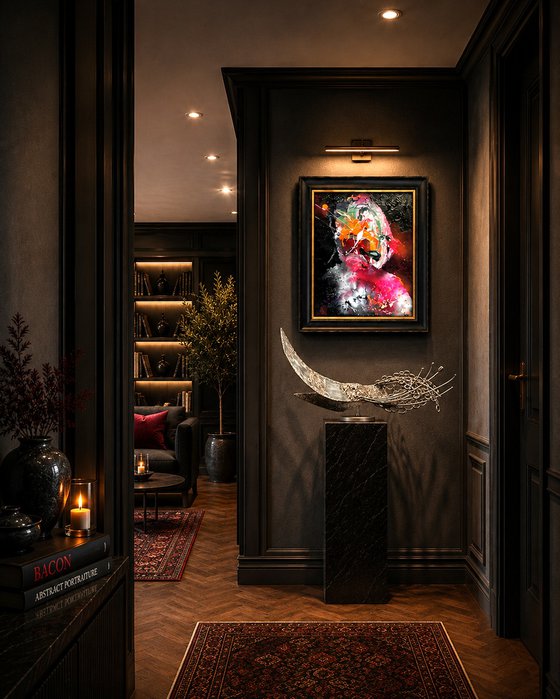
In relation to space, the work operates almost like a presence. It does not decorate the interior; it destabilizes it. The viewer is drawn into an uncomfortable, hypnotic dialogue between attraction and rejection. It is precisely within this ambiguous territory that the strength of the series emerges: a place where beauty and decay coexist without compromise.
These portraits do not ask to be understood immediately. They ask only for time, proximity, and the willingness to look beyond the figure — toward what remains of a human being once the mask begins to disintegrate.
Materials used:
mixed media on wooden panel framed varnished
Details:
- Mixed-media painting on Panel / Board / MDF
- One of a kind artwork
- Size: 50 x 62 x 2cm (framed) / 32 x 45cm (actual image size)
- Framed and ready to hang
- Signed on the front
- Style: Expressive and gestural
- Subject: People and portraits
 Free returns
14 day money back guaranteeLearn more
Original artwork description
There are faces that cannot be painted frontally.
Faces that refuse clear anatomy, fixed identity, or the comfort of a stable outline. They emerge fragmented, like a violent memory suspended somewhere between lucidity and dissolution. In this work, the figure is not represented — it is excavated. Brought violently to the surface through gesture, accident, matter, and tension.
This series explores portraiture as an unstable psychological territory. There is no interest in resemblance, fidelity, or conventional beauty. The body becomes merely a pretext. What ultimately remains essential is the emotional residue: the internal impact of human presence when identity begins to fracture.
The dense layers of paint function like sediments of memory. Areas of black absorb the image almost to the point of disappearance, while eruptions of orange, crimson, and incandescent white provoke the viewer into reconstructing a face that continuously refuses to stabilize. The figure appears and withdraws simultaneously, suspended between emergence and destruction.
The work intentionally preserves traces of brutal gesture: thick accumulations of matter, scratches, drips, and interventions that verge on aggression. These are not decorative effects, but evidence of a direct confrontation with the surface itself. Painting becomes a space of conflict rather than representation — a place where the image is forced into existence.
Echoes of contemporary expressionism and psychological deformation may be subtly perceived, yet the visual language remains deeply personal. The human figure is no longer treated as a subject, but as an unstable phenomenon — vulnerable, visceral, and impossible to fully control.
In relation to space, the work operates almost like a presence. It does not decorate the interior; it destabilizes it. The viewer is drawn into an uncomfortable, hypnotic dialogue between attraction and rejection. It is precisely within this ambiguous territory that the strength of the series emerges: a place where beauty and decay coexist without compromise.
These portraits do not ask to be understood immediately. They ask only for time, proximity, and the willingness to look beyond the figure — toward what remains of a human being once the mask begins to disintegrate.
Materials used:
mixed media on wooden panel framed varnished
Details:
- Mixed-media painting on Panel / Board / MDF
- One of a kind artwork
- Size: 50 x 62 x 2cm (framed) / 32 x 45cm (actual image size)
- Framed and ready to hang
- Signed on the front
- Style: Expressive and gestural
- Subject: People and portraits
Kloska Ovidiu
Romania
About
Ovidiu Kloska – Biography & Curriculum Vitae
BiographyOvidiu Kloska (b. 1977, Romania) is a contemporary visual artist whose multidisciplinary practice spans painting, welded-steel sculpture, mixed media, and oniric conceptual photography. His... Read more