- Kloska Ovidiu
- All Artworks
- I love to eat Bacon, too #11
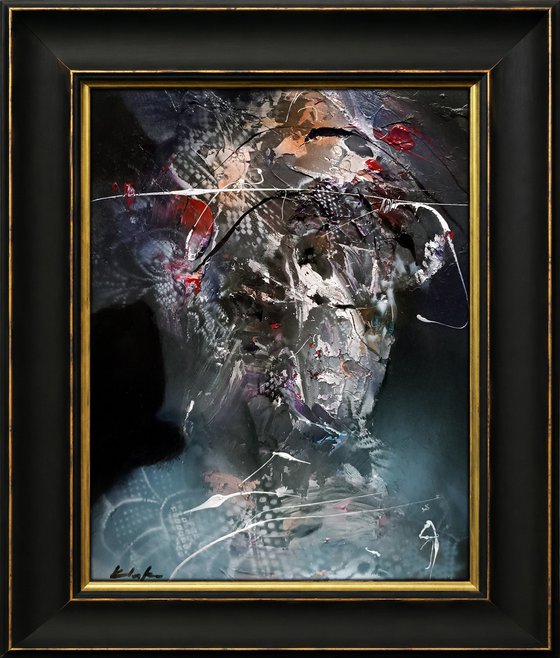
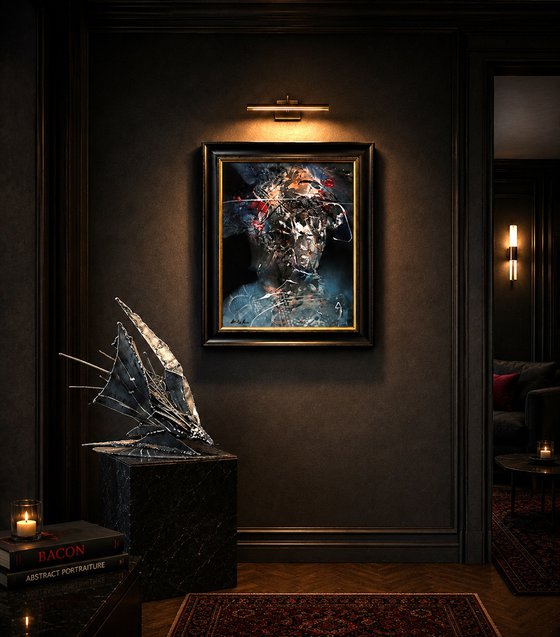
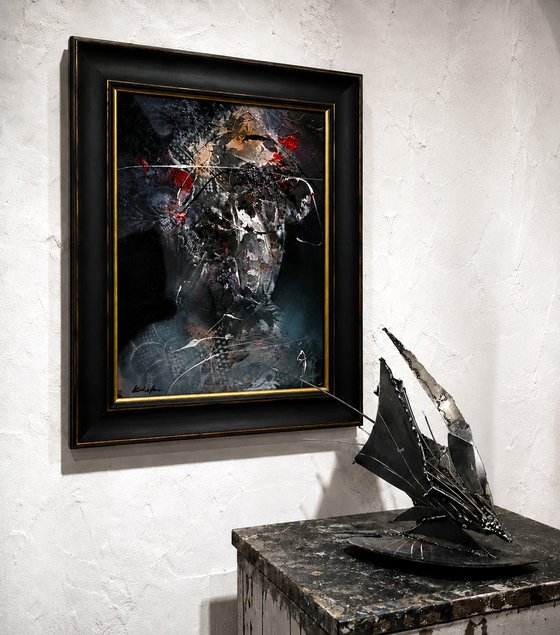
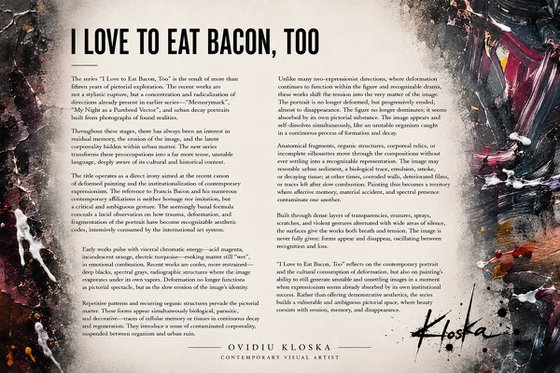
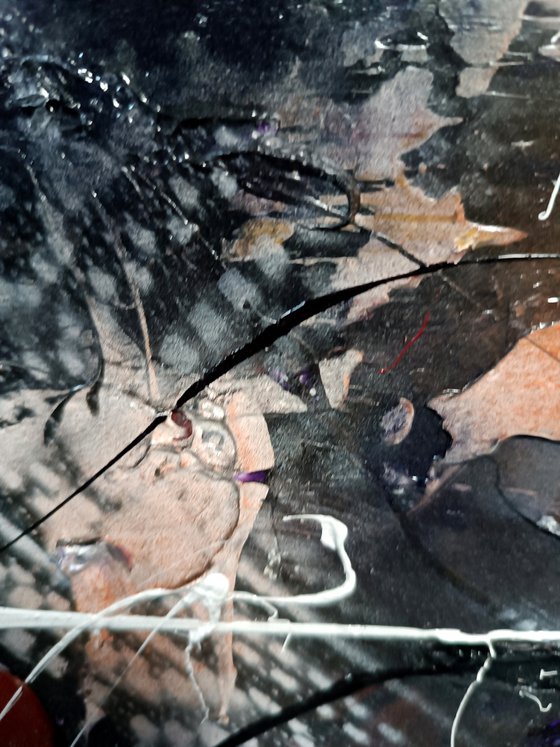
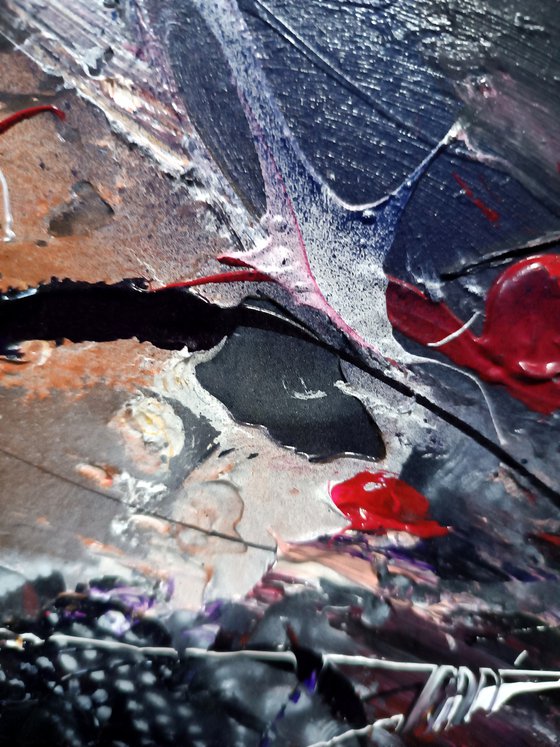
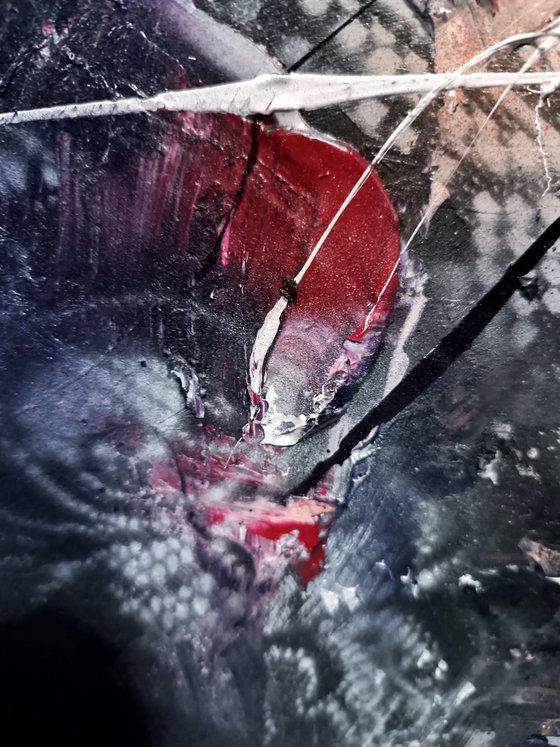
I love to eat Bacon, too #11 (2026) Original Mixed-media Painting by Kloska Ovidiu
57 x 67 x 2cm (framed) / 40 x 50cm (actual image size)
£2,758.4
Original artwork description
I Love to Eat Bacon, Too #11
mixed media on wood panel / 57 × 67 cm / signed May 2026
“I Love to Eat Bacon, Too” is not a series about portraiture in the classical sense.
It is an exploration of identity caught in a continuous process of degradation, reconstruction, and dissolution. The face no longer functions as a faithful representation, but as a psychological territory — a space where memory, instinct, and matter exist in constant conflict.
In Ovidiu Kloska’s works, the human figure is not described, but destabilized. The portrait becomes a fragile apparition, suspended between formation and disappearance, between presence and erosion. The image seems captured precisely at the moment it attempts to organize itself while simultaneously self-destructing.
This tension is what makes his works immediately recognizable.
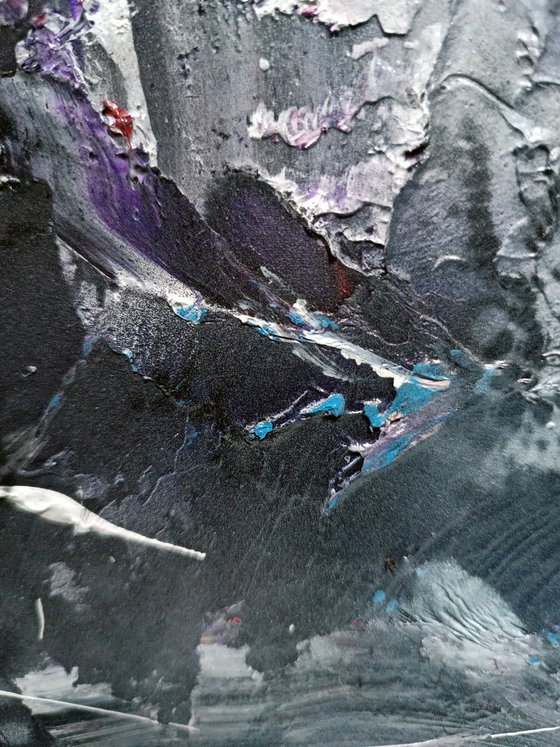
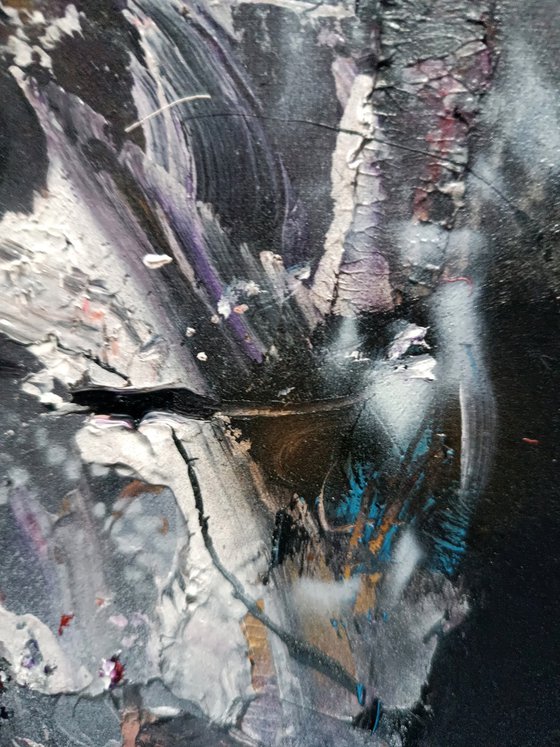
There is within these compositions a deeply personal visual vocabulary: the dark backgrounds that absorb the edges of the figure, the tense white lines cutting across the surface like nervous impulses, the visceral red accents organically embedded into the material, and the dense, almost corroded texture where the painting appears at times like excavation, at times like wound, at times like emotional sediment.
But the uniqueness of these portraits does not emerge solely from their formal language.
It comes from the profound contradiction they contain.
The works are simultaneously brutal and elegant.
Violent and refined.
Instinctive, yet extremely controlled.
Beneath the sophisticated orchestration of light and composition, there is always a primitive, almost animalistic energy. It is precisely this friction between control and accident that generates the intensity of the images.
The Baconian influence is present, yet it never functions as mere stylistic reference. In Kloska’s work, this legacy becomes the starting point for a deeply contemporary language in which the human figure no longer appears as a distorted body, but as fragmented, altered, unstable identity. The portrait becomes corrupted emotional memory.
Many of the works carry the sensation that the image oscillates between the analog and the post-human. The textures simultaneously evoke gestural painting, industrial erosion, digital glitch, and deteriorated photography. The faces appear scanned, deformed, and reconstructed by an unstable emotional intelligence.
This is where the profoundly contemporary nature of the series emerges.
Very few artists manage to combine material expressionism with such a cinematic aesthetic. In Kloska’s work, each painting functions like a fragment extracted from an unseen psychological narrative. Light does not illuminate the figure directly; it slowly extracts it from darkness, like an incomplete apparition. Shadow does not conceal the image — it generates it.
At the same time, the compositions maintain a rare curatorial elegance. Even within the most tense painterly passages, there is an extraordinarily precise understanding of visual rhythm. Nothing feels arbitrary. The chaos is orchestrated.
Perhaps this is also Ovidiu Kloska’s distinctive signature: the ability to transform disintegration into a form of visual seduction.
These works do not ask for compassion, nor do they operate confessionally in the traditional sense. They seduce before they wound. The viewer is initially drawn in by the beauty of the image, by its almost cinematic atmosphere, only later discovering the fragility and latent violence embedded within the figure.
The series “I Love to Eat Bacon, Too” also introduces a subtle ironic dimension. The title appears playful and irreverent, yet conceals a deeper reflection on influence, cultural memory, and the impossibility of escaping the history of painting. “Eating Bacon” becomes the metaphor of an artist who absorbs his influences so completely that he metabolizes them into an entirely personal, recognizable, and unmistakable visual language.
These works do not attempt to represent the contemporary human condition.
They attempt to create the psychological sensation of being contemporary.
Materials used:
framed mixed media on wooden panel varnished
Details:
- Mixed-media painting on Panel / Board / MDF
- One of a kind artwork
- Size: 57 x 67 x 2cm (framed) / 40 x 50cm (actual image size)
- Framed and ready to hang
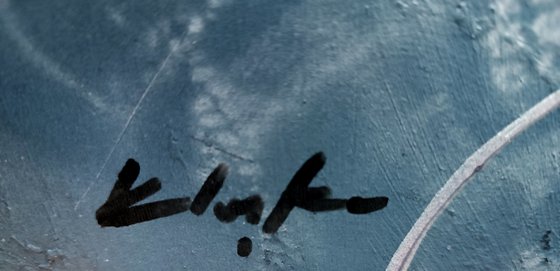
- Signed on the front
- Style: Expressive and gestural
- Subject: People and portraits
 Free returns
14 day money back guaranteeLearn more
Original artwork description
I Love to Eat Bacon, Too #11
mixed media on wood panel / 57 × 67 cm / signed May 2026
“I Love to Eat Bacon, Too” is not a series about portraiture in the classical sense.
It is an exploration of identity caught in a continuous process of degradation, reconstruction, and dissolution. The face no longer functions as a faithful representation, but as a psychological territory — a space where memory, instinct, and matter exist in constant conflict.
In Ovidiu Kloska’s works, the human figure is not described, but destabilized. The portrait becomes a fragile apparition, suspended between formation and disappearance, between presence and erosion. The image seems captured precisely at the moment it attempts to organize itself while simultaneously self-destructing.
This tension is what makes his works immediately recognizable.
There is within these compositions a deeply personal visual vocabulary: the dark backgrounds that absorb the edges of the figure, the tense white lines cutting across the surface like nervous impulses, the visceral red accents organically embedded into the material, and the dense, almost corroded texture where the painting appears at times like excavation, at times like wound, at times like emotional sediment.
But the uniqueness of these portraits does not emerge solely from their formal language.
It comes from the profound contradiction they contain.
The works are simultaneously brutal and elegant.
Violent and refined.
Instinctive, yet extremely controlled.
Beneath the sophisticated orchestration of light and composition, there is always a primitive, almost animalistic energy. It is precisely this friction between control and accident that generates the intensity of the images.
The Baconian influence is present, yet it never functions as mere stylistic reference. In Kloska’s work, this legacy becomes the starting point for a deeply contemporary language in which the human figure no longer appears as a distorted body, but as fragmented, altered, unstable identity. The portrait becomes corrupted emotional memory.
Many of the works carry the sensation that the image oscillates between the analog and the post-human. The textures simultaneously evoke gestural painting, industrial erosion, digital glitch, and deteriorated photography. The faces appear scanned, deformed, and reconstructed by an unstable emotional intelligence.
This is where the profoundly contemporary nature of the series emerges.
Very few artists manage to combine material expressionism with such a cinematic aesthetic. In Kloska’s work, each painting functions like a fragment extracted from an unseen psychological narrative. Light does not illuminate the figure directly; it slowly extracts it from darkness, like an incomplete apparition. Shadow does not conceal the image — it generates it.
At the same time, the compositions maintain a rare curatorial elegance. Even within the most tense painterly passages, there is an extraordinarily precise understanding of visual rhythm. Nothing feels arbitrary. The chaos is orchestrated.
Perhaps this is also Ovidiu Kloska’s distinctive signature: the ability to transform disintegration into a form of visual seduction.
These works do not ask for compassion, nor do they operate confessionally in the traditional sense. They seduce before they wound. The viewer is initially drawn in by the beauty of the image, by its almost cinematic atmosphere, only later discovering the fragility and latent violence embedded within the figure.
The series “I Love to Eat Bacon, Too” also introduces a subtle ironic dimension. The title appears playful and irreverent, yet conceals a deeper reflection on influence, cultural memory, and the impossibility of escaping the history of painting. “Eating Bacon” becomes the metaphor of an artist who absorbs his influences so completely that he metabolizes them into an entirely personal, recognizable, and unmistakable visual language.
These works do not attempt to represent the contemporary human condition.
They attempt to create the psychological sensation of being contemporary.
Materials used:
framed mixed media on wooden panel varnished
Details:
- Mixed-media painting on Panel / Board / MDF
- One of a kind artwork
- Size: 57 x 67 x 2cm (framed) / 40 x 50cm (actual image size)
- Framed and ready to hang
- Signed on the front
- Style: Expressive and gestural
- Subject: People and portraits

Kloska Ovidiu
Romania
About
Ovidiu Kloska – Biography & Curriculum Vitae
BiographyOvidiu Kloska (b. 1977, Romania) is a contemporary visual artist whose multidisciplinary practice spans painting, welded-steel sculpture, mixed media, and oniric conceptual photography. His... Read more