- Kloska Ovidiu
- All Artworks
- I love to eat Bacon , too (10)
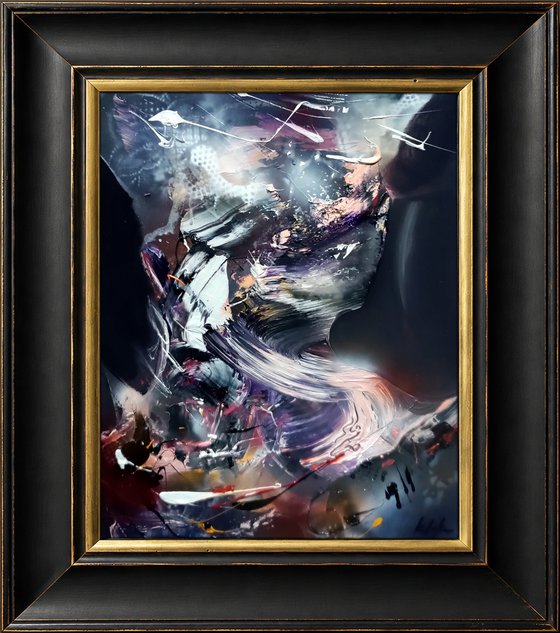
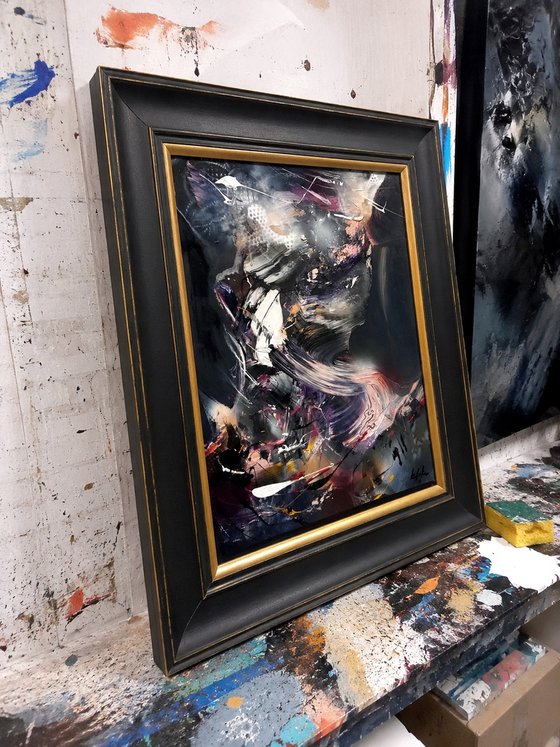
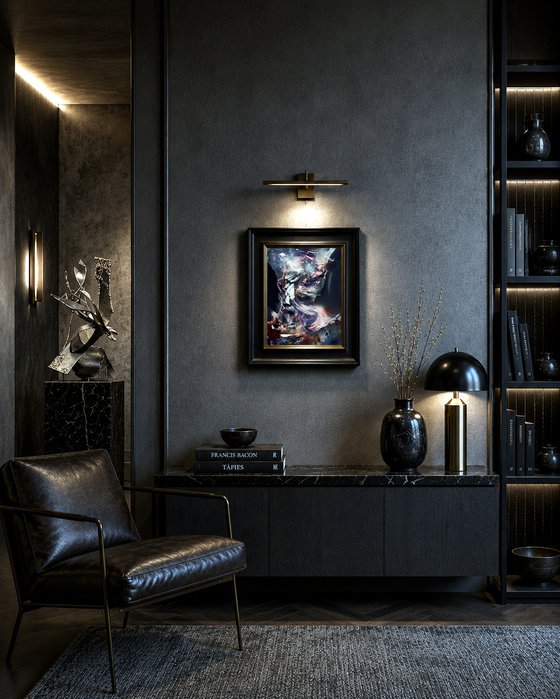
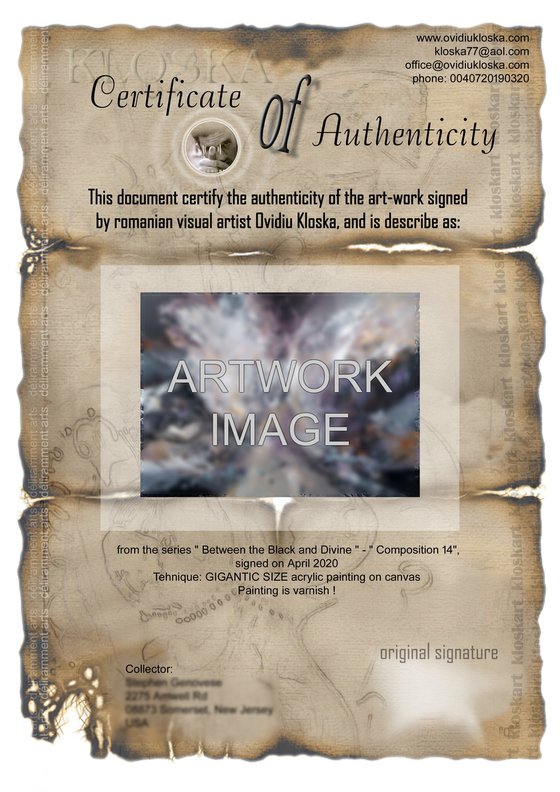
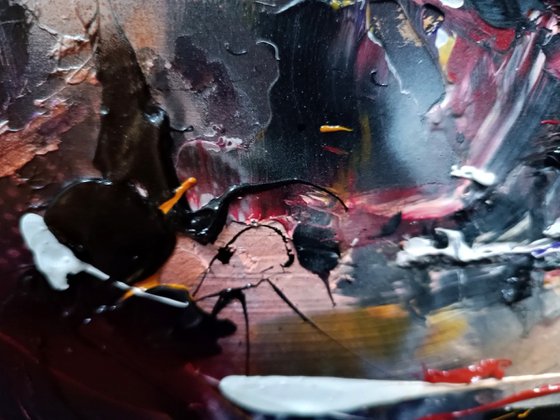
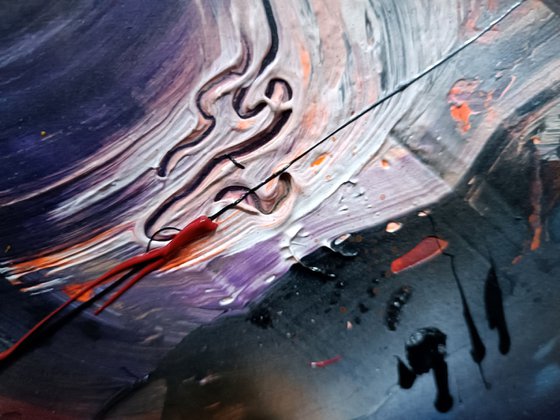
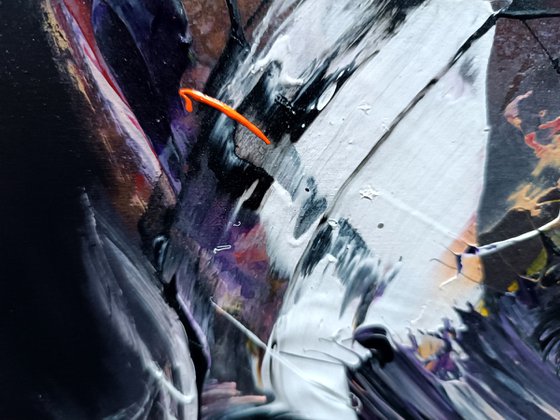
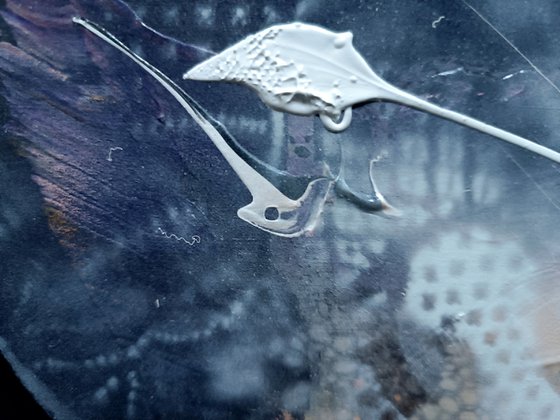

I love to eat Bacon , too (10) (2026) Original Mixed-media Painting by Kloska Ovidiu
57 x 67 x 2cm (framed) / 40 x 50cm (actual image size)
£1,456.14
Original artwork description
Composition No. 10 unfolds as a suspended collision between movement, erosion, memory, and light. Emerging from a dark atmospheric field, the painting does not describe a figure directly, yet continuously suggests one — a spectral presence appearing and dissolving within the same instant. Layers of sweeping gestures, fractured textures, vapor-like transitions, and violent interruptions create a visual structure that feels simultaneously constructed and destroyed in real time.
The work is built around a central current of motion: a luminous, flowing gesture cutting through dense masses of black, violet, ash-grey, and oxidized tones. This movement acts almost like an internal pulse, guiding the eye through an unstable terrain where matter appears fluid, unstable, and emotionally charged. Around it, fragments of light erupt and vanish like electrical traces or fading memories suspended in darkness.
Unlike traditional abstraction that seeks harmony through reduction, Composition No. 10 embraces instability as a living force. The painting resists stillness. Every surface seems caught in transformation — scraped, dissolved, accelerated, or interrupted. Certain passages evoke damaged architecture, smoke, cosmic debris, or fragmented anatomy, yet none fully resolve into representation. The image remains intentionally unresolved, allowing the viewer to move between recognition and ambiguity.
The upper section introduces a mist-like atmospheric layer that expands the emotional depth of the composition. Soft diffusions, granular textures, and ghostly circular traces create the sensation of distance and psychological space, contrasting with the physical aggression of the lower gestures. This tension between vapor and impact, silence and rupture, becomes central to the work’s emotional structure.
Framed within a monumental black and gold setting, the painting enters into dialogue with ideas of classical portraiture and contemporary psychological abstraction. The refined frame amplifies the contrast between elegance and violence, containment and chaos. Rather than functioning as decoration, the frame becomes an extension of the work itself — a theatrical threshold separating the viewer from an unstable interior world.
Composition No. 10 belongs to an evolving body of works exploring fractured identity, energetic movement, and emotional architecture through layered abstraction. Influenced by the psychological intensity of artists such as Francis Bacon and the material sensitivity of Antoni Tàpies, the work seeks not to illustrate emotion, but to materialize it physically through gesture, density, rhythm, and erosion.
The result is a painting that feels less like an image and more like an apparition — something encountered rather than observed. It invites prolonged viewing, revealing shifting structures and hidden tensions over time. At once intimate and monumental, destructive and luminous, Composition No. 10 exists in a space between presence and disappearance, where abstraction becomes a language of psychological and spatial experience.
Materials used:
framed mixed media on wooden panel varnished
Details:
- Mixed-media painting on Panel / Board / MDF
- One of a kind artwork
- Size: 57 x 67 x 2cm (framed) / 40 x 50cm (actual image size)
- Framed and ready to hang
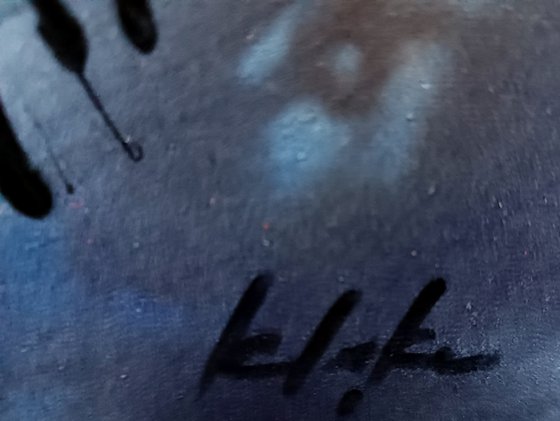
- Signed on the front
- Style: Expressive and gestural
- Subject: People and portraits
 Free returns
14 day money back guaranteeLearn more
Original artwork description
Composition No. 10 unfolds as a suspended collision between movement, erosion, memory, and light. Emerging from a dark atmospheric field, the painting does not describe a figure directly, yet continuously suggests one — a spectral presence appearing and dissolving within the same instant. Layers of sweeping gestures, fractured textures, vapor-like transitions, and violent interruptions create a visual structure that feels simultaneously constructed and destroyed in real time.
The work is built around a central current of motion: a luminous, flowing gesture cutting through dense masses of black, violet, ash-grey, and oxidized tones. This movement acts almost like an internal pulse, guiding the eye through an unstable terrain where matter appears fluid, unstable, and emotionally charged. Around it, fragments of light erupt and vanish like electrical traces or fading memories suspended in darkness.
Unlike traditional abstraction that seeks harmony through reduction, Composition No. 10 embraces instability as a living force. The painting resists stillness. Every surface seems caught in transformation — scraped, dissolved, accelerated, or interrupted. Certain passages evoke damaged architecture, smoke, cosmic debris, or fragmented anatomy, yet none fully resolve into representation. The image remains intentionally unresolved, allowing the viewer to move between recognition and ambiguity.
The upper section introduces a mist-like atmospheric layer that expands the emotional depth of the composition. Soft diffusions, granular textures, and ghostly circular traces create the sensation of distance and psychological space, contrasting with the physical aggression of the lower gestures. This tension between vapor and impact, silence and rupture, becomes central to the work’s emotional structure.
Framed within a monumental black and gold setting, the painting enters into dialogue with ideas of classical portraiture and contemporary psychological abstraction. The refined frame amplifies the contrast between elegance and violence, containment and chaos. Rather than functioning as decoration, the frame becomes an extension of the work itself — a theatrical threshold separating the viewer from an unstable interior world.
Composition No. 10 belongs to an evolving body of works exploring fractured identity, energetic movement, and emotional architecture through layered abstraction. Influenced by the psychological intensity of artists such as Francis Bacon and the material sensitivity of Antoni Tàpies, the work seeks not to illustrate emotion, but to materialize it physically through gesture, density, rhythm, and erosion.
The result is a painting that feels less like an image and more like an apparition — something encountered rather than observed. It invites prolonged viewing, revealing shifting structures and hidden tensions over time. At once intimate and monumental, destructive and luminous, Composition No. 10 exists in a space between presence and disappearance, where abstraction becomes a language of psychological and spatial experience.
Materials used:
framed mixed media on wooden panel varnished
Details:
- Mixed-media painting on Panel / Board / MDF
- One of a kind artwork
- Size: 57 x 67 x 2cm (framed) / 40 x 50cm (actual image size)
- Framed and ready to hang
- Signed on the front
- Style: Expressive and gestural
- Subject: People and portraits

Kloska Ovidiu
Romania
About
Ovidiu Kloska – Biography & Curriculum Vitae
BiographyOvidiu Kloska (b. 1977, Romania) is a contemporary visual artist whose multidisciplinary practice spans painting, welded-steel sculpture, mixed media, and oniric conceptual photography. His... Read more