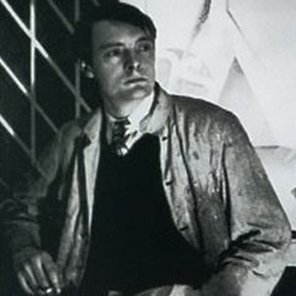
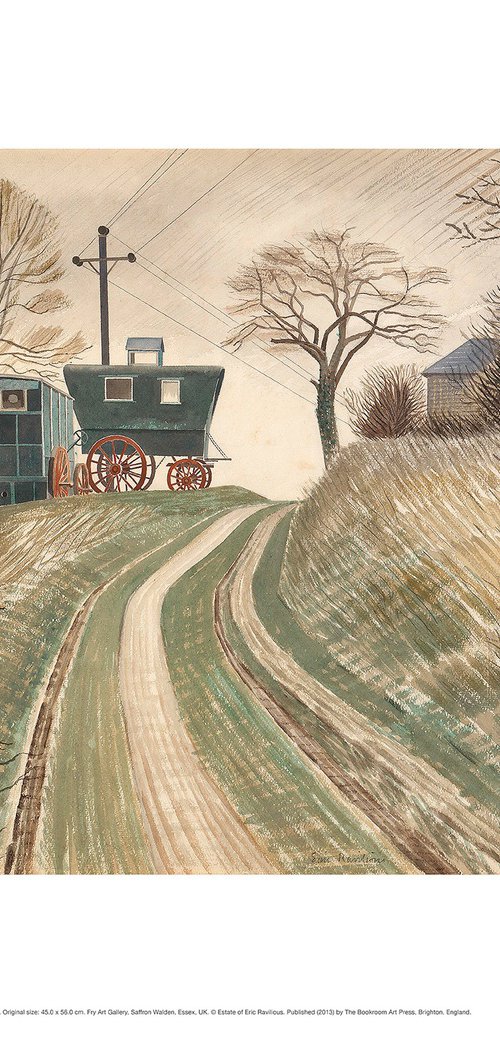
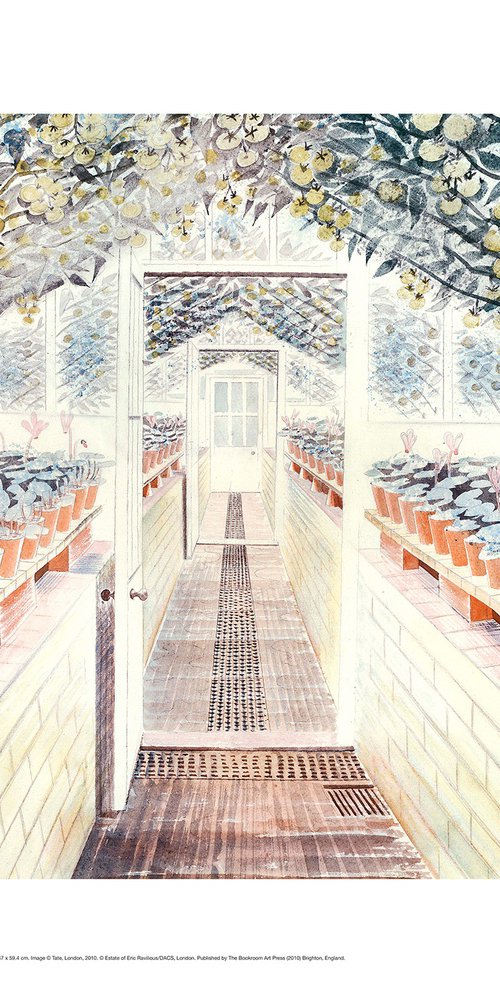
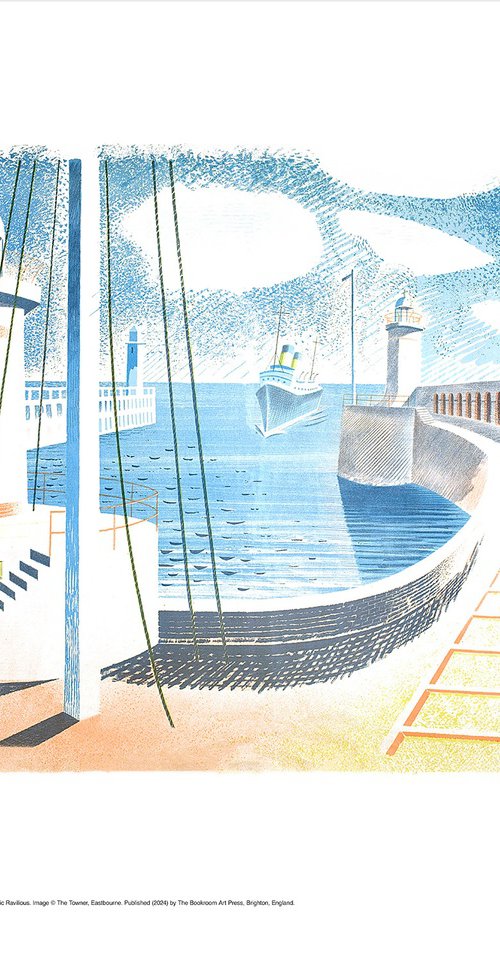
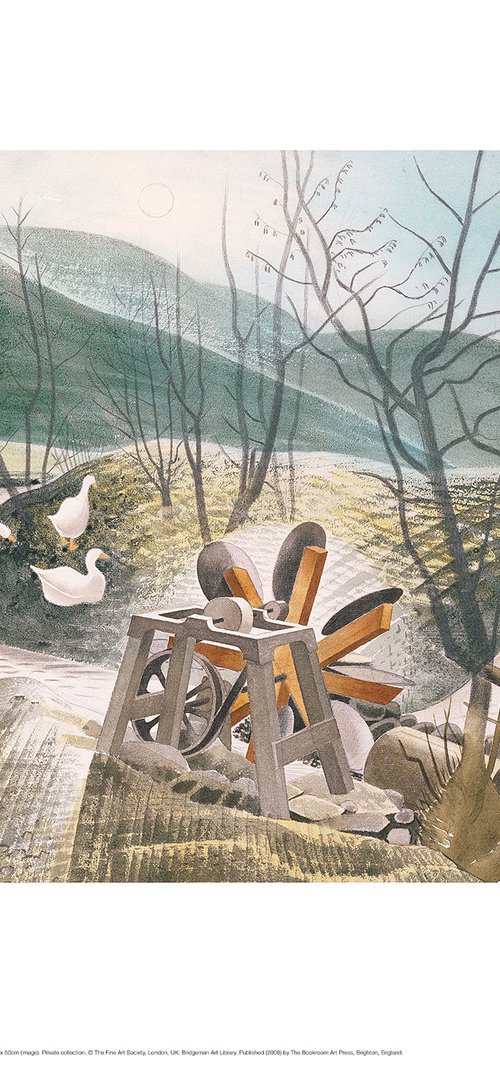
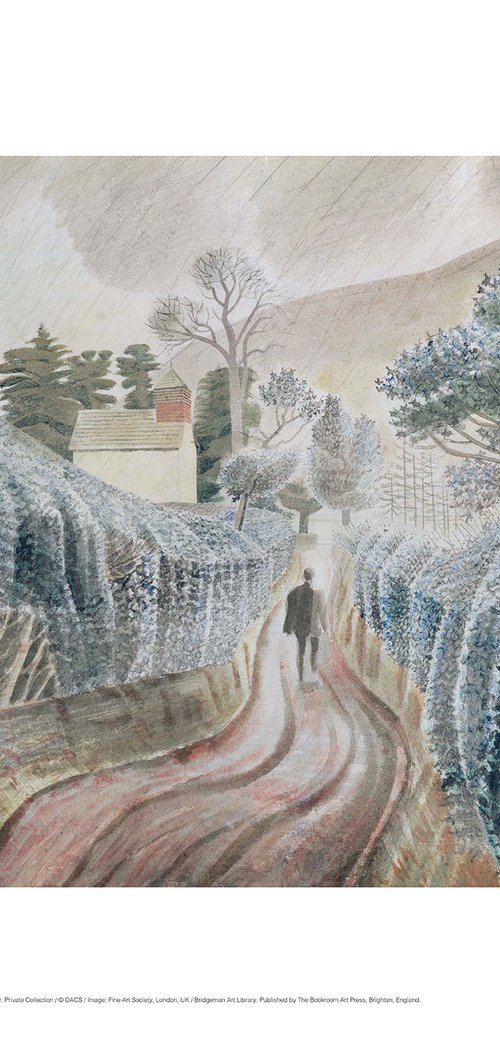
Eric Ravilious found a quiet strangeness in the English landscape: chalk hills, empty lanes, greenhouses and lighthouses, painted in pale, precise watercolour that feels both familiar and slightly unreal.
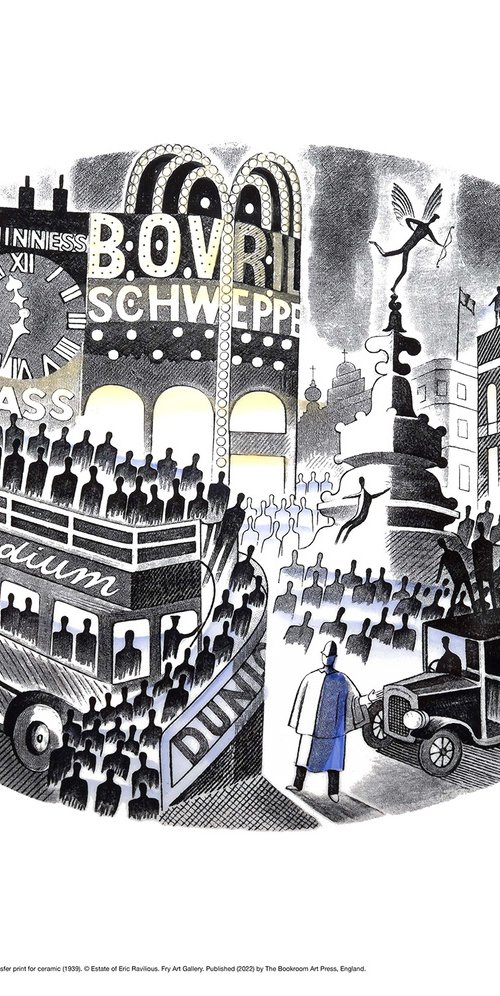
A wood engraver, illustrator and designer as well as a painter, he moved easily between fine art and commercial work, from book illustration to ceramics for Wedgwood. He became an official war artist in the Second World War and died in 1942, aged 39, when the aircraft he was flying in was lost off Iceland.
A wood engraver, illustrator and designer as well as a painter, he moved easily between fine art and commercial work, from book illustration to ceramics for Wedgwood. He became an official war artist in the Second World War and died in 1942, aged 39, when the aircraft he was flying in was lost off Iceland.
Summary
Eric Ravilious found a quiet strangeness in the English landscape: chalk hills, empty lanes, greenhouses and lighthouses, painted in pale, precise watercolour that feels both familiar and slightly unreal.
A wood engraver, illustrator and designer as well as a painter, he moved easily between fine art and commercial work, from book illustration to ceramics for Wedgwood. He became an official war artist in the Second World War and died in 1942, aged 39, when the aircraft he was flying in was lost off Iceland.
A wood engraver, illustrator and designer as well as a painter, he moved easily between fine art and commercial work, from book illustration to ceramics for Wedgwood. He became an official war artist in the Second World War and died in 1942, aged 39, when the aircraft he was flying in was lost off Iceland.
Artworks by Eric Ravilious
About Eric Ravilious
Biography
About Eric Ravilious
Eric Ravilious was born in 1903 in west London and grew up in Eastbourne. He won a scholarship to Eastbourne School of Art in 1919 and then in 1922 to the Design School at the Royal College of Art. There, he became close friends with fellow student, Edward Bawden and from 1924, was taught by Paul Nash.
Nash, an enthusiastic wood engraver, encouraged Ravilious in the technique and proposed him for membership of the Society of Wood Engravers in 1925. He also helped him find his first commissions.
Engraving, design and the English landscape
Through the late 1920s and 1930s, Ravilious built his reputation on wood engraving, producing book illustrations with a crisp, decorative line. With Bawden, he painted a mural for Morley College in south London, and from 1930 he taught part-time at the Royal College of Art. He married the artist and engraver, Tirzah Garwood, whom he'd met while teaching at Eastbourne.
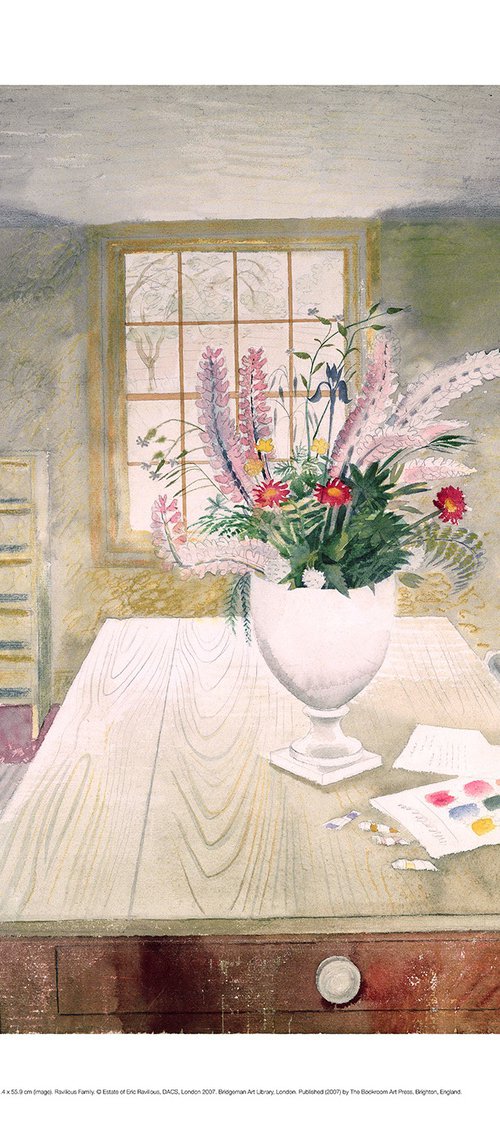
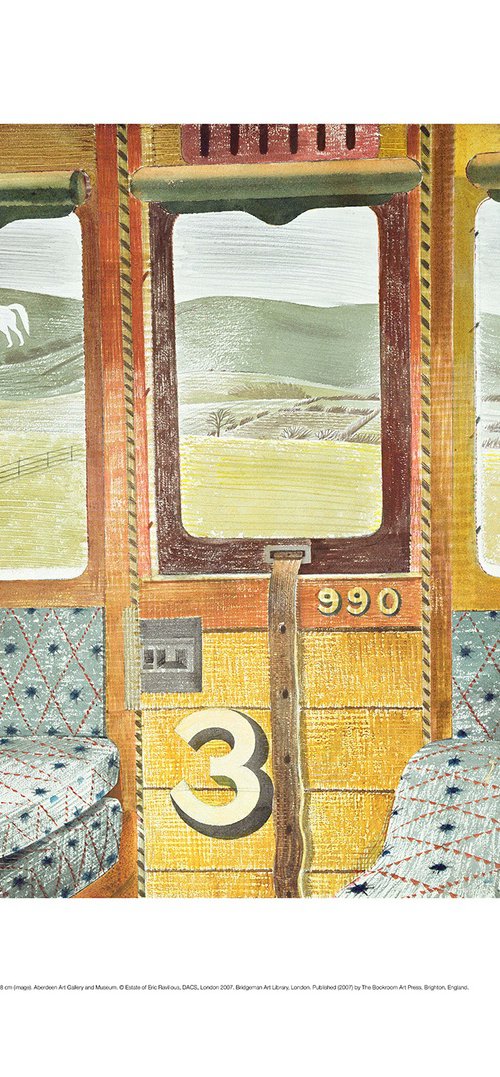
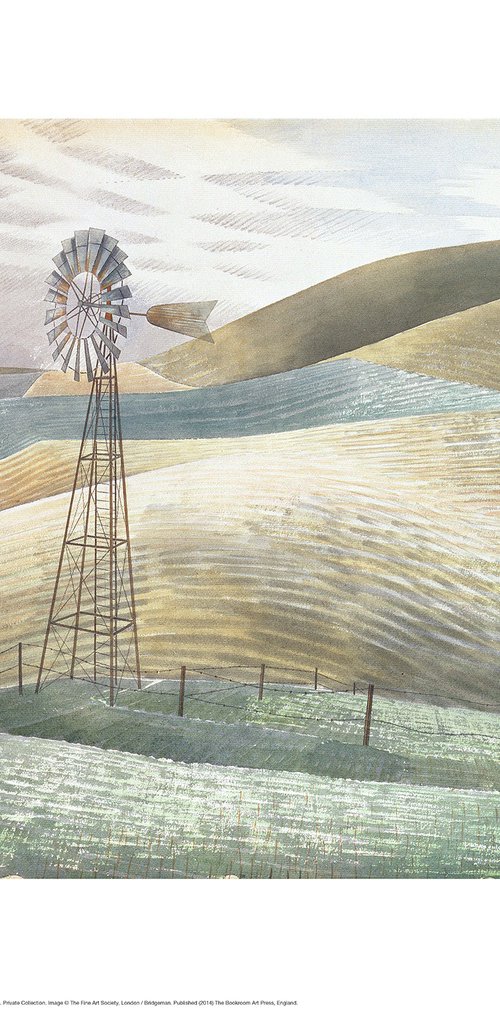
His watercolours, often of the chalk downs of Sussex, use cross-hatching, scratched textures and areas of bare white paper to build a cool, clear light. Between 1936 and 1940, he also designed for Wedgwood, including a commemorative coronation mug. His ceramic designs are still collected today.
Lithographs and war
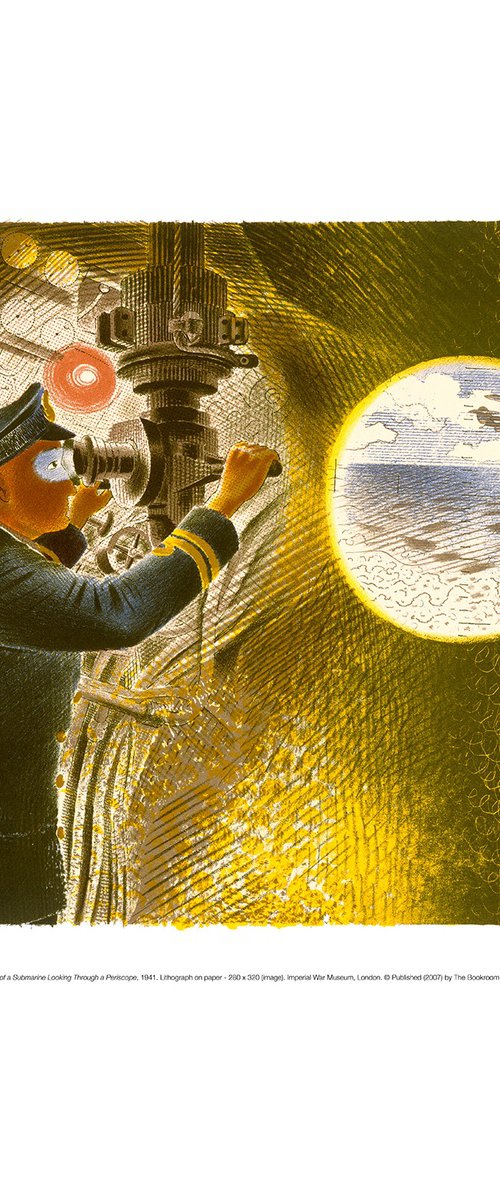
Ravilious's printmaking extended beyond wood engraving into colour lithography. High Street paired 24 colour lithographs of shops with text by J. M. Richards. During the war, he made a series of lithographs drawn from his time aboard submarines.
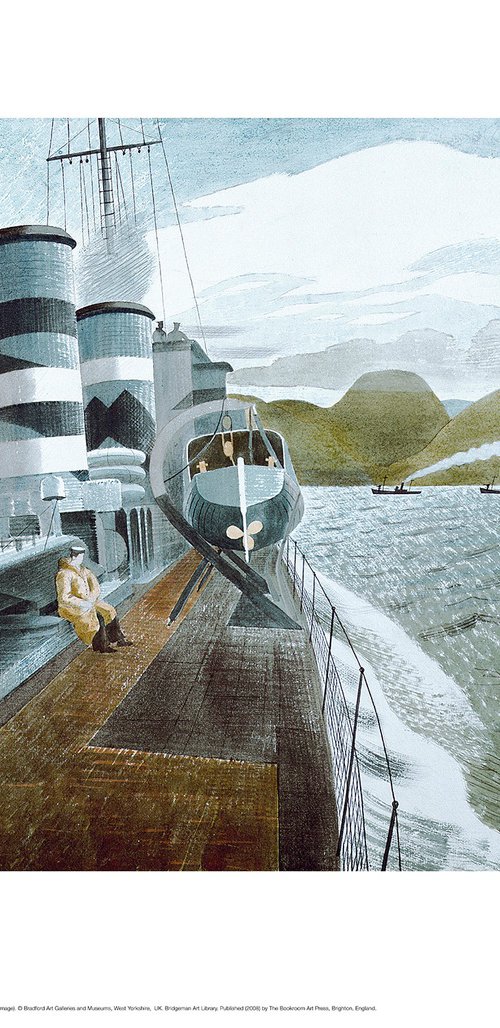
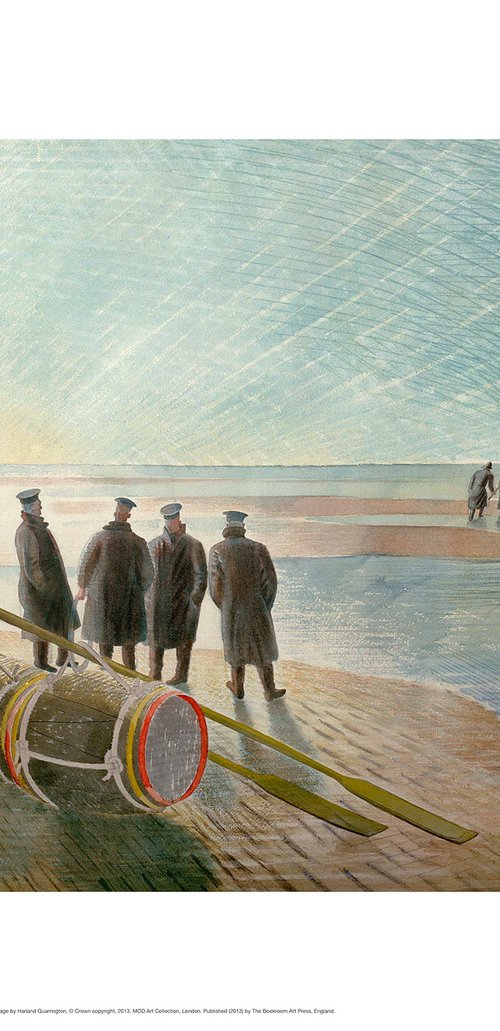
Appointed an official war artist at the start of WWII, he was commissioned as a captain in the Royal Marines and painted ships, coastal defences and naval bases, before being transferred to the Air Ministry in 1942. That August, he flew to Iceland, but on the 2nd September, the aircraft he was aboard failed to return from an air-sea rescue search. He was the first British war artist to die on active service. His work is held by the Imperial War Museums, Tate and Towner Eastbourne, among others.