Italian designer and visual artist. A graduate in Design from the Politecnico di Milano, he works in the furniture sector, developing projects both nationally and internationally. His artistic practice arises from the intersection of design, materials and sustainability, with a particular focus on the processes of transforming waste into aesthetic potential.
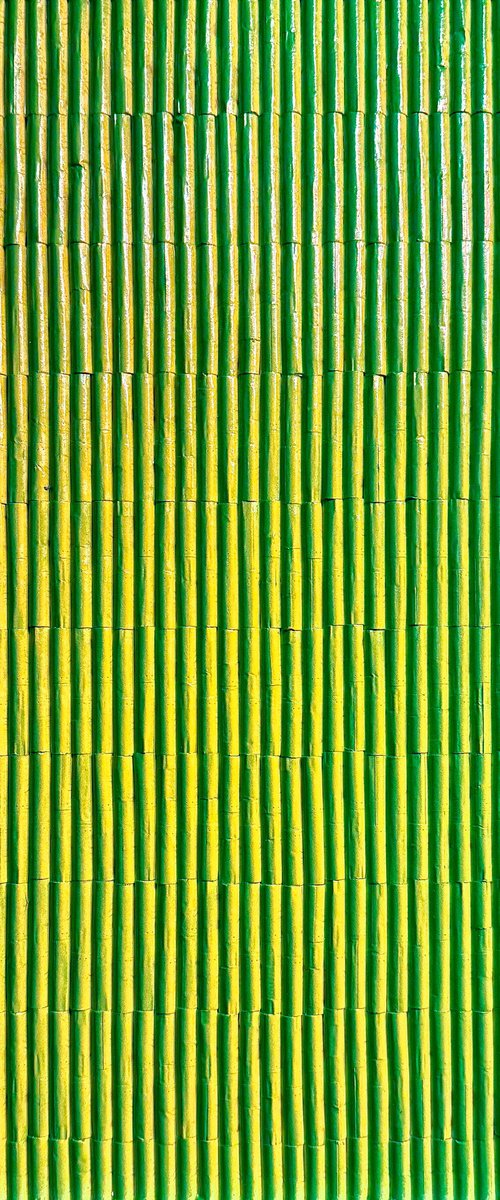
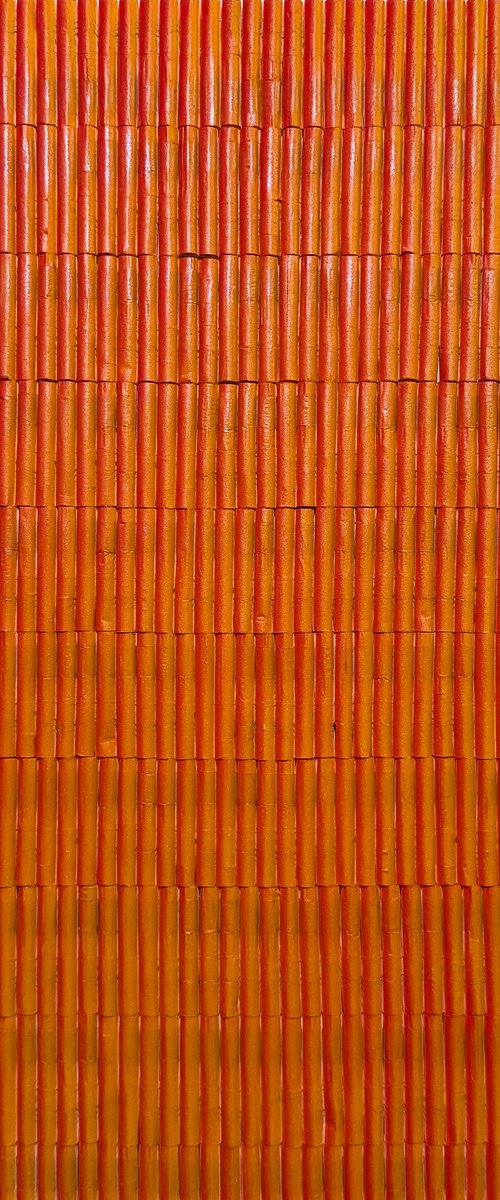
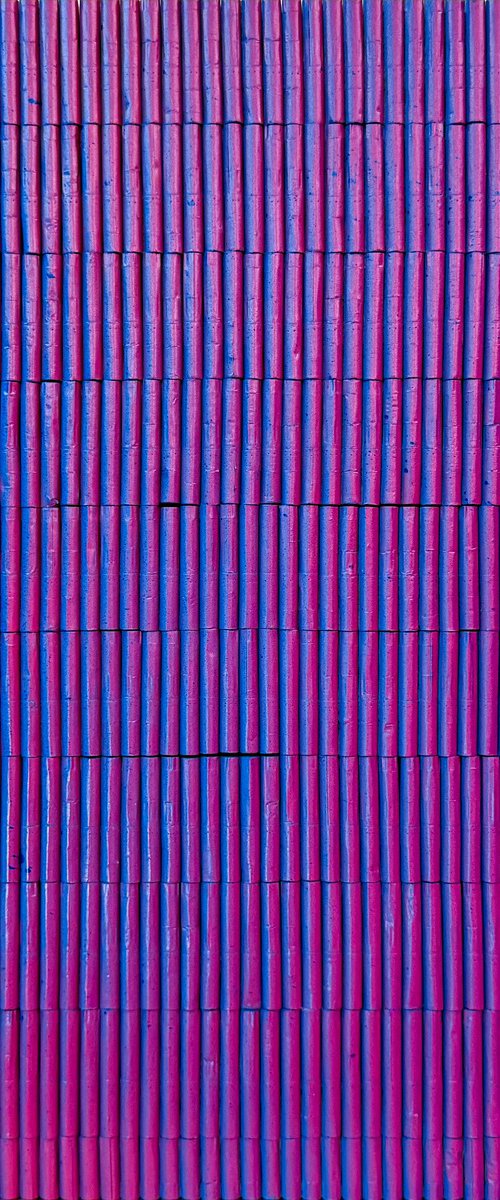
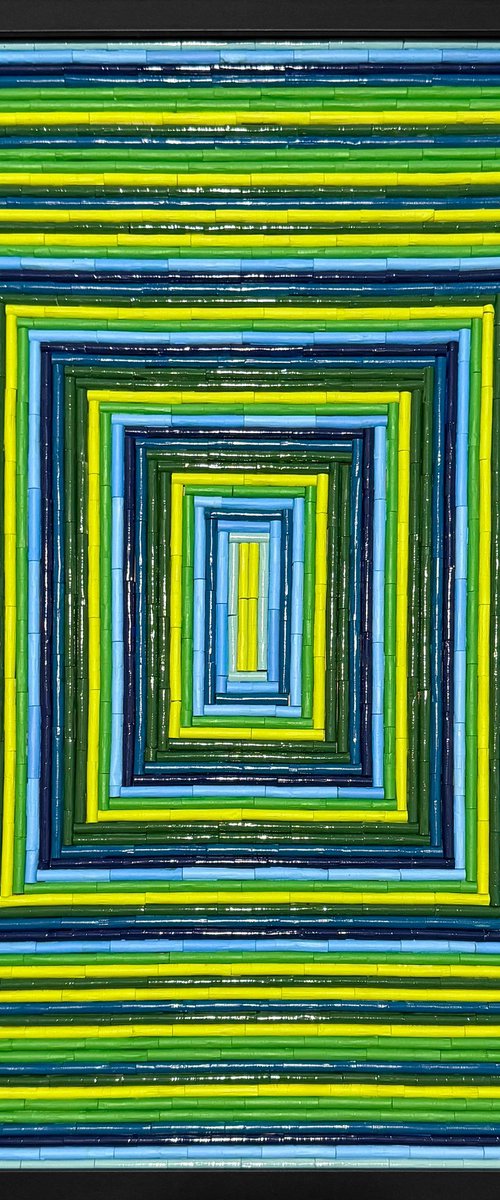
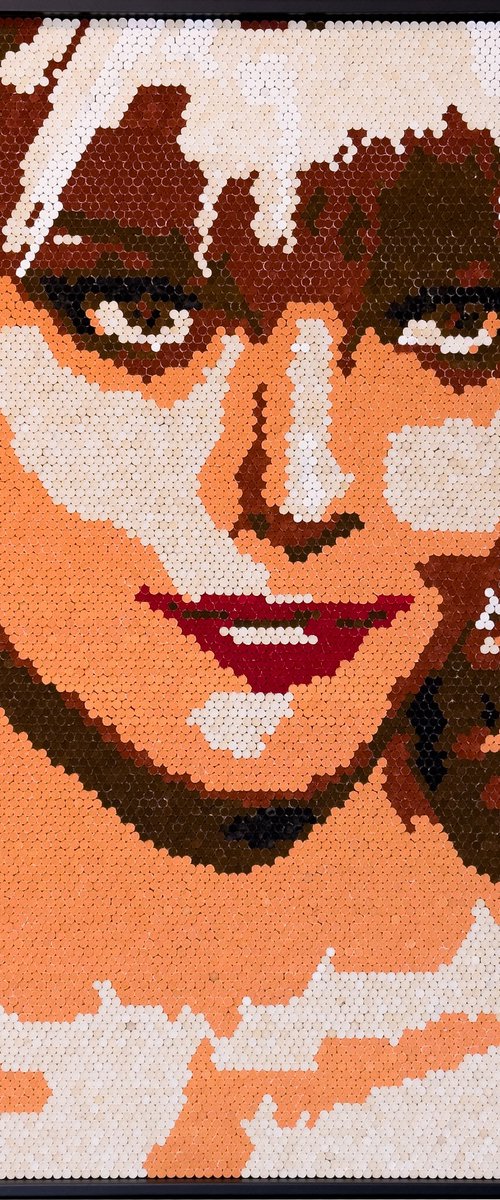
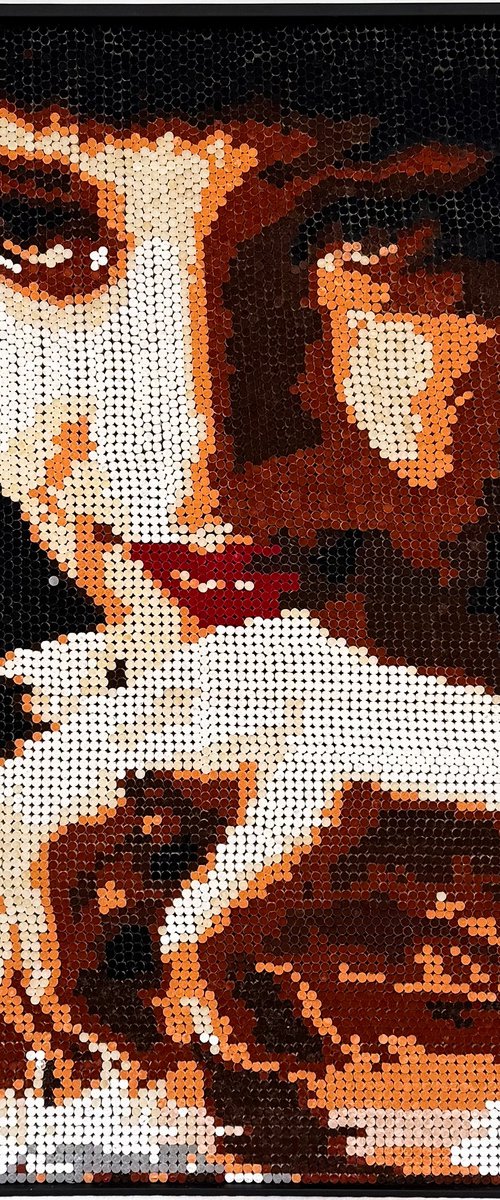
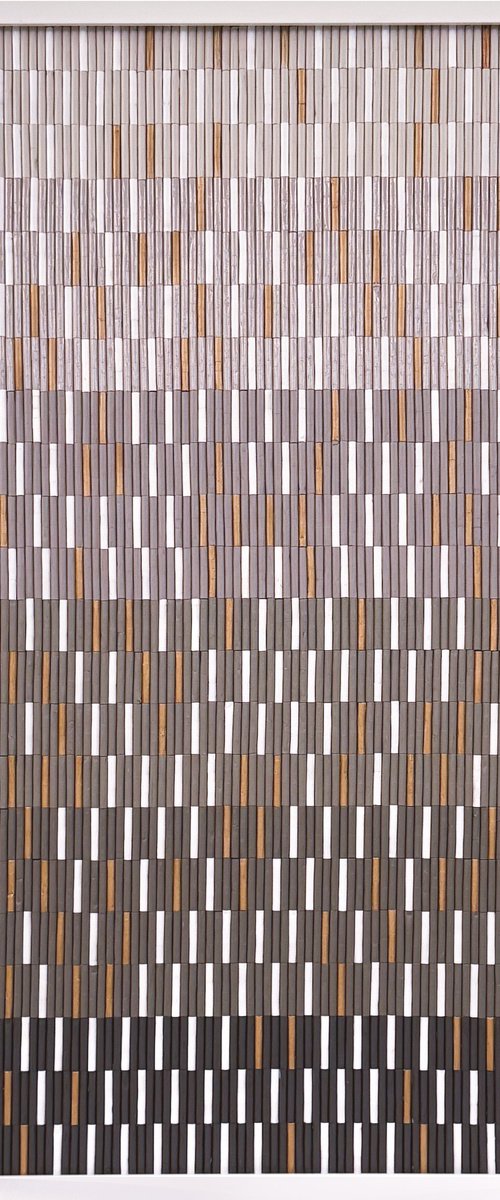
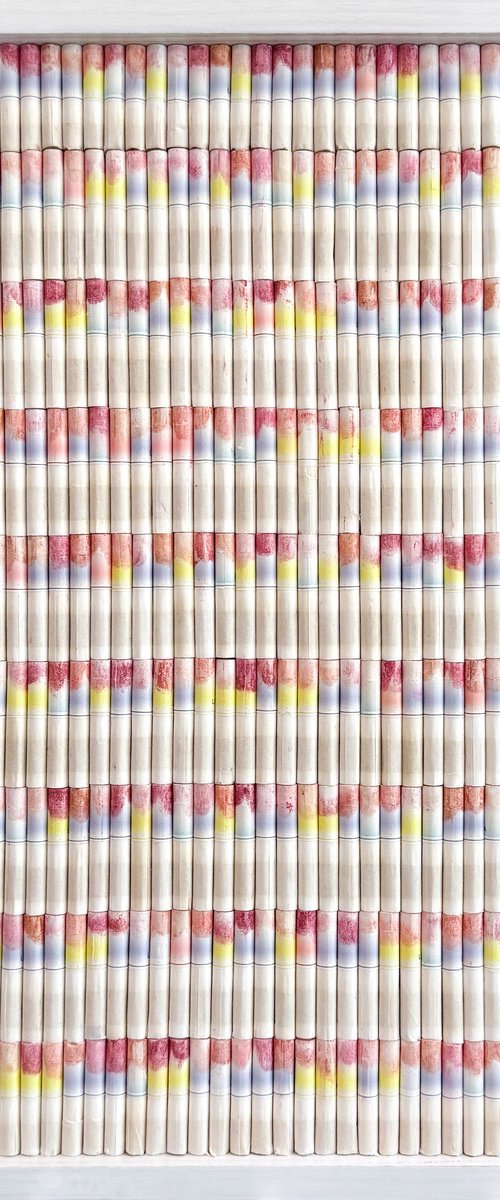
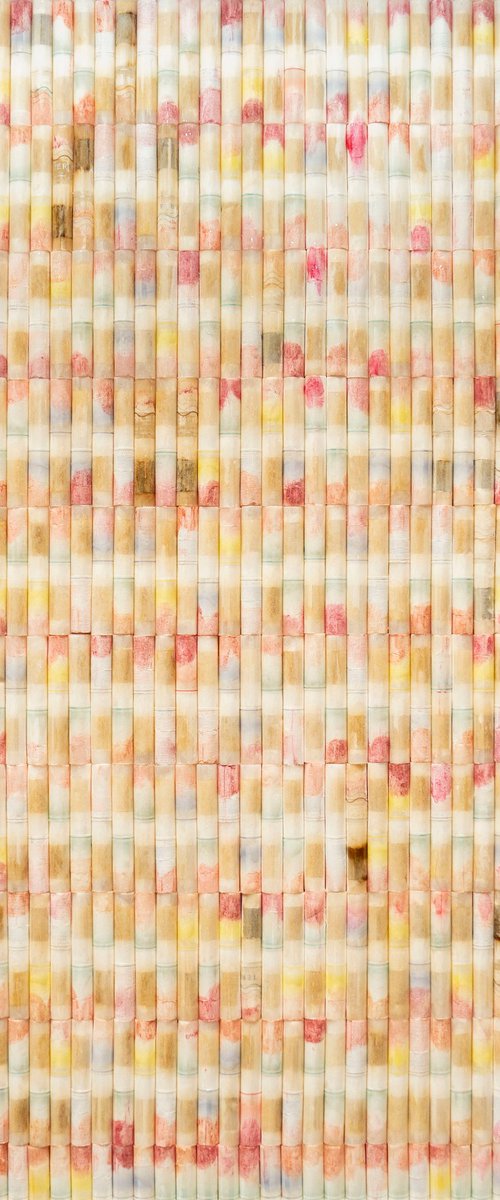
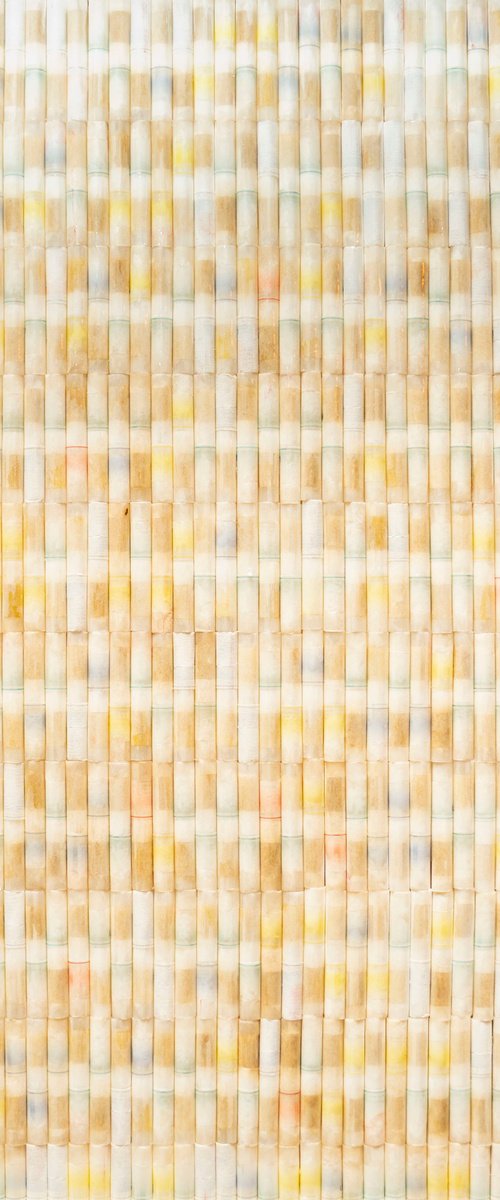
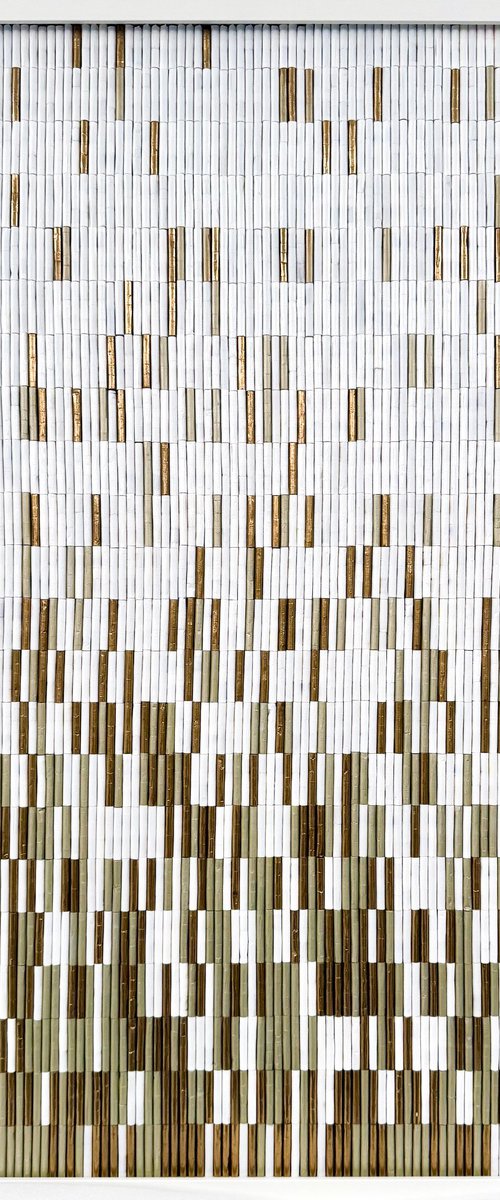
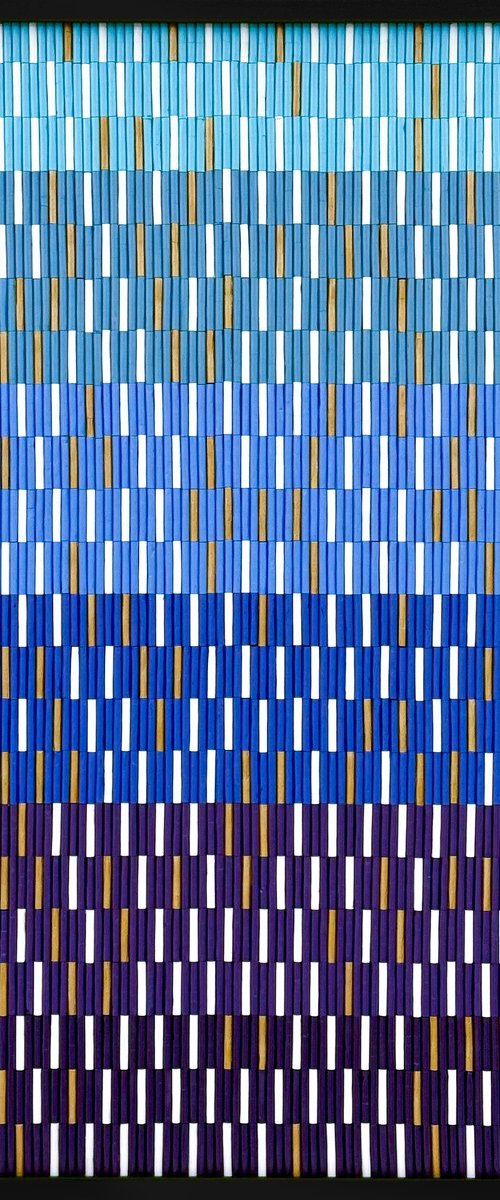
In 2025, he launched ‘From Terea to Art’, a never-before-seen art project based on the recovery and reworking of used tobacco sticks, saved from becoming waste and reincorporated into modular and serial compositions. Through a process of collection, sanitisation, painting and assembly, Johna transforms a material associated with everyday consumption into abstract surfaces, fields of colour and images constructed through accumulation.
His practice focuses on the relationship between material, perception and memory. Each element retains the trace of an individual gesture, but, once incorporated into the work, becomes part of a collective construction. The repetition of the module thus generates a continuous shift between detail and the whole, between object and vision, inviting the viewer to redefine their relationship with what is normally discarded or rendered invisible.
Biography
Italian designer and visual artist. A graduate in Design from the Politecnico di Milano, he works in the furniture sector, developing projects both nationally and internationally. His artistic practice arises from the intersection of design, materials and sustainability, with a particular focus on the processes of transforming waste into aesthetic potential.
In 2025, he launched ‘From Terea to Art’, a never-before-seen art project based on the recovery and reworking of used tobacco sticks, saved from becoming waste and reincorporated into modular and serial compositions. Through a process of collection, sanitisation, painting and assembly, Johna transforms a material associated with everyday consumption into abstract surfaces, fields of colour and images constructed through accumulation.
His practice focuses on the relationship between material, perception and memory. Each element retains the trace of an individual gesture, but, once incorporated into the work, becomes part of a collective construction. The repetition of the module thus generates a continuous shift between detail and the whole, between object and vision, inviting the viewer to redefine their relationship with what is normally discarded or rendered invisible.