YearLimited edition print Paper Print
by Ryan Louder
£75.00
From an edition of 120
Size 22.86 x 30.48 cm (unframed)
Original artwork description
Signal Rating: 9/10 — Strong
Classification: Hypnagogic
This painting by Ryan Louder is part of a body of work shaped by his neurological condition — Narcolepsy with REM Intrusion Hallucinations, clinically confirmed via MSLT at Guy's Hospital, London. The work contains hypnagogic imagery — embedded secondary images, phantom figures, and forms emerging from within the scene.
Neuroaesthetic markers identified: chimeric fusion; pareidolic embedding; boundary dissolution; figure-ground collapse
These markers are not deliberate artistic techniques but direct visual recordings of what REM intrusion hallucinations look like. The imagery emerges from neurological experience, not metaphor. Ryan has painted over 2,000 works, with over 1,000 originals sold. Each painting in this collection has been subjected to neuroaesthetic forensic analysis to identify and catalogue the perceptual phenomena present.
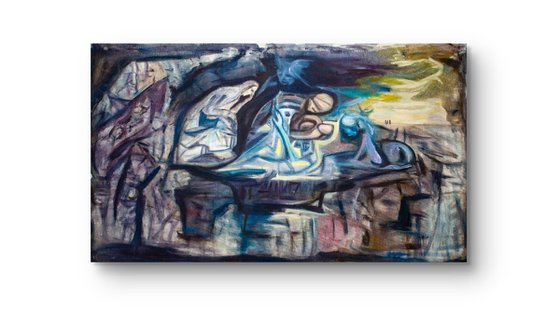
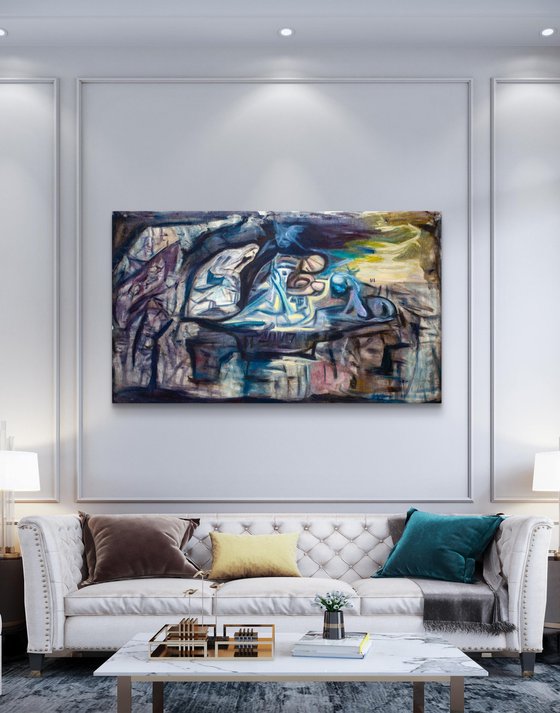
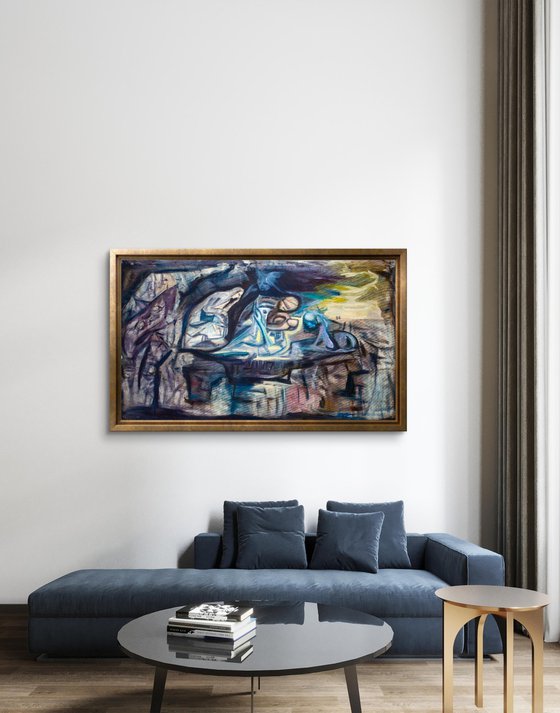
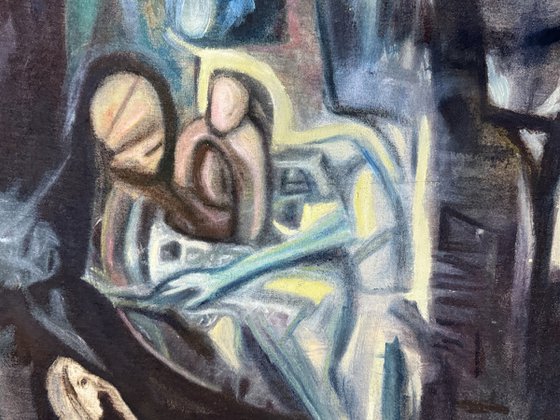
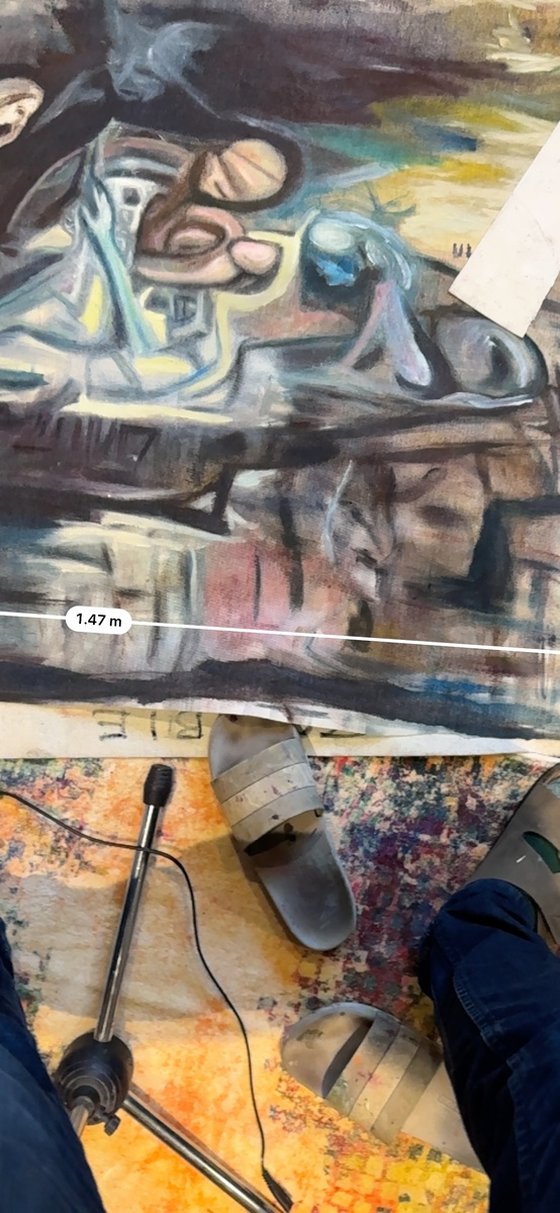
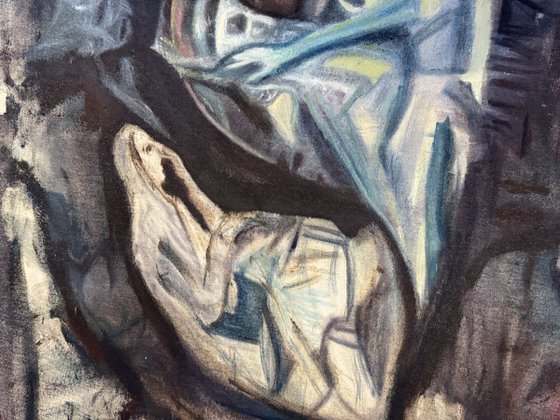
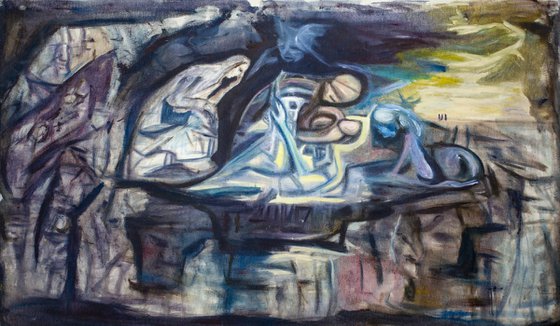
The canvas is landscape-format and densely worked — no clean surface survives. At centre, a horizontal form is bathed in internal blue-white light, loosely read as a reclining body, its mass generated by surrounding marks rather than clear contour. Around it, dark brown and purple-grey zones contain partially resolved presences — at left, what reads as a crouching form; at right, a rounded mass and a small gesture of blue. The upper register lightens toward yellowish-green, suggesting exterior light at a great remove. Throughout, the composition maintains the quality of a scene partially recovered from memory — illuminated at centre, receding into uncertainty on all sides.
Materials used:
oil paint canvas
Details:
- Oil painting on Canvas
- One of a kind artwork
- Size: 101.6 x 65 x 0.25cm (unframed) / 101.6 x 76.2cm (actual image size)
- Signed on the back
- Style: Abstract
- Subject: Abstract and non-figurative
 Free returns
14 day money back guaranteeLearn more
Original artwork description
Signal Rating: 9/10 — Strong
Classification: Hypnagogic
This painting by Ryan Louder is part of a body of work shaped by his neurological condition — Narcolepsy with REM Intrusion Hallucinations, clinically confirmed via MSLT at Guy's Hospital, London. The work contains hypnagogic imagery — embedded secondary images, phantom figures, and forms emerging from within the scene.
Neuroaesthetic markers identified: chimeric fusion; pareidolic embedding; boundary dissolution; figure-ground collapse
These markers are not deliberate artistic techniques but direct visual recordings of what REM intrusion hallucinations look like. The imagery emerges from neurological experience, not metaphor. Ryan has painted over 2,000 works, with over 1,000 originals sold. Each painting in this collection has been subjected to neuroaesthetic forensic analysis to identify and catalogue the perceptual phenomena present.
The canvas is landscape-format and densely worked — no clean surface survives. At centre, a horizontal form is bathed in internal blue-white light, loosely read as a reclining body, its mass generated by surrounding marks rather than clear contour. Around it, dark brown and purple-grey zones contain partially resolved presences — at left, what reads as a crouching form; at right, a rounded mass and a small gesture of blue. The upper register lightens toward yellowish-green, suggesting exterior light at a great remove. Throughout, the composition maintains the quality of a scene partially recovered from memory — illuminated at centre, receding into uncertainty on all sides.
Materials used:
oil paint canvas
Details:
- Oil painting on Canvas
- One of a kind artwork
- Size: 101.6 x 65 x 0.25cm (unframed) / 101.6 x 76.2cm (actual image size)
- Signed on the back
- Style: Abstract
- Subject: Abstract and non-figurative
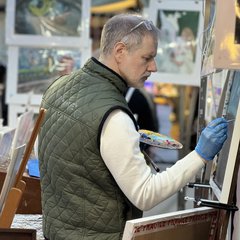
Ryan Louder
United Kingdom
About
Ryan Louder paints dreams in real time. Close to one thousand originals sold over a career spanning more than ten years. Independent forensic visual analysis of 873 of his paintings... Read more