- Artem Andreichuk
- All Artworks
- The Garden of Iris
The Garden of Iris (2026) Original Acrylic Painting by Artem Andreichuk
100 x 120 x 2cm (unframed)
£1,454.95
Original artwork description
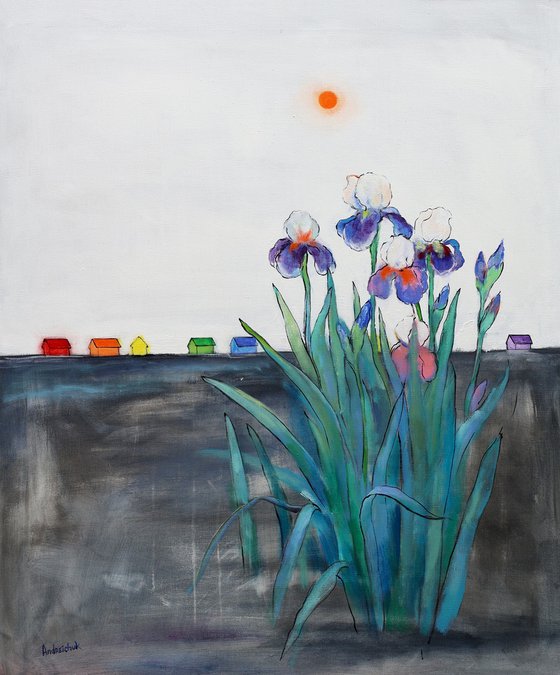
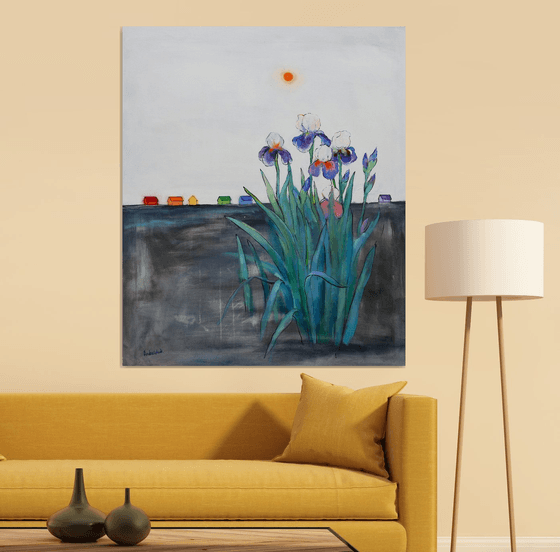
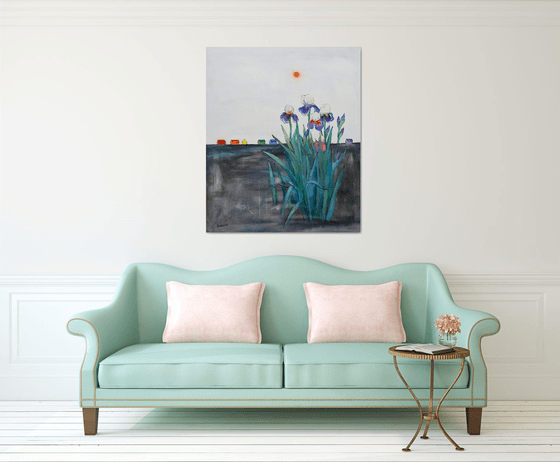
Irises have long been a symbol of diversity — it is from the Greek goddess Iris, who embodied the rainbow, that this flower takes its name. The rainbow, in turn, became the universal symbol of the LGBTQ+ community — and this painting speaks precisely that language.
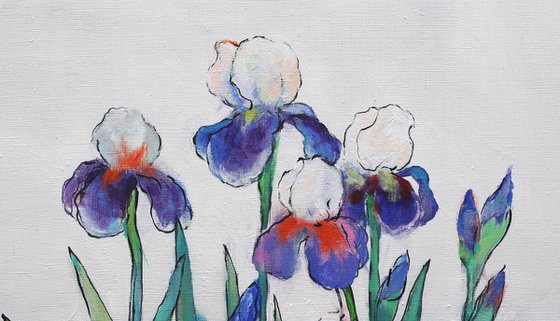
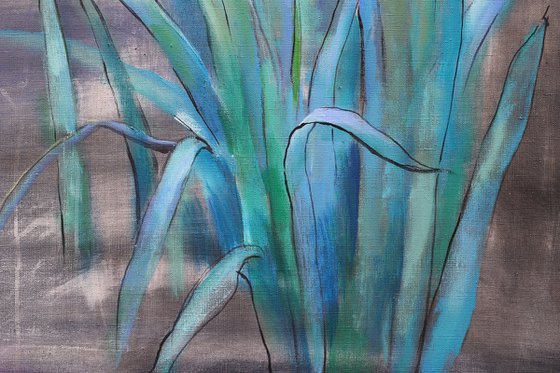
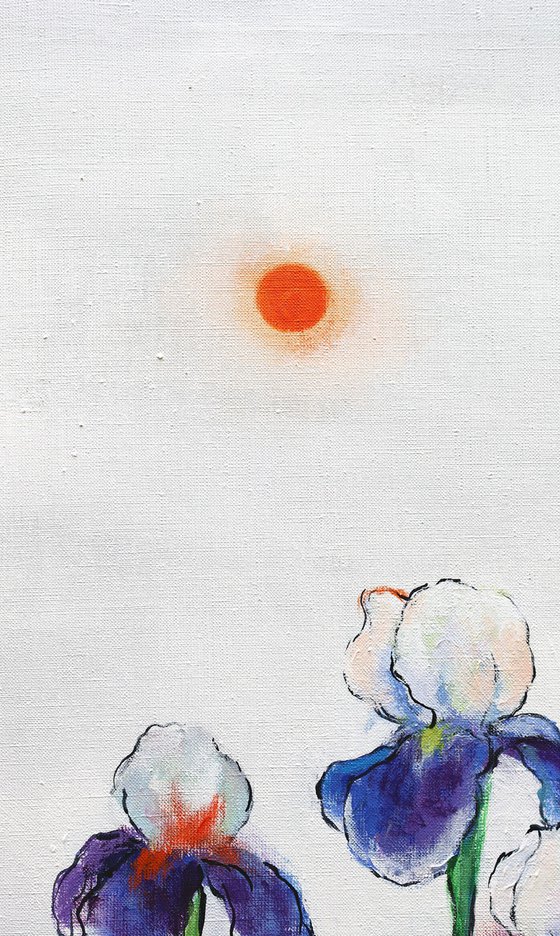
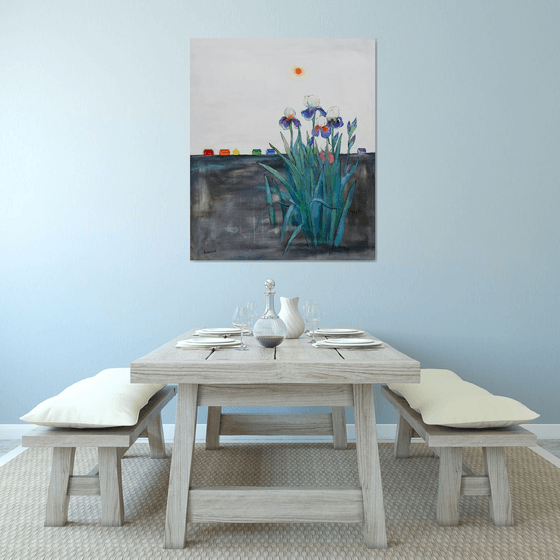
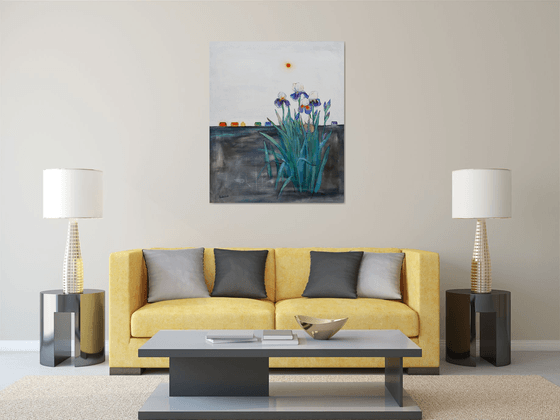
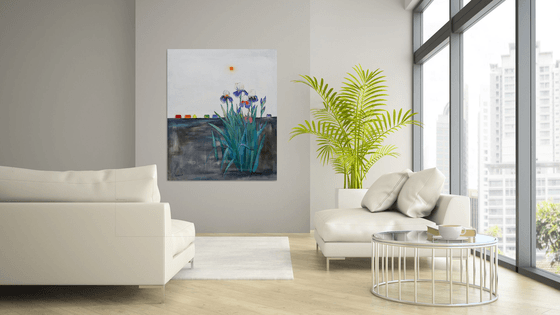
Against a grey, almost monochromatic world — a silent, still earth — a vivid cluster of irises bursts into bloom: boldly, impossibly to contain. The flowers do not ask permission to exist. They simply are.
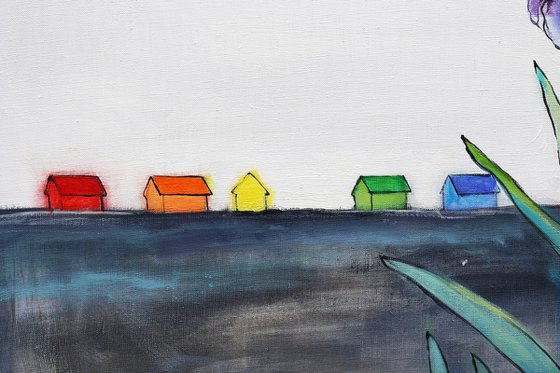
Along the horizon stand small colourful houses: red, orange, yellow, green, blue, violet. Six colours of the rainbow, six homes. Each one separate, unique — yet all standing side by side on the same line, in the same world. This is community: different, yet united.
Above it all — a bright orange sun. Not cold, not indifferent — warm and alive. Light that shines equally for everyone.
«The Garden of Iris» is a metaphor for a space where one can be oneself. Where the greyness of the surrounding world cannot silence the colour within. Where every home has its place beneath the same sun.
Materials used:
acrylic paints
Details:
- Acrylic painting on Canvas
- One of a kind artwork
- Size: 100 x 120 x 2cm (unframed)
- Ready to hang
- Signed on the front
- Style: Surrealistic
- Subject: Landscapes, sea and sky
Featured by our Editors:
 Free returns
14 day money back guaranteeLearn more
Original artwork description
Irises have long been a symbol of diversity — it is from the Greek goddess Iris, who embodied the rainbow, that this flower takes its name. The rainbow, in turn, became the universal symbol of the LGBTQ+ community — and this painting speaks precisely that language.
Against a grey, almost monochromatic world — a silent, still earth — a vivid cluster of irises bursts into bloom: boldly, impossibly to contain. The flowers do not ask permission to exist. They simply are.
Along the horizon stand small colourful houses: red, orange, yellow, green, blue, violet. Six colours of the rainbow, six homes. Each one separate, unique — yet all standing side by side on the same line, in the same world. This is community: different, yet united.
Above it all — a bright orange sun. Not cold, not indifferent — warm and alive. Light that shines equally for everyone.
«The Garden of Iris» is a metaphor for a space where one can be oneself. Where the greyness of the surrounding world cannot silence the colour within. Where every home has its place beneath the same sun.
Materials used:
acrylic paints
Details:
- Acrylic painting on Canvas
- One of a kind artwork
- Size: 100 x 120 x 2cm (unframed)
- Ready to hang
- Signed on the front
- Style: Surrealistic
- Subject: Landscapes, sea and sky
Featured by our Editors:

Artem Andreichuk
Ukraine
About
After graduating from the National Academy of Arts of Ukraine, I experimented a lot with various media and materials, including enamel, ceramics, glass, decorative putty, foam plastic, epoxy resin, and... Read more