- Mieke van Os
- All Artworks
- Flower Power
Original artwork description
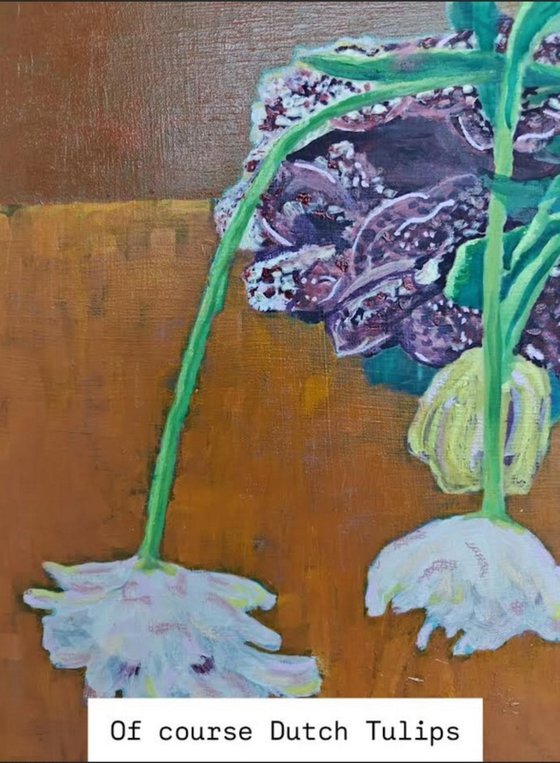
For many people, the Tulip is symbolic of the Netherlands. In fact, it is a flower native to the mountain slopes of Central Asia, which found its way to the Netherlands via the Ottoman Empire. It was there that the breeding of the flower began, as early as the eleventh or twelfth century. The flower then became the favourite of the Turkish Sultans in Istanbul and was given the name ‘Tulip’, derived from the Turkish word ‘Tulbend’ or ‘Dulband’, meaning Turban. At that time, Tulips were therefore a Status Symbol: anyone who had beautiful Tulips in their Garden belonged to the Elite. At the same time, the Tulip symbolised divine Love and Paradise. During the Dutch Golden Age, Tulip Mania flourished. The Dutch East India Company (VOC) traded all over the World and Amsterdam was one of the richest Cities in the world; vast amounts of capital were circulating. In this atmosphere of prosperity and speculative fervour, the Tulip became an Investment Asset. Collectors paid ever-higher sums for the most spectacular specimens. The peak of Tulip Culture, the so-called Lale Devri or Tulip Era, occurred in the early eighteenth century. By then, tulips were so popular that all manner of things were named after them: buildings, fabrics, music and poems. The Tulip thrives in Dutch soil. Every year, 1.5 billion Dutch Tulips are exported around the world. The Tulip thus also represents, to some extent, Dutch Pride. In Turkey, the Tulip remains a National Symbol. In Iran, the Tulip is a traditional symbol of Love and Sacrifice, and also in Islamic Art and Architecture is the Tulip deeply rooted.
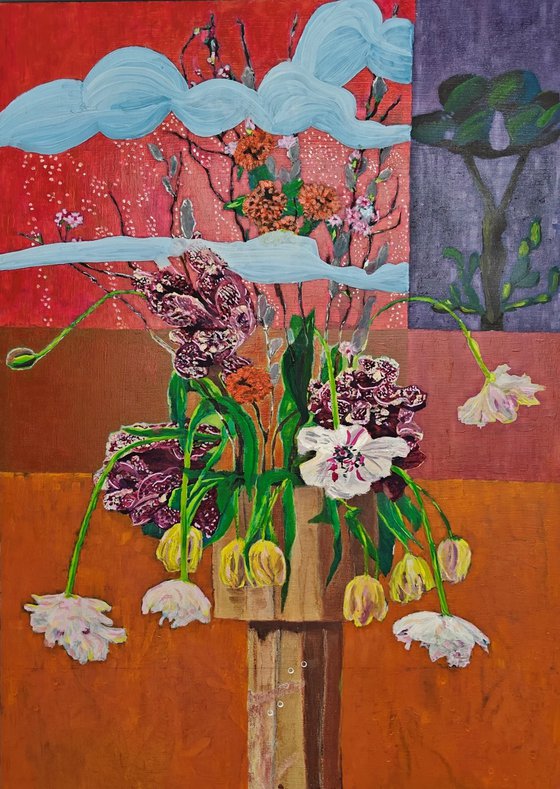
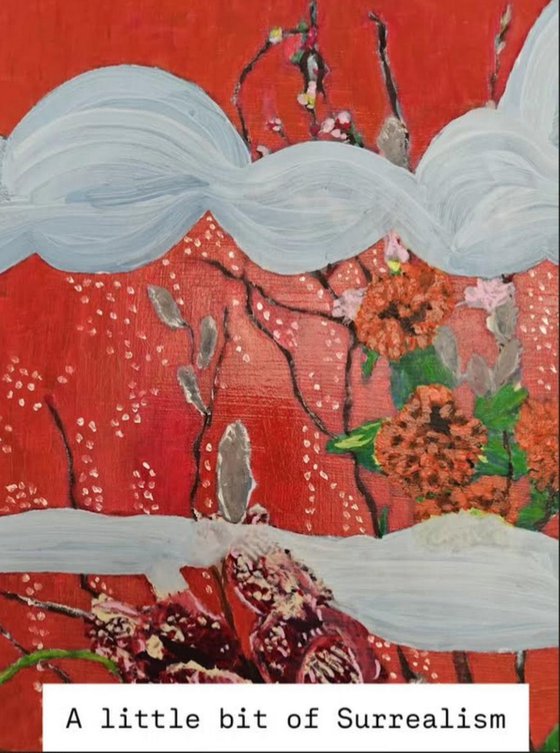
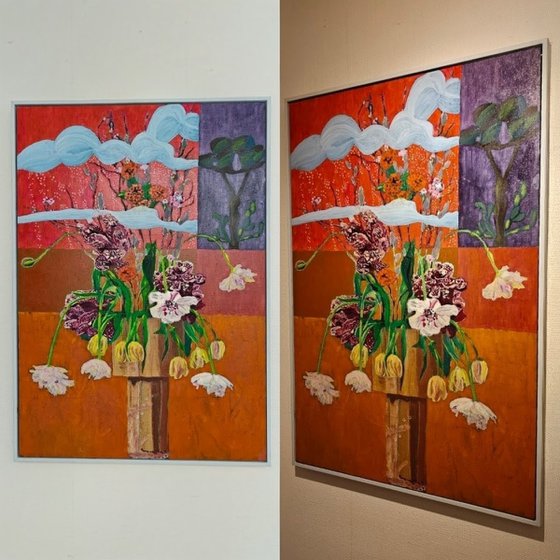
The Colour of the Tulip has also come to carry symbolic Meaning. The red Tulip represents romantic Love, the yellow one Cheerfulness and Friendship, and the white one Purity. In any case, throughout the Centuries, the Tulip has continued to be associated with positive Feelings and Festivity. With this slightly surreal Bouquet, you’ll be bringing a Piece of History and a good Vibe into your Home.
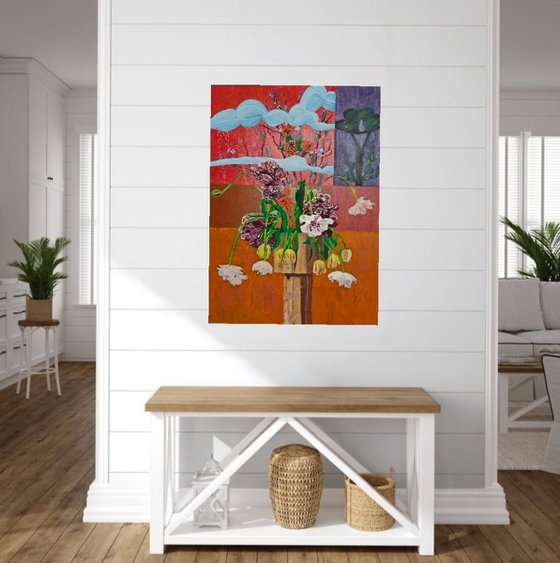
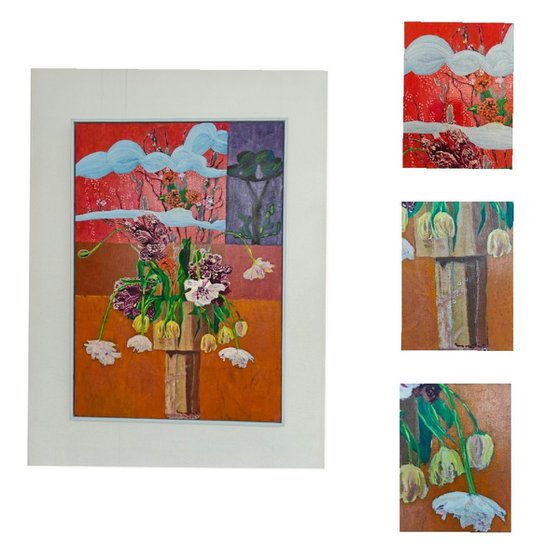
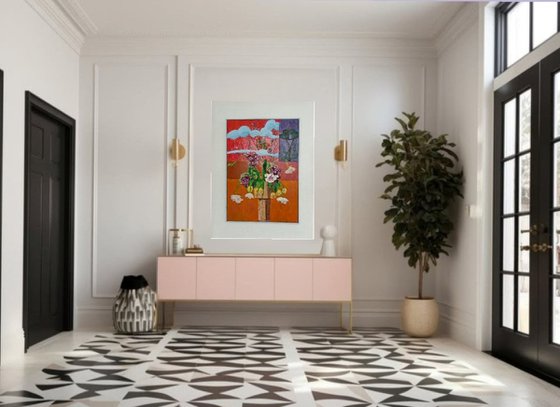
Wooden floating frame, framed soft cloudy light greyblue.
Materials used:
oil, spray paint, oil sticks on aluminium board
Details:
- Oil painting on Other
- One of a kind artwork
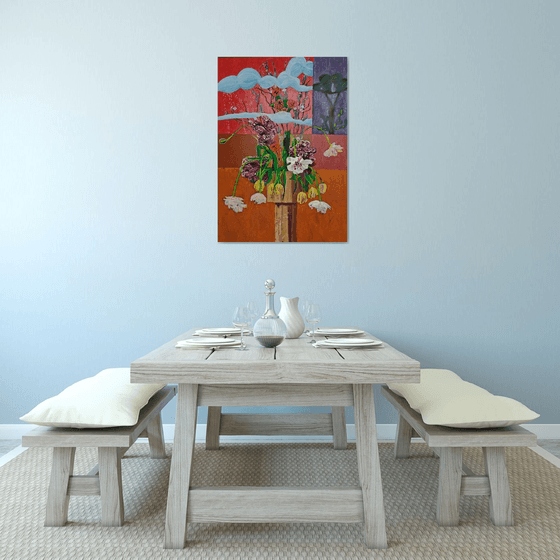
- Size: 73 x 103 x 4cm (framed)
- Framed and ready to hang
- Signed on the front
- Style: Surrealistic
- Subject: Flowers and plants
 Free returns
14 day money back guaranteeLearn more
Original artwork description
For many people, the Tulip is symbolic of the Netherlands. In fact, it is a flower native to the mountain slopes of Central Asia, which found its way to the Netherlands via the Ottoman Empire. It was there that the breeding of the flower began, as early as the eleventh or twelfth century. The flower then became the favourite of the Turkish Sultans in Istanbul and was given the name ‘Tulip’, derived from the Turkish word ‘Tulbend’ or ‘Dulband’, meaning Turban. At that time, Tulips were therefore a Status Symbol: anyone who had beautiful Tulips in their Garden belonged to the Elite. At the same time, the Tulip symbolised divine Love and Paradise. During the Dutch Golden Age, Tulip Mania flourished. The Dutch East India Company (VOC) traded all over the World and Amsterdam was one of the richest Cities in the world; vast amounts of capital were circulating. In this atmosphere of prosperity and speculative fervour, the Tulip became an Investment Asset. Collectors paid ever-higher sums for the most spectacular specimens. The peak of Tulip Culture, the so-called Lale Devri or Tulip Era, occurred in the early eighteenth century. By then, tulips were so popular that all manner of things were named after them: buildings, fabrics, music and poems. The Tulip thrives in Dutch soil. Every year, 1.5 billion Dutch Tulips are exported around the world. The Tulip thus also represents, to some extent, Dutch Pride. In Turkey, the Tulip remains a National Symbol. In Iran, the Tulip is a traditional symbol of Love and Sacrifice, and also in Islamic Art and Architecture is the Tulip deeply rooted.
The Colour of the Tulip has also come to carry symbolic Meaning. The red Tulip represents romantic Love, the yellow one Cheerfulness and Friendship, and the white one Purity. In any case, throughout the Centuries, the Tulip has continued to be associated with positive Feelings and Festivity. With this slightly surreal Bouquet, you’ll be bringing a Piece of History and a good Vibe into your Home.
Wooden floating frame, framed soft cloudy light greyblue.
Materials used:
oil, spray paint, oil sticks on aluminium board
Details:
- Oil painting on Other
- One of a kind artwork
- Size: 73 x 103 x 4cm (framed)
- Framed and ready to hang
- Signed on the front
- Style: Surrealistic
- Subject: Flowers and plants