- Kloska Ovidiu
- All Artworks
- Eternal still life 7.03.2026
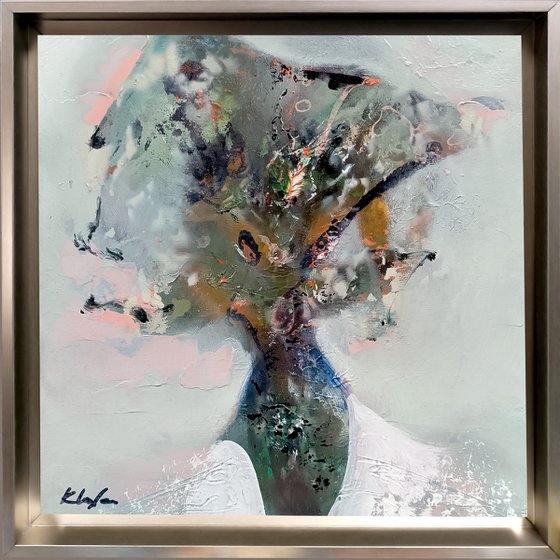
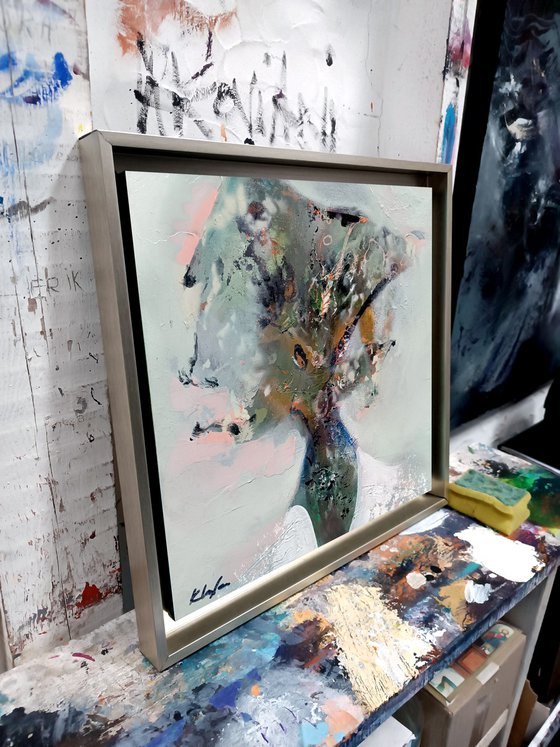
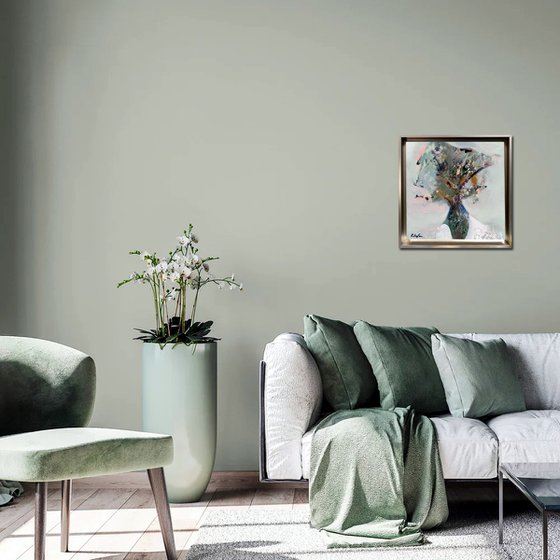
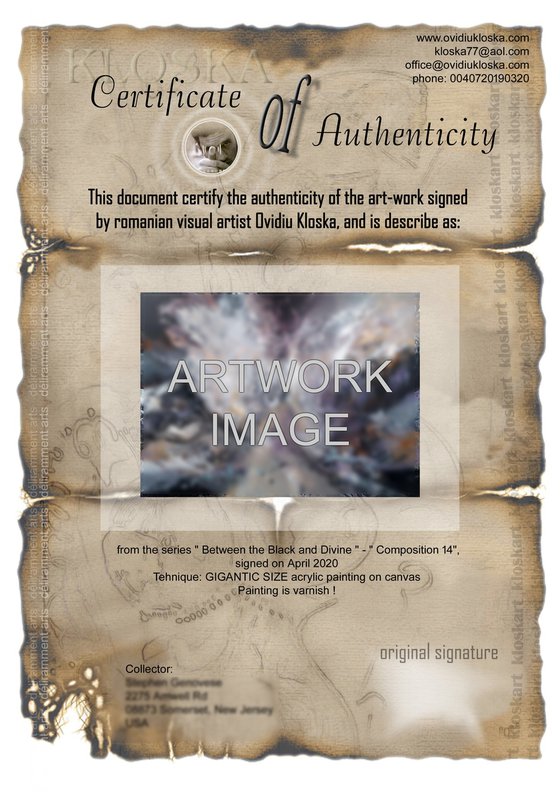
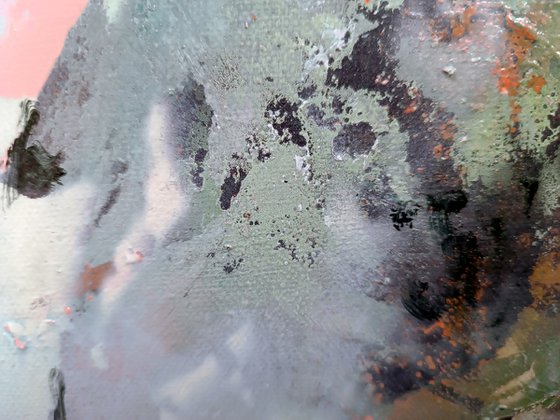
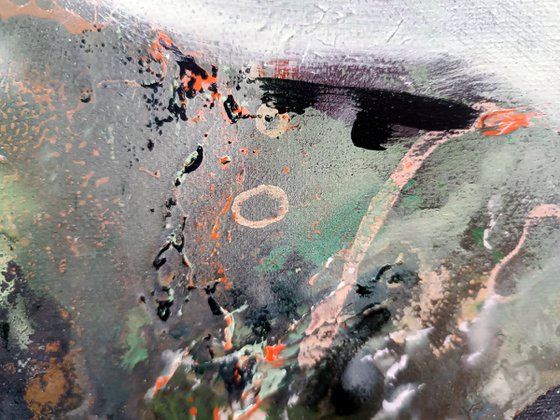
Eternal still life 7.03.2026 (2026) Original Acrylic Painting by Kloska Ovidiu
45 x 45 x 3cm (framed) / 40 x 40cm (actual image size)
£344.71Sold
Do you like this artwork?
This artwork has sold, but the artist is accepting commission requests. Commissioning an artwork is easy and you get a perfectly personalised piece.
Original artwork description
Eternal Still Life, signed March 7, 2026
Acrylic on canvas, framed, varnished, 45 × 45 cm
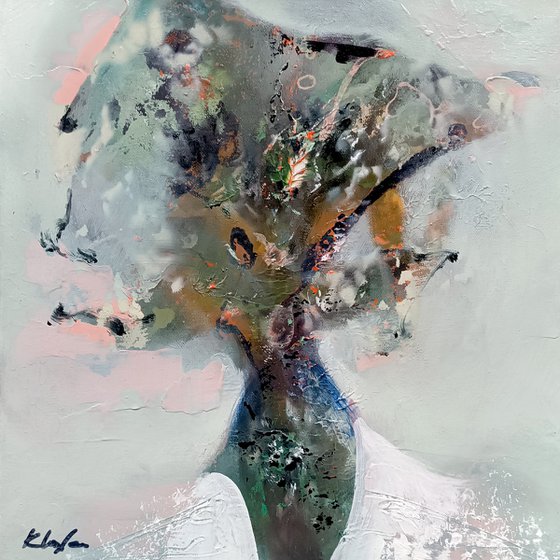
The work coherently continues the trajectory of a recognizable visual poetics, in which the still life becomes merely a pretext for a broader meditation on memory, dissolution, and permanence. In this “Eternal Still Life,” the composition seems to deliberately refuse the classical stability of the genre, choosing instead an almost vegetal-organic form, caught in continuous metamorphosis.
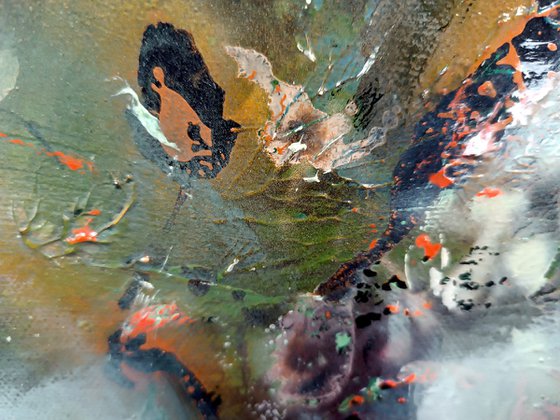
The vase, barely suggested, becomes a fragile axis between two worlds: the dense, material, almost telluric base, and the upper register, where the flowers are no longer recognizable representations but eruptions of color and gesture. This formal ambiguity generates a fertile tension between figuration and abstraction, between emergence and disappearance. The flowers are not described, but evoked—like relics of a presence already consumed.
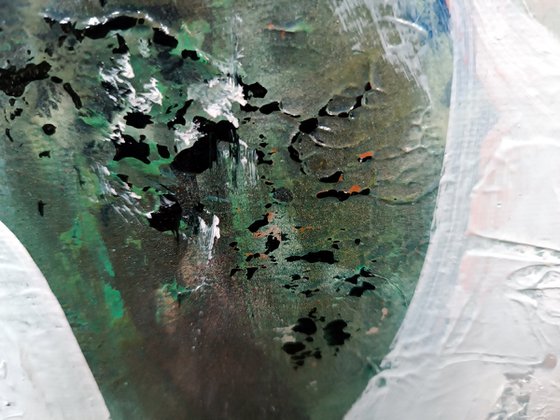
The chromatic palette is subtly orchestrated: muted greens, vaporous greys, and pale pink accents are suddenly traversed by incisive interventions of orange and black. These insertions seem to function as ruptures within the pictorial fabric, suggesting a latent violence or an inner combustion. The rich, layered texture contributes decisively to this sense of instability, as if the surface itself were undergoing a process of erosion or regeneration.
The “Kafkaesque” reference is not illustrative, but atmospheric. It is felt in this diffuse state of unease, in the absence of a fixed point of reading, and in the transformation of the familiar object into a strange, elusive presence. The hour “7 pm” introduces a crepuscular temporal cue, suggesting a moment of transition—neither day nor night—when forms lose their contours and meanings become fluid.
Overall, the work functions as a space of tension between the ephemeral and the eternal. The still life is no longer a celebration of permanence, but a meditation on its fragility. It is precisely within this instability that the painting finds its strength: in its ability to transform a classical subject into a deeply contemporary, almost visceral experience.
Materials used:
framed acrylic painting on canvas varnished
Details:
- Acrylic painting on Canvas
- One of a kind artwork
- Size: 45 x 45 x 3cm (framed) / 40 x 40cm (actual image size)
- Framed and ready to hang
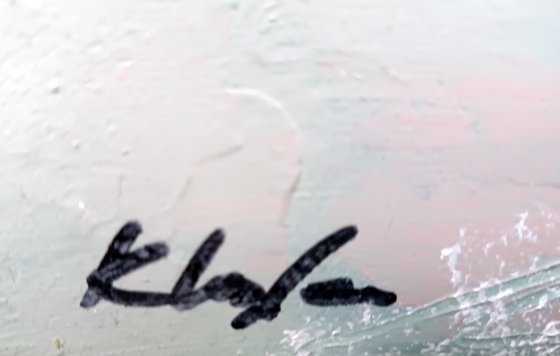
- Signed on the front
- Style: Expressive and gestural
- Subject: Still life
 Free returns
14 day money back guaranteeLearn more
Original artwork description
Eternal Still Life, signed March 7, 2026
Acrylic on canvas, framed, varnished, 45 × 45 cm
The work coherently continues the trajectory of a recognizable visual poetics, in which the still life becomes merely a pretext for a broader meditation on memory, dissolution, and permanence. In this “Eternal Still Life,” the composition seems to deliberately refuse the classical stability of the genre, choosing instead an almost vegetal-organic form, caught in continuous metamorphosis.
The vase, barely suggested, becomes a fragile axis between two worlds: the dense, material, almost telluric base, and the upper register, where the flowers are no longer recognizable representations but eruptions of color and gesture. This formal ambiguity generates a fertile tension between figuration and abstraction, between emergence and disappearance. The flowers are not described, but evoked—like relics of a presence already consumed.
The chromatic palette is subtly orchestrated: muted greens, vaporous greys, and pale pink accents are suddenly traversed by incisive interventions of orange and black. These insertions seem to function as ruptures within the pictorial fabric, suggesting a latent violence or an inner combustion. The rich, layered texture contributes decisively to this sense of instability, as if the surface itself were undergoing a process of erosion or regeneration.
The “Kafkaesque” reference is not illustrative, but atmospheric. It is felt in this diffuse state of unease, in the absence of a fixed point of reading, and in the transformation of the familiar object into a strange, elusive presence. The hour “7 pm” introduces a crepuscular temporal cue, suggesting a moment of transition—neither day nor night—when forms lose their contours and meanings become fluid.
Overall, the work functions as a space of tension between the ephemeral and the eternal. The still life is no longer a celebration of permanence, but a meditation on its fragility. It is precisely within this instability that the painting finds its strength: in its ability to transform a classical subject into a deeply contemporary, almost visceral experience.
Materials used:
framed acrylic painting on canvas varnished
Details:
- Acrylic painting on Canvas
- One of a kind artwork
- Size: 45 x 45 x 3cm (framed) / 40 x 40cm (actual image size)
- Framed and ready to hang
- Signed on the front
- Style: Expressive and gestural
- Subject: Still life

Kloska Ovidiu
Romania
About
Ovidiu Kloska – Biography & Curriculum Vitae
BiographyOvidiu Kloska (b. 1977, Romania) is a contemporary visual artist whose multidisciplinary practice spans painting, welded-steel sculpture, mixed media, and oniric conceptual photography. His... Read more