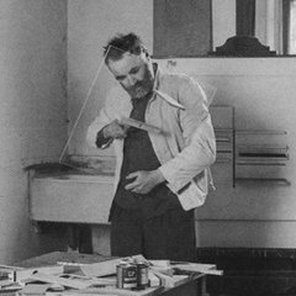
Victor Pasmore changed direction more than once, more radically than most artists of his generation. A gifted painter of quiet, atmospheric landscapes in the 1930s, he turned to pure abstraction in the late 1940s, a shift the critic Herbert Read called “the most revolutionary event in post-war British art”.
He went on to construct reliefs, helped design a new town in County Durham and spent his final 30 years in Malta, where printmaking became an important part of his work.
He went on to construct reliefs, helped design a new town in County Durham and spent his final 30 years in Malta, where printmaking became an important part of his work.
Summary
Victor Pasmore changed direction more than once, more radically than most artists of his generation. A gifted painter of quiet, atmospheric landscapes in the 1930s, he turned to pure abstraction in the late 1940s, a shift the critic Herbert Read called “the most revolutionary event in post-war British art”.
He went on to construct reliefs, helped design a new town in County Durham and spent his final 30 years in Malta, where printmaking became an important part of his work.
He went on to construct reliefs, helped design a new town in County Durham and spent his final 30 years in Malta, where printmaking became an important part of his work.
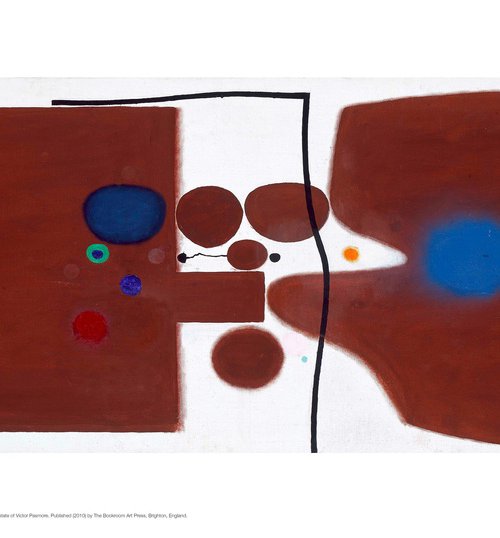
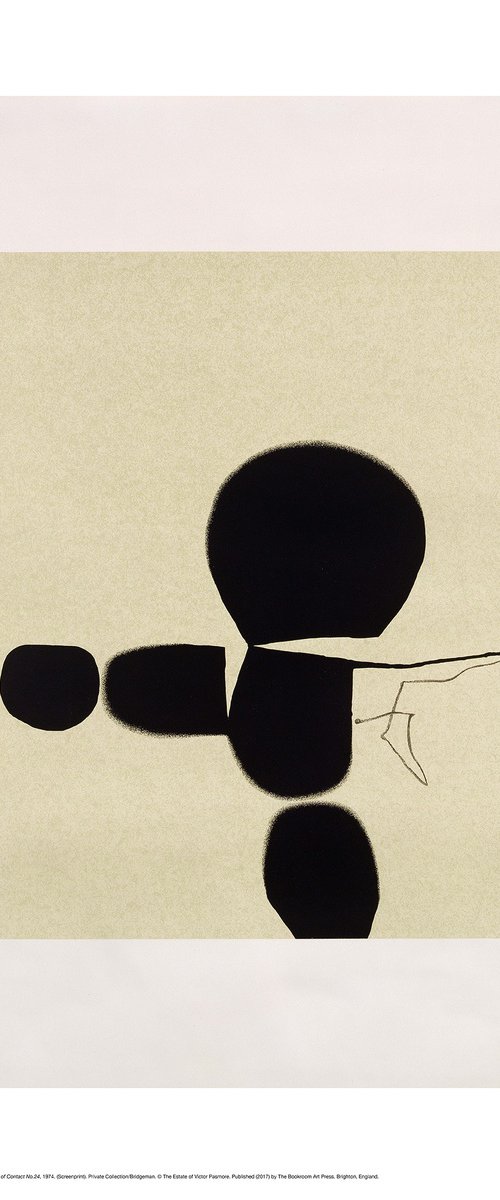
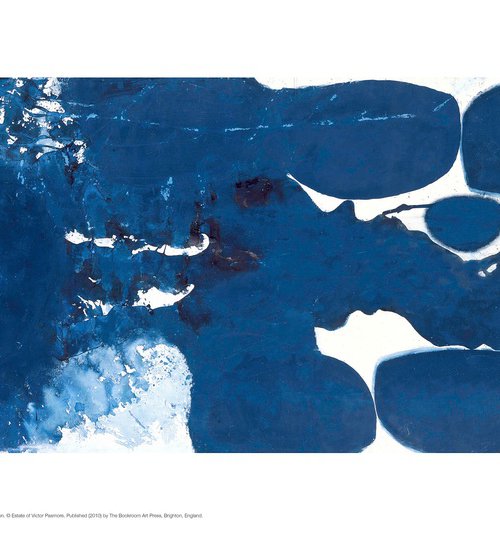
Artworks by Victor Pasmore
About Victor Pasmore
Biography
About Victor Pasmore
Edwin John Victor Pasmore was born in 1908 in Surrey and was educated at Harrow School. After his father's death in 1927, he took a job as a clerk with London County Council and studied painting at evening classes at the Central School of Arts and Crafts.
After early experiments with abstraction, he returned to painting from observation. In 1937, he founded the Euston Road School with William Coldstream and Claude Rogers. The school championed careful, objective looking. Pasmore's lyrical views of the Thames from this period recall Turner and Whistler.
The turn to abstraction
From 1943, Pasmore taught at Camberwell School of Art, where his students included Terry Frost. In the late 1940s, he began working in pure abstraction, first in collage, followed by paint and then in constructed reliefs of wood and Perspex. Spirals and precise geometry replaced the soft light of his earlier paintings. He became a leading figure in Britain's postwar Constructivist revival.
He later headed the painting department at King's College, Durham University and in 1955, he was appointed Consulting Director of Architectural Design for the new town of Peterlee in County Durham. His Apollo Pavilion, an abstract concrete structure at the heart of a housing estate, was completed in 1969 and divided local opinion for decades.
Malta and printmaking
In 1966, Pasmore bought a house and studio in Malta, where he lived and worked for the rest of his life. The island's light brought new warmth to his work and printmaking became a major part of his practice.
He was made a Companion of Honour and continued working in Malta until his death in 1998.