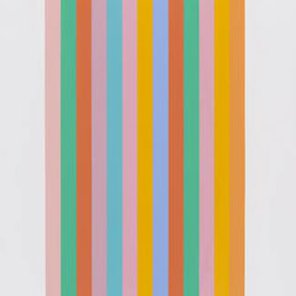
Bridget Riley makes paintings that seem to move, using nothing but flat colour and precisely calculated patterns to unsettle the eye. As one of the leading figures of the 1960s Op Art movement, she builds compositions from stripes, curves and repeated geometric shapes that are so exact that looking at them becomes a genuinely physical experience. Viewers notice a flicker, a pulse or a sense of depth where there is none.
Riley began in black and white before introducing colour in 1967 and has continued refining the same underlying inquiry into perception ever since. Screenprinting has been part of her practice since the early 1960s, translating the same optical precision into editions.
Riley began in black and white before introducing colour in 1967 and has continued refining the same underlying inquiry into perception ever since. Screenprinting has been part of her practice since the early 1960s, translating the same optical precision into editions.
Summary
Bridget Riley makes paintings that seem to move, using nothing but flat colour and precisely calculated patterns to unsettle the eye. As one of the leading figures of the 1960s Op Art movement, she builds compositions from stripes, curves and repeated geometric shapes that are so exact that looking at them becomes a genuinely physical experience. Viewers notice a flicker, a pulse or a sense of depth where there is none.
Riley began in black and white before introducing colour in 1967 and has continued refining the same underlying inquiry into perception ever since. Screenprinting has been part of her practice since the early 1960s, translating the same optical precision into editions.
Riley began in black and white before introducing colour in 1967 and has continued refining the same underlying inquiry into perception ever since. Screenprinting has been part of her practice since the early 1960s, translating the same optical precision into editions.
Artworks by Bridget Riley

About Bridget Riley
Biography
About Bridget Riley
Bridget Riley was born in 1931 in South London, the daughter of a printer. She spent part of the Second World War in Cornwall, where the shifting coastal light made a lasting impression on her, before studying at Goldsmiths College from 1949 to 1952 and then at the Royal College of Art from 1952 to 1955, working largely in black and white figure drawing.
From Seurat to Op Art
Riley’s style shifted around 1960 after years studying the Pointillist technique of Georges Seurat. Working initially in only black and white, she built paintings from varied squares, circles and stripes that appeared to shift, ripple or vibrate as a viewer’s eye moved across them. Her 1962 debut solo show at Gallery One in London established her reputation and by 1965 her work was included in The Responsive Eye at New York’s Museum of Modern Art, the exhibition that helped bring Op Art to international attention. She introduced colour into her paintings in 1967 and won the International Painting Prize at the 1968 Venice Biennale, the first British woman to do so.
A parallel life in print
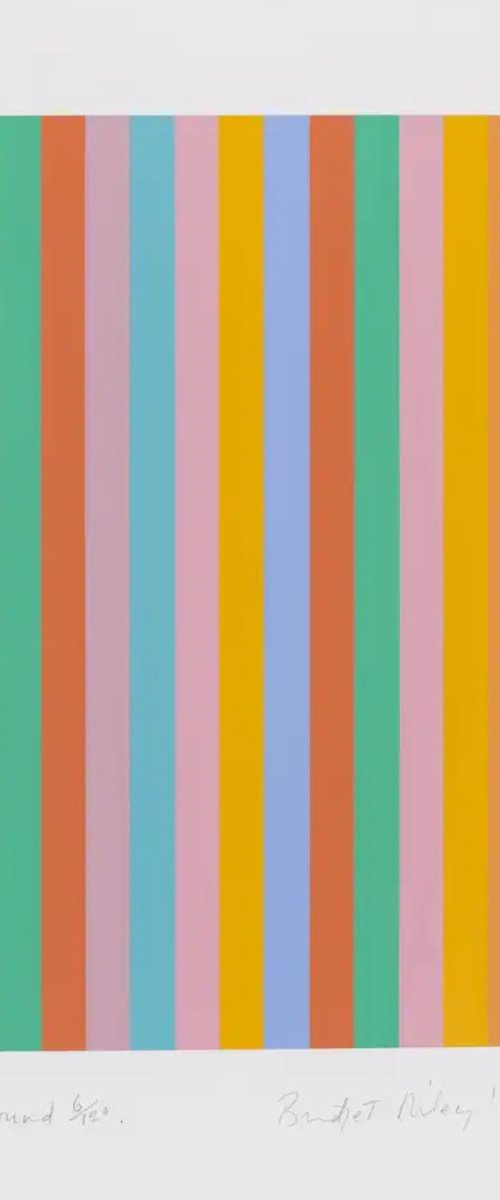
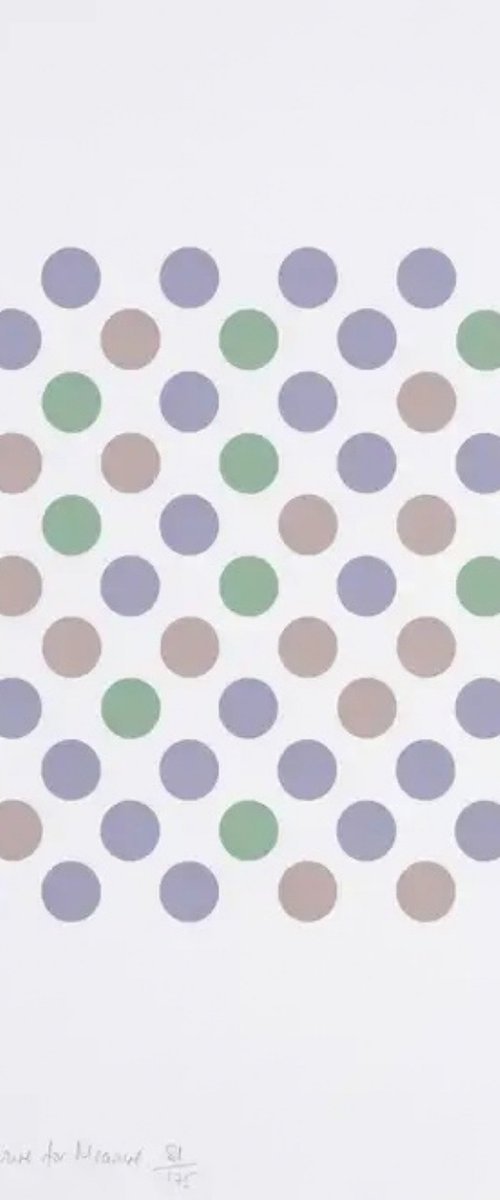
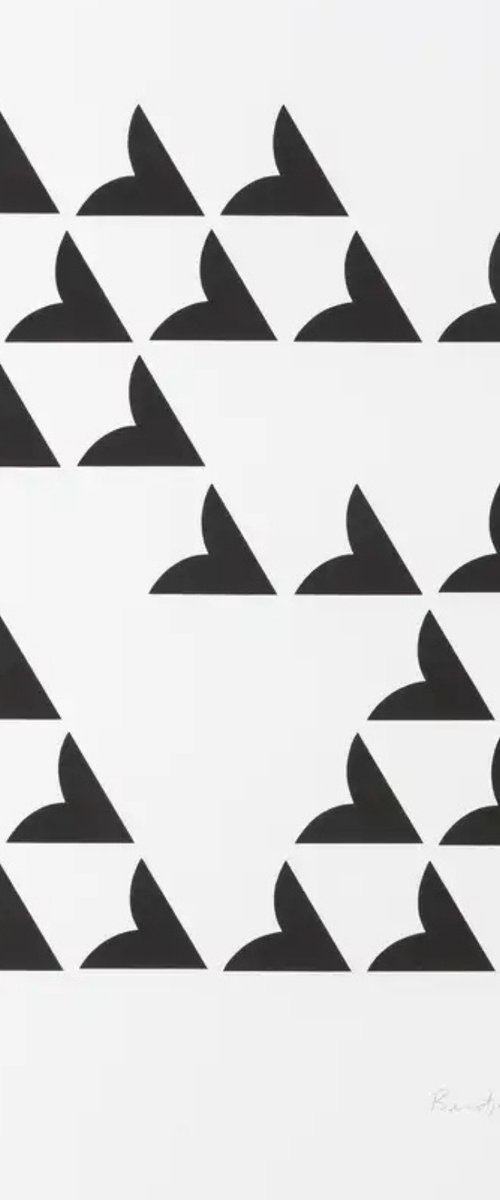
Riley has made screenprints since the early 1960s, sometimes to fulfil a specific request and sometimes to test an idea before reaching the canvas. The prints translate the same rigorous colour and pattern systems as her paintings and form a substantial and continuously updated body of work in their own right. She continues to remain active from studios in London, Cornwall and France.
Biography
About Bridget Riley
Bridget Riley was born in 1931 in South London, the daughter of a printer. She spent part of the Second World War in Cornwall, where the shifting coastal light made a lasting impression on her, before studying at Goldsmiths College from 1949 to 1952 and then at the Royal College of Art from 1952 to 1955, working largely in black and white figure drawing.
From Seurat to Op Art
Riley’s style shifted around 1960 after years studying the Pointillist technique of Georges Seurat. Working initially in only black and white, she built paintings from varied squares, circles and stripes that appeared to shift, ripple or vibrate as a viewer’s eye moved across them. Her 1962 debut solo show at Gallery One in London established her reputation and by 1965 her work was included in The Responsive Eye at New York’s Museum of Modern Art, the exhibition that helped bring Op Art to international attention. She introduced colour into her paintings in 1967 and won the International Painting Prize at the 1968 Venice Biennale, the first British woman to do so.
A parallel life in print
Riley has made screenprints since the early 1960s, sometimes to fulfil a specific request and sometimes to test an idea before reaching the canvas. The prints translate the same rigorous colour and pattern systems as her paintings and form a substantial and continuously updated body of work in their own right. She continues to remain active from studios in London, Cornwall and France.