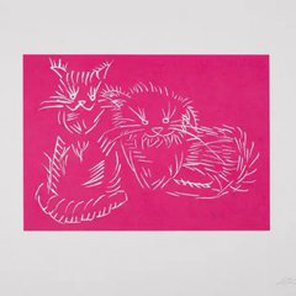
Ai Weiwei transforms traditional Chinese craft and ordinary objects into blunt, often confrontational commentary on power, censorship and human rights. Working across sculpture, installation, photography, architecture and an increasingly prolific print practice, his internationally recognised works include Sunflower Seeds, an installation of 100-million handpainted porcelain seeds at Tate Modern.
Since leaving China in 2015, Ai has continued to make and exhibit work worldwide, extending his practice into limited edition prints that carry the same directness as his larger installations.
Since leaving China in 2015, Ai has continued to make and exhibit work worldwide, extending his practice into limited edition prints that carry the same directness as his larger installations.
Summary
Ai Weiwei transforms traditional Chinese craft and ordinary objects into blunt, often confrontational commentary on power, censorship and human rights. Working across sculpture, installation, photography, architecture and an increasingly prolific print practice, his internationally recognised works include Sunflower Seeds, an installation of 100-million handpainted porcelain seeds at Tate Modern.
Since leaving China in 2015, Ai has continued to make and exhibit work worldwide, extending his practice into limited edition prints that carry the same directness as his larger installations.
Since leaving China in 2015, Ai has continued to make and exhibit work worldwide, extending his practice into limited edition prints that carry the same directness as his larger installations.
Artworks by Ai Weiwei
About Ai Weiwei
Biography
About Ai Weiwei
Ai Weiwei was born in 1957 in Beijing, the son of the poet, Ai Qing. His father was denounced during the Anti-Rightist Movement and as a result, Ai was sent with his family to a labour camp in Xinjiang, where he spent much of his childhood. Ai studied animation at the Beijing Film Academy and helped found the Stars in 1979, an early Chinese avant-garde art group, before moving to New York in 1981.
Readymades, activism and detention
Ai returned to Beijing in 1993 and began combining traditional Chinese materials and craft with conceptual, often provocative ideas. For example, Dropping a Han Dynasty Urn involved smashing a 2,000 year-old Han dynasty urn.
His international profile grew through the 2000s, even as he grew more openly critical of the Chinese government through his blog and investigations into corruption following the Sichuan earthquake. That criticism brought consequences, however: police assaulted him in 2009, his Shanghai studio was demolished and in 2011, he was held in secret detention on charges of tax evasion that he has always disputed.
Prints, Lego and a global practice
Since regaining his passport in 2015 and relocating his practice abroad, Ai has continued to make work that confronts censorship, surveillance and the refugee crisis, including his 2017 installation, Law of the Journey.
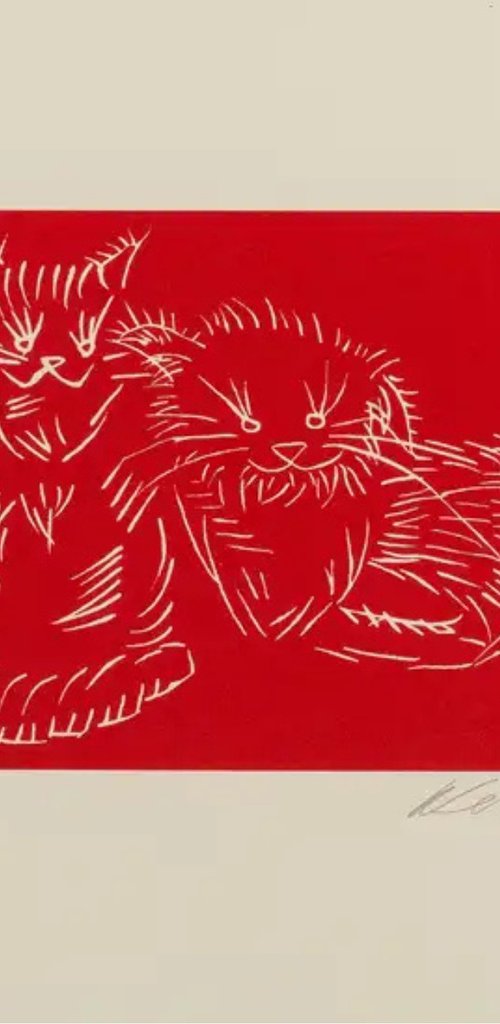
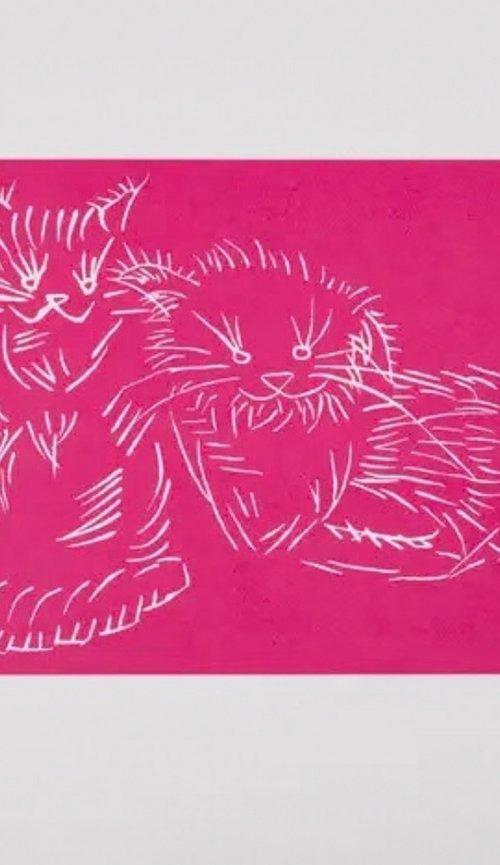
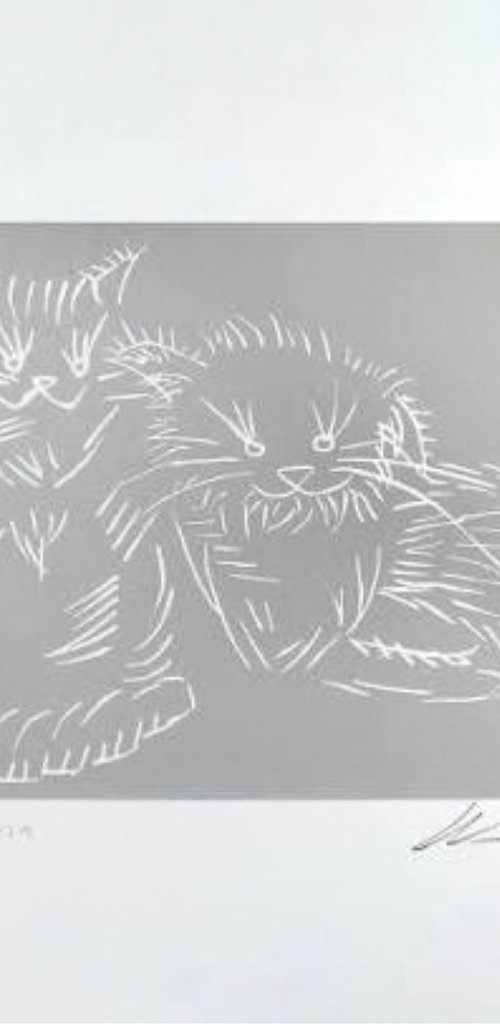
Printmaking has become an increasingly prominent part of Ai’s output: screenprints such as Everyone Is a Dragon translate the blocky, pixelated style of his Lego portraits into large-scale editions, while a 2024 series of limited edition lithographs were made with Human Rights Watch. His work is held in major museum collections worldwide and he continues to divide his practice between studios in Europe.
Biography
About Ai Weiwei
Ai Weiwei was born in 1957 in Beijing, the son of the poet, Ai Qing. His father was denounced during the Anti-Rightist Movement and as a result, Ai was sent with his family to a labour camp in Xinjiang, where he spent much of his childhood. Ai studied animation at the Beijing Film Academy and helped found the Stars in 1979, an early Chinese avant-garde art group, before moving to New York in 1981.
Readymades, activism and detention
Ai returned to Beijing in 1993 and began combining traditional Chinese materials and craft with conceptual, often provocative ideas. For example, Dropping a Han Dynasty Urn involved smashing a 2,000 year-old Han dynasty urn.
His international profile grew through the 2000s, even as he grew more openly critical of the Chinese government through his blog and investigations into corruption following the Sichuan earthquake. That criticism brought consequences, however: police assaulted him in 2009, his Shanghai studio was demolished and in 2011, he was held in secret detention on charges of tax evasion that he has always disputed.
Prints, Lego and a global practice
Since regaining his passport in 2015 and relocating his practice abroad, Ai has continued to make work that confronts censorship, surveillance and the refugee crisis, including his 2017 installation, Law of the Journey.
Printmaking has become an increasingly prominent part of Ai’s output: screenprints such as Everyone Is a Dragon translate the blocky, pixelated style of his Lego portraits into large-scale editions, while a 2024 series of limited edition lithographs were made with Human Rights Watch. His work is held in major museum collections worldwide and he continues to divide his practice between studios in Europe.