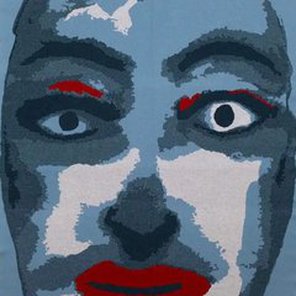
Nicolas Party paints in soft pastel, a medium he has made entirely his own. He uses pastel to build portraits, still lifes and landscapes so saturated in colour that ordinary subjects start to feel invented. Swiss Alpine landscapes, still lifes and portraits appear in improbable pinks, acid yellows and electric blues, simplified almost to the point of looking digitally generated despite being entirely handmade. Party has also built a significant body of prints, extending his saturated colour sense into a more widely collectible form.
Summary
Nicolas Party paints in soft pastel, a medium he has made entirely his own. He uses pastel to build portraits, still lifes and landscapes so saturated in colour that ordinary subjects start to feel invented. Swiss Alpine landscapes, still lifes and portraits appear in improbable pinks, acid yellows and electric blues, simplified almost to the point of looking digitally generated despite being entirely handmade. Party has also built a significant body of prints, extending his saturated colour sense into a more widely collectible form.
Artworks by Nicolas Party
About Nicolas Party
Biography
About Nicolas Party
Nicolas Party was born in 1980 in Switzerland, and spent his teenage years painting graffiti on trains around the city before turning to formal art training. He studied at the Lausanne School of Art, earning a degree in 2004, before completing an MFA at the Glasgow School of Art in Scotland in 2009. Party now lives and works between New York and Brussels.
From trains to pastel
Party's style draws on artists such as the 18th century pastellist, Rosalba Carriera, and the Swiss landscape painter, Ferdinand Hodler, filtered through the flattened, high-contrast look of his own early graffiti work. He has said that seeing Pablo Picasso’s Tête de femme in the flesh was a turning point for his work, and pastel has remained his primary material since. Party’s technique in pastel is prized for the intensity and immediacy it brings to his stylised faces, fruit bowls and rock formations. His large-scale murals, such as Draw the Curtain, which wrapped the exterior of the Hirshhorn Museum in Washington, D.C. in 2021, extend the same palette from canvas onto an entire building facade.
Experimenting with prints
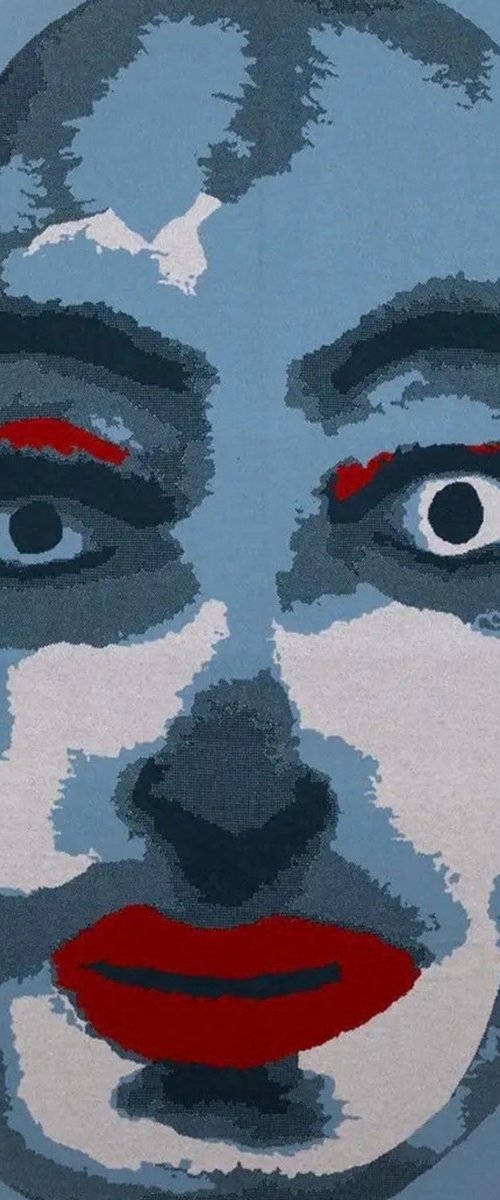
Party’s prints include screenprints, offset lithographs and woodcuts. Working with publishers including Phaidon and Artspace, he treats each edition as its own experiment in colour and material rather than a straightforward reproduction of a painting.