Damien Hirst
Artworks for sale:
Loading...
United Kingdom
Damien Hirst turned the shock of a shark in formaldehyde into one of the defining images of contemporary British art, building a career out of confronting viewers with mortality in materials nobody expected to see in a gallery.
As the driving force behind Goldsmiths’ Freeze exhibition in 1988, he became one of the best-known ‘Young British Artists’, a generation that used everyday and unconventional materials to challenge what art was allowed to look like.
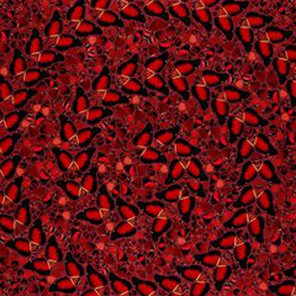
Hirst works across painting, sculpture and an extensive print practice, returning again and again to a small set of recurring forms, much like Yayoi Kusama. Spots, butterflies and skulls are reworked obsessively across scale and medium. He won the Turner Prize in 1995 and remains one of Britain’s most prolific and widely collected living artists.
As the driving force behind Goldsmiths’ Freeze exhibition in 1988, he became one of the best-known ‘Young British Artists’, a generation that used everyday and unconventional materials to challenge what art was allowed to look like.
Hirst works across painting, sculpture and an extensive print practice, returning again and again to a small set of recurring forms, much like Yayoi Kusama. Spots, butterflies and skulls are reworked obsessively across scale and medium. He won the Turner Prize in 1995 and remains one of Britain’s most prolific and widely collected living artists.
Summary
Damien Hirst turned the shock of a shark in formaldehyde into one of the defining images of contemporary British art, building a career out of confronting viewers with mortality in materials nobody expected to see in a gallery.
As the driving force behind Goldsmiths’ Freeze exhibition in 1988, he became one of the best-known ‘Young British Artists’, a generation that used everyday and unconventional materials to challenge what art was allowed to look like.
Hirst works across painting, sculpture and an extensive print practice, returning again and again to a small set of recurring forms, much like Yayoi Kusama. Spots, butterflies and skulls are reworked obsessively across scale and medium. He won the Turner Prize in 1995 and remains one of Britain’s most prolific and widely collected living artists.
As the driving force behind Goldsmiths’ Freeze exhibition in 1988, he became one of the best-known ‘Young British Artists’, a generation that used everyday and unconventional materials to challenge what art was allowed to look like.
Hirst works across painting, sculpture and an extensive print practice, returning again and again to a small set of recurring forms, much like Yayoi Kusama. Spots, butterflies and skulls are reworked obsessively across scale and medium. He won the Turner Prize in 1995 and remains one of Britain’s most prolific and widely collected living artists.
Artworks by Damien Hirst
About Damien Hirst
Biography
About Damien Hirst
Damien Hirst was born in 1965 in Bristol and studied at Goldsmiths College, London. While still a student, he organised Freeze, a self-curated exhibition staged in a disused Docklands warehouse in 1988, that brought together the work of his classmates and helped launch the generation later known as the Young British Artists. In 1991, backed by the collector, Charles Saatchi, Hirst created The Physical Impossibility of Death in the Mind of Someone Living — a huge tiger shark suspended in a tank of formaldehyde — which became an instant, controversial landmark and the first major work in his ongoing Natural History series.
Spots, screenprints and a print career of its own
Hirst’s paintings and prints have long run alongside each other. His Spot paintings, begun in the late 1980s, translate into an entire universe of print editions. Screenprints, etchings and woodcuts, each named after a pharmaceutical compound, were released through publishers including Paul Stolper and Other Criteria.
His 1999 debut print series, The Last Supper, reimagined pharmaceutical packaging under everyday food names. His later series pushed the format further, from the diamond dust screenprints of For the Love of God to the hand-carved 12 Woodcut Spots, which trade the flat, clinical surface of screenprint for the visible texture of a carved block.
From Turner Prize to Newport Street
Hirst won the Turner Prize in 1995, and has continued to cause controversy since. Most notably with In and Out of Love, an installation of two rooms filled with live butterflies. In 2015, he opened Newport Street Gallery in South London to share his own art collection with the public. His work is held in more than 45 museum collections worldwide and he continues to produce new series from his London studio.
Biography
About Damien Hirst
Damien Hirst was born in 1965 in Bristol and studied at Goldsmiths College, London. While still a student, he organised Freeze, a self-curated exhibition staged in a disused Docklands warehouse in 1988, that brought together the work of his classmates and helped launch the generation later known as the Young British Artists. In 1991, backed by the collector, Charles Saatchi, Hirst created The Physical Impossibility of Death in the Mind of Someone Living — a huge tiger shark suspended in a tank of formaldehyde — which became an instant, controversial landmark and the first major work in his ongoing Natural History series.
Spots, screenprints and a print career of its own
Hirst’s paintings and prints have long run alongside each other. His Spot paintings, begun in the late 1980s, translate into an entire universe of print editions. Screenprints, etchings and woodcuts, each named after a pharmaceutical compound, were released through publishers including Paul Stolper and Other Criteria.
His 1999 debut print series, The Last Supper, reimagined pharmaceutical packaging under everyday food names. His later series pushed the format further, from the diamond dust screenprints of For the Love of God to the hand-carved 12 Woodcut Spots, which trade the flat, clinical surface of screenprint for the visible texture of a carved block.
From Turner Prize to Newport Street
Hirst won the Turner Prize in 1995, and has continued to cause controversy since. Most notably with In and Out of Love, an installation of two rooms filled with live butterflies. In 2015, he opened Newport Street Gallery in South London to share his own art collection with the public. His work is held in more than 45 museum collections worldwide and he continues to produce new series from his London studio.