- Maxim Bondarenko
- All Artworks
- Young Man in Wreath
Young Man in Wreath (2025) Original Pastel Drawing by Maxim Bondarenko
30.48 x 45.72 x 0.25cm (unframed)
£656.69
Original artwork description
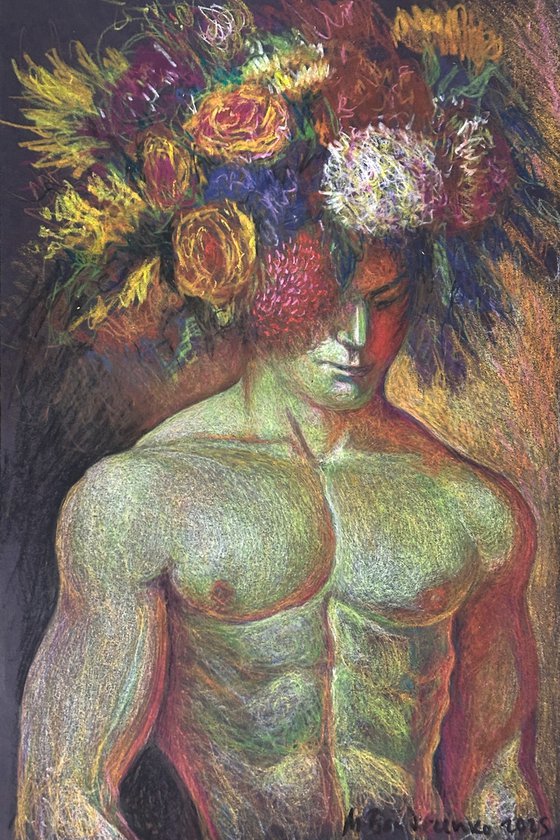
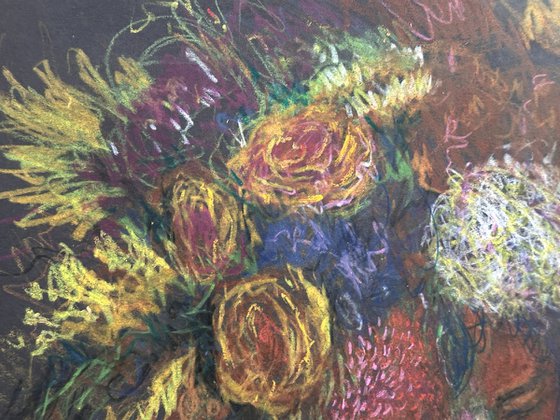
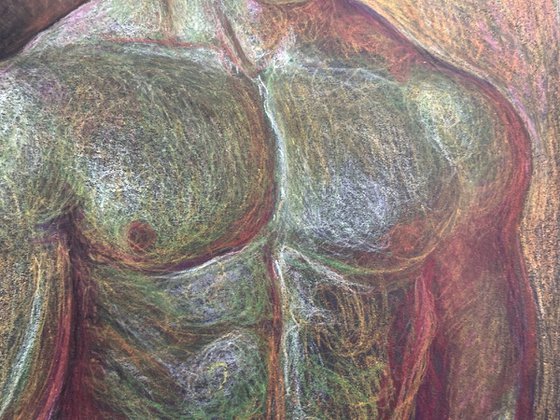
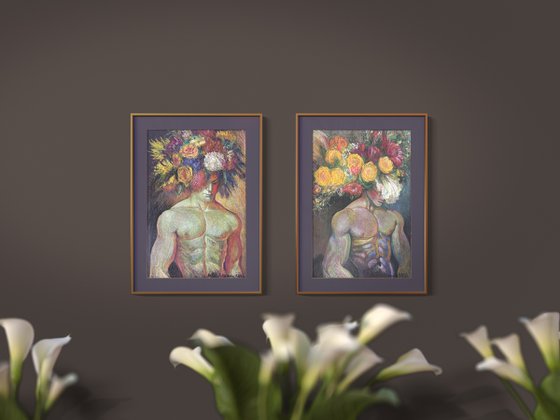
In Young Man in Wreath, the main drama isn’t narrative, it’s pressure. The drawing is split into two fields: the body, slow and solid; the wreath, fast and exploding. The torso is built with layered pastel, where green sits in the skin like an afterimage and reds trace the edges as heat. Anatomy is clear—chest, shoulders, abdomen—but the color refuses realism, which makes the figure feel less like a posed model and more like a remembered sensation.
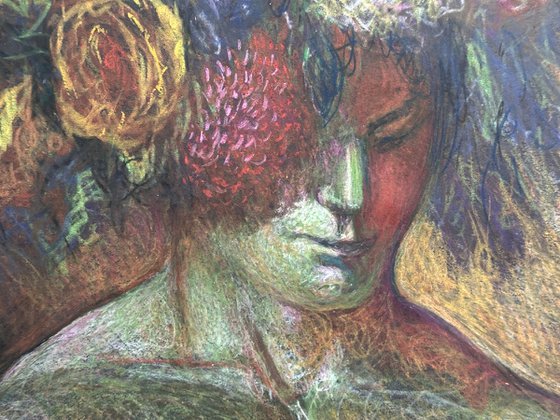
The face is present but withheld. The head turns down, eyes lowered, and the right side of the face catches warmer tones while the left dissolves into darker shadow. That choice keeps the work intimate. The viewer is close enough to see, but not invited to “take” the subject. It’s a portrait that protects itself.
Compositionally, it’s direct: the wreath claims space, the body absorbs it. The background stays dark, with a warmer zone on the right that pushes the figure forward and gives the skin a faint glow. The contrast makes the body feel heavy and the wreath almost weightless, like noise above a held breath.
In a queer context, the image carries a familiar tension: visibility and disguise. Ornament becomes armor; beauty becomes a way to be seen on one’s own terms. The result is sensual without being performative—desire expressed through attention, not display.
Materials used:
Black paper
Details:
- Pastel drawing on Paper
- One of a kind artwork
- Size: 30.48 x 45.72 x 0.25cm (unframed)
- Signed on the front
- Style: Impressionistic
- Subject: Nudes and erotic
Featured by our Editors:
 Free returns
14 day money back guaranteeLearn more
Original artwork description
In Young Man in Wreath, the main drama isn’t narrative, it’s pressure. The drawing is split into two fields: the body, slow and solid; the wreath, fast and exploding. The torso is built with layered pastel, where green sits in the skin like an afterimage and reds trace the edges as heat. Anatomy is clear—chest, shoulders, abdomen—but the color refuses realism, which makes the figure feel less like a posed model and more like a remembered sensation.
The face is present but withheld. The head turns down, eyes lowered, and the right side of the face catches warmer tones while the left dissolves into darker shadow. That choice keeps the work intimate. The viewer is close enough to see, but not invited to “take” the subject. It’s a portrait that protects itself.
Compositionally, it’s direct: the wreath claims space, the body absorbs it. The background stays dark, with a warmer zone on the right that pushes the figure forward and gives the skin a faint glow. The contrast makes the body feel heavy and the wreath almost weightless, like noise above a held breath.
In a queer context, the image carries a familiar tension: visibility and disguise. Ornament becomes armor; beauty becomes a way to be seen on one’s own terms. The result is sensual without being performative—desire expressed through attention, not display.
Materials used:
Black paper
Details:
- Pastel drawing on Paper
- One of a kind artwork
- Size: 30.48 x 45.72 x 0.25cm (unframed)
- Signed on the front
- Style: Impressionistic
- Subject: Nudes and erotic
Featured by our Editors:

Maxim Bondarenko
United States
About
I create art as long as I remember myself and it was always a different cause for that. Currently I endeavor to paint as a spiritual work, as a service,... Read more