- Maurizio Puglisi
- All Artworks
- The shadow of light
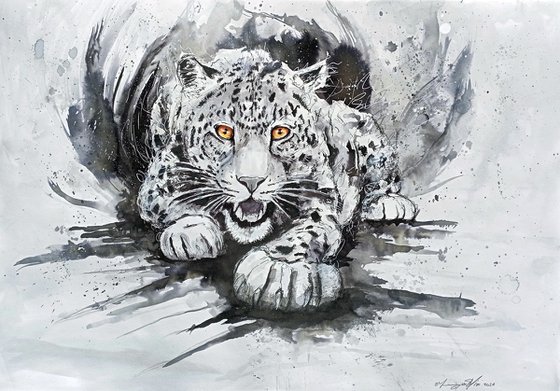
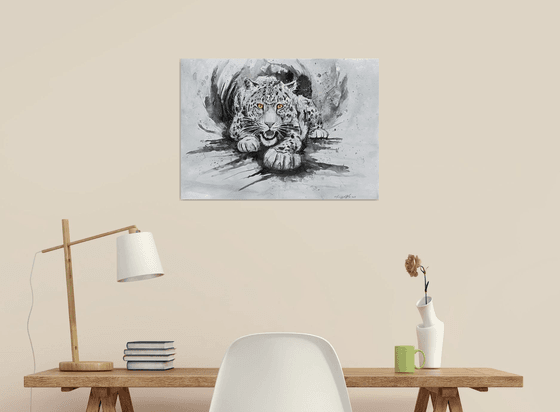
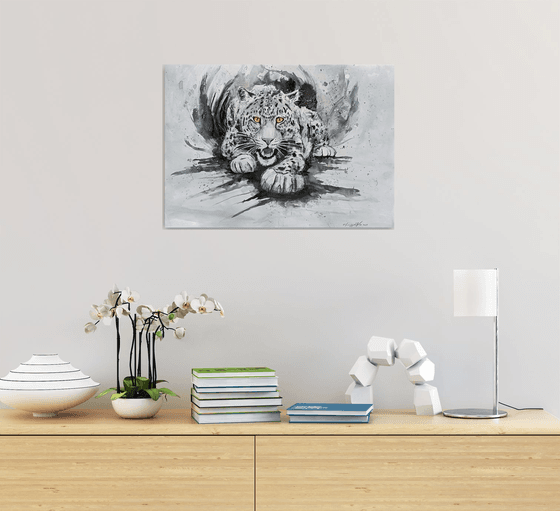
The shadow of light (2024) Original Ink Drawing by Maurizio Puglisi
59 x 42 x 0.1cm (unframed)
£392.66
Original artwork description
The Snow Leopard (or irbis), a symbol of Hidden Strength, is an iconic animal from the mountainous regions of Central Asia, often associated with solitude, resilience, and spiritual power. In many Himalayan and shamanic cultures, the snow leopard is seen as a sacred guardian, a bridge between the material and spiritual worlds, symbolizing adaptability in hostile environments and the ability to survive in the shadows.
The leopard emerges from a tunnel of darkness, suggesting an awakening or inner revelation. This represents the inner strength that emerges from periods of crisis or introspection, a common theme in contemporary art that explores the human psyche through animal metaphors. The aggressive pose, with its mouth wide open, evokes a primal energy, symbolizing the wild instinct that challenges urban conventions – consistent with the "Urban and Pop" style of the work.
The shadow of light," insinuating that light itself generates shadows, or that illumination can arise from darkness. The leopard seems to emerge from a vortex of swirling, abstract darkness toward a lighter area, symbolizing the transition from chaos to order, from fear to awareness.
This contrast reflects philosophical themes such as the yin-yang dualism (where light and shadow are interdependent) or the Platonic idea of the cave, where emerging from the shadows represents access to truth. Shadows are not merely a backdrop but an active element, "swallowing" and "liberating" the subject, suggesting a cycle of destruction and rebirth.
The Orange Eyes: Inner Fire and Penetrating Gaze. The leopard's eyes, a vivid orange in a predominantly monochromatic work, are the only point of intense color, immediately drawing attention. Orange evokes fire, passion, and vitality, symbolizing an "inner fire" or a divine spark that illuminates the darkness. In animal symbolism, luminous eyes They often represent intuition, wisdom, or a latent danger – here, they could indicate the ability to see beyond appearances, an invitation to the viewer to confront their own "wild side."
This element could also allude to ecological themes: the snow leopard is an endangered species, and its "lit" eyes could symbolize a cry of alarm for nature conservation, where light represents hope amidst the shadows of extinction.
The Scribble Art Style: Controlled Chaos and Wild Energy. The chaotic, scribbled strokes are not random: they symbolize the uncontrolled energy of nature and creativity. In contrast to more precise techniques, this style evokes the primordial disorder from which order emerges, reflecting "wild energy." It represents the internal struggle of modern humans, trapped in an urban world yet capable of unleashing ancestral instincts.
Symbolically, the scribble recalls Informal Art or Expressionism, where the gesture (flowing ink and splatter) symbolizes fluidity. Emotional and unpredictable life.
Overall Interpretation: "The Shadow of Light" explores the theme of inner resilience and existential duality: light does not exist without shadow, and true strength emerges from confronting darkness. In a contemporary context, it symbolizes personal rebirth, where the wild animal represents humanity emerging stronger. The work invites personal reflection, emphasizing how beauty and danger coexist in nature and the human soul.
inks , canson on paper 200 g/m
shipping in a tube -scribbles art
-The artwork listed are unique, original drawings and not prints, signed and dated by the artist.
Drawings is signed and dated by the artist as well as accompanied by a Certificate of Authenticity.
Multiple purchases of the same size will be shipped together, where possible, and any excess shipping costs will be refunded after purchase
Materials used:
inks
Details:
- Ink drawing on Paper
- One of a kind artwork
- Size: 59 x 42 x 0.1cm (unframed)
- Signed certificate of authenticity
- Style: Urban and Pop
- Subject: Animals and birds
Tags:
#energy#wildlife#shadows#leopard#ink drawing#inks#wild energy#lights#scribble drawing Free returns
14 day money back guaranteeLearn more
Original artwork description
The Snow Leopard (or irbis), a symbol of Hidden Strength, is an iconic animal from the mountainous regions of Central Asia, often associated with solitude, resilience, and spiritual power. In many Himalayan and shamanic cultures, the snow leopard is seen as a sacred guardian, a bridge between the material and spiritual worlds, symbolizing adaptability in hostile environments and the ability to survive in the shadows.
The leopard emerges from a tunnel of darkness, suggesting an awakening or inner revelation. This represents the inner strength that emerges from periods of crisis or introspection, a common theme in contemporary art that explores the human psyche through animal metaphors. The aggressive pose, with its mouth wide open, evokes a primal energy, symbolizing the wild instinct that challenges urban conventions – consistent with the "Urban and Pop" style of the work.
The shadow of light," insinuating that light itself generates shadows, or that illumination can arise from darkness. The leopard seems to emerge from a vortex of swirling, abstract darkness toward a lighter area, symbolizing the transition from chaos to order, from fear to awareness.
This contrast reflects philosophical themes such as the yin-yang dualism (where light and shadow are interdependent) or the Platonic idea of the cave, where emerging from the shadows represents access to truth. Shadows are not merely a backdrop but an active element, "swallowing" and "liberating" the subject, suggesting a cycle of destruction and rebirth.
The Orange Eyes: Inner Fire and Penetrating Gaze. The leopard's eyes, a vivid orange in a predominantly monochromatic work, are the only point of intense color, immediately drawing attention. Orange evokes fire, passion, and vitality, symbolizing an "inner fire" or a divine spark that illuminates the darkness. In animal symbolism, luminous eyes They often represent intuition, wisdom, or a latent danger – here, they could indicate the ability to see beyond appearances, an invitation to the viewer to confront their own "wild side."
This element could also allude to ecological themes: the snow leopard is an endangered species, and its "lit" eyes could symbolize a cry of alarm for nature conservation, where light represents hope amidst the shadows of extinction.
The Scribble Art Style: Controlled Chaos and Wild Energy. The chaotic, scribbled strokes are not random: they symbolize the uncontrolled energy of nature and creativity. In contrast to more precise techniques, this style evokes the primordial disorder from which order emerges, reflecting "wild energy." It represents the internal struggle of modern humans, trapped in an urban world yet capable of unleashing ancestral instincts.
Symbolically, the scribble recalls Informal Art or Expressionism, where the gesture (flowing ink and splatter) symbolizes fluidity. Emotional and unpredictable life.
Overall Interpretation: "The Shadow of Light" explores the theme of inner resilience and existential duality: light does not exist without shadow, and true strength emerges from confronting darkness. In a contemporary context, it symbolizes personal rebirth, where the wild animal represents humanity emerging stronger. The work invites personal reflection, emphasizing how beauty and danger coexist in nature and the human soul.
inks , canson on paper 200 g/m
shipping in a tube -scribbles art
-The artwork listed are unique, original drawings and not prints, signed and dated by the artist.
Drawings is signed and dated by the artist as well as accompanied by a Certificate of Authenticity.
Multiple purchases of the same size will be shipped together, where possible, and any excess shipping costs will be refunded after purchase
Materials used:
inks
Details:
- Ink drawing on Paper
- One of a kind artwork
- Size: 59 x 42 x 0.1cm (unframed)
- Signed certificate of authenticity
- Style: Urban and Pop
- Subject: Animals and birds
Tags:
#energy#wildlife#shadows#leopard#ink drawing#inks#wild energy#lights#scribble drawing
Maurizio Puglisi
Italy
About
Maurizio Puglisi, I was born in 1994, I started a painting in 1994, attracted by the power of the oil technique over the years I have perfected my style lately... Read more