- Maurizio Puglisi
- All Artworks
- Tell it to the Moon
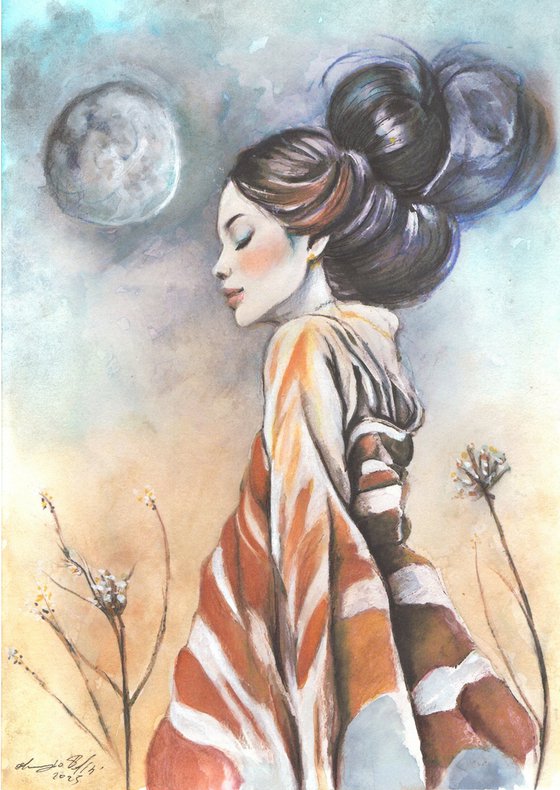
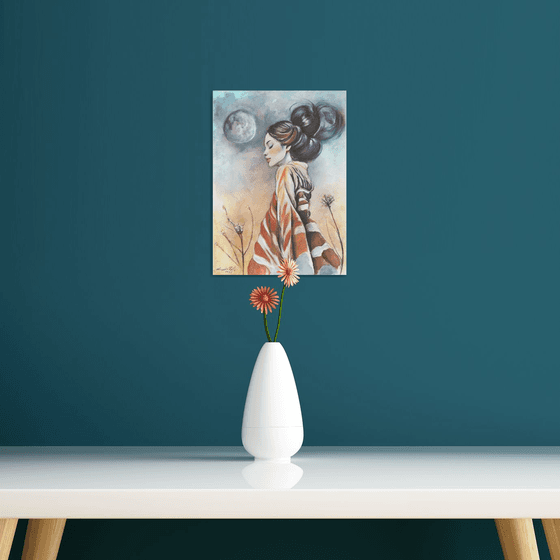
Tell it to the Moon (2025) Original Watercolour by Maurizio Puglisi
21 x 29 x 0.1cm (unframed)
£261.77
Original artwork description
The moon is a universal archetype of mystery and the subconscious. The title "Tell it to the Moon" evokes the idea of intimate confession: in many folk traditions (European and Asian), the moon is a silent confidant for desires, secrets, or unexpressed pain. It also symbolizes cyclicality—lunar phases as a metaphor for renewal and transition—reinforced by the winter and Christmas context, where the full moon represents the culmination of a cycle, light in darkness, and the hope of rebirth. This symbolic content invites the viewer to reflect on their own "unspoken messages," transforming the work into an invitation to emotional catharsis.
The woman represents inner femininity and contemplative solitude. Her averted gaze and closed pose symbolize a withdrawal from the outside world, an introspection that protects the soul from external influences. The kimono, an oriental element, symbolizes ephemeral grace and tradition: in Japan, it evokes transitory beauty (mono no aware), while the stripes could allude to "layers" of identity or the flow of time. The warm orange contrasts the lunar cold, symbolizing repressed vitality or inner resilience: an emotional "fire" that resists the winter of life. Overall, this symbolic content explores hybrid identity (West-East) and feminine strength as a bridge between vulnerability and harmony.
Slender stems with white flowers or winter inflorescences (similar to dandelions or umbellifers) emerge from below, almost framing the figure.
The flowers embody the fragility of life and fleeting beauty. In a winter context, they symbolize resilience: plants that bloom in the frost, a metaphor for hope and purification (a Christmas theme of rebirth). When interpreted as dandelions, they allude to wishes scattered in the wind—a direct connection to the title, where "telling the moon" is like blowing a wish. Influenced by ukiyo-e, the flowers represent the cycle of life, death, and rebirth, adding a symbolic meaning of transience: everything is ephemeral, but beauty endures. This element invites an optimistic interpretation, where fragility becomes a generative force.
The colors symbolize an internal dualism: blue represents mystery, infinity, and melancholy (the "cold" of the soul), while orange evokes warmth, creativity, and optimism (the "light" within). This contrast reflects the balance between repressed emotions and latent passion, a symbolic meaning of harmony amidst conflict. The nocturnal, wintery atmosphere symbolizes silence and introspection, yet with a hint of magic, evoking Christmas themes of peace and reflection. This emotional symbolism transforms the work into a mirror of the human soul, where darkness amplifies the inner light.
The asymmetry, inspired by Japanese art, symbolizes natural imperfection and harmony in disorder—a rejection of classical symmetry to emphasize emotional authenticity. The empty spaces (ma) represent the "unspoken," silence as a space for personal reflection. The intimate format symbolizes accessibility: a work to be kept like a secret, strengthening the symbolic content of personal connection between artist and viewer.
In summary, the symbolic content of "Tell it to the Moon" intertwines themes of emotional trust, resilience, and cyclicality, creating a work that is both decorative and profound.
The moon as a listener, the woman as an emblem of inner strength, the flowers as ephemeral greetings. The work invites a personal reading, especially in the Christmas context of mystery and hope. It is an invitation to "tell the moon" one's wishes, transforming symbolism into a cathartic experience.
inks ,brush pen , watercolor, pencils on canson paper 200 g/m, matte varnish finish
shipping in a cardboard box
-The artwork listed are unique, original drawings and not prints, signed and dated by the artist.
Drawings is signed and dated by the artist as well as accompanied by a Certificate of Authenticity.
Multiple purchases of the same size will be shipped together, where possible, and any excess shipping costs will be refunded after purchase
Materials used:
ink,brushpen,watercolor,pencils
Details:
- Watercolour on Paper
- One of a kind artwork
- Size: 21 x 29 x 0.1cm (unframed)
- Signed certificate of authenticity
- Style: Impressionistic
- Subject: People and portraits
Tags:
#moon#art contemporain#watercolor#art collection#moon light#italy art#art sales#impression art Free returns
14 day money back guaranteeLearn more
Original artwork description
The moon is a universal archetype of mystery and the subconscious. The title "Tell it to the Moon" evokes the idea of intimate confession: in many folk traditions (European and Asian), the moon is a silent confidant for desires, secrets, or unexpressed pain. It also symbolizes cyclicality—lunar phases as a metaphor for renewal and transition—reinforced by the winter and Christmas context, where the full moon represents the culmination of a cycle, light in darkness, and the hope of rebirth. This symbolic content invites the viewer to reflect on their own "unspoken messages," transforming the work into an invitation to emotional catharsis.
The woman represents inner femininity and contemplative solitude. Her averted gaze and closed pose symbolize a withdrawal from the outside world, an introspection that protects the soul from external influences. The kimono, an oriental element, symbolizes ephemeral grace and tradition: in Japan, it evokes transitory beauty (mono no aware), while the stripes could allude to "layers" of identity or the flow of time. The warm orange contrasts the lunar cold, symbolizing repressed vitality or inner resilience: an emotional "fire" that resists the winter of life. Overall, this symbolic content explores hybrid identity (West-East) and feminine strength as a bridge between vulnerability and harmony.
Slender stems with white flowers or winter inflorescences (similar to dandelions or umbellifers) emerge from below, almost framing the figure.
The flowers embody the fragility of life and fleeting beauty. In a winter context, they symbolize resilience: plants that bloom in the frost, a metaphor for hope and purification (a Christmas theme of rebirth). When interpreted as dandelions, they allude to wishes scattered in the wind—a direct connection to the title, where "telling the moon" is like blowing a wish. Influenced by ukiyo-e, the flowers represent the cycle of life, death, and rebirth, adding a symbolic meaning of transience: everything is ephemeral, but beauty endures. This element invites an optimistic interpretation, where fragility becomes a generative force.
The colors symbolize an internal dualism: blue represents mystery, infinity, and melancholy (the "cold" of the soul), while orange evokes warmth, creativity, and optimism (the "light" within). This contrast reflects the balance between repressed emotions and latent passion, a symbolic meaning of harmony amidst conflict. The nocturnal, wintery atmosphere symbolizes silence and introspection, yet with a hint of magic, evoking Christmas themes of peace and reflection. This emotional symbolism transforms the work into a mirror of the human soul, where darkness amplifies the inner light.
The asymmetry, inspired by Japanese art, symbolizes natural imperfection and harmony in disorder—a rejection of classical symmetry to emphasize emotional authenticity. The empty spaces (ma) represent the "unspoken," silence as a space for personal reflection. The intimate format symbolizes accessibility: a work to be kept like a secret, strengthening the symbolic content of personal connection between artist and viewer.
In summary, the symbolic content of "Tell it to the Moon" intertwines themes of emotional trust, resilience, and cyclicality, creating a work that is both decorative and profound.
The moon as a listener, the woman as an emblem of inner strength, the flowers as ephemeral greetings. The work invites a personal reading, especially in the Christmas context of mystery and hope. It is an invitation to "tell the moon" one's wishes, transforming symbolism into a cathartic experience.
inks ,brush pen , watercolor, pencils on canson paper 200 g/m, matte varnish finish
shipping in a cardboard box
-The artwork listed are unique, original drawings and not prints, signed and dated by the artist.
Drawings is signed and dated by the artist as well as accompanied by a Certificate of Authenticity.
Multiple purchases of the same size will be shipped together, where possible, and any excess shipping costs will be refunded after purchase
Materials used:
ink,brushpen,watercolor,pencils
Details:
- Watercolour on Paper
- One of a kind artwork
- Size: 21 x 29 x 0.1cm (unframed)
- Signed certificate of authenticity
- Style: Impressionistic
- Subject: People and portraits
Tags:
#moon#art contemporain#watercolor#art collection#moon light#italy art#art sales#impression art
Maurizio Puglisi
Italy
About
Maurizio Puglisi, I was born in 1994, I started a painting in 1994, attracted by the power of the oil technique over the years I have perfected my style lately... Read more