- Kloska Ovidiu
- All Artworks
- Silence and the Threshold of Becoming
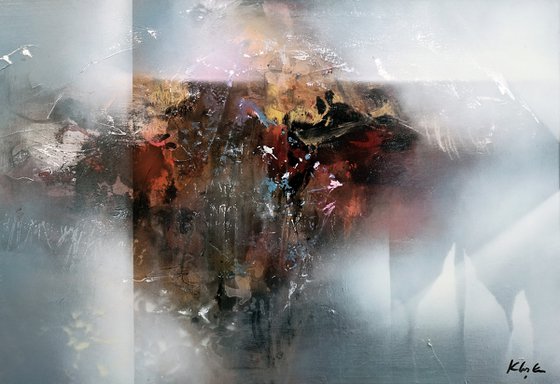
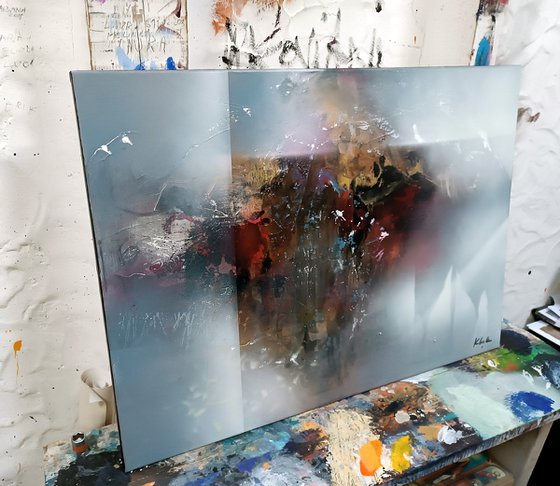
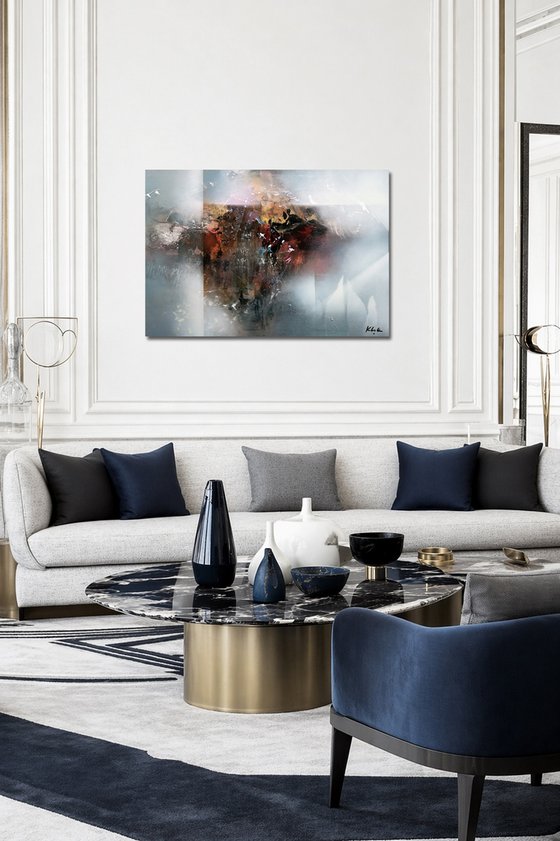
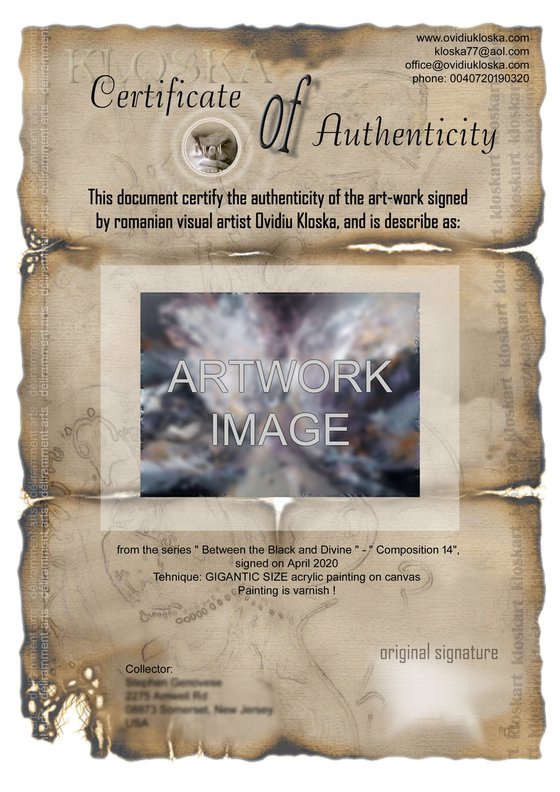
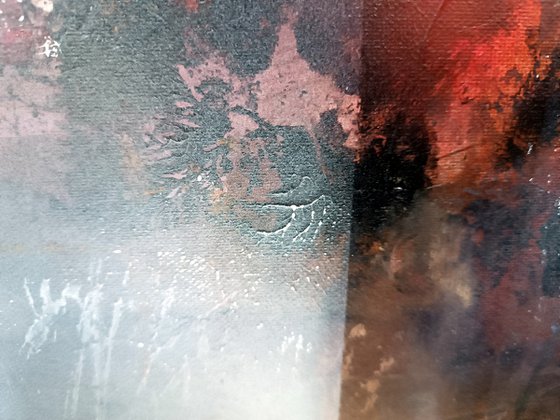
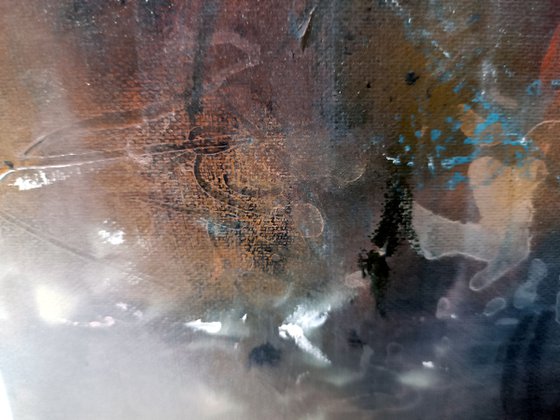
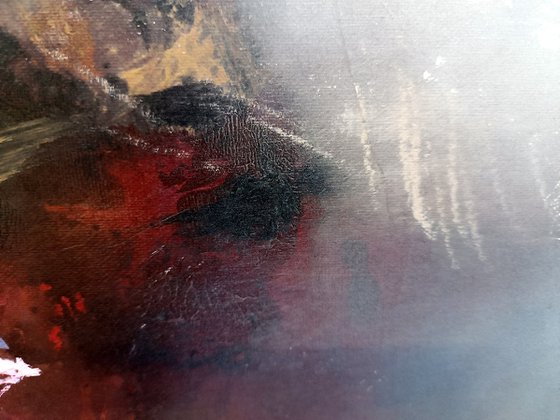
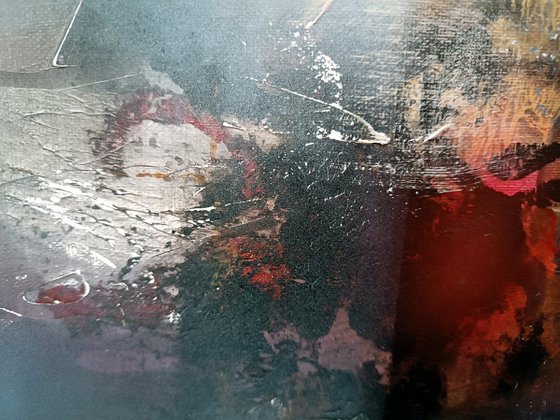
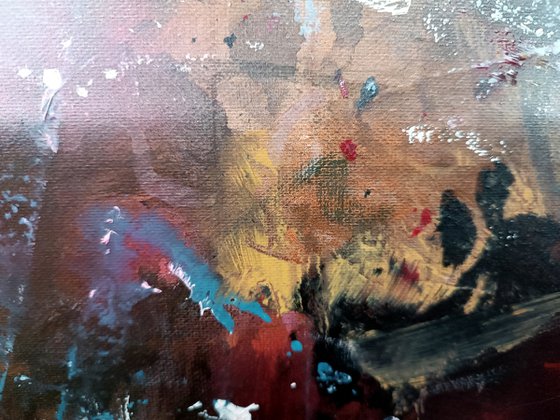
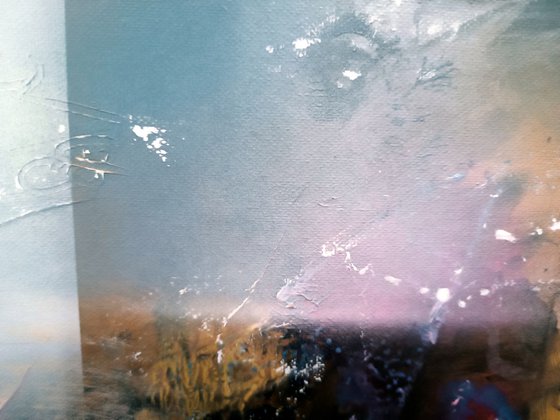
Silence and the Threshold of Becoming (2026) Original Acrylic Painting by Kloska Ovidiu
70 x 50 x 2cm (unframed) / 70 x 50cm (actual image size)
£689.42
Original artwork description
Beyond the Inside — On Silence, Turbulence, and the Threshold of Becoming
In *Beyond the Inside*, the image does not present itself immediately as an object, nor even as a stable field of perception. Instead, it hovers in a state of suspension—something between appearance and disappearance, between emergence and withdrawal. What we encounter is not a depiction, but a condition: a space where matter, memory, and sensation coalesce without fully resolving into form. The painting resists clarity, and in doing so, it invites a different kind of looking—one that is slower, more meditative, and attuned to nuance rather than certainty.
At first glance, the composition seems to organize itself around a central mass, a dense accumulation of pigment that appears both constructed and eroded. This core is neither entirely solid nor entirely dissolving. It vibrates with internal tension, as if holding within it multiple temporalities—gestures layered, obscured, and partially revealed. The surrounding atmosphere, by contrast, opens into a field of pale diffusion. It is here that light becomes not illumination but substance: a veil, a membrane, a breathing surface that both conceals and reveals.
Light in this work does not behave as a passive condition. It is active, almost sentient. It does not simply fall upon the image but seems to emanate from within it, filtered through layers of material that have been worked, disturbed, and softened. This internal luminosity carries a metaphysical weight—it suggests not visibility, but the possibility of becoming visible. Light becomes a threshold, a passage through which the unseen negotiates its entry into perception.
There is, within this dynamic, a profound sense of fascination—not as spectacle, but as a quiet compulsion to remain. The painting does not demand attention; it absorbs it. One does not “look at” it in the conventional sense, but rather lingers within its field, as though entering a mental or emotional landscape that cannot be mapped in advance. This fascination emerges precisely from the work’s refusal to resolve. It holds the viewer in a state of suspended understanding, where meaning is neither fixed nor absent, but continually forming.
Meditation, in this context, becomes not a theme but a mode of engagement. The painting slows perception. It asks the viewer to relinquish the desire for immediate comprehension and instead inhabit a more fluid temporality. The eye moves, hesitates, returns. Subtle variations in texture and tone begin to register. What initially appeared as emptiness reveals itself as complexity. What seemed chaotic begins to disclose an internal coherence—not logical, but affective.
The central mass, with its darker tonalities and intermittent flashes of color, operates as a site of condensation. It gathers energy, memory, and gesture into a concentrated zone that feels at once intimate and unstable. There are suggestions—never fully formed—of bodily presence, of organic structures, of something once whole now fragmented. Yet these associations remain fleeting. The image resists being named, and in doing so, it preserves its openness.
Memory plays a crucial role here, not as recollection of specific events, but as a mode of presence. The painting feels remembered rather than seen. Its surfaces carry traces—marks that suggest previous states, erased gestures, decisions undone or transformed. These traces do not function as narrative clues but as residues of process, evidence of time embedded within material. The work becomes a site where past actions persist, not visibly, but as pressure beneath the surface.
This notion of trace is essential. Nothing in the painting appears entirely new; everything bears the imprint of having been altered, displaced, or partially removed. Even the lighter areas—the so-called “empty” spaces—are charged with subtle disturbances. Scratches, smudges, faint tonal shifts: these are not incidental, but integral. They suggest that absence itself is constructed, that silence is not the lack of activity but its quiet aftermath.
The interplay between presence and absence gives rise to a sense of escaping—not in the sense of departure, but of evasion. The image continually withdraws from definitive capture. Just as the eye begins to settle on a form, it dissolves. Just as a structure begins to emerge, it disperses into atmosphere. This elusiveness is not frustrating; it is generative. It creates a space in which perception remains active, searching, alive.
Energy within the work is not explosive but contained. It is a pressure that does not erupt, a turbulence that remains internalized. The central area pulses with this restrained intensity, while the surrounding field absorbs and diffuses it. The result is a delicate equilibrium—one that could easily collapse if pushed too far in either direction. Too much articulation, and the image would lose its ambiguity. Too much erasure, and it would lose its vitality. What we witness is a precise calibration, a balancing act sustained through restraint.
Serenity, therefore, is not the absence of disturbance but its integration. The painting does not present a calm surface untouched by conflict; rather, it offers a state in which turbulence has been absorbed, quieted, and held in suspension. This serenity is active, not passive. It is the result of negotiation, of forces brought into relation without being fully resolved.
The vertical veils that subtly traverse the composition introduce another layer of complexity. They read almost as interruptions—moments where the image is filtered, refracted, or partially obscured. These bands evoke a sense of interference, as though the act of seeing itself were being mediated. They disrupt the continuity of the surface, introducing a temporal dimension: a sense that what we see is not simultaneous, but layered, sequential, perhaps even fragmented across moments.
This fragmentation aligns with the painting’s broader engagement with perception. Vision here is not stable or unified; it is contingent, shifting, and incomplete. The viewer becomes aware not only of the image, but of the act of seeing it—of the conditions that shape and limit perception. In this sense, the work operates as a kind of mirror, reflecting not the external world, but the internal processes through which we attempt to grasp it.
Materiality plays a crucial role in sustaining this tension. The surface bears the marks of its own making—drips, scratches, accumulations, and dissolutions. These are not merely technical features; they are expressive in themselves. They speak of gestures performed and undone, of decisions made and reconsidered. The painting becomes a record of its own becoming, a site where process and image are inseparable.
And yet, despite this emphasis on material, the work never collapses into pure abstraction. It maintains a tenuous connection to the suggestive, the almost-figurative. There is always the possibility that something might emerge—a form, a presence, a recognizable structure—but this possibility is never fulfilled. It remains suspended, deferred. This tension between abstraction and suggestion is what gives the painting its psychological depth.
In the end, *Beyond the Inside* does not offer resolution. It does not conclude, explain, or define. Instead, it opens—a space of contemplation in which opposites coexist: light and obscurity, movement and stillness, presence and absence. It invites the viewer not to understand, but to remain—to inhabit the interval where meaning is still forming.
What lingers after viewing is not an image, but a sensation: of having encountered something that cannot be fully grasped, only approached. A quiet intensity, a held breath, a memory without origin. In this sense, the painting succeeds not by revealing what lies beyond the inside, but by allowing us to feel the threshold itself—the place where inside and outside, self and image, begin to blur.
It is in this threshold that the work finds its deepest resonance. Not as an answer, but as an opening.
Materials used:
varnished acrylics and spray on canvas
Details:
- Acrylic painting on Canvas
- One of a kind artwork
- Size: 70 x 50 x 2cm (unframed) / 70 x 50cm (actual image size)
- Ready to hang
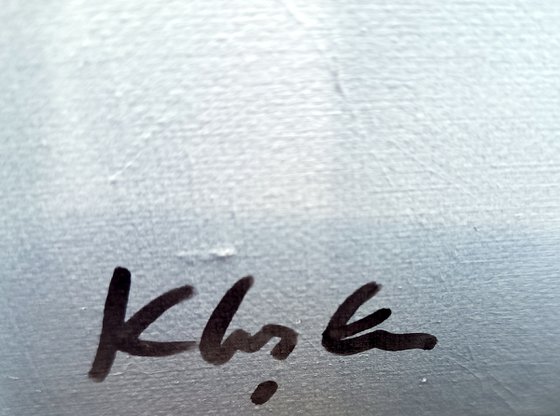
- Signed on the front
- Style: Organic
- Subject: Landscapes, sea and sky
 Free returns
14 day money back guaranteeLearn more
Original artwork description
Beyond the Inside — On Silence, Turbulence, and the Threshold of Becoming
In *Beyond the Inside*, the image does not present itself immediately as an object, nor even as a stable field of perception. Instead, it hovers in a state of suspension—something between appearance and disappearance, between emergence and withdrawal. What we encounter is not a depiction, but a condition: a space where matter, memory, and sensation coalesce without fully resolving into form. The painting resists clarity, and in doing so, it invites a different kind of looking—one that is slower, more meditative, and attuned to nuance rather than certainty.
At first glance, the composition seems to organize itself around a central mass, a dense accumulation of pigment that appears both constructed and eroded. This core is neither entirely solid nor entirely dissolving. It vibrates with internal tension, as if holding within it multiple temporalities—gestures layered, obscured, and partially revealed. The surrounding atmosphere, by contrast, opens into a field of pale diffusion. It is here that light becomes not illumination but substance: a veil, a membrane, a breathing surface that both conceals and reveals.
Light in this work does not behave as a passive condition. It is active, almost sentient. It does not simply fall upon the image but seems to emanate from within it, filtered through layers of material that have been worked, disturbed, and softened. This internal luminosity carries a metaphysical weight—it suggests not visibility, but the possibility of becoming visible. Light becomes a threshold, a passage through which the unseen negotiates its entry into perception.
There is, within this dynamic, a profound sense of fascination—not as spectacle, but as a quiet compulsion to remain. The painting does not demand attention; it absorbs it. One does not “look at” it in the conventional sense, but rather lingers within its field, as though entering a mental or emotional landscape that cannot be mapped in advance. This fascination emerges precisely from the work’s refusal to resolve. It holds the viewer in a state of suspended understanding, where meaning is neither fixed nor absent, but continually forming.
Meditation, in this context, becomes not a theme but a mode of engagement. The painting slows perception. It asks the viewer to relinquish the desire for immediate comprehension and instead inhabit a more fluid temporality. The eye moves, hesitates, returns. Subtle variations in texture and tone begin to register. What initially appeared as emptiness reveals itself as complexity. What seemed chaotic begins to disclose an internal coherence—not logical, but affective.
The central mass, with its darker tonalities and intermittent flashes of color, operates as a site of condensation. It gathers energy, memory, and gesture into a concentrated zone that feels at once intimate and unstable. There are suggestions—never fully formed—of bodily presence, of organic structures, of something once whole now fragmented. Yet these associations remain fleeting. The image resists being named, and in doing so, it preserves its openness.
Memory plays a crucial role here, not as recollection of specific events, but as a mode of presence. The painting feels remembered rather than seen. Its surfaces carry traces—marks that suggest previous states, erased gestures, decisions undone or transformed. These traces do not function as narrative clues but as residues of process, evidence of time embedded within material. The work becomes a site where past actions persist, not visibly, but as pressure beneath the surface.
This notion of trace is essential. Nothing in the painting appears entirely new; everything bears the imprint of having been altered, displaced, or partially removed. Even the lighter areas—the so-called “empty” spaces—are charged with subtle disturbances. Scratches, smudges, faint tonal shifts: these are not incidental, but integral. They suggest that absence itself is constructed, that silence is not the lack of activity but its quiet aftermath.
The interplay between presence and absence gives rise to a sense of escaping—not in the sense of departure, but of evasion. The image continually withdraws from definitive capture. Just as the eye begins to settle on a form, it dissolves. Just as a structure begins to emerge, it disperses into atmosphere. This elusiveness is not frustrating; it is generative. It creates a space in which perception remains active, searching, alive.
Energy within the work is not explosive but contained. It is a pressure that does not erupt, a turbulence that remains internalized. The central area pulses with this restrained intensity, while the surrounding field absorbs and diffuses it. The result is a delicate equilibrium—one that could easily collapse if pushed too far in either direction. Too much articulation, and the image would lose its ambiguity. Too much erasure, and it would lose its vitality. What we witness is a precise calibration, a balancing act sustained through restraint.
Serenity, therefore, is not the absence of disturbance but its integration. The painting does not present a calm surface untouched by conflict; rather, it offers a state in which turbulence has been absorbed, quieted, and held in suspension. This serenity is active, not passive. It is the result of negotiation, of forces brought into relation without being fully resolved.
The vertical veils that subtly traverse the composition introduce another layer of complexity. They read almost as interruptions—moments where the image is filtered, refracted, or partially obscured. These bands evoke a sense of interference, as though the act of seeing itself were being mediated. They disrupt the continuity of the surface, introducing a temporal dimension: a sense that what we see is not simultaneous, but layered, sequential, perhaps even fragmented across moments.
This fragmentation aligns with the painting’s broader engagement with perception. Vision here is not stable or unified; it is contingent, shifting, and incomplete. The viewer becomes aware not only of the image, but of the act of seeing it—of the conditions that shape and limit perception. In this sense, the work operates as a kind of mirror, reflecting not the external world, but the internal processes through which we attempt to grasp it.
Materiality plays a crucial role in sustaining this tension. The surface bears the marks of its own making—drips, scratches, accumulations, and dissolutions. These are not merely technical features; they are expressive in themselves. They speak of gestures performed and undone, of decisions made and reconsidered. The painting becomes a record of its own becoming, a site where process and image are inseparable.
And yet, despite this emphasis on material, the work never collapses into pure abstraction. It maintains a tenuous connection to the suggestive, the almost-figurative. There is always the possibility that something might emerge—a form, a presence, a recognizable structure—but this possibility is never fulfilled. It remains suspended, deferred. This tension between abstraction and suggestion is what gives the painting its psychological depth.
In the end, *Beyond the Inside* does not offer resolution. It does not conclude, explain, or define. Instead, it opens—a space of contemplation in which opposites coexist: light and obscurity, movement and stillness, presence and absence. It invites the viewer not to understand, but to remain—to inhabit the interval where meaning is still forming.
What lingers after viewing is not an image, but a sensation: of having encountered something that cannot be fully grasped, only approached. A quiet intensity, a held breath, a memory without origin. In this sense, the painting succeeds not by revealing what lies beyond the inside, but by allowing us to feel the threshold itself—the place where inside and outside, self and image, begin to blur.
It is in this threshold that the work finds its deepest resonance. Not as an answer, but as an opening.
Materials used:
varnished acrylics and spray on canvas
Details:
- Acrylic painting on Canvas
- One of a kind artwork
- Size: 70 x 50 x 2cm (unframed) / 70 x 50cm (actual image size)
- Ready to hang
- Signed on the front
- Style: Organic
- Subject: Landscapes, sea and sky

Kloska Ovidiu
Romania
About
Ovidiu Kloska – Biography & Curriculum Vitae
BiographyOvidiu Kloska (b. 1977, Romania) is a contemporary visual artist whose multidisciplinary practice spans painting, welded-steel sculpture, mixed media, and oniric conceptual photography. His... Read more