- Kloska Ovidiu
- All Artworks
- Nocturnal Calligraphy and Traces on Snow
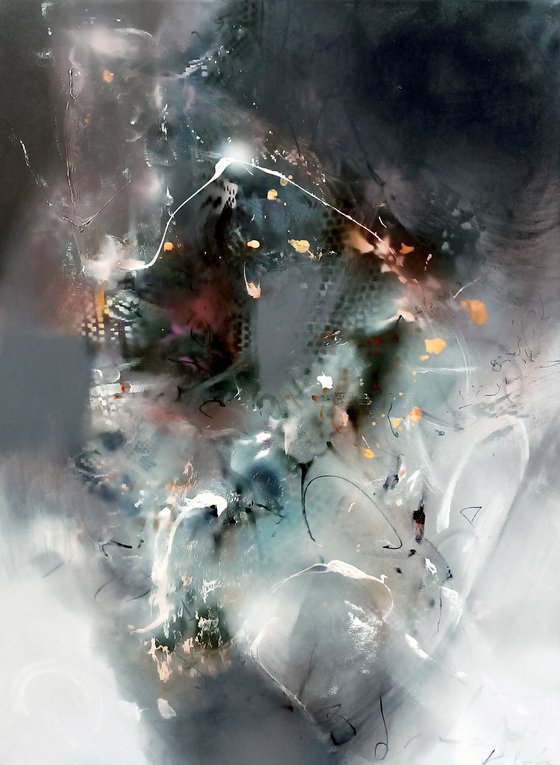
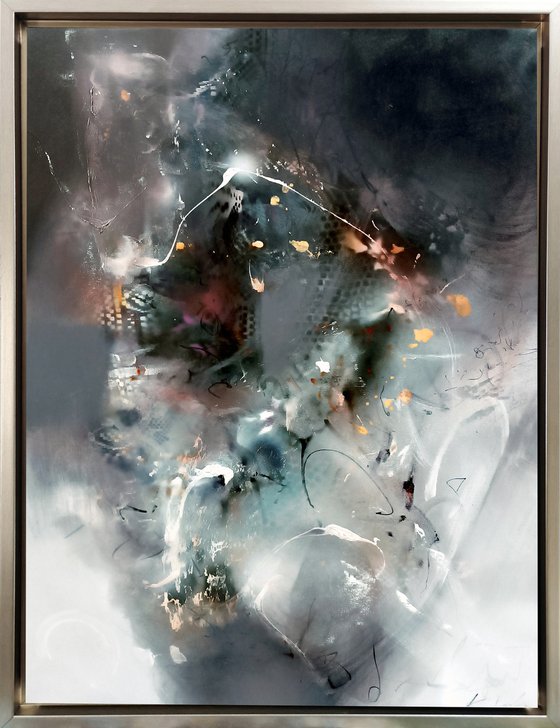
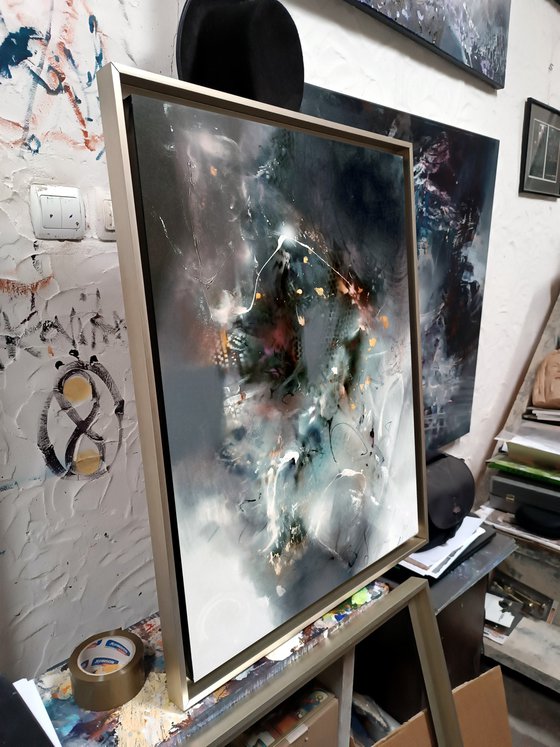
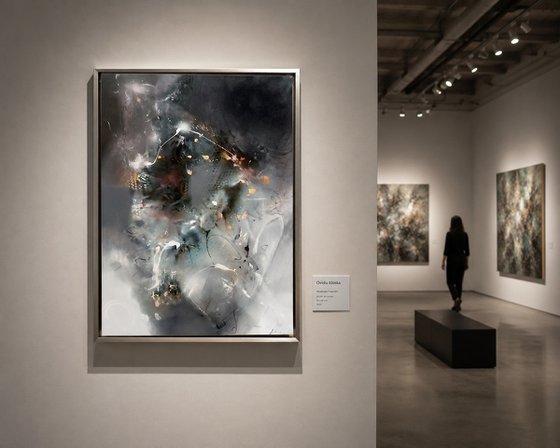
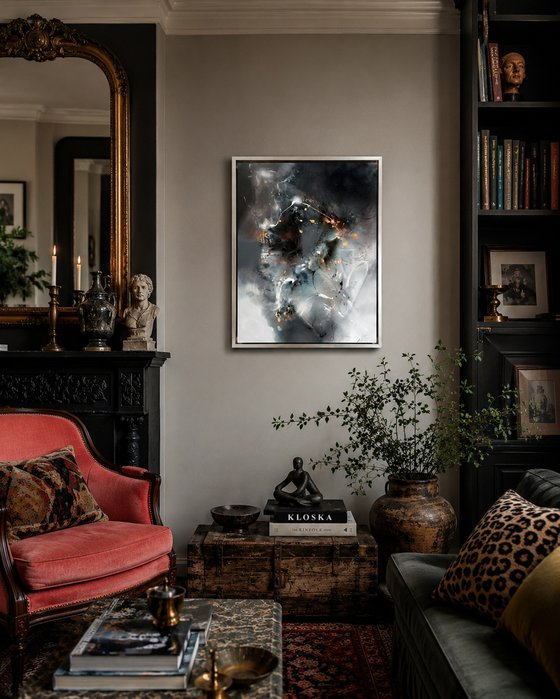
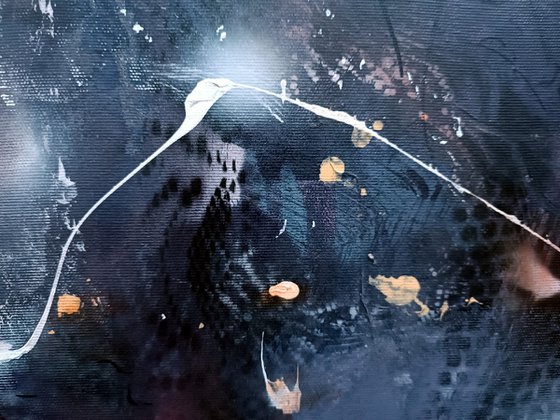
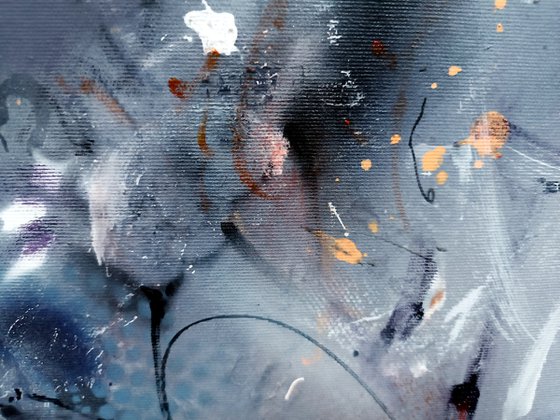
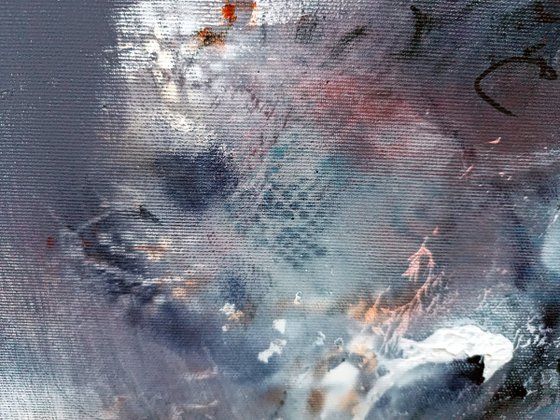
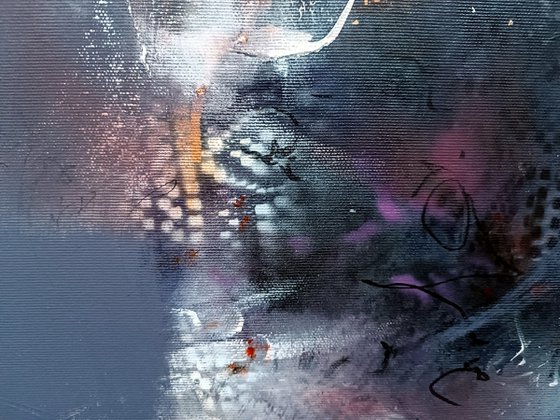
Nocturnal Calligraphy and Traces on Snow (2026) Original Mixed-media Painting by Kloska Ovidiu
65 x 85 x 3cm (framed) / 60 x 80cm (actual image size)
£1,282.25
Original artwork description
Nocturnal Calligraphy and Traces on Snow
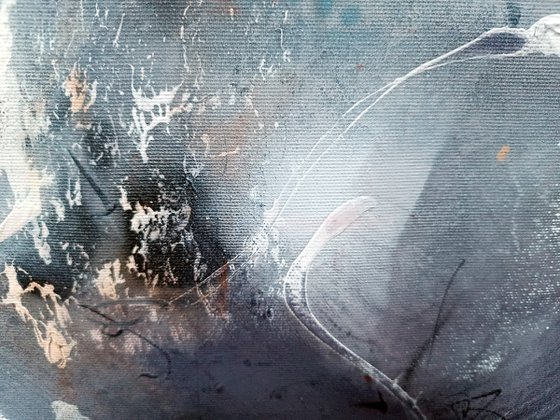
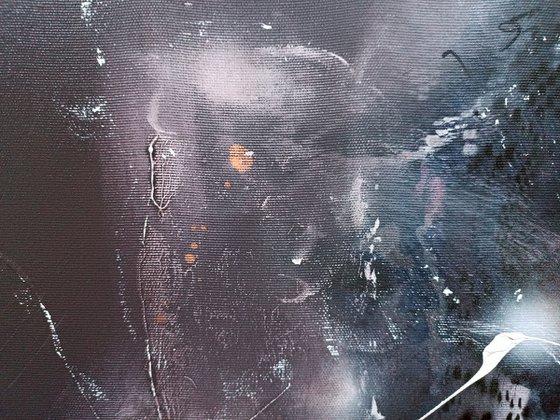
Mixed media on canvas
65 × 85 cm (25.6 × 33.5 in)
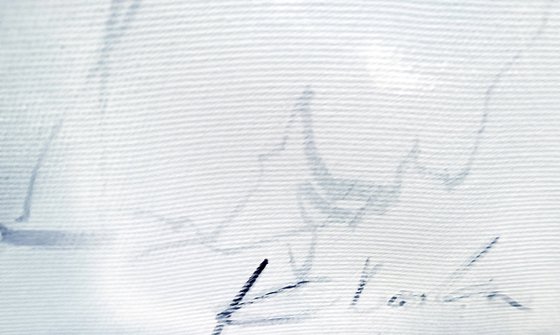
Signed and dated: Ovidiu Kloșka, July 2026
Presented in a hand-finished silver patinated float frame
From the series Intimate Calligraphies of Forgetting
There is a quiet paradox at the heart of memory. As time advances, images gradually lose their clarity, their contours dissolving into an unnamed haze. And yet, certain fragments seem to resist this erosion. They are not necessarily the most important, nor the most beautiful. They are simply the ones that time cannot overcome.
Perhaps memory does not truly seek to preserve images, but the intensity of their presence. It slowly relinquishes details, faces, and stories, while safeguarding what has touched the deepest part of our inner being. In this sense, forgetting is not the opposite of memory but the way memory distills itself to its essence. What disappears continues to shape what remains.
It is from this tension that Intimate Calligraphies of Forgetting emerges. Not as an attempt to recover the past, but as an inquiry into the nature of the trace. There is a moment that precedes language, when gesture means nothing and, precisely because of that, is capable of saying almost everything. It is the moment when the sign no longer communicates an idea but makes a presence visible.
Perhaps this is why the great traditions of Eastern calligraphy continue to move us so profoundly. Not because they conceal an unfamiliar alphabet, but because they preserve the living memory of the gesture that brought them into being. Within them, the sign is more than a carrier of meaning; it is an extension of the body, of breath, and of consciousness. Its beauty does not arise from the perfection of its form, but from the energy it continues to embody. The sign does not merely represent presence. It still inhabits it.
These paintings do not seek to borrow the aesthetics of the East or transform graphic marks into decorative motifs. Instead, they return to the question that made the sign itself possible: What does a trace look like before it becomes language? How can love, attachment, the fascination with silence, or the light of a fleeting encounter be preserved without reducing them to words? Some experiences resist translation into concepts and choose instead to survive as a form of writing that can no longer be read.
Perhaps this is the true semiotics of absence. Not the absence of meaning, but the persistence of presence after meaning has faded. Here, the trace becomes more significant than the message, and silence more eloquent than speech. These signs are not meant to be deciphered like an alphabet. They are recognised instinctively, much like an emotion we experience long before we are able to name it.
The visible world belongs to time. Matter changes, images erode, and memory continually rewrites itself. Yet there is a territory within us that seems untouched by this flow. Not memory as an archive of the past, but the inner realm where love, attachment, silence, and wonder endure beyond representation. Time may transform matter, but it cannot alter presence.
Perhaps this is the deepest purpose of painting. Not to rescue the world from disappearance—for the world is, by its very nature, transient—but to reveal the trace of that inner place where time loses its authority, and where being continues to speak through a script that no one can read, yet everyone somehow recognises.
Materials used:
framed mixed painting on canvas varnished
Details:
- Mixed-media painting on Canvas
- One of a kind artwork
- Size: 65 x 85 x 3cm (framed) / 60 x 80cm (actual image size)
- Framed and ready to hang
- Signed on the front
- Style: Expressive and gestural
- Subject: Abstract and non-figurative
 Free returns
14 day money back guaranteeLearn more
Original artwork description
Nocturnal Calligraphy and Traces on Snow
Mixed media on canvas
65 × 85 cm (25.6 × 33.5 in)
Signed and dated: Ovidiu Kloșka, July 2026
Presented in a hand-finished silver patinated float frame
From the series Intimate Calligraphies of Forgetting
There is a quiet paradox at the heart of memory. As time advances, images gradually lose their clarity, their contours dissolving into an unnamed haze. And yet, certain fragments seem to resist this erosion. They are not necessarily the most important, nor the most beautiful. They are simply the ones that time cannot overcome.
Perhaps memory does not truly seek to preserve images, but the intensity of their presence. It slowly relinquishes details, faces, and stories, while safeguarding what has touched the deepest part of our inner being. In this sense, forgetting is not the opposite of memory but the way memory distills itself to its essence. What disappears continues to shape what remains.
It is from this tension that Intimate Calligraphies of Forgetting emerges. Not as an attempt to recover the past, but as an inquiry into the nature of the trace. There is a moment that precedes language, when gesture means nothing and, precisely because of that, is capable of saying almost everything. It is the moment when the sign no longer communicates an idea but makes a presence visible.
Perhaps this is why the great traditions of Eastern calligraphy continue to move us so profoundly. Not because they conceal an unfamiliar alphabet, but because they preserve the living memory of the gesture that brought them into being. Within them, the sign is more than a carrier of meaning; it is an extension of the body, of breath, and of consciousness. Its beauty does not arise from the perfection of its form, but from the energy it continues to embody. The sign does not merely represent presence. It still inhabits it.
These paintings do not seek to borrow the aesthetics of the East or transform graphic marks into decorative motifs. Instead, they return to the question that made the sign itself possible: What does a trace look like before it becomes language? How can love, attachment, the fascination with silence, or the light of a fleeting encounter be preserved without reducing them to words? Some experiences resist translation into concepts and choose instead to survive as a form of writing that can no longer be read.
Perhaps this is the true semiotics of absence. Not the absence of meaning, but the persistence of presence after meaning has faded. Here, the trace becomes more significant than the message, and silence more eloquent than speech. These signs are not meant to be deciphered like an alphabet. They are recognised instinctively, much like an emotion we experience long before we are able to name it.
The visible world belongs to time. Matter changes, images erode, and memory continually rewrites itself. Yet there is a territory within us that seems untouched by this flow. Not memory as an archive of the past, but the inner realm where love, attachment, silence, and wonder endure beyond representation. Time may transform matter, but it cannot alter presence.
Perhaps this is the deepest purpose of painting. Not to rescue the world from disappearance—for the world is, by its very nature, transient—but to reveal the trace of that inner place where time loses its authority, and where being continues to speak through a script that no one can read, yet everyone somehow recognises.
Materials used:
framed mixed painting on canvas varnished
Details:
- Mixed-media painting on Canvas
- One of a kind artwork
- Size: 65 x 85 x 3cm (framed) / 60 x 80cm (actual image size)
- Framed and ready to hang
- Signed on the front
- Style: Expressive and gestural
- Subject: Abstract and non-figurative

Kloska Ovidiu
Romania
About
Ovidiu Kloska – Biography & Curriculum Vitae
BiographyOvidiu Kloska (b. 1977, Romania) is a contemporary visual artist whose multidisciplinary practice spans painting, welded-steel sculpture, mixed media, and oniric conceptual photography. His... Read more