- Lena Okamoto
- All Artworks
- Kobachi ~Marine Collection~ (Kimono)
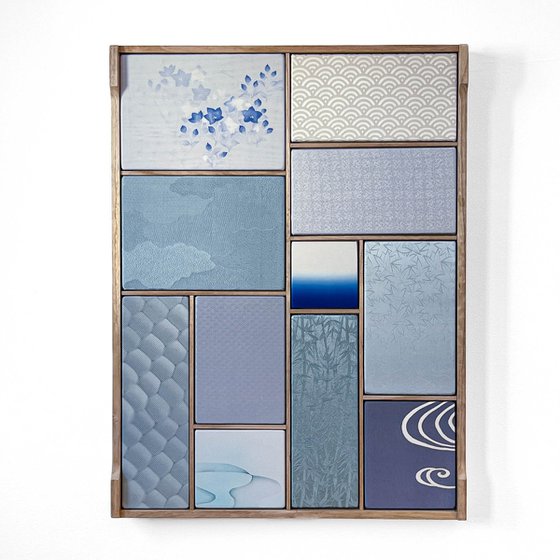
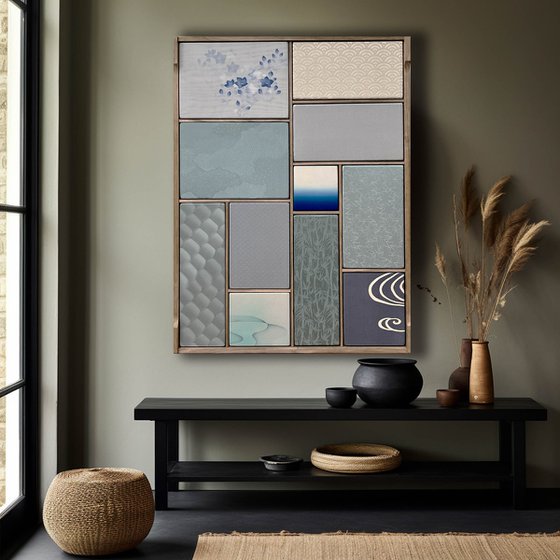
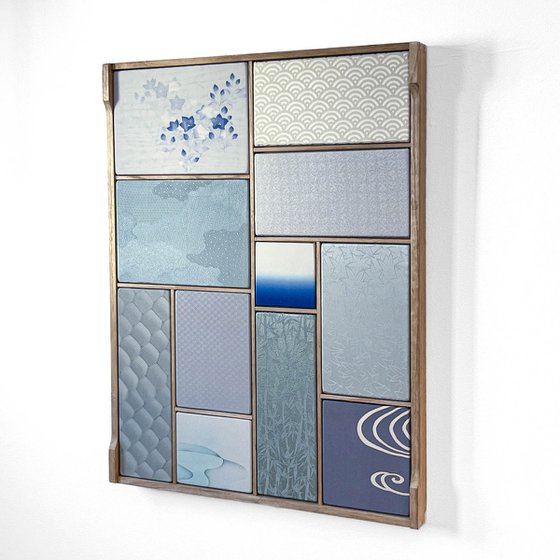
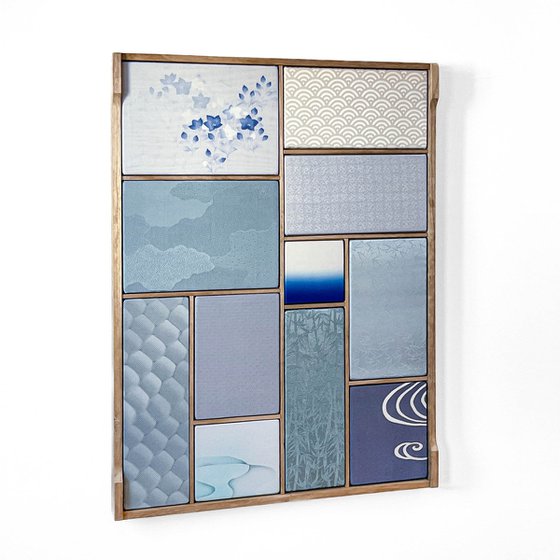
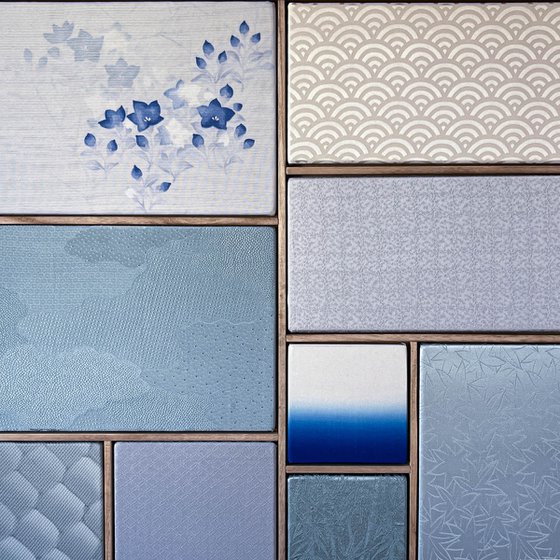
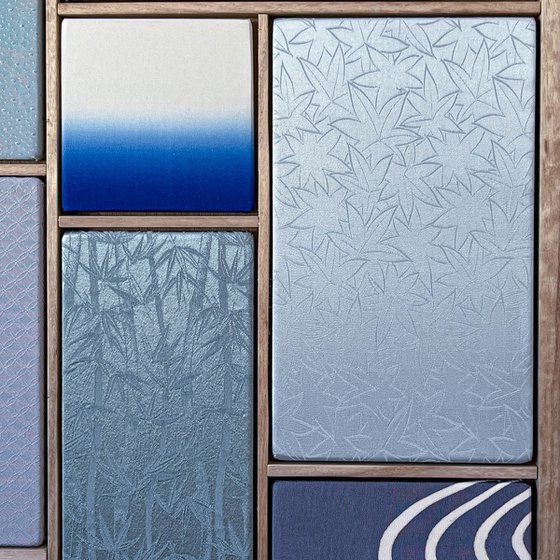
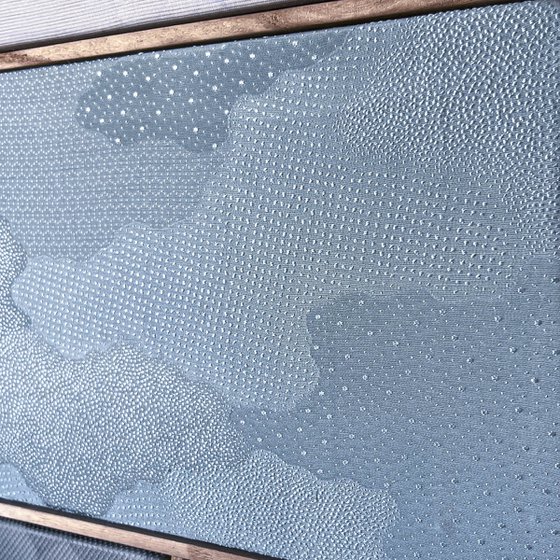
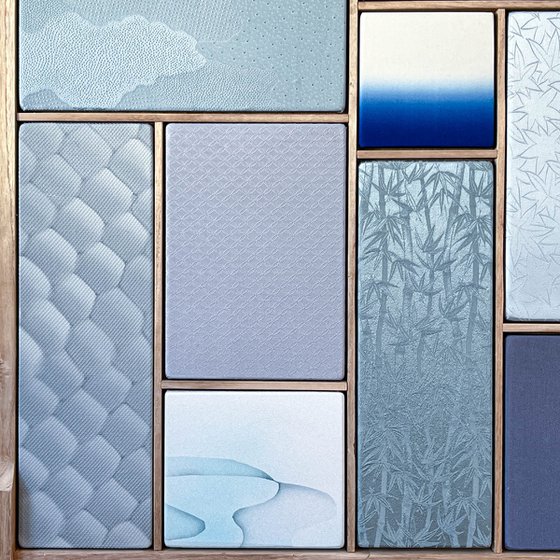
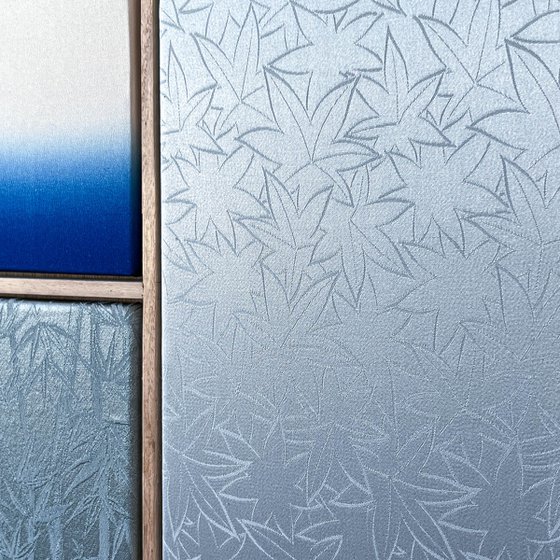
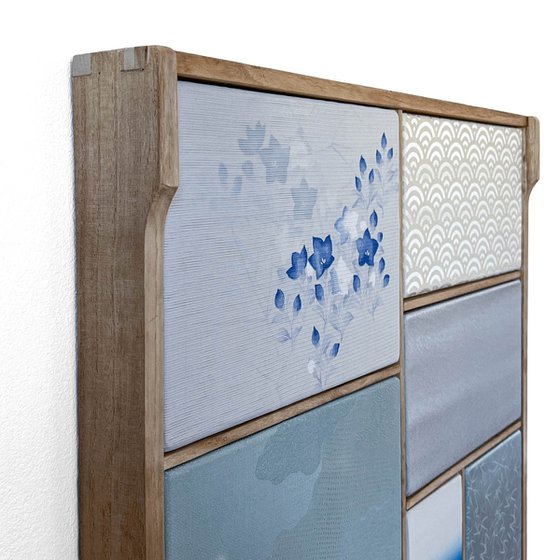
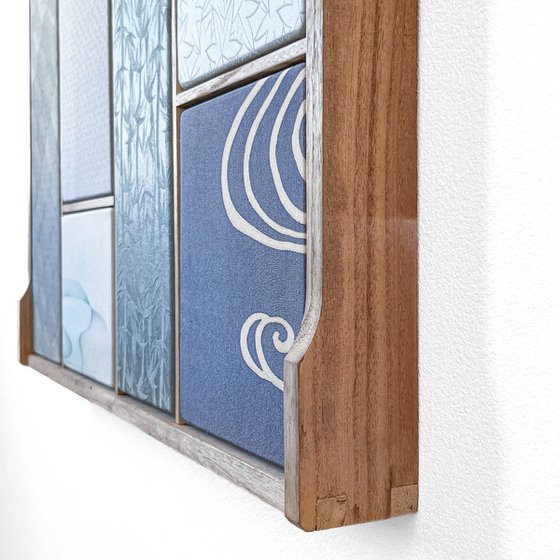
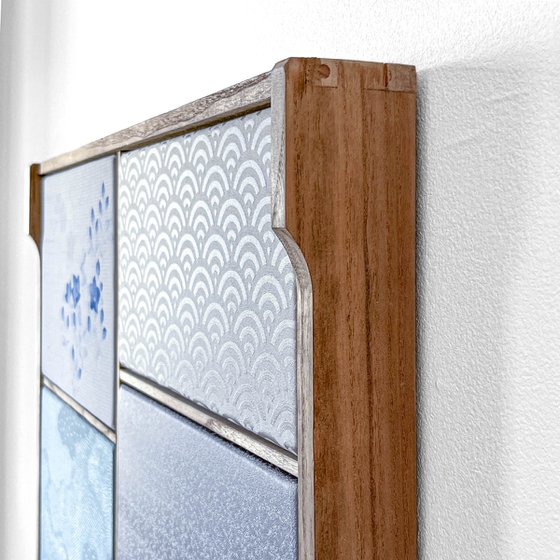
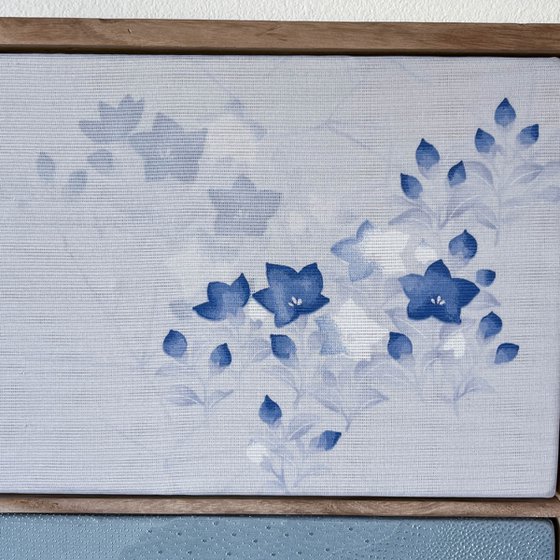
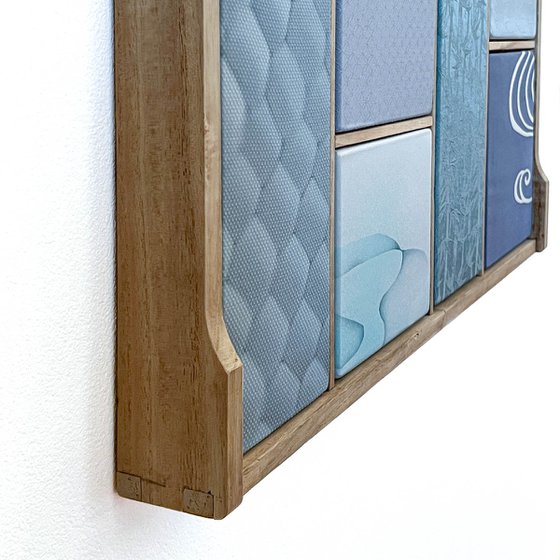
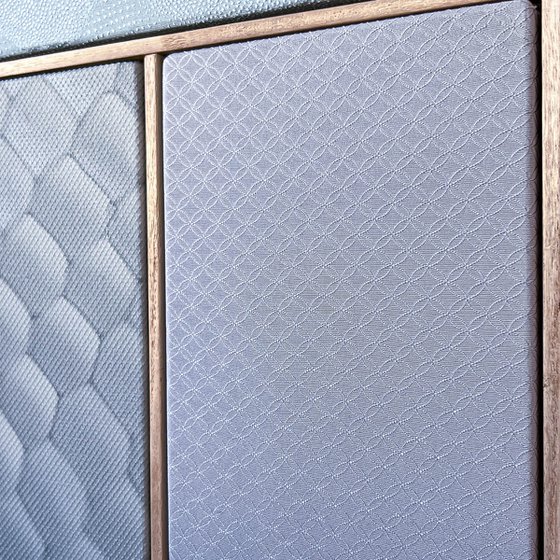
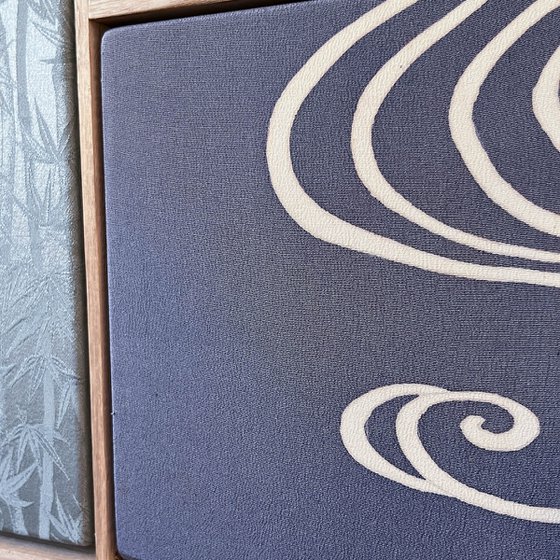
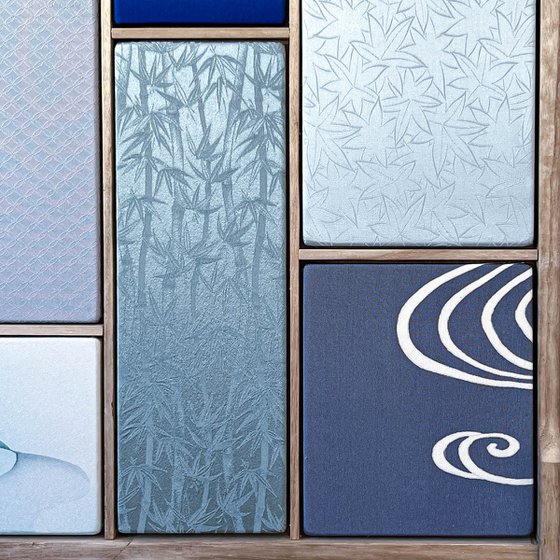
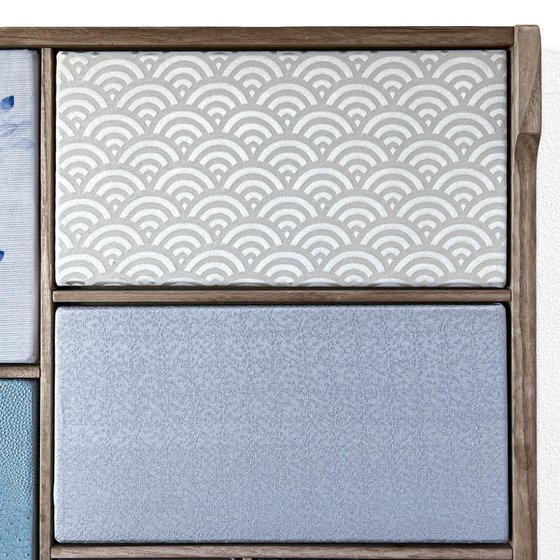
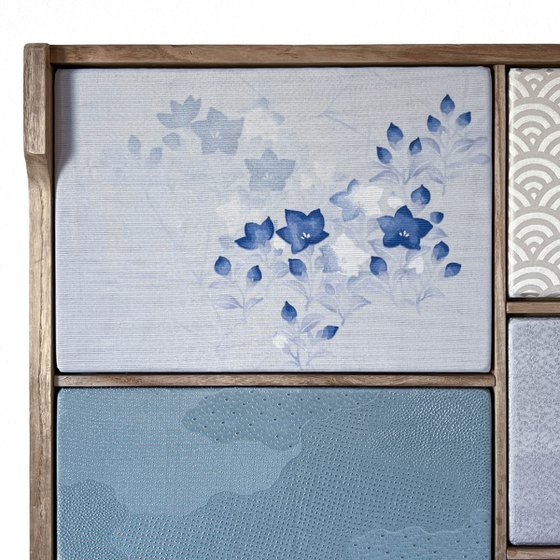
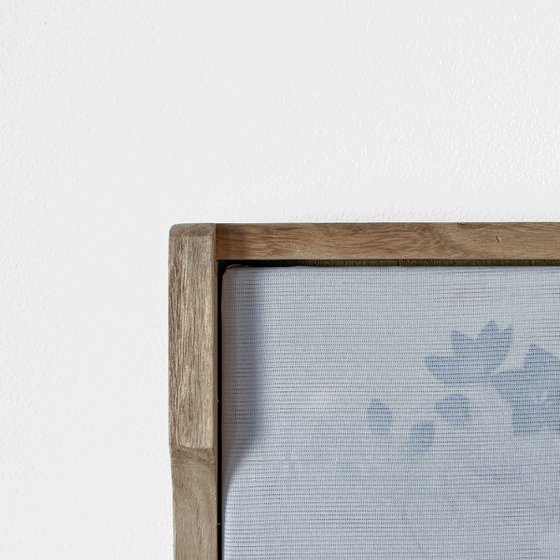
Kobachi ~Marine Collection~ (Kimono) (2024) Original Mixed-media Painting by Lena Okamoto
63 x 85 x 5cm (framed)
£2,465.67Sold
Do you like this artwork?
This artwork has sold, but the artist is accepting commission requests. Commissioning an artwork is easy and you get a perfectly personalised piece.
Original artwork description
Certified Kimono Meister work / Certificate of Authenticity included.
One-of-a-kind Japanese textile art made from vintage kimono fabrics.
[Size]
63 x 85 x 5cm
[Materials]
antique silk, antique paulownia wood
[Edition]
One-of-a-kind
[Story behind the work]
This work is inspired by the blue color palette, and is framed in paulownia wood originally used for a kimono chest-of-drawers.
It is elegantly framed with paulownia wood, a tree closely connected to kimono culture, and is filled with storytelling and sense of luxury.
In this artwork, the aim was to capture the wide palette of blue color commonly used in antique kimono. Traditional Japanese culture, represented by the kimono, and wood, an integral element of Japanese craftsmanship, were used to bring this vision to life.
I used pieces of kimono, haori and kimono lining that could no longer be used as clothing and kiritansu chest-of-drawers that would normally be discarded to create the ultimate upcycled piece.
The artwork is called "kobachi". Kobachi is a style of serving in Japanese cuisine, when small plates are positioned in a special way to satisfy both mouth and eyes.
[Explanation and meaning of pattern and colors]
In Japanese culture, "Blue" evokes thoughts of the sky and the sea, imparting a sense of intelligence and calmness. The color blue, also known as "ruri," is one of the seven treasures in Buddhism legends and has long been considered a noble and sacred color.
This is a sophisticated and deep piece with a gradient of grayish indigo.
Indigo, derived from plant dye, is a blue color with various shades depending on the dyeing method, loved for a range of variations known as "ai-yonjūhachi-shoku 藍四十八色" (48 shades of indigo). In traditional Japanese culture, indigo initially referred to a greenish-blue hue dyed with indigo and yellow dyes, with the pure deep blue color being labeled as indigo only from the Edo period (17th cent.~) onwards. It was cherished for items like hand towels and shop curtains and was called "Japan Blue" in foreign countries due to its use by many artists including Hiroshige Utagawa.
The light bluish-gray, known as "minato-nezumi 湊鼠" (harbor mouse), derives its name from the Minato village in Osaka, where it was used in wall coverings and sliding doors. In the latter Edo period, there was a preference for subdued and stylish colors like those in the mouse color palette, leading to the trend of "48 tea, 100 mice 四十八茶百鼠" - shades of brown and grey, contrasting with the earlier extravagant hues.
The pale bluish-purple tint with a hint of gray is called "fujinando 藤納戸" (wisteria storage). "Nando-iro" was a popular shade in the Edo period, associated with the dark interior of storage rooms or the color of curtains. Combining the beloved color "fuji-iro" (wisteria color) with "nando-iro," which has been favored by women since ancient times for its mature and sophisticated impression, "fujinando" emerged as a color name in the latter Edo period. It remains popular for garments like kimonos today as well due to its serene and refined aura.
In this work, blue is represented in different shades and tones to show the fascinating Japanese traditional dying techniques.
[About the frame]
Kiritansu - chest-of-drawers for kimono, is traditionally made from paulownia wood, a uniquely Japanese material closely tied to the world of kimonos.
Paulownia wood is known as the lightest wood in Japan, prased for its natural luster, resistance to moisture, and resilience against cracking. Since ancient times, it has been used in crafting furniture, chests, and musical instruments.
During the Edo period, it became customary to store cherished kimonos in paulownia chests, which offered fire resistance and protection from moisture and insects.
Traditionally, when a daughter was born, a paulownia tree would be planted. Upon her marriage, the tree would be cut down, and the wood would be used to craft a chest for her as a wedding gift.
Following the Ansei Earthquake during the late Edo period in 1855, paulownia chests gained popularity due to their ability to withstand fires and even float in water, thereby safeguarding their contents during floods.
I use antique kiritansu that can’t be used as furniture anymore to create basis and frames for my works. It adds them even more authentic atmosphere of traditional wabisabi spirit. Can you feel it?
[Decoration Advice]
Canvas can be displayed on a table, wall, etc. Hanging on a wall requires hooks, tacks or nails. It can also be displayed propped up on an easel. Ideal for a room makeover, housewarming gift, present, or souvenir for a loved one.
[Precaution]
All the works are made from real kimonos, antiques and vintages. For this reason, the fabric may have traces of long-term use and minor fabric damages.
Materials used:
antique silk, antique paulownia wood
Details:
- Mixed-media painting on Other
- One of a kind artwork
- Size: 63 x 85 x 5cm (framed)
- Framed and ready to hang
- Signed certificate of authenticity
- Style: Geometric
- Subject: Abstract and non-figurative
 Free returns
14 day money back guaranteeLearn more
Original artwork description
Certified Kimono Meister work / Certificate of Authenticity included.
One-of-a-kind Japanese textile art made from vintage kimono fabrics.
[Size]
63 x 85 x 5cm
[Materials]
antique silk, antique paulownia wood
[Edition]
One-of-a-kind
[Story behind the work]
This work is inspired by the blue color palette, and is framed in paulownia wood originally used for a kimono chest-of-drawers.
It is elegantly framed with paulownia wood, a tree closely connected to kimono culture, and is filled with storytelling and sense of luxury.
In this artwork, the aim was to capture the wide palette of blue color commonly used in antique kimono. Traditional Japanese culture, represented by the kimono, and wood, an integral element of Japanese craftsmanship, were used to bring this vision to life.
I used pieces of kimono, haori and kimono lining that could no longer be used as clothing and kiritansu chest-of-drawers that would normally be discarded to create the ultimate upcycled piece.
The artwork is called "kobachi". Kobachi is a style of serving in Japanese cuisine, when small plates are positioned in a special way to satisfy both mouth and eyes.
[Explanation and meaning of pattern and colors]
In Japanese culture, "Blue" evokes thoughts of the sky and the sea, imparting a sense of intelligence and calmness. The color blue, also known as "ruri," is one of the seven treasures in Buddhism legends and has long been considered a noble and sacred color.
This is a sophisticated and deep piece with a gradient of grayish indigo.
Indigo, derived from plant dye, is a blue color with various shades depending on the dyeing method, loved for a range of variations known as "ai-yonjūhachi-shoku 藍四十八色" (48 shades of indigo). In traditional Japanese culture, indigo initially referred to a greenish-blue hue dyed with indigo and yellow dyes, with the pure deep blue color being labeled as indigo only from the Edo period (17th cent.~) onwards. It was cherished for items like hand towels and shop curtains and was called "Japan Blue" in foreign countries due to its use by many artists including Hiroshige Utagawa.
The light bluish-gray, known as "minato-nezumi 湊鼠" (harbor mouse), derives its name from the Minato village in Osaka, where it was used in wall coverings and sliding doors. In the latter Edo period, there was a preference for subdued and stylish colors like those in the mouse color palette, leading to the trend of "48 tea, 100 mice 四十八茶百鼠" - shades of brown and grey, contrasting with the earlier extravagant hues.
The pale bluish-purple tint with a hint of gray is called "fujinando 藤納戸" (wisteria storage). "Nando-iro" was a popular shade in the Edo period, associated with the dark interior of storage rooms or the color of curtains. Combining the beloved color "fuji-iro" (wisteria color) with "nando-iro," which has been favored by women since ancient times for its mature and sophisticated impression, "fujinando" emerged as a color name in the latter Edo period. It remains popular for garments like kimonos today as well due to its serene and refined aura.
In this work, blue is represented in different shades and tones to show the fascinating Japanese traditional dying techniques.
[About the frame]
Kiritansu - chest-of-drawers for kimono, is traditionally made from paulownia wood, a uniquely Japanese material closely tied to the world of kimonos.
Paulownia wood is known as the lightest wood in Japan, prased for its natural luster, resistance to moisture, and resilience against cracking. Since ancient times, it has been used in crafting furniture, chests, and musical instruments.
During the Edo period, it became customary to store cherished kimonos in paulownia chests, which offered fire resistance and protection from moisture and insects.
Traditionally, when a daughter was born, a paulownia tree would be planted. Upon her marriage, the tree would be cut down, and the wood would be used to craft a chest for her as a wedding gift.
Following the Ansei Earthquake during the late Edo period in 1855, paulownia chests gained popularity due to their ability to withstand fires and even float in water, thereby safeguarding their contents during floods.
I use antique kiritansu that can’t be used as furniture anymore to create basis and frames for my works. It adds them even more authentic atmosphere of traditional wabisabi spirit. Can you feel it?
[Decoration Advice]
Canvas can be displayed on a table, wall, etc. Hanging on a wall requires hooks, tacks or nails. It can also be displayed propped up on an easel. Ideal for a room makeover, housewarming gift, present, or souvenir for a loved one.
[Precaution]
All the works are made from real kimonos, antiques and vintages. For this reason, the fabric may have traces of long-term use and minor fabric damages.
Materials used:
antique silk, antique paulownia wood
Details:
- Mixed-media painting on Other
- One of a kind artwork
- Size: 63 x 85 x 5cm (framed)
- Framed and ready to hang
- Signed certificate of authenticity
- Style: Geometric
- Subject: Abstract and non-figurative