- Dasha Pogodina
- All Artworks
- I am your idol, worship me
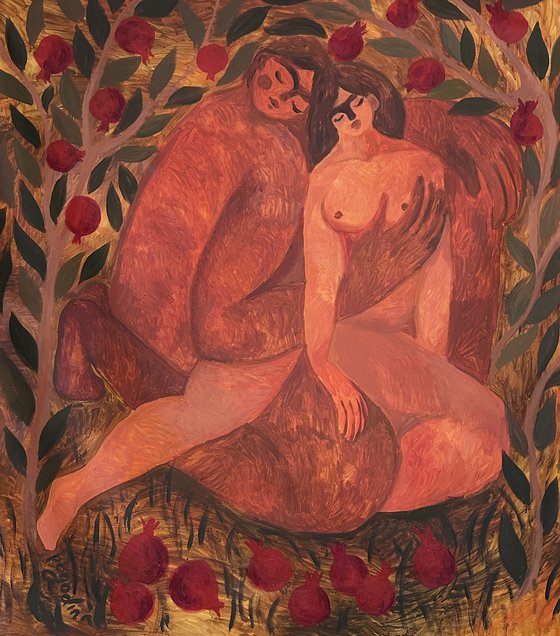
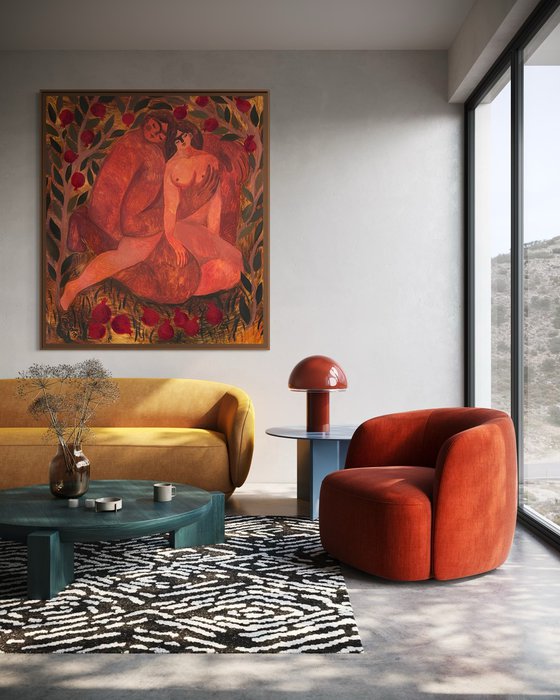
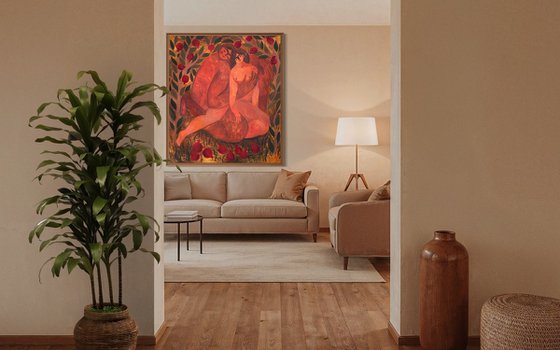
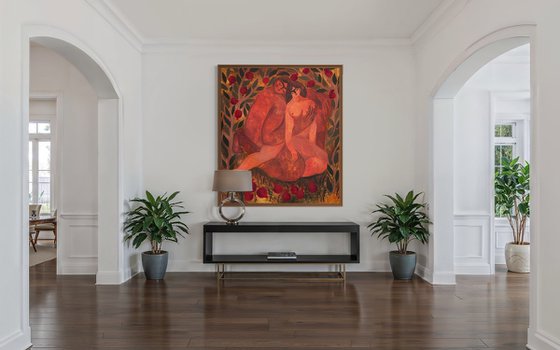
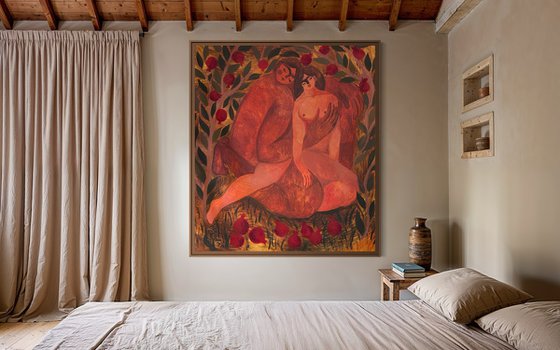
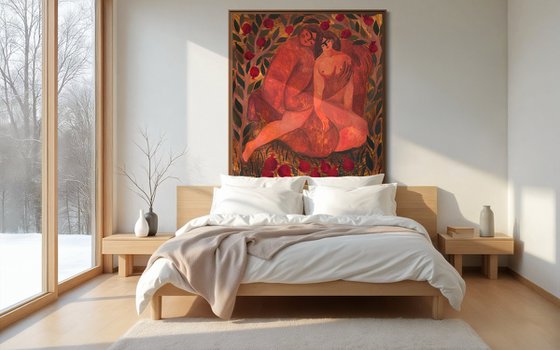
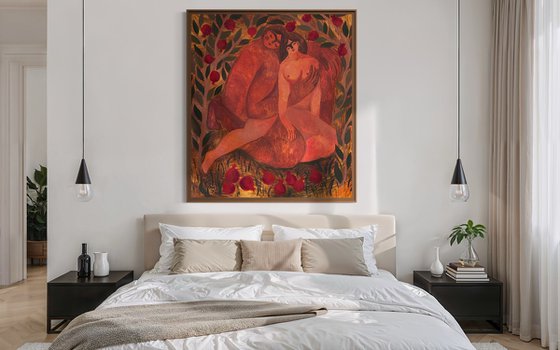
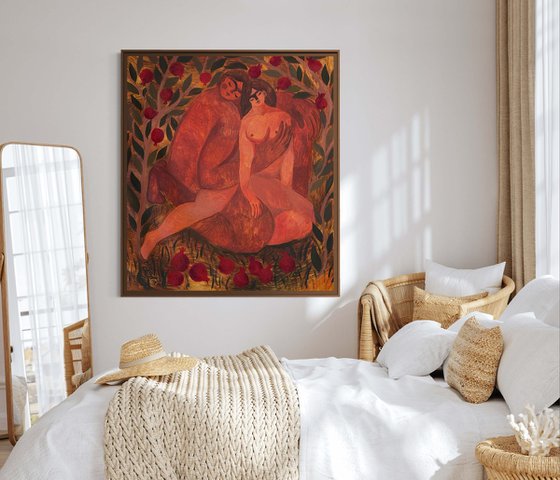
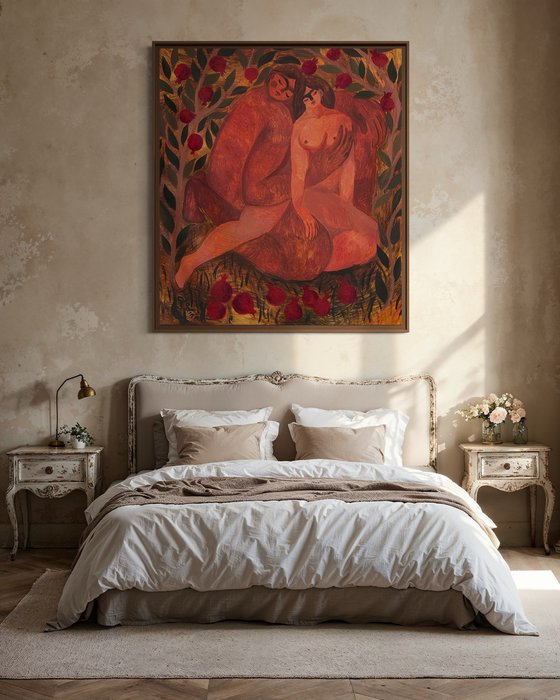
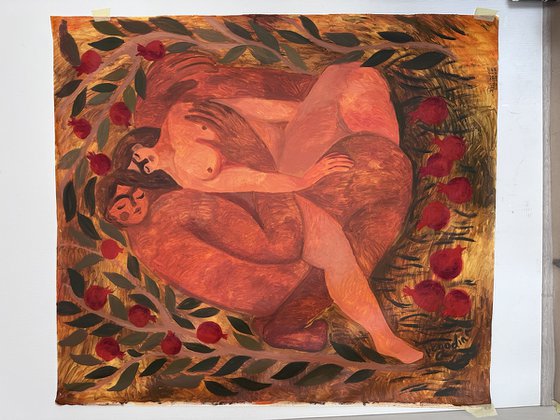
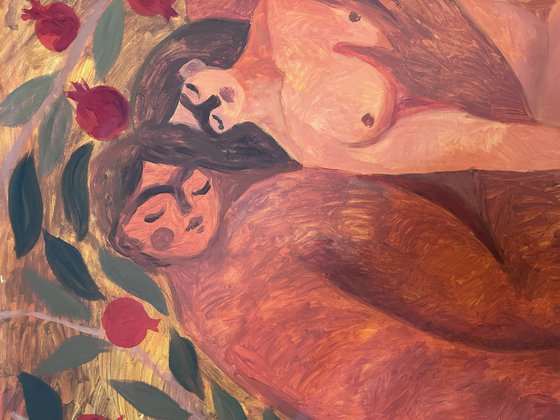
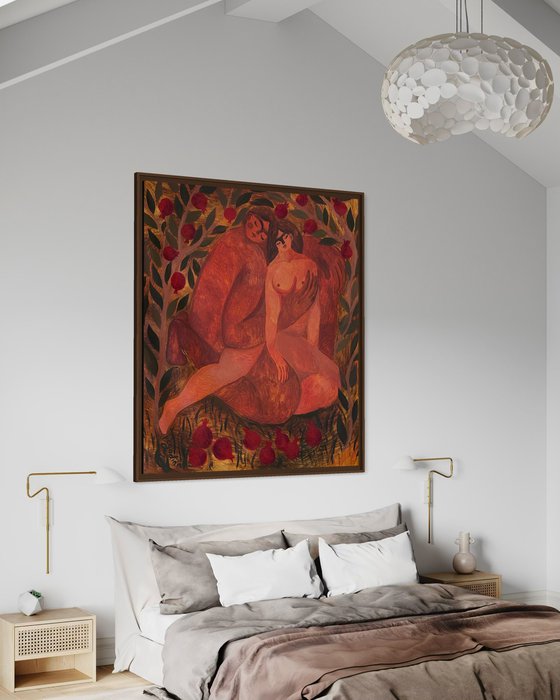
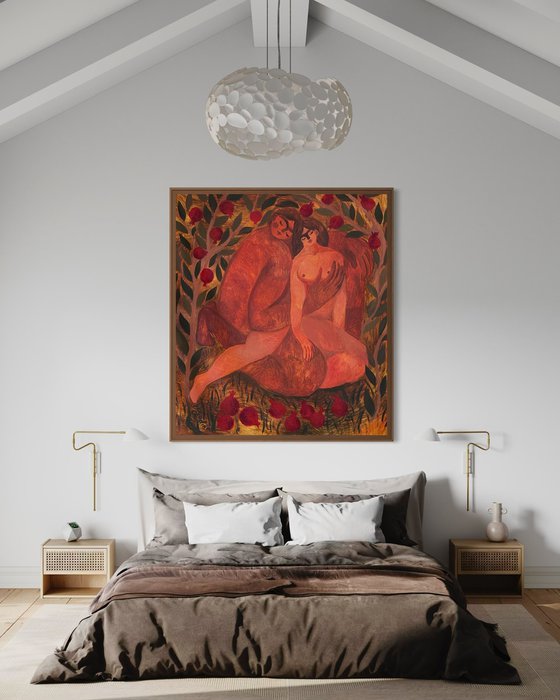
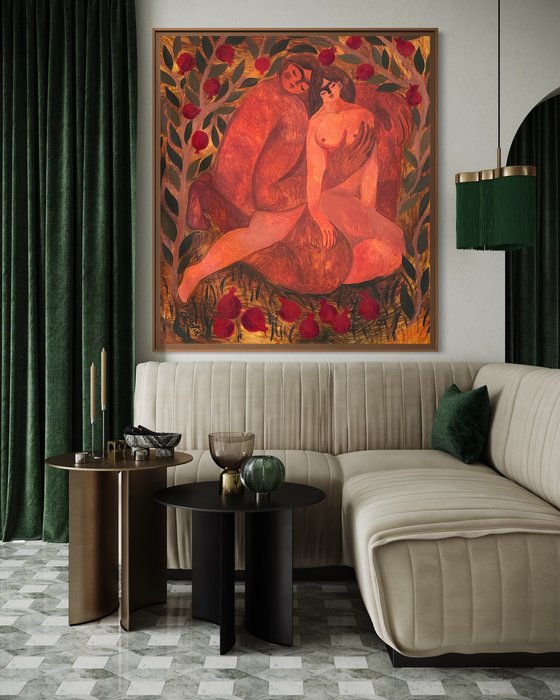
I am your idol, worship me (2026) Original Acrylic Painting by Dasha Pogodina
150 x 170 x 2cm (unframed) / 150 x 170cm (actual image size)
£2,200.74
Original artwork description
ABOUT THE ARTWORK
“I Am Your Idol, Worship Me”
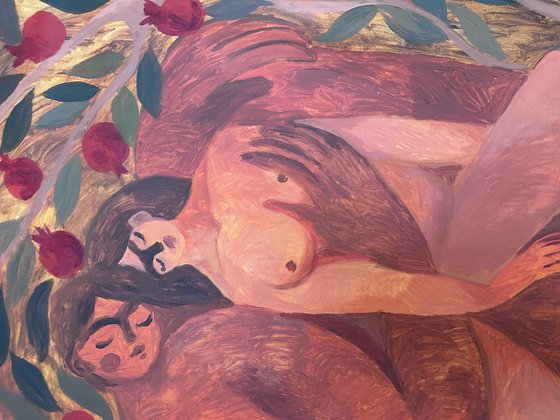
In this work, the artist addresses the theme of worship as a subtle boundary between love, desire, and power. She explores the moment in which the Other is endowed with sacred significance not through religious ritual, but through intimacy and emotional involvement. Worship here is not associated with submission or the loss of freedom; rather, it emerges as a voluntary gesture of recognizing the value and uniqueness of another person.
The painting raises the question of how the image of an “idol” is formed within love — not as an object of blind adoration, but as a mirror in which one encounters their own desire to be seen and accepted. Within the context of the Perichoresis series, this work speaks of the mutual interpenetration of the sacred and the bodily, where deification does not destroy individuality but becomes a form of conscious choice, closeness, and shared responsibility.
PERICHORESIS SERIES
“Perichoresis” (ancient Greek περιχώρησις - “interpenetration”), a theological term meaning the mutual penetration of divine parts into each other, to describe a unique union that does not imply mixing or merging, but emphasizes an indivisible unity.
Daria explores the theme of new sexuality, deliberately choosing a term from theological treatises for her series of works.
With this gesture, she protests against the dictates of religion, the church’s manipulation and pessimization of human sexual manifestations and physicality, the false meanings and concepts with which religions have burdened, and instead of building true connections and bridges for man and God, they build walls.
“Perichoresis” for her is a beautiful and complex term that describes the fusion of the divine and the material. Having grown up in the Protestant tradition within an Orthodox society, Daria notes the common separation of sexuality from divinity in all these religions, while she sees sexuality as the clearest manifestation of divinity, beauty, and sublimity.
The artist notes that Christian culture has invested the image of the female body with a narrative of pornographic tension, while at the same time presenting paradise before the Fall as a sexual paradise, the Garden of earthly pleasures. For the artist, sexual paradise is a safe environment, complete trust, acceptance, the opportunity to open up and discover the Other, the opportunity to learn to be loved and to love.
Love is an environment where merging does not dissolve in another person, but on the contrary, strengthens the individuality of each and enriches each other.
Thus, the artist reminds that the division into the sublime and the low in love is artificial, and overcoming this division can make life more beautiful. The heroes of her paintings are immersed in the enigmatic space of love, and sometimes there are ironic scenes that balance the degree of sublimity.
Materials used:
Acrylic
Details:
- Acrylic painting on Canvas
- One of a kind artwork
- Size: 150 x 170 x 2cm (unframed) / 150 x 170cm (actual image size)
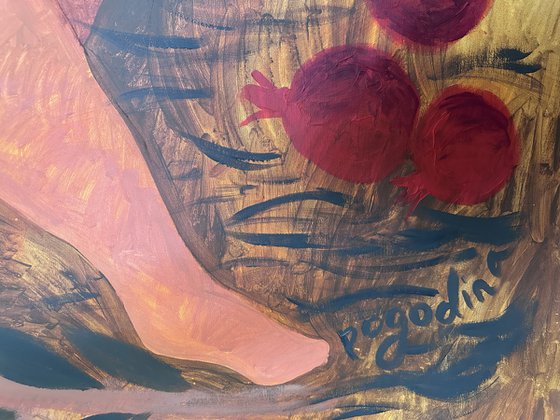
- Signed on the front
- Style: Impressionistic
- Subject: People and portraits
 Free returns
14 day money back guaranteeLearn more
Original artwork description
ABOUT THE ARTWORK
“I Am Your Idol, Worship Me”
In this work, the artist addresses the theme of worship as a subtle boundary between love, desire, and power. She explores the moment in which the Other is endowed with sacred significance not through religious ritual, but through intimacy and emotional involvement. Worship here is not associated with submission or the loss of freedom; rather, it emerges as a voluntary gesture of recognizing the value and uniqueness of another person.
The painting raises the question of how the image of an “idol” is formed within love — not as an object of blind adoration, but as a mirror in which one encounters their own desire to be seen and accepted. Within the context of the Perichoresis series, this work speaks of the mutual interpenetration of the sacred and the bodily, where deification does not destroy individuality but becomes a form of conscious choice, closeness, and shared responsibility.
PERICHORESIS SERIES
“Perichoresis” (ancient Greek περιχώρησις - “interpenetration”), a theological term meaning the mutual penetration of divine parts into each other, to describe a unique union that does not imply mixing or merging, but emphasizes an indivisible unity.
Daria explores the theme of new sexuality, deliberately choosing a term from theological treatises for her series of works.
With this gesture, she protests against the dictates of religion, the church’s manipulation and pessimization of human sexual manifestations and physicality, the false meanings and concepts with which religions have burdened, and instead of building true connections and bridges for man and God, they build walls.
“Perichoresis” for her is a beautiful and complex term that describes the fusion of the divine and the material. Having grown up in the Protestant tradition within an Orthodox society, Daria notes the common separation of sexuality from divinity in all these religions, while she sees sexuality as the clearest manifestation of divinity, beauty, and sublimity.
The artist notes that Christian culture has invested the image of the female body with a narrative of pornographic tension, while at the same time presenting paradise before the Fall as a sexual paradise, the Garden of earthly pleasures. For the artist, sexual paradise is a safe environment, complete trust, acceptance, the opportunity to open up and discover the Other, the opportunity to learn to be loved and to love.
Love is an environment where merging does not dissolve in another person, but on the contrary, strengthens the individuality of each and enriches each other.
Thus, the artist reminds that the division into the sublime and the low in love is artificial, and overcoming this division can make life more beautiful. The heroes of her paintings are immersed in the enigmatic space of love, and sometimes there are ironic scenes that balance the degree of sublimity.
Materials used:
Acrylic
Details:
- Acrylic painting on Canvas
- One of a kind artwork
- Size: 150 x 170 x 2cm (unframed) / 150 x 170cm (actual image size)
- Signed on the front
- Style: Impressionistic
- Subject: People and portraits

Dasha Pogodina
Ukraine
About
My name is Dasha Pogodina and I am 30 y. o. Ukrainian artist based in Switzerland. I’ve been an experienced graduate designer and artist since 2012. After finishing my studies... Read more