- Kloska Ovidiu
- All Artworks
- Frame of Serenity
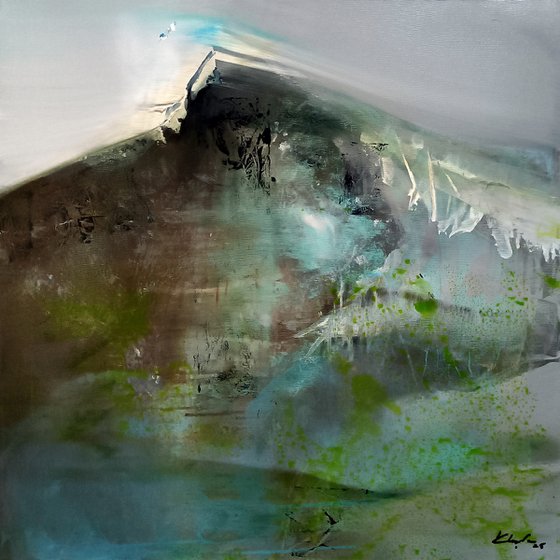
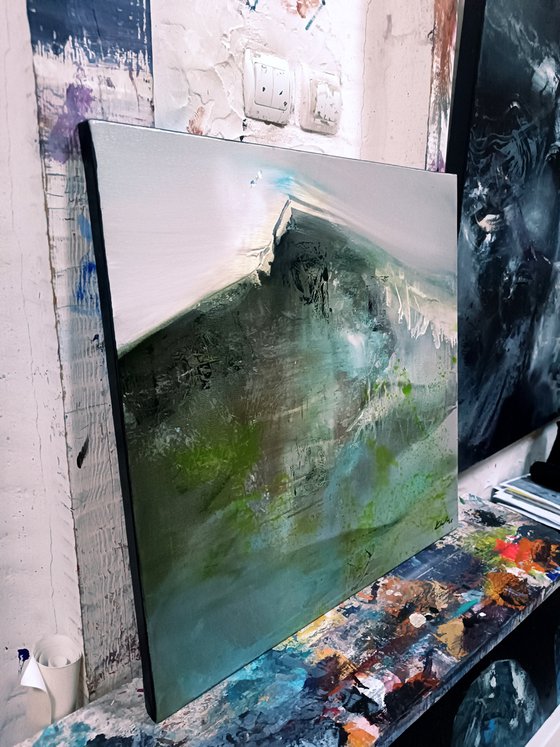
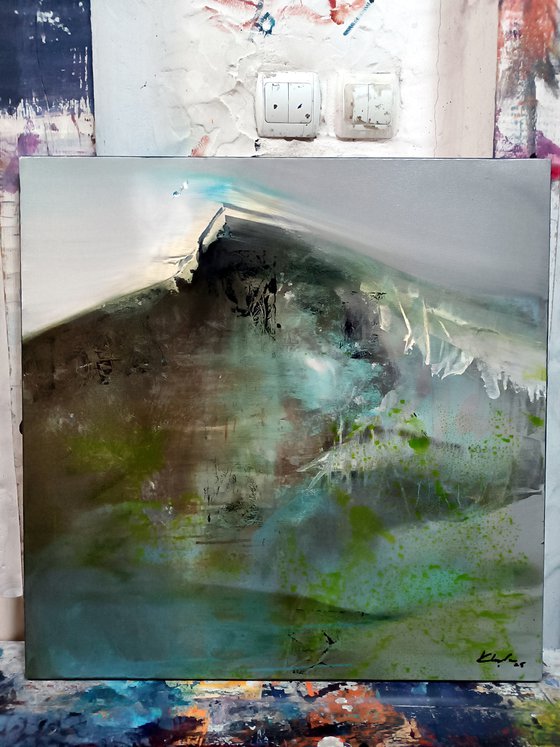


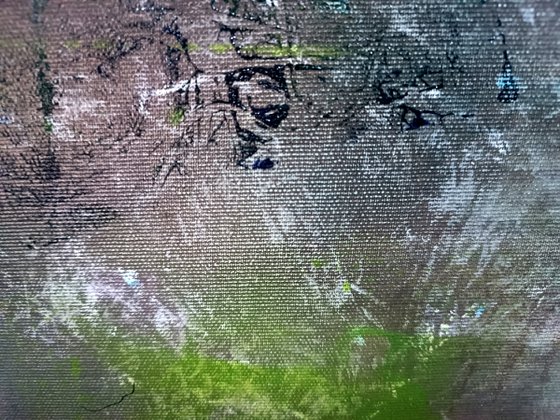
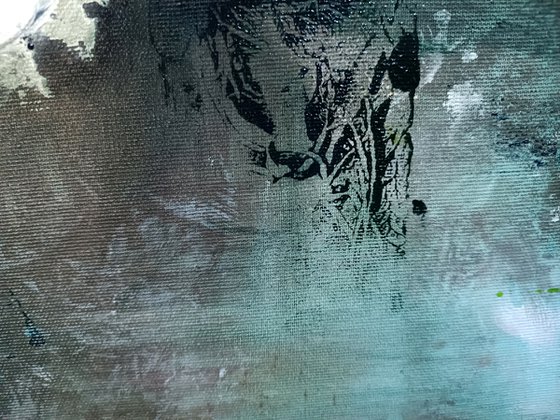
Frame of Serenity (2025) Original Acrylic Painting by Kloska Ovidiu
60 x 60 x 2cm (unframed) / 60 x 60cm (actual image size)
£605.79
Original artwork description
Frame of Serenity
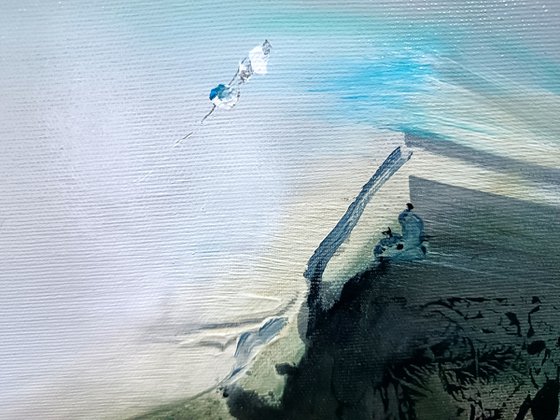
This mindscape unfolds as a quiet terrain where matter, memory, and time converge without hierarchy. The image does not describe a place, yet it carries the unmistakable presence of one—an interior shaped by exposure, erosion, and lingering silence. The surface feels less painted than lived-in, as though the canvas has absorbed years rather than gestures.
At the center, a dense formation rises ambiguously, neither figure nor structure, but something that holds the gravity of both. It evokes material that has endured pressure: walls marked by seepage, concrete softened by weather, spaces where human passage has long receded but left its trace behind. The form feels gathered and compressed, shaped by accumulation rather than intention. Serenity here is not light or empty; it is weighted, structural, and earned.
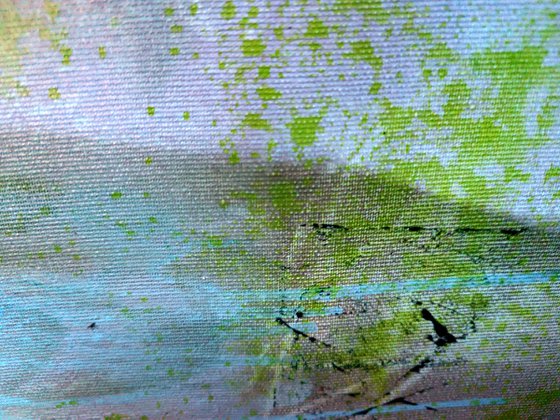
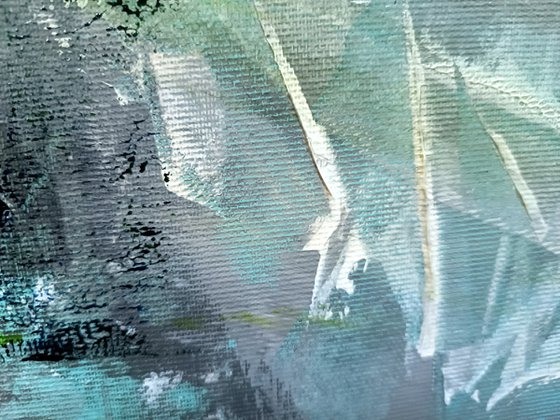
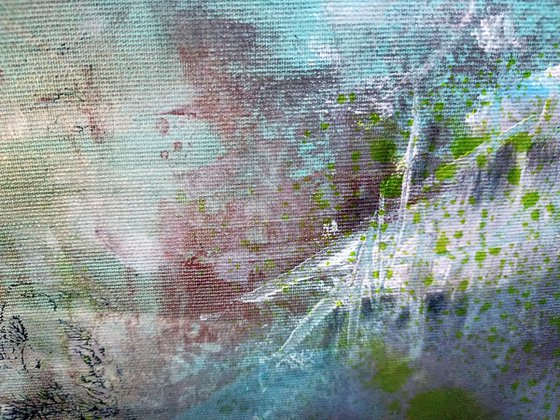
The artist’s ongoing search for inspiration in matter altered by time is woven deeply into the work. Layers of oxidized green, metallic grey, muted blues, and softened whites speak the chromatic language of surfaces exposed long enough to transform. These tones do not illustrate decay; they embody duration. The painting seems built from sediment—time settling into texture—rather than from paint alone.
Translucent passages hover across denser areas like mist inside an abandoned space, softening edges without dissolving them. This suspension invites the viewer to slow down, to remain with the image rather than move through it. There is a sense that serenity appears only when time is briefly interrupted—when one allows the moment to extend beyond usefulness and simply be observed.
Abraded marks, scratches, and embedded textures act like scars rather than disruptions. They recall contact, friction, and history—evidence that the surface has been tested. These traces do not fracture the calm; they define it. Serenity emerges not through perfection, but through the willingness to stay with what has been worn.
Subtle green accents appear almost incidentally, like moss claiming the smallest fractures in cold material. They suggest persistence rather than growth, life that does not announce itself but continues quietly. Their presence rewards patience; they reveal themselves slowly, as if visible only to those who take the time to look.
The composition resists stability. It leans, dissolves, reforms. There is no fixed horizon, no sense of arrival—only a held interval. The image feels like an invitation to pause, to suspend forward movement, to admire serenity not as a destination but as a fleeting condition worth lingering in.
Ultimately, this mindscape transforms ruin into a contemplative space. It asks not for interpretation, but for presence. Time does not advance here; it hesitates. And in that hesitation, serenity becomes perceptible—fragile, temporary, and all the more meaningful because it asks us to stop, if only for a moment, and remain.
Materials used:
acrylics on streched canvas varnished
Details:
- Acrylic painting on Canvas
- One of a kind artwork
- Size: 60 x 60 x 2cm (unframed) / 60 x 60cm (actual image size)
- Ready to hang
- Signed on the front
- Style: Expressive and gestural
- Subject: Landscapes, sea and sky
Tags:
#light painting#abstract landscape#mindscape#perenity#ovidiu kloska#serenity painting#concrete abstraction#eternity viewFeatured by our Editors:
 Free returns
14 day money back guaranteeLearn more
Original artwork description
Frame of Serenity
This mindscape unfolds as a quiet terrain where matter, memory, and time converge without hierarchy. The image does not describe a place, yet it carries the unmistakable presence of one—an interior shaped by exposure, erosion, and lingering silence. The surface feels less painted than lived-in, as though the canvas has absorbed years rather than gestures.
At the center, a dense formation rises ambiguously, neither figure nor structure, but something that holds the gravity of both. It evokes material that has endured pressure: walls marked by seepage, concrete softened by weather, spaces where human passage has long receded but left its trace behind. The form feels gathered and compressed, shaped by accumulation rather than intention. Serenity here is not light or empty; it is weighted, structural, and earned.
The artist’s ongoing search for inspiration in matter altered by time is woven deeply into the work. Layers of oxidized green, metallic grey, muted blues, and softened whites speak the chromatic language of surfaces exposed long enough to transform. These tones do not illustrate decay; they embody duration. The painting seems built from sediment—time settling into texture—rather than from paint alone.
Translucent passages hover across denser areas like mist inside an abandoned space, softening edges without dissolving them. This suspension invites the viewer to slow down, to remain with the image rather than move through it. There is a sense that serenity appears only when time is briefly interrupted—when one allows the moment to extend beyond usefulness and simply be observed.
Abraded marks, scratches, and embedded textures act like scars rather than disruptions. They recall contact, friction, and history—evidence that the surface has been tested. These traces do not fracture the calm; they define it. Serenity emerges not through perfection, but through the willingness to stay with what has been worn.
Subtle green accents appear almost incidentally, like moss claiming the smallest fractures in cold material. They suggest persistence rather than growth, life that does not announce itself but continues quietly. Their presence rewards patience; they reveal themselves slowly, as if visible only to those who take the time to look.
The composition resists stability. It leans, dissolves, reforms. There is no fixed horizon, no sense of arrival—only a held interval. The image feels like an invitation to pause, to suspend forward movement, to admire serenity not as a destination but as a fleeting condition worth lingering in.
Ultimately, this mindscape transforms ruin into a contemplative space. It asks not for interpretation, but for presence. Time does not advance here; it hesitates. And in that hesitation, serenity becomes perceptible—fragile, temporary, and all the more meaningful because it asks us to stop, if only for a moment, and remain.
Materials used:
acrylics on streched canvas varnished
Details:
- Acrylic painting on Canvas
- One of a kind artwork
- Size: 60 x 60 x 2cm (unframed) / 60 x 60cm (actual image size)
- Ready to hang
- Signed on the front
- Style: Expressive and gestural
- Subject: Landscapes, sea and sky
Tags:
#light painting#abstract landscape#mindscape#perenity#ovidiu kloska#serenity painting#concrete abstraction#eternity viewFeatured by our Editors:

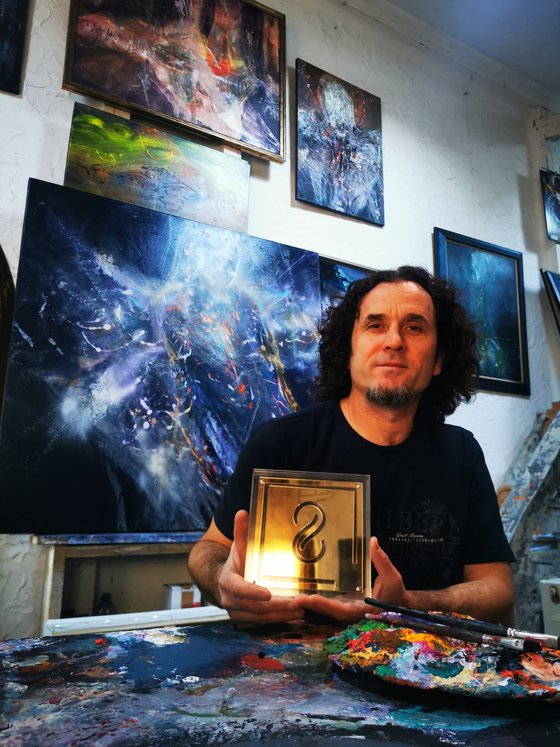
Kloska Ovidiu
Romania
About
Ovidiu Kloska – Biography & Curriculum Vitae
BiographyOvidiu Kloska (b. 1977, Romania) is a contemporary visual artist whose multidisciplinary practice spans painting, welded-steel sculpture, mixed media, and oniric conceptual photography. His... Read more