- Kloska Ovidiu
- All Artworks
- For the Love of Fire
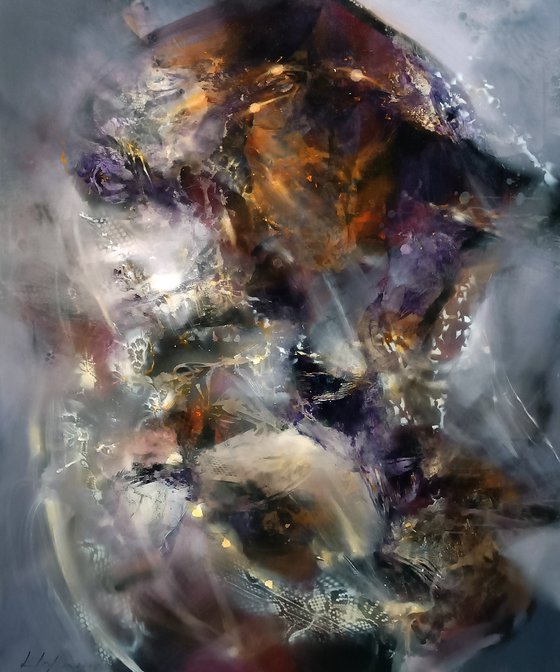
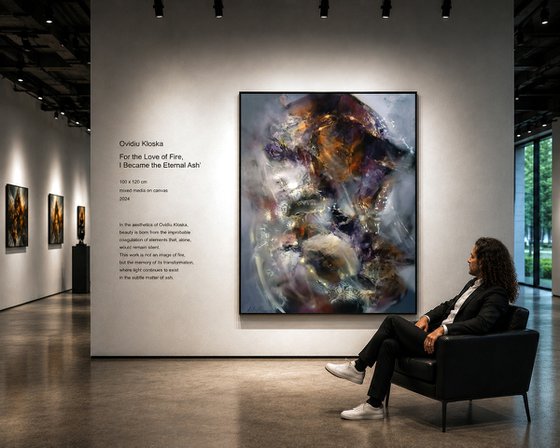
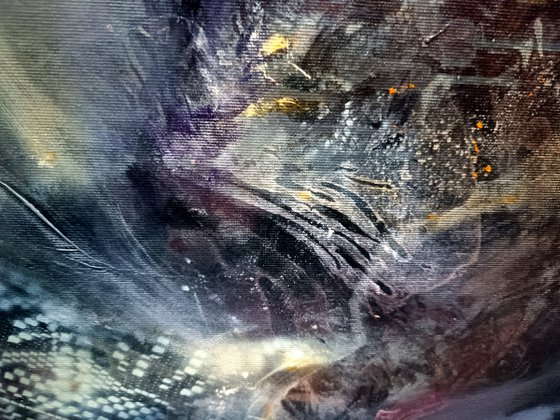
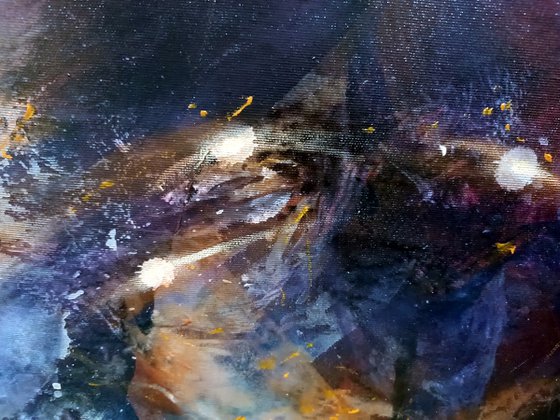
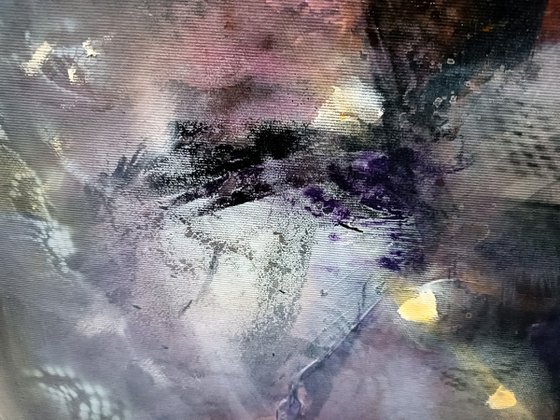
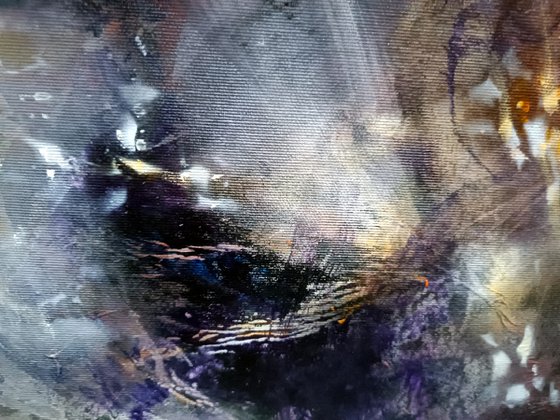
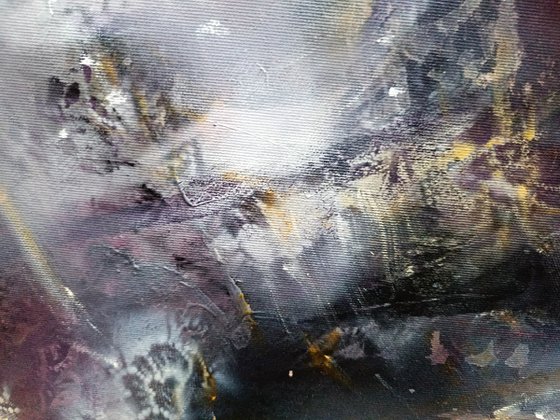
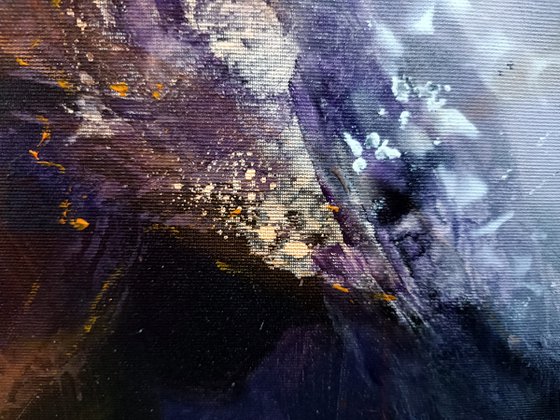
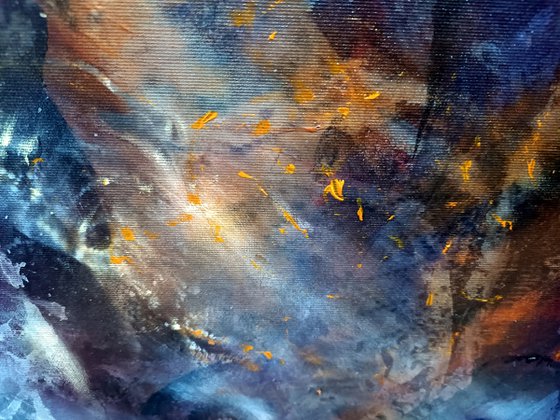
For the Love of Fire (2026) Original Mixed-media Painting by Kloska Ovidiu
100 x 120 x 2cm (unframed) / 100 x 120cm (actual image size)
£2,566.5
Original artwork description
For the Love of Fire, I Became the Eternal Ash
In the aesthetic vision developed by Ovidiu Kloska, beauty is not an inherent quality of form, nor the outcome of a carefully calculated composition. It cannot be manufactured through virtuosity or achieved by imposing absolute control over matter. Beauty emerges only through the improbable coagulation of visual elements that, when isolated, seem incapable of generating meaning. A trace of color, an accidental gesture, a translucent veil, a fracture, a chromatic silence—each remains almost sterile in its autonomy. Yet together they give rise to a reality that transcends the sum of its parts. Beauty resides not within the elements themselves, but within the mysterious relationships that arise between them.
This improbability forms the foundation of the Mindscape aesthetic. Painting is conceived neither as representation nor as personal confession. It becomes the site of a gradual coagulation in which matter begins to reveal its own intelligence. The artist does not impose an image; he creates the conditions in which it may emerge. Spontaneity is therefore not the abandonment of thought, but an act of trust—trust that beyond conscious intention there exists an invisible order capable of organizing chaos without diminishing its freedom.
Every intervention remains open to being transformed by the next. Layers overlap, dissolve, reappear, and continuously redefine one another. The composition is never designed in advance; it reveals itself like a living organism discovering its own architecture as it breathes. What appears accidental conceals an unseen necessity. Chance ceases to oppose order and becomes one of its most subtle manifestations.
In Kloska's painting, the gesture does not depict the world—it witnesses its emergence. Matter is no longer a passive medium but an active interlocutor. Every layer carries the memory of the one before it and the possibility of the one yet to come. The work therefore ceases to exist merely as an object and becomes an event of consciousness—a place where the visible and the invisible negotiate a shared existence.
The title opens a second dimension of experience. For the Love of Fire, I Became the Eternal Ash neither describes nor explains the image. Instead, it establishes a metaphysical field in which the visual experience acquires an entirely different resonance. Fire no longer belongs to the physical world; it becomes the symbol of the primordial force through which every authentic existence is transformed. To love fire is to embrace transformation without reservation. Ash is not the sign of disappearance, but the subtle substance in which the intensity of fire continues to exist, liberated from the violence of flame.
Between title and image, a poetics of transformation begins to unfold. The viewer does not contemplate a depiction of fire, nor an image of ash. Instead, one enters a territory where light seems to arise from the memory of a combustion already completed, and where the painted surface becomes a place in which time no longer unfolds linearly. Everything that pulses within the composition exists simultaneously before and after the burning. The painting does not capture a moment; it reveals a continuous state of becoming.
This is one of the central propositions of the aesthetic developed by Ovidiu Kloska: abstract painting neither represents reality nor merely expresses the artist's inner world. It creates the conditions for the emergence of a reality that did not exist before its own improbable coagulation. In that rare and unrepeatable instant, matter, light, memory and silence cease to function as separate visual components and become a single presence.
In Kloska's conception, the artist does not create beauty; he prepares the conditions for its appearance. Gesture, color, matter and time remain mere possibilities until an invisible order begins to bind them into an unforeseeable unity. At that moment occurs what may rightly be called the aesthetic miracle: the birth of a presence that existed in none of its individual fragments and yet, once revealed, appears as though it had always been there.
This is the poetics of Mindscape: the improbable made inevitable.
Perhaps this is also the deepest meaning of the title. It is neither the story of a fire nor the metaphor of a sacrifice. It is the acceptance of a more profound law of existence: only that which consents to complete transformation can partake in permanence. Fire does not destroy being; it strips away its provisional forms. Ash is not the residue of flame, but its living memory—the subtle matter through which light continues to exist without the necessity of burning.
This is where the painting of Ovidiu Kloska truly begins. Not in color. Not in gesture. Not even in composition. It begins in that almost impossible space where beauty is not constructed but emerges as the consequence of an improbable coagulation between presences that, in isolation, would remain silent. In the very instant that coagulation is fulfilled, abstraction ceases to be merely a language of form and becomes the experience of a reality not previously seen. For a fleeting moment of eternity, painting no longer represents the world. It participates in its creation.
Materials used:
mixed media on canvas varnished
Details:
- Mixed-media painting on Canvas
- One of a kind artwork
- Size: 100 x 120 x 2cm (unframed) / 100 x 120cm (actual image size)
- Ready to hang
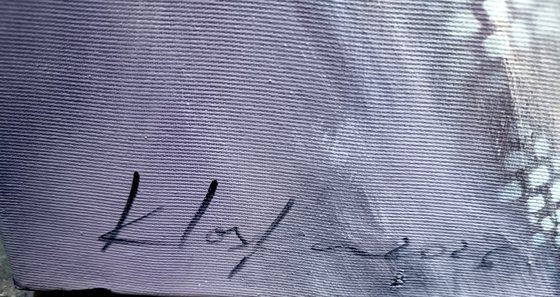
- Signed on the front
- Style: Expressive and gestural
- Subject: Abstract and non-figurative
 Free returns
14 day money back guaranteeLearn more
Original artwork description
For the Love of Fire, I Became the Eternal Ash
In the aesthetic vision developed by Ovidiu Kloska, beauty is not an inherent quality of form, nor the outcome of a carefully calculated composition. It cannot be manufactured through virtuosity or achieved by imposing absolute control over matter. Beauty emerges only through the improbable coagulation of visual elements that, when isolated, seem incapable of generating meaning. A trace of color, an accidental gesture, a translucent veil, a fracture, a chromatic silence—each remains almost sterile in its autonomy. Yet together they give rise to a reality that transcends the sum of its parts. Beauty resides not within the elements themselves, but within the mysterious relationships that arise between them.
This improbability forms the foundation of the Mindscape aesthetic. Painting is conceived neither as representation nor as personal confession. It becomes the site of a gradual coagulation in which matter begins to reveal its own intelligence. The artist does not impose an image; he creates the conditions in which it may emerge. Spontaneity is therefore not the abandonment of thought, but an act of trust—trust that beyond conscious intention there exists an invisible order capable of organizing chaos without diminishing its freedom.
Every intervention remains open to being transformed by the next. Layers overlap, dissolve, reappear, and continuously redefine one another. The composition is never designed in advance; it reveals itself like a living organism discovering its own architecture as it breathes. What appears accidental conceals an unseen necessity. Chance ceases to oppose order and becomes one of its most subtle manifestations.
In Kloska's painting, the gesture does not depict the world—it witnesses its emergence. Matter is no longer a passive medium but an active interlocutor. Every layer carries the memory of the one before it and the possibility of the one yet to come. The work therefore ceases to exist merely as an object and becomes an event of consciousness—a place where the visible and the invisible negotiate a shared existence.
The title opens a second dimension of experience. For the Love of Fire, I Became the Eternal Ash neither describes nor explains the image. Instead, it establishes a metaphysical field in which the visual experience acquires an entirely different resonance. Fire no longer belongs to the physical world; it becomes the symbol of the primordial force through which every authentic existence is transformed. To love fire is to embrace transformation without reservation. Ash is not the sign of disappearance, but the subtle substance in which the intensity of fire continues to exist, liberated from the violence of flame.
Between title and image, a poetics of transformation begins to unfold. The viewer does not contemplate a depiction of fire, nor an image of ash. Instead, one enters a territory where light seems to arise from the memory of a combustion already completed, and where the painted surface becomes a place in which time no longer unfolds linearly. Everything that pulses within the composition exists simultaneously before and after the burning. The painting does not capture a moment; it reveals a continuous state of becoming.
This is one of the central propositions of the aesthetic developed by Ovidiu Kloska: abstract painting neither represents reality nor merely expresses the artist's inner world. It creates the conditions for the emergence of a reality that did not exist before its own improbable coagulation. In that rare and unrepeatable instant, matter, light, memory and silence cease to function as separate visual components and become a single presence.
In Kloska's conception, the artist does not create beauty; he prepares the conditions for its appearance. Gesture, color, matter and time remain mere possibilities until an invisible order begins to bind them into an unforeseeable unity. At that moment occurs what may rightly be called the aesthetic miracle: the birth of a presence that existed in none of its individual fragments and yet, once revealed, appears as though it had always been there.
This is the poetics of Mindscape: the improbable made inevitable.
Perhaps this is also the deepest meaning of the title. It is neither the story of a fire nor the metaphor of a sacrifice. It is the acceptance of a more profound law of existence: only that which consents to complete transformation can partake in permanence. Fire does not destroy being; it strips away its provisional forms. Ash is not the residue of flame, but its living memory—the subtle matter through which light continues to exist without the necessity of burning.
This is where the painting of Ovidiu Kloska truly begins. Not in color. Not in gesture. Not even in composition. It begins in that almost impossible space where beauty is not constructed but emerges as the consequence of an improbable coagulation between presences that, in isolation, would remain silent. In the very instant that coagulation is fulfilled, abstraction ceases to be merely a language of form and becomes the experience of a reality not previously seen. For a fleeting moment of eternity, painting no longer represents the world. It participates in its creation.
Materials used:
mixed media on canvas varnished
Details:
- Mixed-media painting on Canvas
- One of a kind artwork
- Size: 100 x 120 x 2cm (unframed) / 100 x 120cm (actual image size)
- Ready to hang
- Signed on the front
- Style: Expressive and gestural
- Subject: Abstract and non-figurative

Kloska Ovidiu
Romania
About
Ovidiu Kloska – Biography & Curriculum Vitae
BiographyOvidiu Kloska (b. 1977, Romania) is a contemporary visual artist whose multidisciplinary practice spans painting, welded-steel sculpture, mixed media, and oniric conceptual photography. His... Read more