- Lena Okamoto
- All Artworks
- Yin–Yang ~Balance~ (Kimono Upcycled)
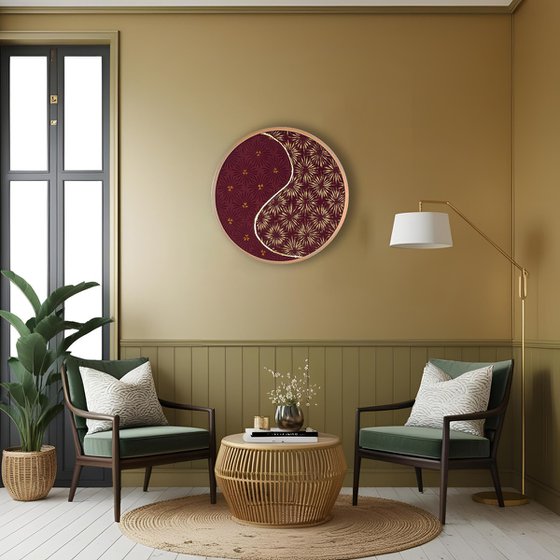
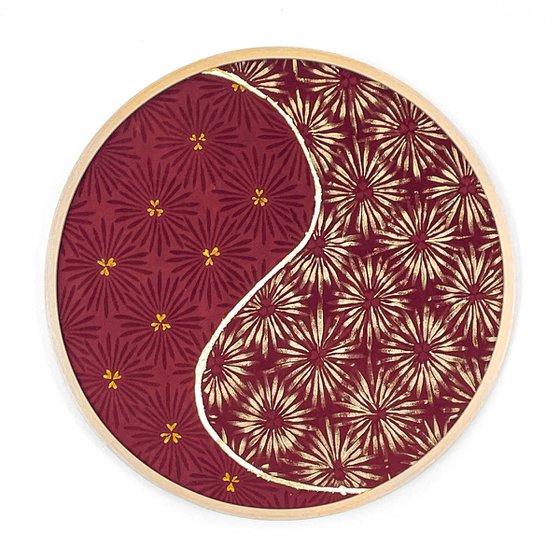
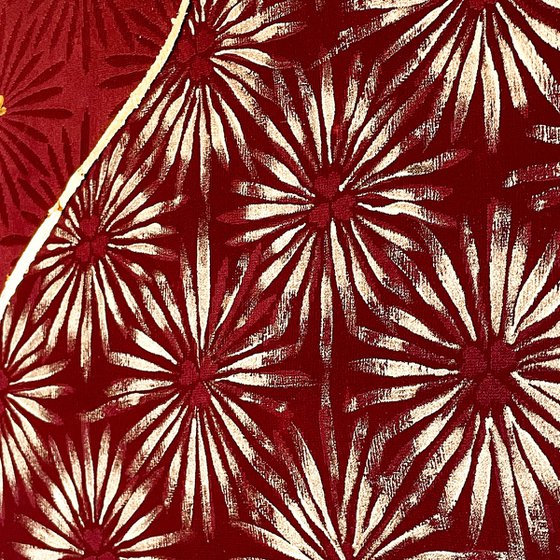
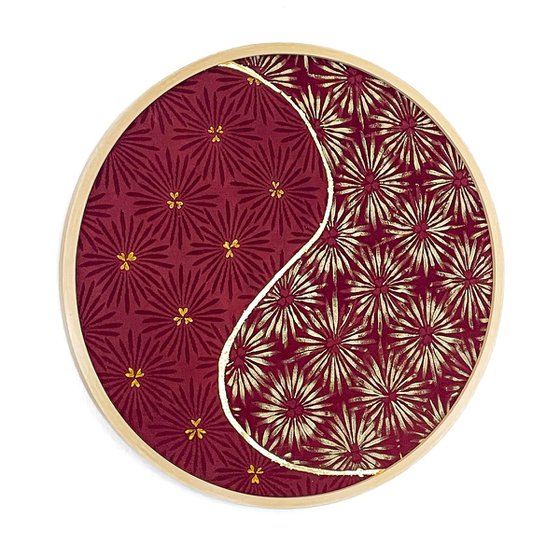
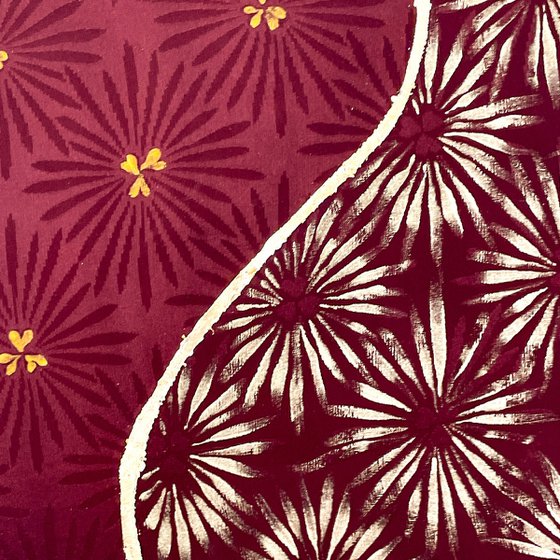
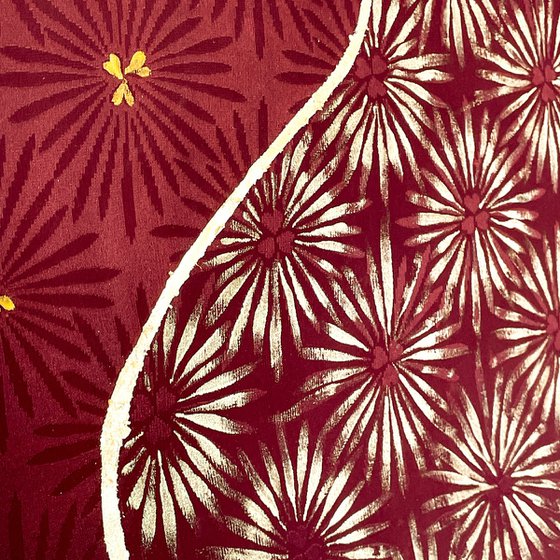
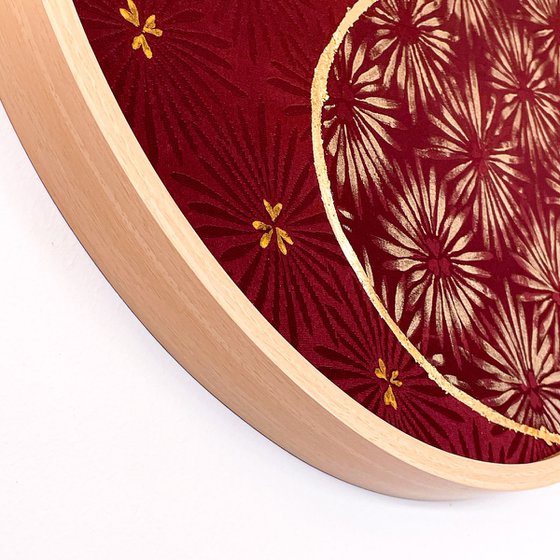
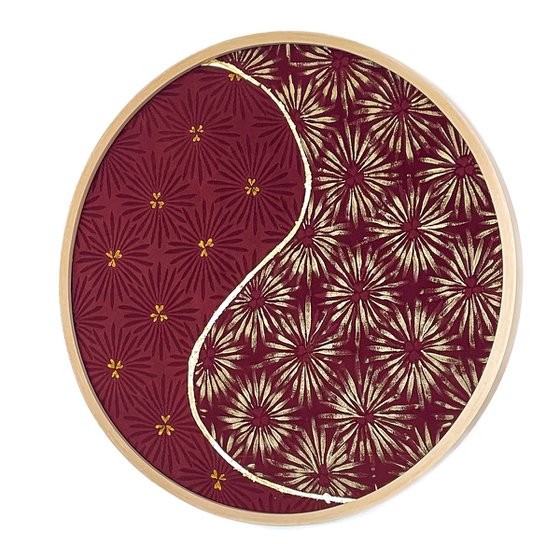
Yin–Yang ~Balance~ (Kimono Upcycled) (2025) Original Collage by Lena Okamoto
50 x 50 x 4cm (framed)
£830.72
Original artwork description
[Size]
Diameter 50cm x 4cm
[Materials]
antique silk, acrylic, golden leaf on pine wood
[Edition]
1/2
[Story behind the work]
This artwork is inspired by the philosophy of Yin and Yang, expressing balance, duality, and harmony through textile transformation. Both sides of the composition are created from the same kimono fabric, using its front and reverse surfaces. Although originating from a single textile, the two sides reveal slightly different textures, tones, and shimmering qualities, symbolizing how contrast and unity coexist within one entity.
The flowing curved line dividing the composition represents the natural movement between opposing yet complementary forces - light and shadow, strength and softness, visible and hidden. This border is accentuated by hand-applied golden acrylic and gold leaf, referencing traditional decorative techniques while introducing a contemporary artistic gesture. The golden line also symbolizes connection rather than separation, suggesting that contrast itself creates harmony.
[Period / Story]
Vintage silk kimono textile, Showa period (mid-20th century).
[Meaning of colors and patterns]
The paining on fabric draws inspiration from the philosophy of Yin and Yang, an ancient oriental concept describing the balance of opposing yet complementary forces. Rather than representing conflict, Yin and Yang symbolize harmony created through contrast - light and shadow, softness and strength, stillness and movement.
The interplay of colors reflects this dialogue between dualities. Dark tones suggest depth, mystery, and introspection, while lighter elements evoke clarity, openness, and renewal. Together, they form a visual rhythm that expresses the natural cycles of transformation present in both nature and human experience.
Through the recontextualization of antique textiles, the pattern becomes a metaphor for continuity. Materials that once existed in a different form are brought into a new equilibrium, where past and present coexist. The artwork invites the viewer to reflect on the beauty found in imperfection, change, and the constant search for balance.
[Characteristics of the fabric]
The artwork is created from high-quality vintage silk kimono fabric. Kimono textile used in this artwork is valued for its' refined weaving techniques, durability, and ability to reflect light differently depending on viewing angle. Using both front and reverse sides of the same fabric highlights the material’s structural beauty and craftsmanship.
地紋 (Jimon) is a subtle woven pattern embedded into the base fabric of a textile. Unlike boldly dyed or embroidered motifs, jimon is created during the weaving process itself, forming delicate patterns that often become visible only when light reflects across the surface.
Traditionally, these patterns carry symbolic meanings such as prosperity, longevity, or protection, while also adding depth and quiet elegance to the fabric. Jimon reflects the refined Japanese aesthetic of appreciating understated beauty - details that may not immediately reveal themselves, but reward closer observation over time.
[About the frame]
The piece is set within a circular wooden frame, reinforcing the symbolism of completeness, continuity, and the cyclical nature of existence. The natural wood complements the organic warmth of the textile and enhances the sense of harmony between material and concept.
[Decoration Advice]
The circular composition makes this artwork suitable as a central decorative element. It can be displayed individually on a wall or incorporated into gallery-style installations. Ideal for residential interiors, meditation spaces, hospitality environments, or cultural settings.
Materials used:
silk (outside-layer), acrylic, golden leaf on wood
Details:
- Collage on Fabric
- One of a kind artwork
- Size: 50 x 50 x 4cm (framed)
- Framed and ready to hang
- Signed certificate of authenticity
- Style: Collage
- Subject: Abstract and non-figurative
Tags:
#contemporary#pattern#white#green#japanese#geometric#upcycled#vintage#zen#fabric#meditation#kimono#textile art#sustainable#eco-friendly Free returns
14 day money back guaranteeLearn more
Original artwork description
[Size]
Diameter 50cm x 4cm
[Materials]
antique silk, acrylic, golden leaf on pine wood
[Edition]
1/2
[Story behind the work]
This artwork is inspired by the philosophy of Yin and Yang, expressing balance, duality, and harmony through textile transformation. Both sides of the composition are created from the same kimono fabric, using its front and reverse surfaces. Although originating from a single textile, the two sides reveal slightly different textures, tones, and shimmering qualities, symbolizing how contrast and unity coexist within one entity.
The flowing curved line dividing the composition represents the natural movement between opposing yet complementary forces - light and shadow, strength and softness, visible and hidden. This border is accentuated by hand-applied golden acrylic and gold leaf, referencing traditional decorative techniques while introducing a contemporary artistic gesture. The golden line also symbolizes connection rather than separation, suggesting that contrast itself creates harmony.
[Period / Story]
Vintage silk kimono textile, Showa period (mid-20th century).
[Meaning of colors and patterns]
The paining on fabric draws inspiration from the philosophy of Yin and Yang, an ancient oriental concept describing the balance of opposing yet complementary forces. Rather than representing conflict, Yin and Yang symbolize harmony created through contrast - light and shadow, softness and strength, stillness and movement.
The interplay of colors reflects this dialogue between dualities. Dark tones suggest depth, mystery, and introspection, while lighter elements evoke clarity, openness, and renewal. Together, they form a visual rhythm that expresses the natural cycles of transformation present in both nature and human experience.
Through the recontextualization of antique textiles, the pattern becomes a metaphor for continuity. Materials that once existed in a different form are brought into a new equilibrium, where past and present coexist. The artwork invites the viewer to reflect on the beauty found in imperfection, change, and the constant search for balance.
[Characteristics of the fabric]
The artwork is created from high-quality vintage silk kimono fabric. Kimono textile used in this artwork is valued for its' refined weaving techniques, durability, and ability to reflect light differently depending on viewing angle. Using both front and reverse sides of the same fabric highlights the material’s structural beauty and craftsmanship.
地紋 (Jimon) is a subtle woven pattern embedded into the base fabric of a textile. Unlike boldly dyed or embroidered motifs, jimon is created during the weaving process itself, forming delicate patterns that often become visible only when light reflects across the surface.
Traditionally, these patterns carry symbolic meanings such as prosperity, longevity, or protection, while also adding depth and quiet elegance to the fabric. Jimon reflects the refined Japanese aesthetic of appreciating understated beauty - details that may not immediately reveal themselves, but reward closer observation over time.
[About the frame]
The piece is set within a circular wooden frame, reinforcing the symbolism of completeness, continuity, and the cyclical nature of existence. The natural wood complements the organic warmth of the textile and enhances the sense of harmony between material and concept.
[Decoration Advice]
The circular composition makes this artwork suitable as a central decorative element. It can be displayed individually on a wall or incorporated into gallery-style installations. Ideal for residential interiors, meditation spaces, hospitality environments, or cultural settings.
Materials used:
silk (outside-layer), acrylic, golden leaf on wood
Details:
- Collage on Fabric
- One of a kind artwork
- Size: 50 x 50 x 4cm (framed)
- Framed and ready to hang
- Signed certificate of authenticity
- Style: Collage
- Subject: Abstract and non-figurative
Tags:
#contemporary#pattern#white#green#japanese#geometric#upcycled#vintage#zen#fabric#meditation#kimono#textile art#sustainable#eco-friendly