- Delnara El
- All Artworks
- The Physical Possibility of Death

The Physical Possibility of Death (2025) Original Sculpture by Delnara El
20 x 20 x 5cm
Now £362.5£453.12
20% off sale. Sale ends in 23 days 6 hours
Original artwork description
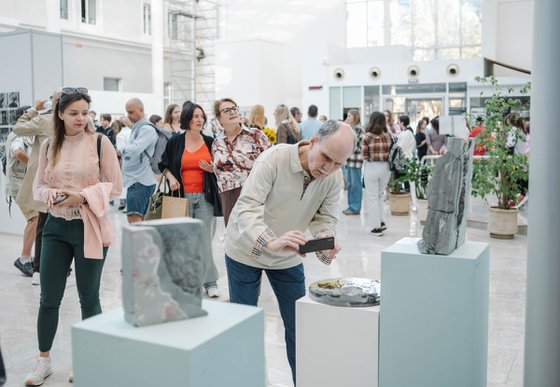
This work was presented at my solo exhibition "On the Threshold" at the Shevchenko Museum in Kyiv in 2025.
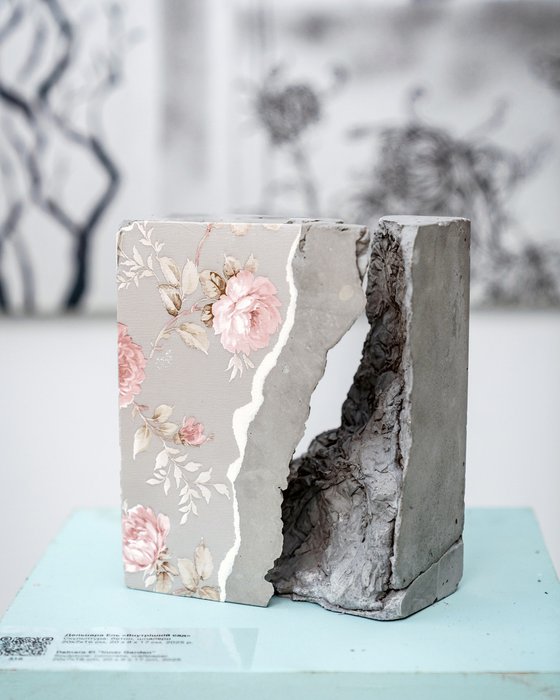
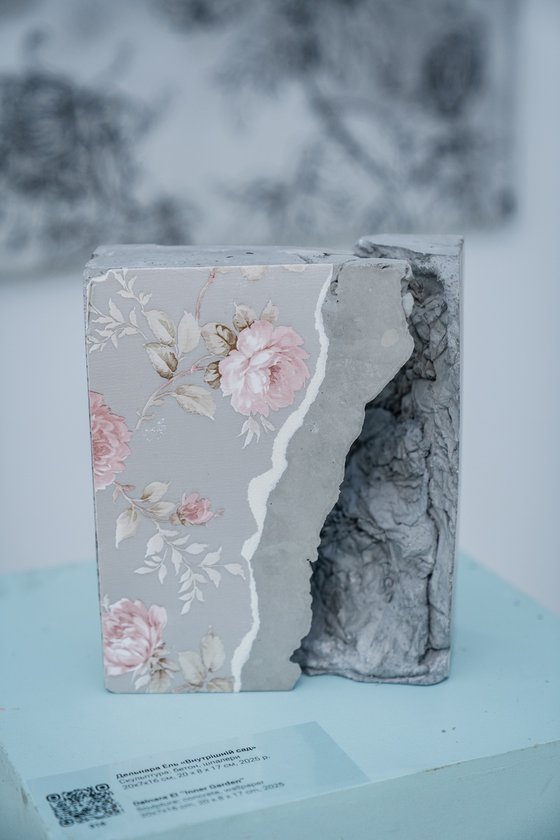
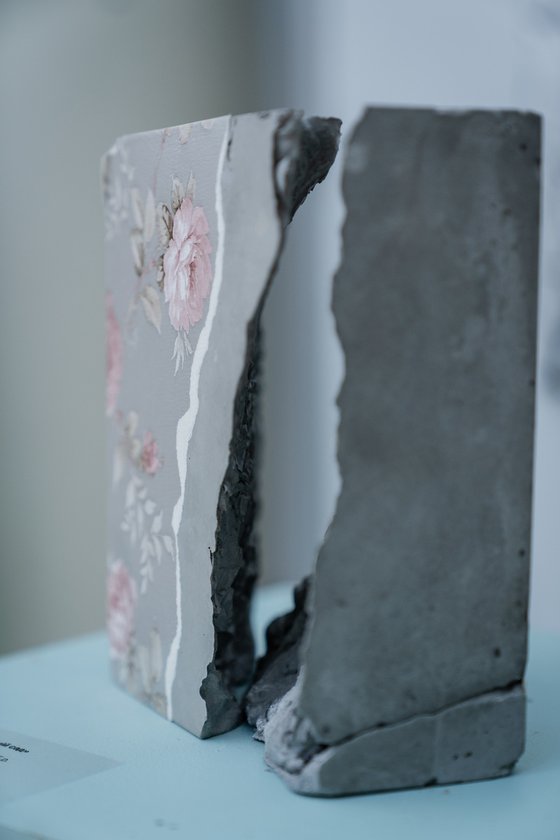
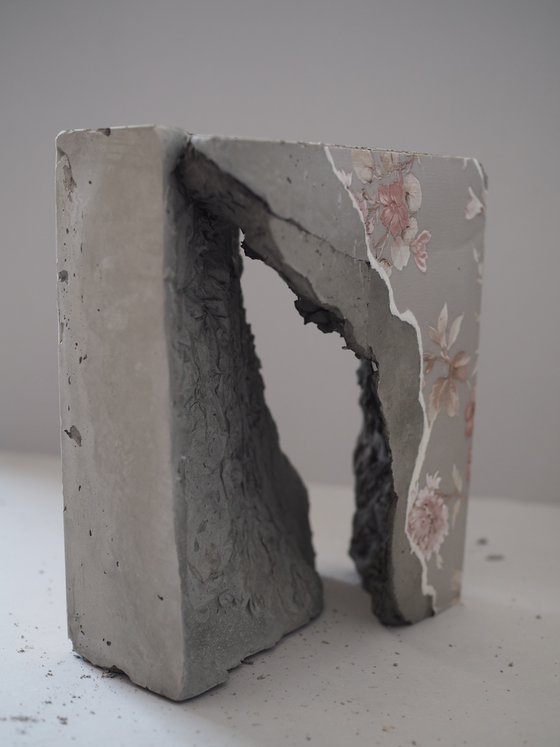
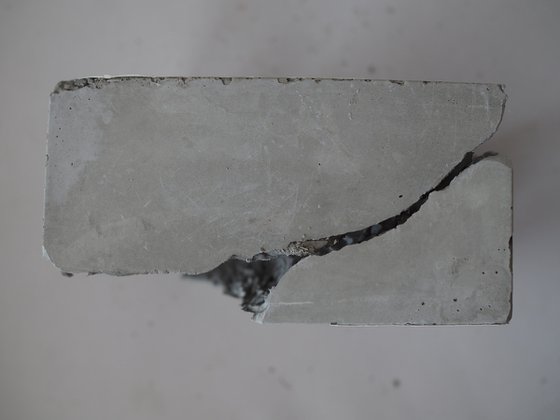
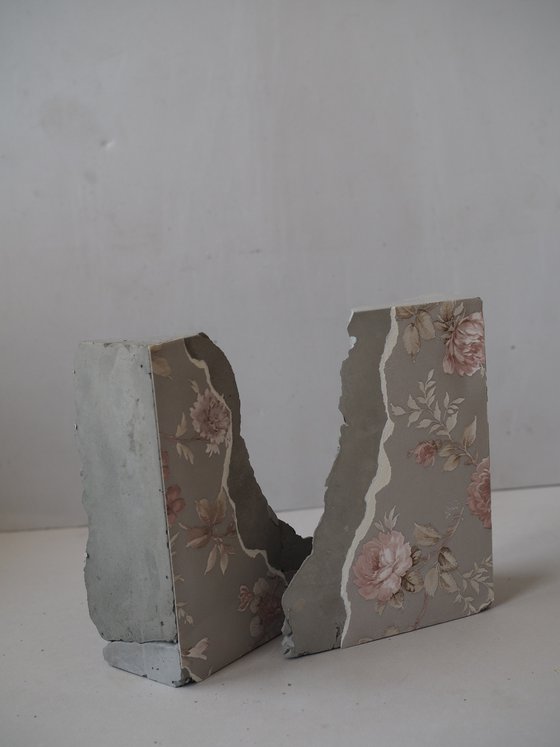
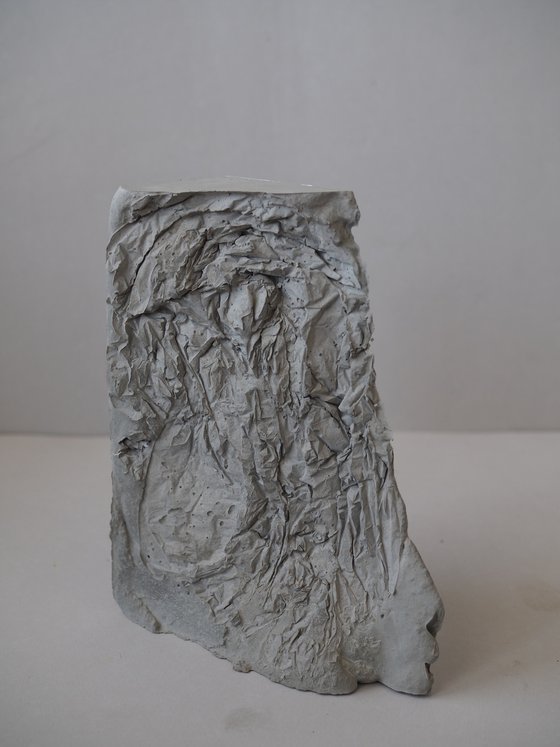
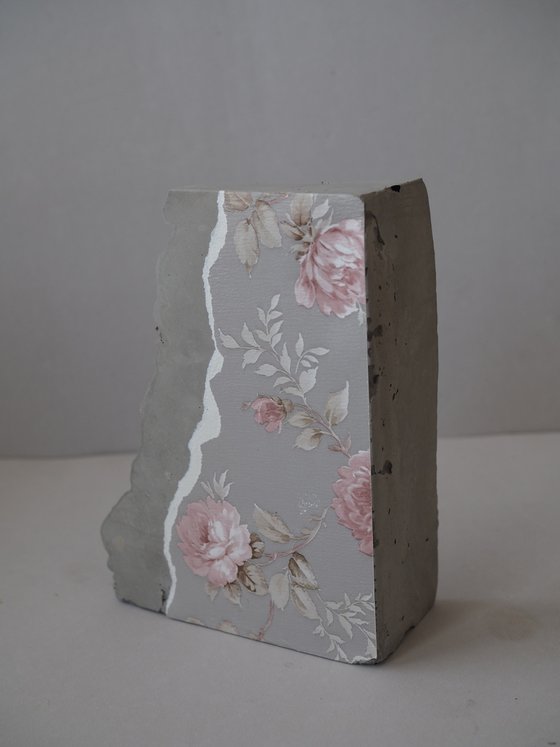
This sculpture resembles a fragment of a wall, as if taken from someone’s childhood home — a place where old floral wallpaper once held the quiet memory of safety and everyday life. Yet this memory is broken, both literally and metaphorically. The smooth, delicate surface gives way to exposed concrete, its torn structure echoing the trace of an explosion, destruction, or the erosion of time.
Despite its static form, the piece contains a sense of movement — the movement of collapse, loss, and the fragile attempt to hold onto something that is disappearing.
If in Damien Hirst’s “The Physical Impossibility of Death in the Mind of Someone Living” the shark becomes a symbol of death’s inevitability — something the mind cannot truly grasp — here the object works differently. This sculpture reveals the possibility of death inside the familiar, embedded directly into the material of everyday life.
This is the reality Ukrainians have been forced to inhabit: death is no longer abstract, no longer somewhere “far away.” It is present in every morning, in every walk outside, in every sound that might be an explosion. It becomes a form of “Russian roulette,” where life continues on the surface, yet an invisible threat pulses beneath it.
And just as Hirst places the predator in a transparent vitrine — making it even more terrifying through containment — here destruction is placed within the shape of a wall, the most domestic and grounding of structures. We are not seeing the catastrophe itself, but its imprint — and that is what makes it even more unsettling.
This torn wall fragment becomes both an archaeology of memory and an archaeology of war. It may be the wall of someone’s childhood home — a home that no longer exists. Or a home that still stands, but no longer feels safe.
The gentle flowers on the wallpaper remind us that life instinctively reaches for beauty. The rupture beside them reminds us how quickly everything stable can vanish.
The sculpture becomes a witness:
to the fragility of home, to trauma breaking through the surface, and to the attempt to preserve memory in a reality that continues to destroy it.
Materials used:
concrete, wallpaper
Details:
- Sculpture on Other
- One of a kind artwork
- Size: 20 x 20 x 5cm
- Ready to hang
- Signed certificate of authenticity
- Style: Urban and Pop
- Subject: Flowers and plants
Tags:
#wood#migration#flower#minimalism#memory#war#wallpaper#gray#concrete#metaphor#ecology#crackle#anthropocene#ukranian#metamodernFeatured by our Editors:
 Free returns
14 day money back guaranteeLearn more
Original artwork description
This work was presented at my solo exhibition "On the Threshold" at the Shevchenko Museum in Kyiv in 2025.
This sculpture resembles a fragment of a wall, as if taken from someone’s childhood home — a place where old floral wallpaper once held the quiet memory of safety and everyday life. Yet this memory is broken, both literally and metaphorically. The smooth, delicate surface gives way to exposed concrete, its torn structure echoing the trace of an explosion, destruction, or the erosion of time.
Despite its static form, the piece contains a sense of movement — the movement of collapse, loss, and the fragile attempt to hold onto something that is disappearing.
If in Damien Hirst’s “The Physical Impossibility of Death in the Mind of Someone Living” the shark becomes a symbol of death’s inevitability — something the mind cannot truly grasp — here the object works differently. This sculpture reveals the possibility of death inside the familiar, embedded directly into the material of everyday life.
This is the reality Ukrainians have been forced to inhabit: death is no longer abstract, no longer somewhere “far away.” It is present in every morning, in every walk outside, in every sound that might be an explosion. It becomes a form of “Russian roulette,” where life continues on the surface, yet an invisible threat pulses beneath it.
And just as Hirst places the predator in a transparent vitrine — making it even more terrifying through containment — here destruction is placed within the shape of a wall, the most domestic and grounding of structures. We are not seeing the catastrophe itself, but its imprint — and that is what makes it even more unsettling.
This torn wall fragment becomes both an archaeology of memory and an archaeology of war. It may be the wall of someone’s childhood home — a home that no longer exists. Or a home that still stands, but no longer feels safe.
The gentle flowers on the wallpaper remind us that life instinctively reaches for beauty. The rupture beside them reminds us how quickly everything stable can vanish.
The sculpture becomes a witness:
to the fragility of home, to trauma breaking through the surface, and to the attempt to preserve memory in a reality that continues to destroy it.
Materials used:
concrete, wallpaper
Details:
- Sculpture on Other
- One of a kind artwork
- Size: 20 x 20 x 5cm
- Ready to hang
- Signed certificate of authenticity
- Style: Urban and Pop
- Subject: Flowers and plants
Tags:
#wood#migration#flower#minimalism#memory#war#wallpaper#gray#concrete#metaphor#ecology#crackle#anthropocene#ukranian#metamodernFeatured by our Editors:

Delnara El
Türkiye
About
My name is Natalia (Delnara is my creative pseudonym). I'm from Ukraine.
I'm a full-time artist, my passion is painting and travel. For seven years I traveled to different countries... Read more