- Megan Ashman
- All Artworks
- The Longest Fall
The Longest Fall (2021) Original Mixed-media Painting by Megan Ashman
60.96 x 121.92 x 7.62cm (unframed) / 60.96 x 121.92cm (actual image size)
£2,488.93
Original artwork description
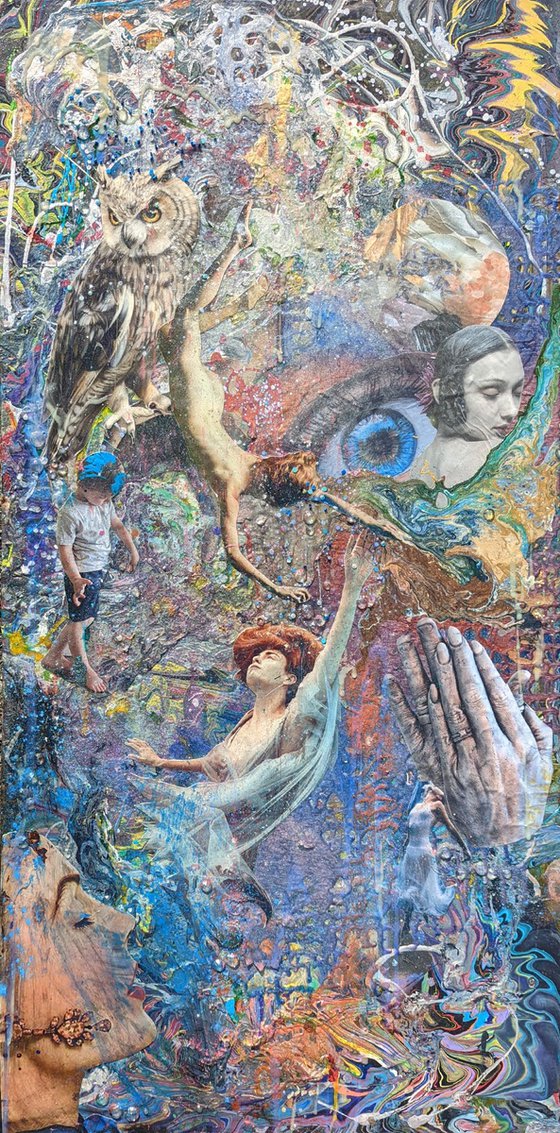
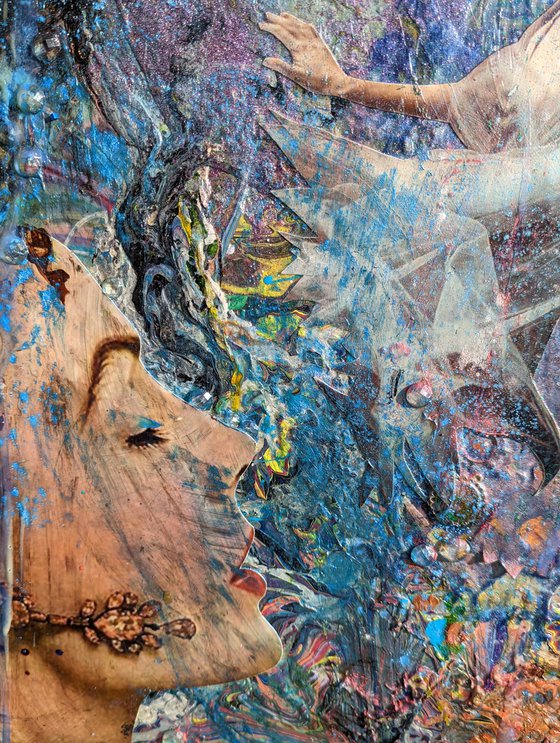
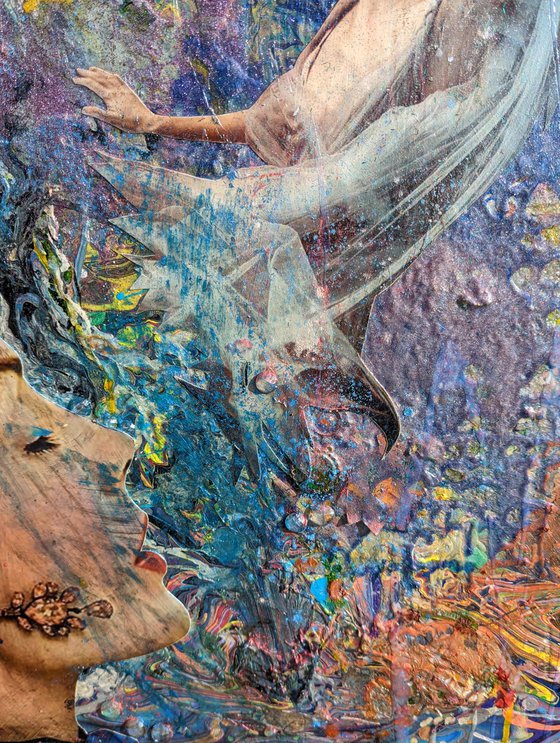
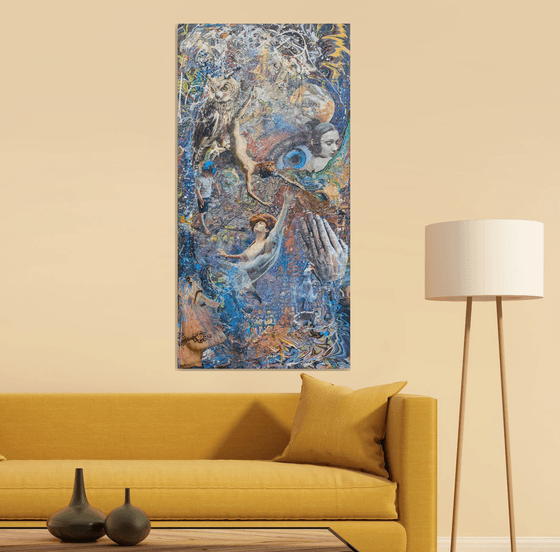
The Longest Fall is a deeply personal mixed-media painting about dissociation, fractured consciousness, motherhood, marriage, and the long passage through emotional darkness. Layered figures appear to fall, float, dream, drown, and rise within a dense psychological landscape. Each figure can be read as a separate person, but together they also suggest different states of the same self—existing simultaneously within one moment of memory.
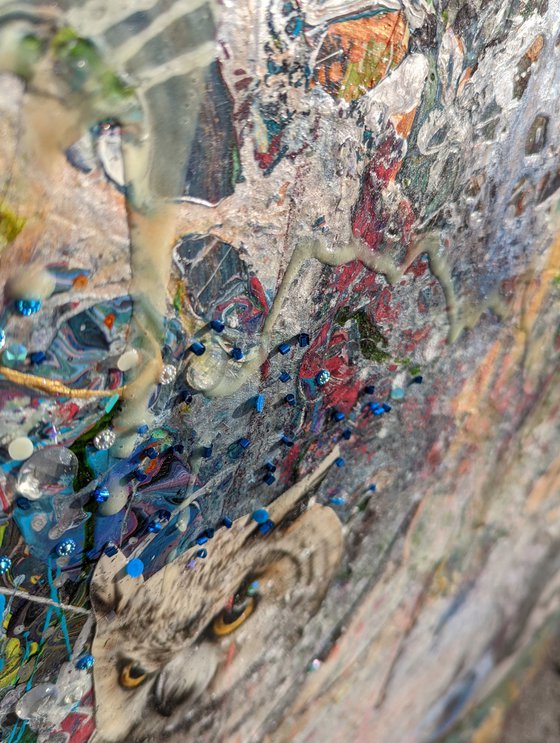
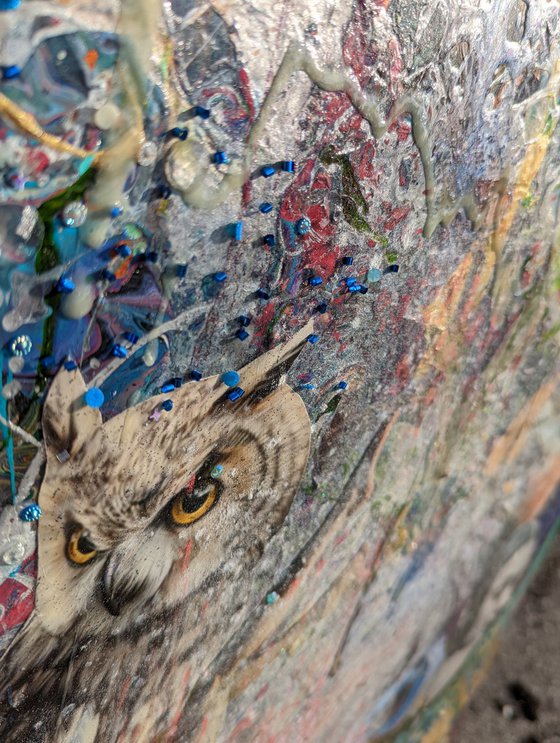
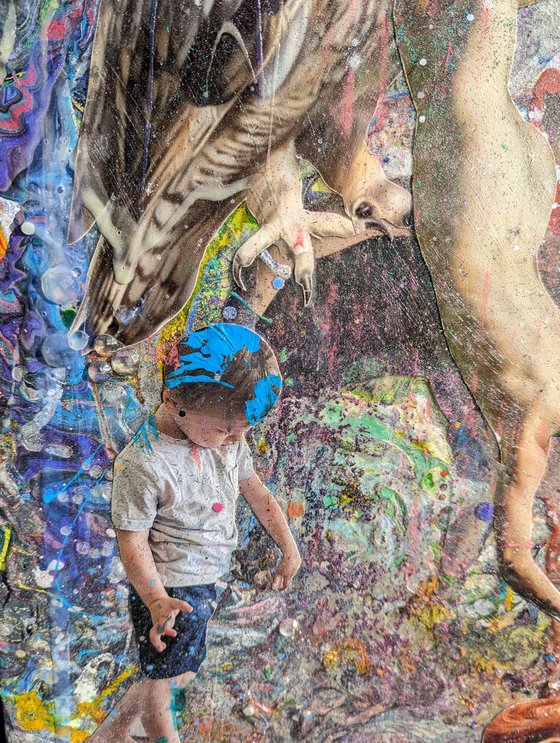
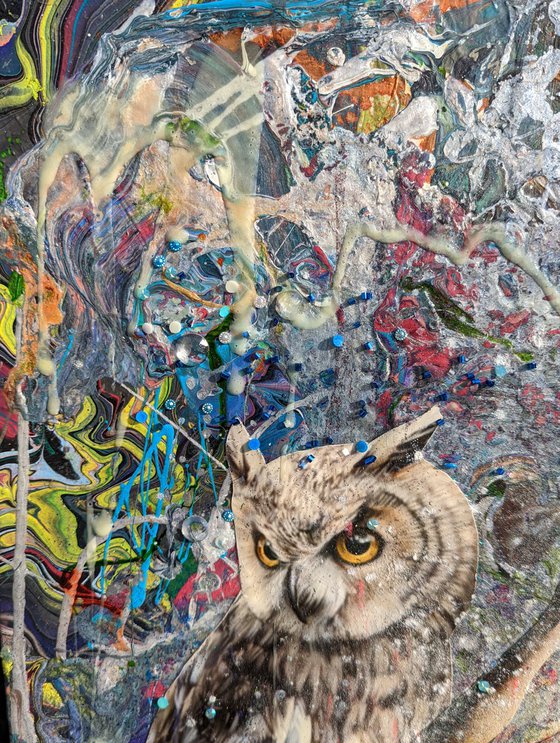
At the top of the composition, an owl stands as a silent guardian. Its watchful eye mirrors the enormous blue eye beneath it, creating the sense that the entire scene is being observed from somewhere beyond ordinary consciousness. The owl represents protection, intuition, and the presence of something that remains awake even when the conscious self has disappeared into darkness.
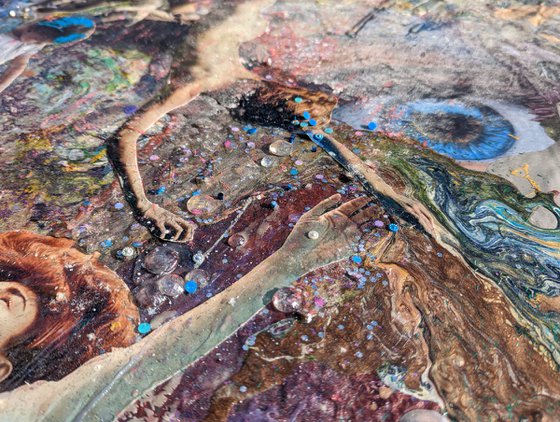
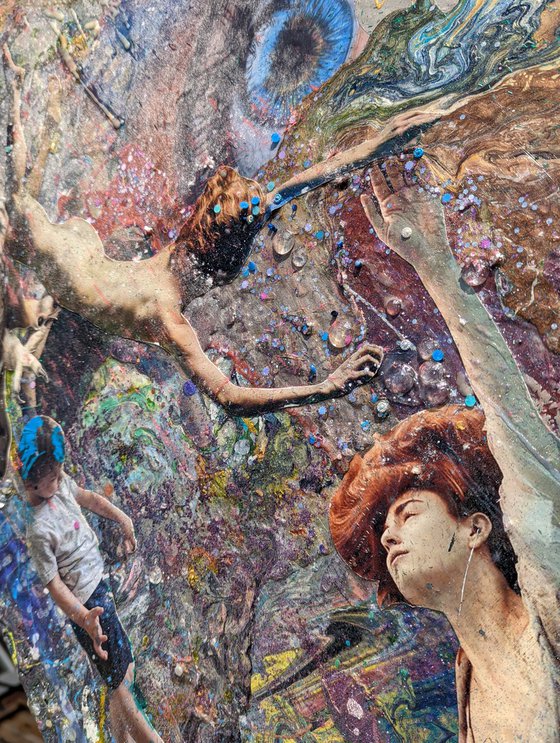
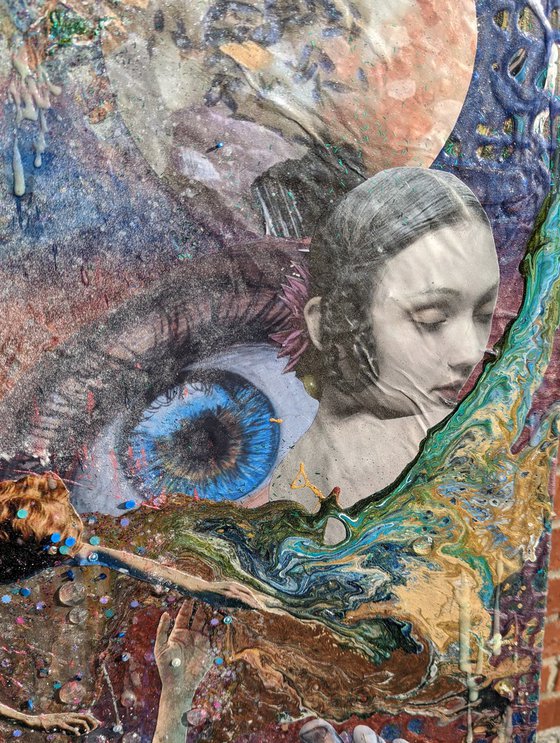
The large eye dominates the center of the painting, merging with the face of a woman whose own eyes remain closed. This contrast between the open eye and the sleeping woman reflects the divided nature of dissociation: one part of the self witnesses everything, while another retreats somewhere unreachable. The eye sees, but the body dreams. Awareness remains present, yet strangely disconnected from the life unfolding beneath it.
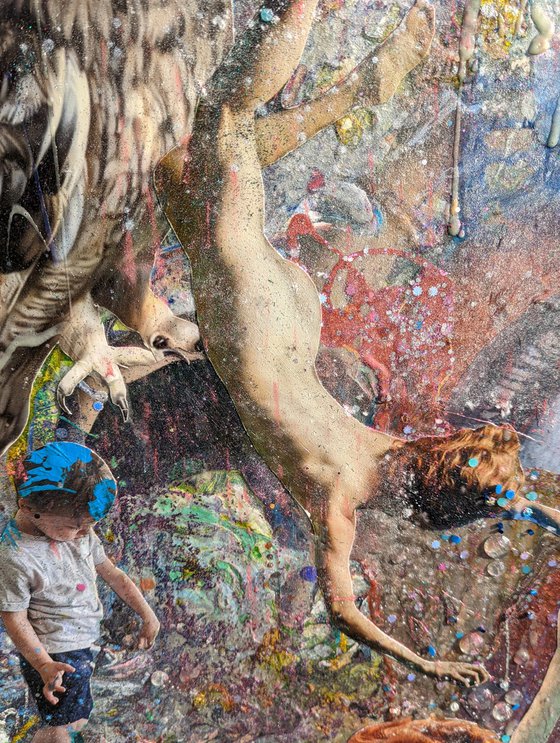
A nude woman tumbles through the center of the composition. Her body appears caught between falling and dancing, making it unclear whether she is losing control or surrendering to a current larger than herself. She becomes the moment of rupture—the instant when gravity takes hold and the familiar world begins to disappear.
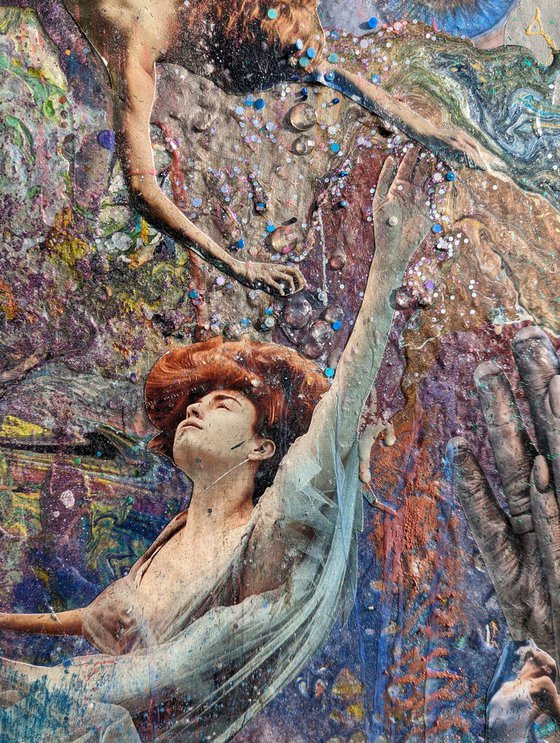
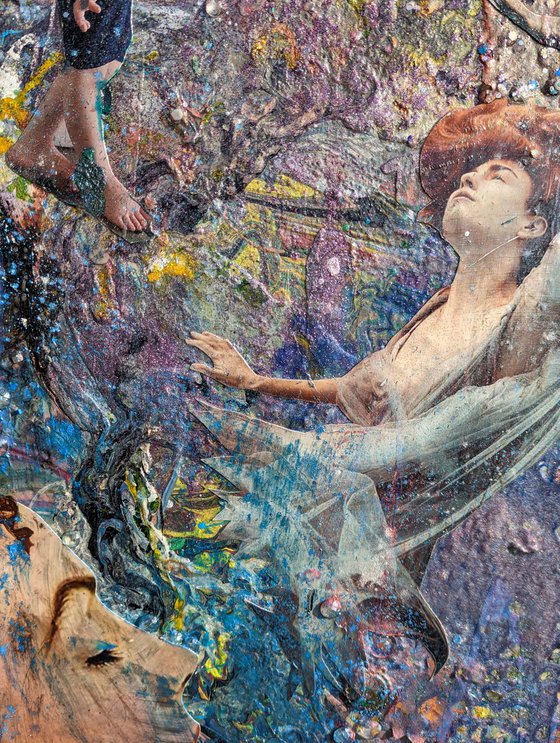
Below her, the descent continues through other figures. One woman appears submerged, while another reaches upward through the turbulence, stretching toward air, connection, and consciousness. These bodies represent successive stages of the same internal journey: falling into despair, drowning within it, and eventually beginning the difficult movement back toward the surface.
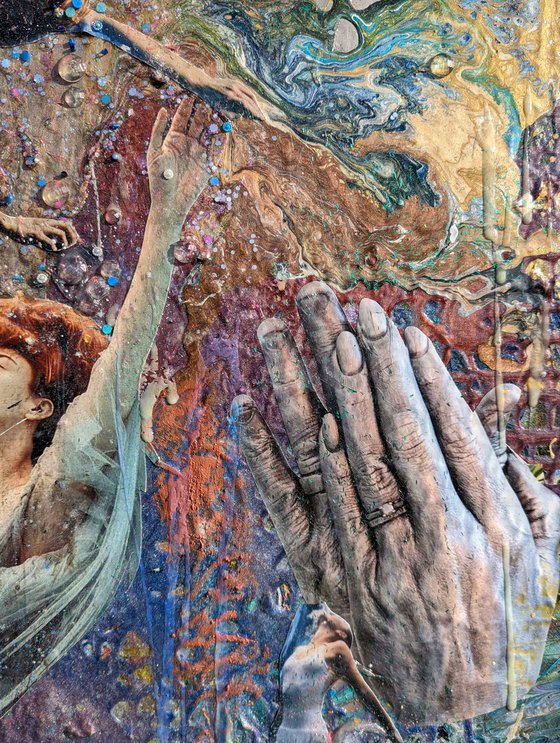
The woman rising through the lower center does not emerge untouched. Her body remains entangled in the fluid paint, beads, fractured imagery, and accumulated textures surrounding her. She carries the landscape of the fall with her. Her upward reach therefore represents more than recovery; it suggests the reconstruction of identity after the self has been divided, buried, or transformed.
To the right, the hands of a husband and wife meet within the chaos. They represent reconciliation, partnership, and the fragile human connection capable of reaching into places where language cannot. Their closeness becomes a lifeline—a reminder that love does not necessarily prevent the fall, but may offer something to hold onto within it.
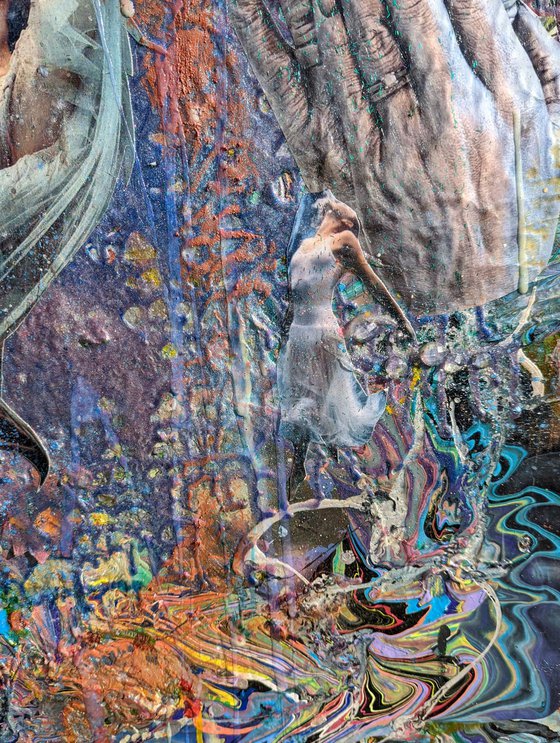
Near these hands, another small female figure appears almost like an echo or spirit-double. She may be interpreted as the dissociated self observing from outside the body, or as a quieter version of the woman still waiting to return. Throughout the painting, figures repeat, overlap, and dissolve, reflecting the sensation of being divided into multiple perspectives while remaining part of one consciousness.
On the left, a child stands alone, absorbed in drawing on a wall. He represents waiting, longing, and the impact of an internal struggle upon those who remain nearby. His presence is quiet rather than dramatic, which makes it especially poignant. He is not falling with the other figures, yet he exists inside the same emotional landscape. He becomes both a reminder of what was at stake and an anchor calling the artist back toward the physical world.
At the bottom, the upward-facing profile of a woman emerges from the layered surface like a buried memory. Her closed eyes suggest derealization, exhaustion, and separation from the body, but her face is peaceful rather than defeated. She may represent the deepest self—the part that remained suspended beneath the turbulence, waiting to be recognized and reunited with the others.
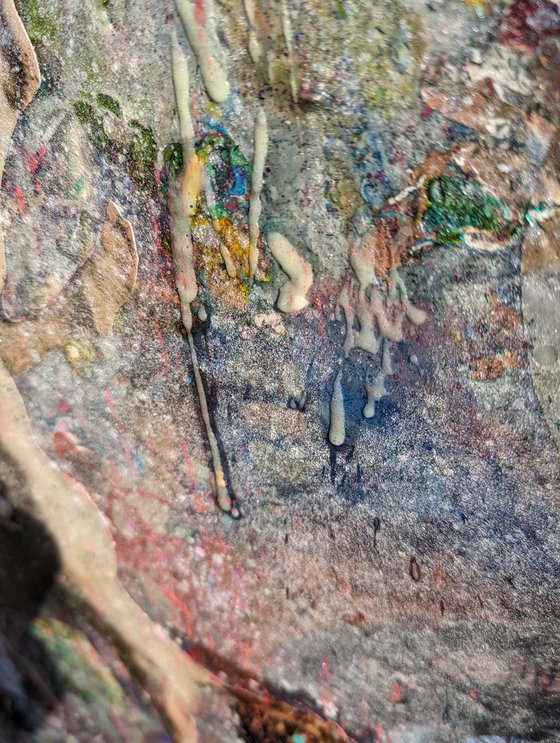
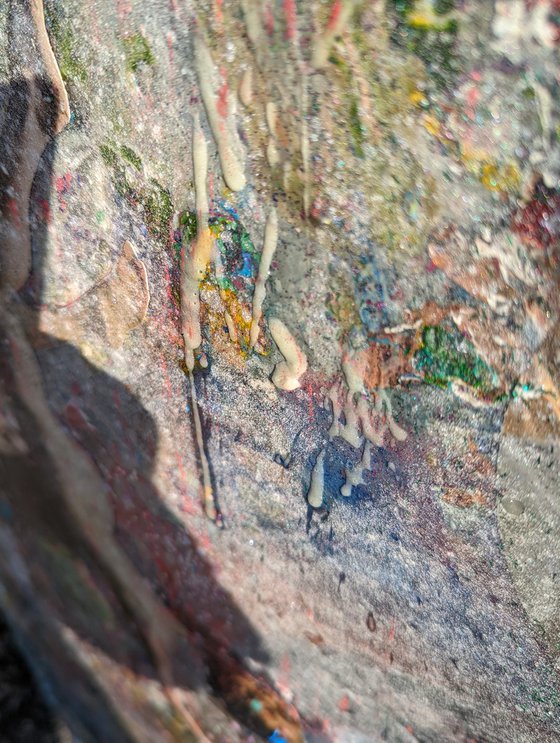
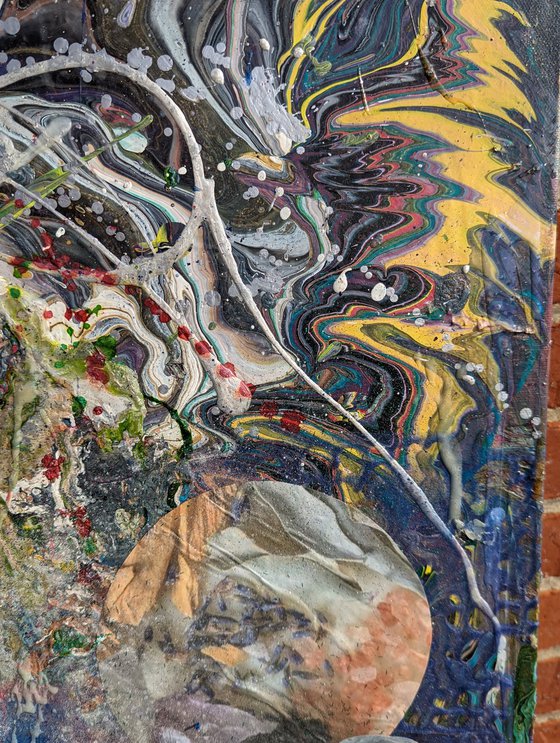
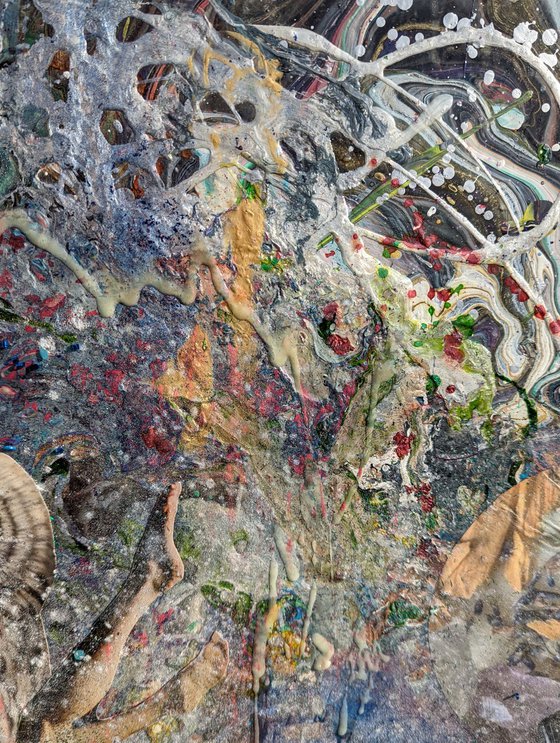
The marbled pours, phosphorescent passages, glittering fragments, beads, and heavily worked textures transform the canvas into an unstable inner world. Water, air, flesh, and dream seem to merge. Forms appear and vanish depending upon the viewer’s distance and perspective, allowing the painting to continually reorganize itself before the eye.
The title refers not only to a descent into despair, but to the seemingly endless distance between losing oneself and returning. The fall becomes psychological rather than physical—a prolonged state in which there is no visible ground, only a succession of selves attempting to survive the journey.
Ultimately, The Longest Fall is not solely a painting about darkness. It is about the consciousness that remains watchful within it, the relationships that reach through it, and the slow, uncertain movement toward integration. It portrays survival not as a clean emergence into light, but as the act of gathering each fractured part of the self and carrying them upward together.
Although rooted in the artist’s experience with dissociation, the work speaks more broadly to anyone who has felt separated from themselves, submerged by grief, or suspended between the person they once were and the person they are becoming. Its dense imagery rewards prolonged viewing, revealing new figures, relationships, and emotional narratives over time.
"In the longest fall, the owl watches as I dissolve into the eye of dreams. Hands reach, waters part, and I rise—through drowning, through waiting, through the silent weight of becoming."
This painting is a visual representation of my emotional and psychological journey. The owl at the top represents a guardian, a presence that watches over me, much like the protective spirit of a loved one. The large eye and the dreaming woman symbolize a moment of clarity and peace, a place where I can see myself and my life from a distance. The falling woman, the drowning figure, and the swimmer depict the stages of my struggle—falling into despair, drowning in it, and then fighting to rise above it. The hands of the husband and wife signify the strength of my marriage, a lifeline that helps pull me back. My son, standing alone and drawing on the wall, represents the impact of my struggles on him, his quiet waiting a reminder of the love and responsibility that anchor me. Ultimately, The Longest Fall is about the journey through darkness and the hope of emerging into light, of finding clarity and peace amidst the chaos. It is a deeply personal work, but one that I hope resonates with others who have experienced their own falls and rises.
Materials used:
Acrylic paint, spray paint, Pebeo Prism paints, mica powders, India inks, paper collage, phosphorescent paint, texture mediums, heavy gloss gel, beads, glitter, protective UV varnish (archival quality).
Details:
- Mixed-media painting on Canvas
- One of a kind artwork
- Size: 60.96 x 121.92 x 7.62cm (unframed) / 60.96 x 121.92cm (actual image size)
- Ready to hang
- Signed on the back
- Style: Surrealistic
- Subject: People and portraits
 Free returns
14 day money back guaranteeLearn more
Original artwork description
The Longest Fall is a deeply personal mixed-media painting about dissociation, fractured consciousness, motherhood, marriage, and the long passage through emotional darkness. Layered figures appear to fall, float, dream, drown, and rise within a dense psychological landscape. Each figure can be read as a separate person, but together they also suggest different states of the same self—existing simultaneously within one moment of memory.
At the top of the composition, an owl stands as a silent guardian. Its watchful eye mirrors the enormous blue eye beneath it, creating the sense that the entire scene is being observed from somewhere beyond ordinary consciousness. The owl represents protection, intuition, and the presence of something that remains awake even when the conscious self has disappeared into darkness.
The large eye dominates the center of the painting, merging with the face of a woman whose own eyes remain closed. This contrast between the open eye and the sleeping woman reflects the divided nature of dissociation: one part of the self witnesses everything, while another retreats somewhere unreachable. The eye sees, but the body dreams. Awareness remains present, yet strangely disconnected from the life unfolding beneath it.
A nude woman tumbles through the center of the composition. Her body appears caught between falling and dancing, making it unclear whether she is losing control or surrendering to a current larger than herself. She becomes the moment of rupture—the instant when gravity takes hold and the familiar world begins to disappear.
Below her, the descent continues through other figures. One woman appears submerged, while another reaches upward through the turbulence, stretching toward air, connection, and consciousness. These bodies represent successive stages of the same internal journey: falling into despair, drowning within it, and eventually beginning the difficult movement back toward the surface.
The woman rising through the lower center does not emerge untouched. Her body remains entangled in the fluid paint, beads, fractured imagery, and accumulated textures surrounding her. She carries the landscape of the fall with her. Her upward reach therefore represents more than recovery; it suggests the reconstruction of identity after the self has been divided, buried, or transformed.
To the right, the hands of a husband and wife meet within the chaos. They represent reconciliation, partnership, and the fragile human connection capable of reaching into places where language cannot. Their closeness becomes a lifeline—a reminder that love does not necessarily prevent the fall, but may offer something to hold onto within it.
Near these hands, another small female figure appears almost like an echo or spirit-double. She may be interpreted as the dissociated self observing from outside the body, or as a quieter version of the woman still waiting to return. Throughout the painting, figures repeat, overlap, and dissolve, reflecting the sensation of being divided into multiple perspectives while remaining part of one consciousness.
On the left, a child stands alone, absorbed in drawing on a wall. He represents waiting, longing, and the impact of an internal struggle upon those who remain nearby. His presence is quiet rather than dramatic, which makes it especially poignant. He is not falling with the other figures, yet he exists inside the same emotional landscape. He becomes both a reminder of what was at stake and an anchor calling the artist back toward the physical world.
At the bottom, the upward-facing profile of a woman emerges from the layered surface like a buried memory. Her closed eyes suggest derealization, exhaustion, and separation from the body, but her face is peaceful rather than defeated. She may represent the deepest self—the part that remained suspended beneath the turbulence, waiting to be recognized and reunited with the others.
The marbled pours, phosphorescent passages, glittering fragments, beads, and heavily worked textures transform the canvas into an unstable inner world. Water, air, flesh, and dream seem to merge. Forms appear and vanish depending upon the viewer’s distance and perspective, allowing the painting to continually reorganize itself before the eye.
The title refers not only to a descent into despair, but to the seemingly endless distance between losing oneself and returning. The fall becomes psychological rather than physical—a prolonged state in which there is no visible ground, only a succession of selves attempting to survive the journey.
Ultimately, The Longest Fall is not solely a painting about darkness. It is about the consciousness that remains watchful within it, the relationships that reach through it, and the slow, uncertain movement toward integration. It portrays survival not as a clean emergence into light, but as the act of gathering each fractured part of the self and carrying them upward together.
Although rooted in the artist’s experience with dissociation, the work speaks more broadly to anyone who has felt separated from themselves, submerged by grief, or suspended between the person they once were and the person they are becoming. Its dense imagery rewards prolonged viewing, revealing new figures, relationships, and emotional narratives over time.
"In the longest fall, the owl watches as I dissolve into the eye of dreams. Hands reach, waters part, and I rise—through drowning, through waiting, through the silent weight of becoming."
This painting is a visual representation of my emotional and psychological journey. The owl at the top represents a guardian, a presence that watches over me, much like the protective spirit of a loved one. The large eye and the dreaming woman symbolize a moment of clarity and peace, a place where I can see myself and my life from a distance. The falling woman, the drowning figure, and the swimmer depict the stages of my struggle—falling into despair, drowning in it, and then fighting to rise above it. The hands of the husband and wife signify the strength of my marriage, a lifeline that helps pull me back. My son, standing alone and drawing on the wall, represents the impact of my struggles on him, his quiet waiting a reminder of the love and responsibility that anchor me. Ultimately, The Longest Fall is about the journey through darkness and the hope of emerging into light, of finding clarity and peace amidst the chaos. It is a deeply personal work, but one that I hope resonates with others who have experienced their own falls and rises.
Materials used:
Acrylic paint, spray paint, Pebeo Prism paints, mica powders, India inks, paper collage, phosphorescent paint, texture mediums, heavy gloss gel, beads, glitter, protective UV varnish (archival quality).
Details:
- Mixed-media painting on Canvas
- One of a kind artwork
- Size: 60.96 x 121.92 x 7.62cm (unframed) / 60.96 x 121.92cm (actual image size)
- Ready to hang
- Signed on the back
- Style: Surrealistic
- Subject: People and portraits