- Lena Okamoto
- All Artworks
- River ~Flow~ (Kimono Upcycled)
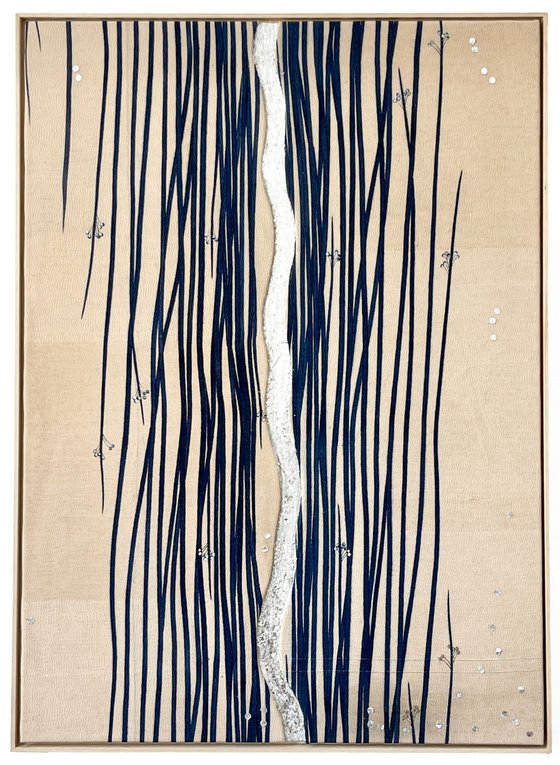
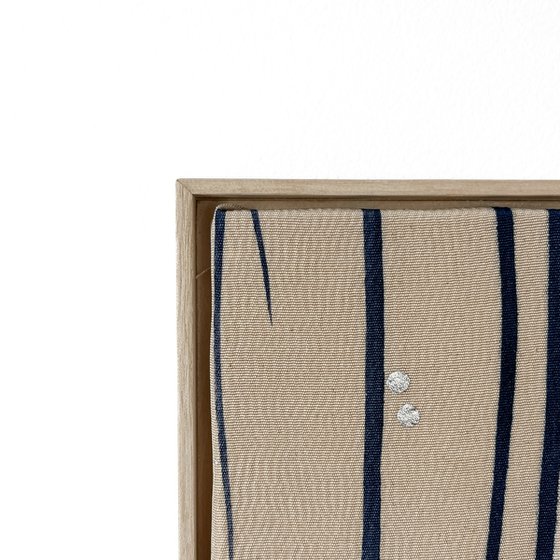
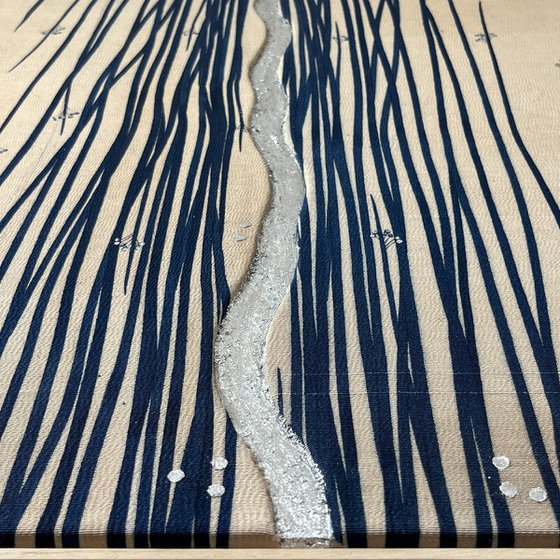

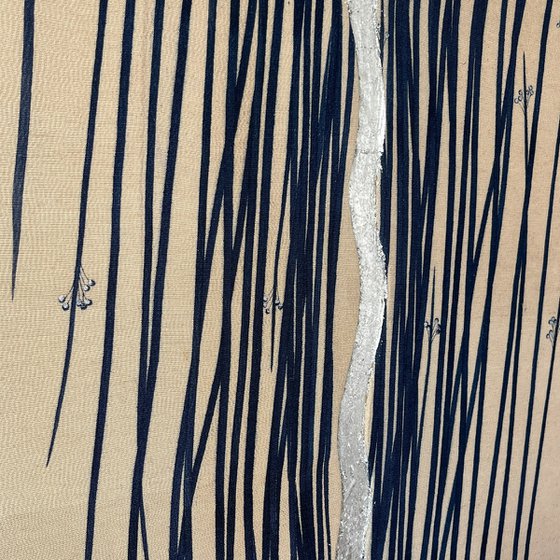
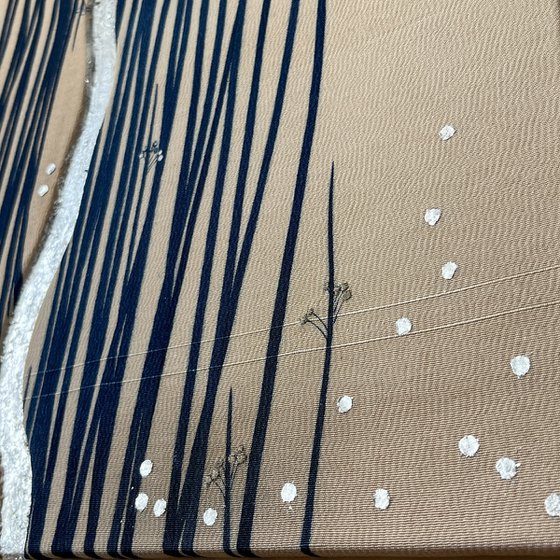
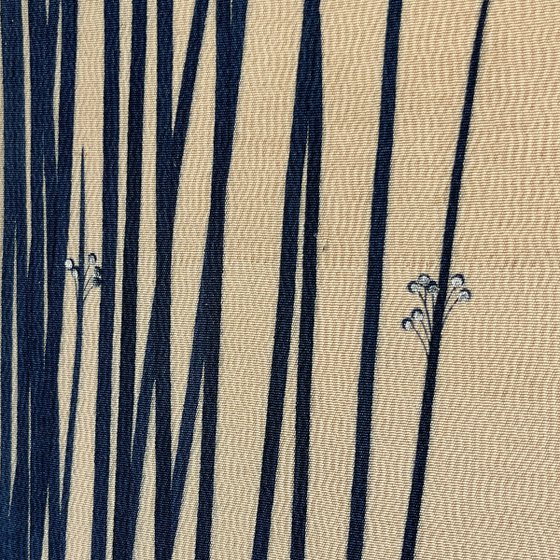
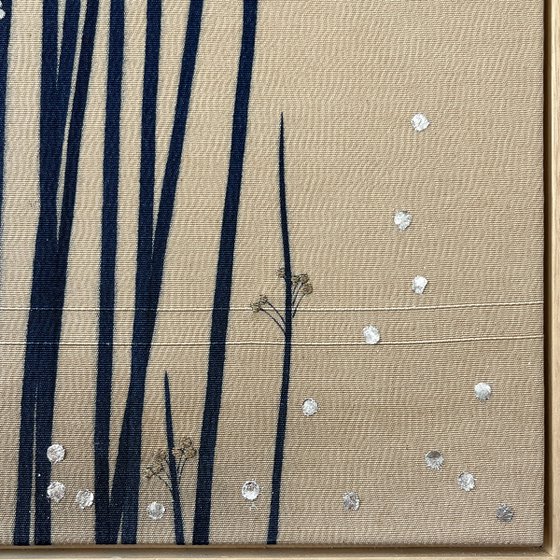
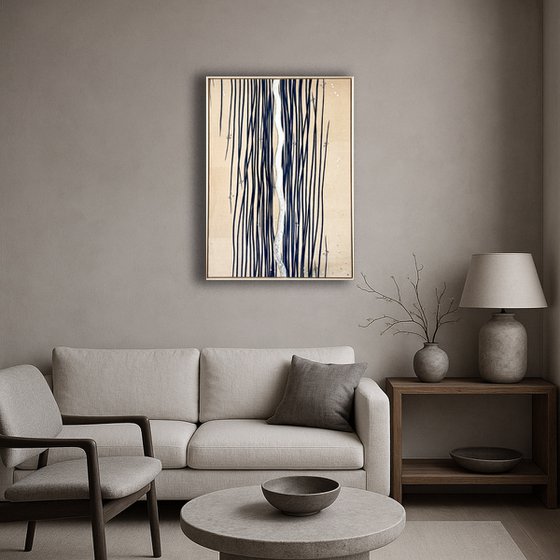
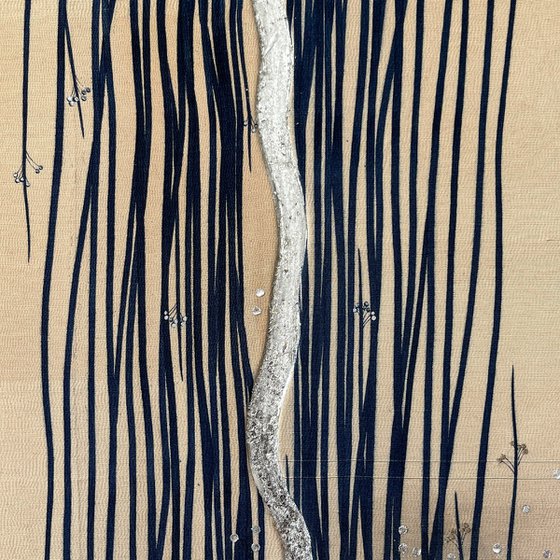
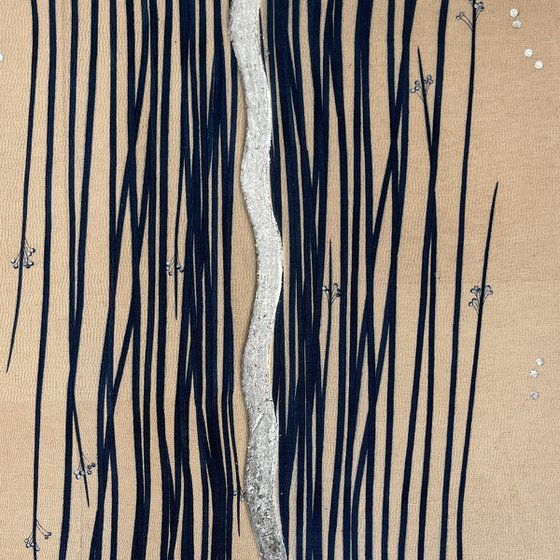
River ~Flow~ (Kimono Upcycled) (2024) Original Collage by Lena Okamoto
53 x 73 x 5cm (framed)
£1,649Sold
Do you like this artwork?
This artwork has sold, but the artist is accepting commission requests. Commissioning an artwork is easy and you get a perfectly personalised piece.
Original artwork description
[Materials]
antique silk, silver leaf on paulownia wood
[Edition]
one-of-a-kind
[Story behind the work]
This artwork uses the obi (kimono sash) fabric from Meiji era, over 100 years old, to depict grass by the bank of the river.
Fireflies were added with silver leaf by the artist to add movement, shine accents, and summer feeling.
The piece uses the traditional Japanese concept of "kintsugi" - it "unites" the pieces of antique obi back together with silver leaf to give it a second wind as art work.
“Kintsugi” is a concept of wabi-sabi, which values imperfection, impermanence, and the beauty of aging. Just as uniting broken cup in pottery, kintsugi line re-unites "broken" kimono to give it second life.
Other art piece from the same obi became a finalist at 5th All Japan Art Competition.
[Period / Story]
The artwork uses obi textile from Taisho era, around 1910-1920ies.
[Meaning of patterns and colors]
In Japanese culture, grass and fireflies along the river embody the fleeting beauty of summer nights.
The soft glow of fireflies among the grasses reflects the transience of life - a symbol often associated with mono no aware, the gentle awareness of impermanence.
Such scenes have long inspired poetry, love stories, and quiet contemplation in Japanese aesthetics.
[About the Material]
The fabric is hand-painted in traditional Japanese technique "yuzen", so basically it's an antique painting.
[About the Frame]
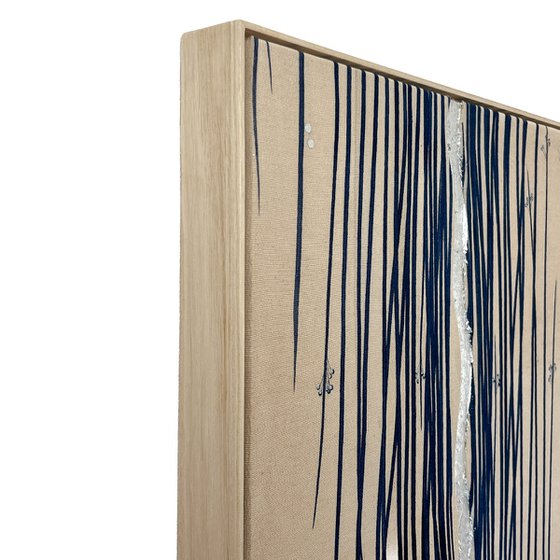
The frame is hand-crafted by Japanese artisan, from sustainable wood taken from "kiritansu".
Kiritansu - chest-of-drawers for kimono, is traditionally made from paulownia wood, a uniquely Japanese material closely tied to the world of kimonos.
Paulownia wood is known as the lightest wood in Japan, praised for its natural luster, resistance to moisture, and resilience against cracking. Since ancient times, it has been used in crafting furniture, chests, and musical instruments.
During the Edo period (17th cent.), it became customary to store cherished kimonos in paulownia chests, which offered fire resistance and protection from moisture and insects.
Traditionally, when a daughter was born, a paulownia tree would be planted. Upon her marriage, the tree would be cut down, and the wood would be used to craft a chest for her as a wedding gift.
Following the Ansei Earthquake during the late Edo period in 1855, paulownia chests gained popularity due to their ability to withstand fires and even float in water, thereby safeguarding their contents during floods.
I use antique kiritansu that can’t be used as furniture anymore to create basis and frames for my works. It adds them even more authentic atmosphere of traditional wabi-sabi spirit. Can you feel it?
[Precaution]
All the works are made from real kimonos, antiques and vintages. For this reason, the fabric may have traces of long-term use and minor fabric damages. In case there are any scratches or stains, we always add a photo of the area on the item page, so please check before purchasing. Regarding precaution, cancellation and refund policy, please refer to the refund policy in the footer section of the site for information.
Materials used:
silk (outside-layer) , paulownia (wooden frame), silver leaf
Details:
- Collage on Other
- One of a kind artwork
- Size: 53 x 73 x 5cm (framed)
- Framed and ready to hang
- Signed certificate of authenticity
- Style: Collage
- Subject: Abstract and non-figurative
Tags:
#contemporary#tree#pattern#japanese#geometric#antique#upcycled#silver#wabi-sabi#zen#beige#kimono#textile art#sustainable#eco-friendly Free returns
14 day money back guaranteeLearn more
Original artwork description
[Materials]
antique silk, silver leaf on paulownia wood
[Edition]
one-of-a-kind
[Story behind the work]
This artwork uses the obi (kimono sash) fabric from Meiji era, over 100 years old, to depict grass by the bank of the river.
Fireflies were added with silver leaf by the artist to add movement, shine accents, and summer feeling.
The piece uses the traditional Japanese concept of "kintsugi" - it "unites" the pieces of antique obi back together with silver leaf to give it a second wind as art work.
“Kintsugi” is a concept of wabi-sabi, which values imperfection, impermanence, and the beauty of aging. Just as uniting broken cup in pottery, kintsugi line re-unites "broken" kimono to give it second life.
Other art piece from the same obi became a finalist at 5th All Japan Art Competition.
[Period / Story]
The artwork uses obi textile from Taisho era, around 1910-1920ies.
[Meaning of patterns and colors]
In Japanese culture, grass and fireflies along the river embody the fleeting beauty of summer nights.
The soft glow of fireflies among the grasses reflects the transience of life - a symbol often associated with mono no aware, the gentle awareness of impermanence.
Such scenes have long inspired poetry, love stories, and quiet contemplation in Japanese aesthetics.
[About the Material]
The fabric is hand-painted in traditional Japanese technique "yuzen", so basically it's an antique painting.
[About the Frame]
The frame is hand-crafted by Japanese artisan, from sustainable wood taken from "kiritansu".
Kiritansu - chest-of-drawers for kimono, is traditionally made from paulownia wood, a uniquely Japanese material closely tied to the world of kimonos.
Paulownia wood is known as the lightest wood in Japan, praised for its natural luster, resistance to moisture, and resilience against cracking. Since ancient times, it has been used in crafting furniture, chests, and musical instruments.
During the Edo period (17th cent.), it became customary to store cherished kimonos in paulownia chests, which offered fire resistance and protection from moisture and insects.
Traditionally, when a daughter was born, a paulownia tree would be planted. Upon her marriage, the tree would be cut down, and the wood would be used to craft a chest for her as a wedding gift.
Following the Ansei Earthquake during the late Edo period in 1855, paulownia chests gained popularity due to their ability to withstand fires and even float in water, thereby safeguarding their contents during floods.
I use antique kiritansu that can’t be used as furniture anymore to create basis and frames for my works. It adds them even more authentic atmosphere of traditional wabi-sabi spirit. Can you feel it?
[Precaution]
All the works are made from real kimonos, antiques and vintages. For this reason, the fabric may have traces of long-term use and minor fabric damages. In case there are any scratches or stains, we always add a photo of the area on the item page, so please check before purchasing. Regarding precaution, cancellation and refund policy, please refer to the refund policy in the footer section of the site for information.
Materials used:
silk (outside-layer) , paulownia (wooden frame), silver leaf
Details:
- Collage on Other
- One of a kind artwork
- Size: 53 x 73 x 5cm (framed)
- Framed and ready to hang
- Signed certificate of authenticity
- Style: Collage
- Subject: Abstract and non-figurative
Tags:
#contemporary#tree#pattern#japanese#geometric#antique#upcycled#silver#wabi-sabi#zen#beige#kimono#textile art#sustainable#eco-friendly