River (2023) Original Mixed-media Painting by Gisella Stapleton
44 x 62 x 5cm (framed)
£690
Original artwork description
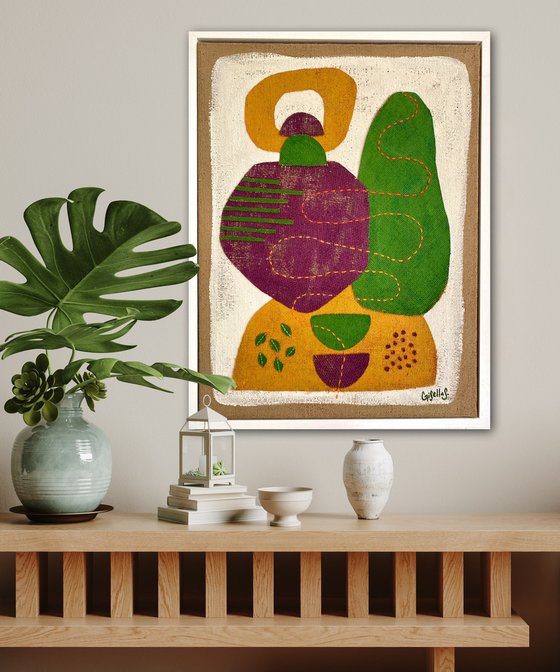
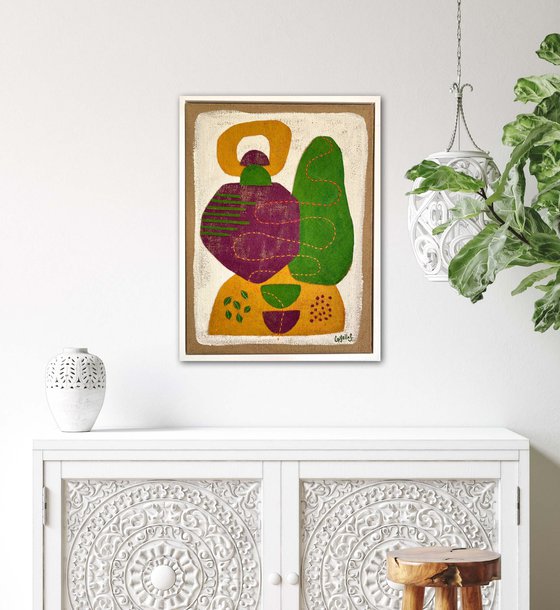
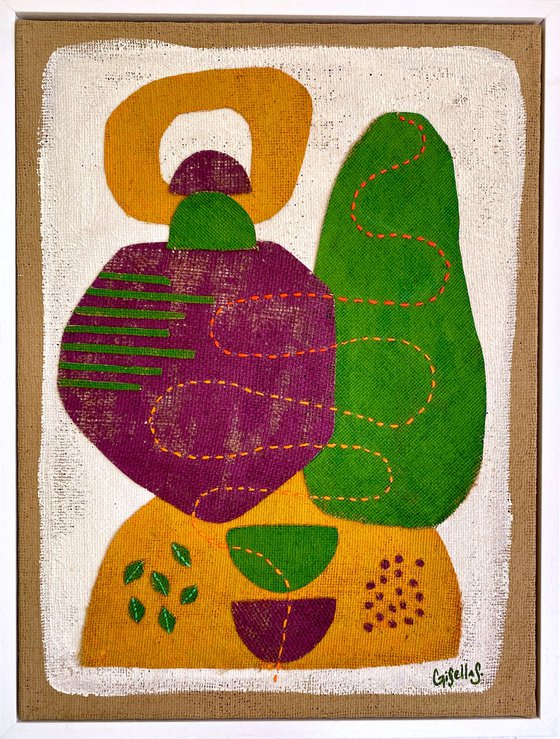
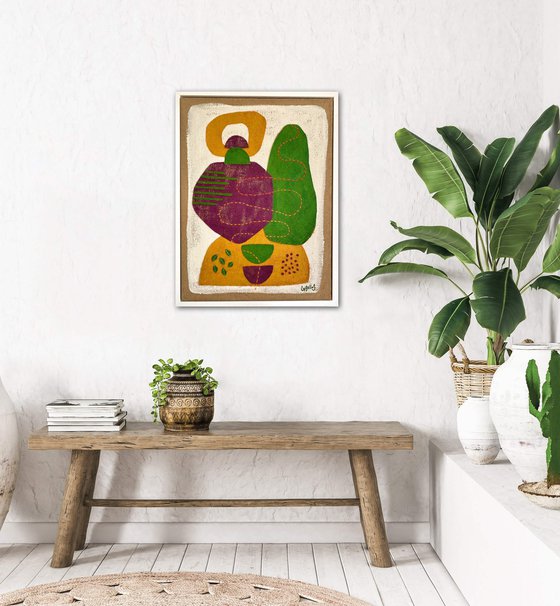
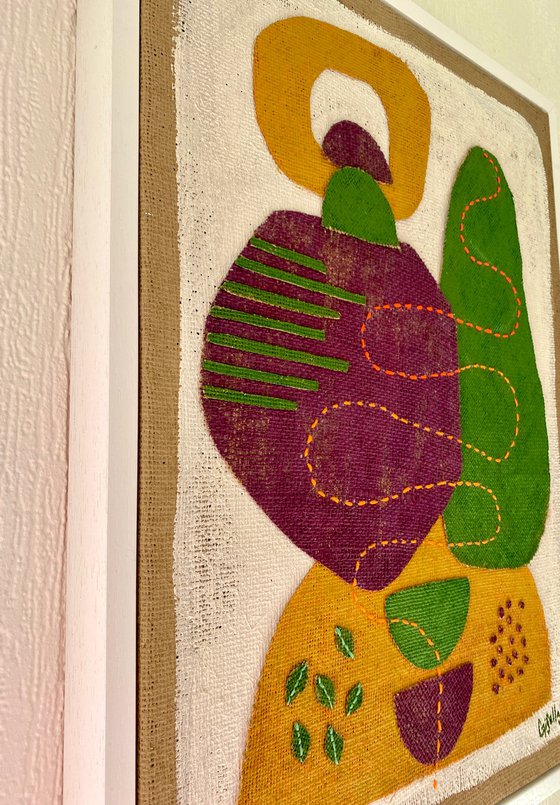
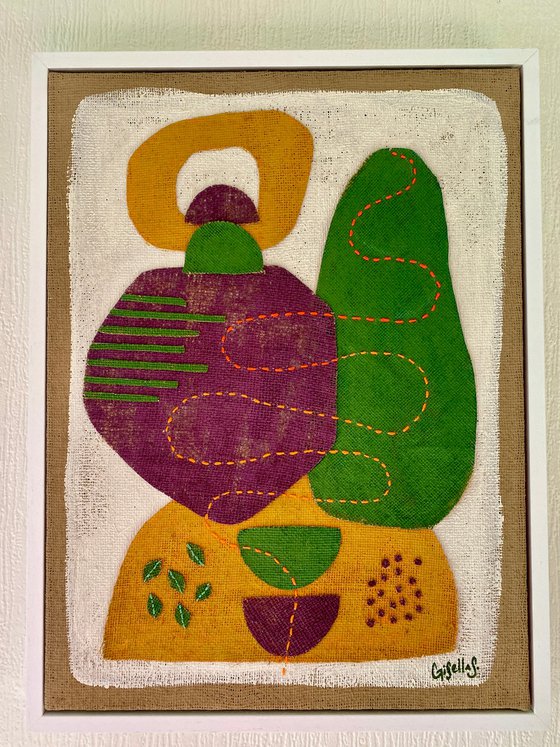
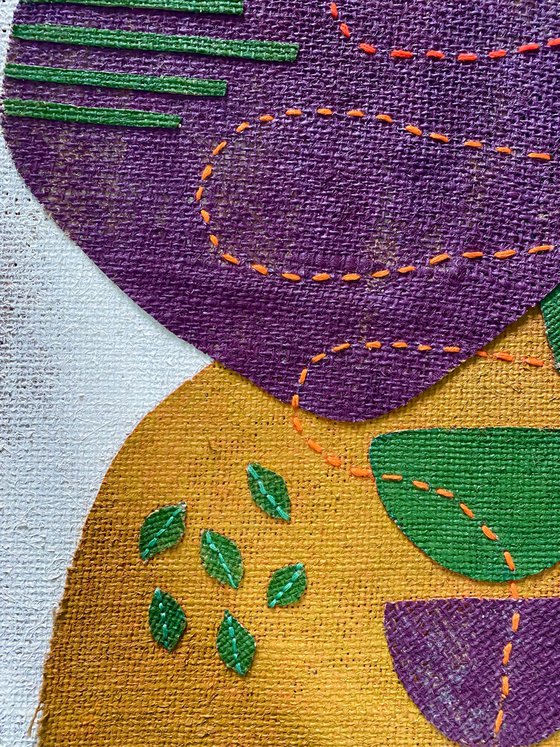
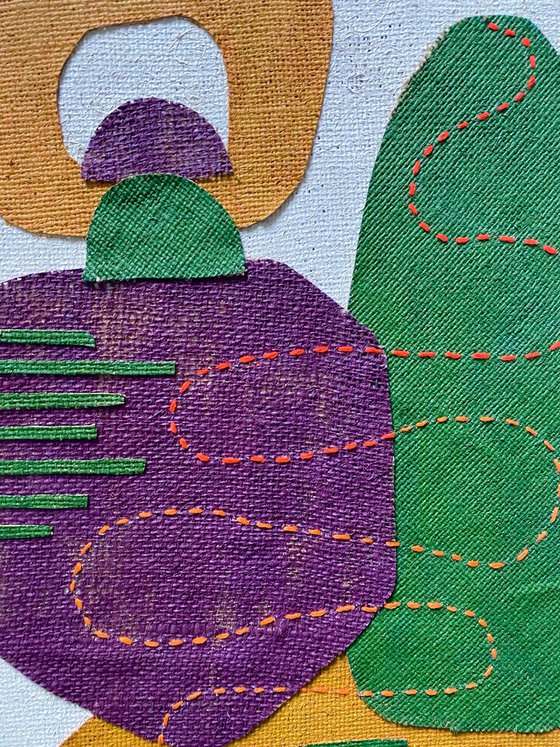
River is inspired in the amazon river, This river does not move in a straight line, but forms winding shapes from the Peruvian Andes to the north and then to the east. The curvature of these serpentine figures are known as meanders. I have represented these meanders with an embroidery that crosses the composition, likewise the organic figures in the background represent the different ecosystems and landscapes that the river crosses from the mountains to the sea.
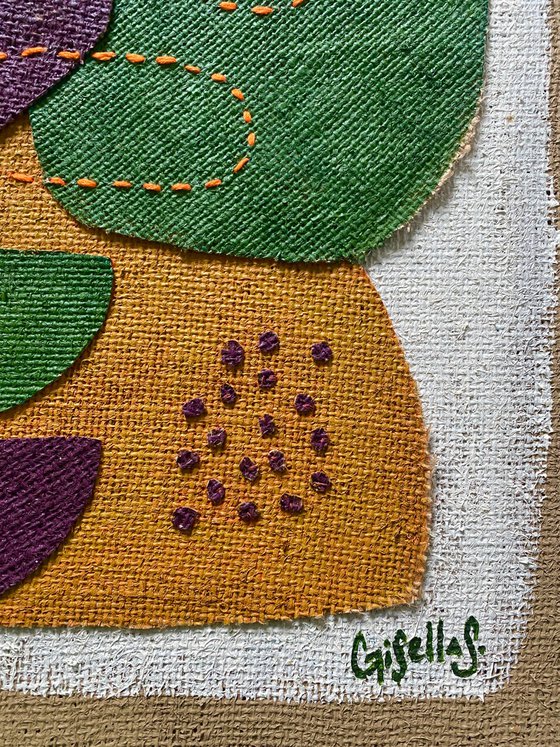
This work has been created with recycled jute (Latin American coffee bags) and embroidery. Lately I am exploring materials that allow me to create a more sustainable and environmentally conscious art, in my process the recycled jute coffee bags are painted, cut and reconstructed in organic abstracts and arcing contour body silhouettes. I also use embroidery in my works as a tool for female empowerment and peaceful protest, I consider the embroidery as a space of freedom, introspection, self-knowledge and sisterhood.
About jute:
Known as the 'golden fiber' or Burlap, jute is the vegetable fiber extracted from the stem and bark of the plant called white jute (Corchorus capsularis) Jute is 100% natural, ecological, biodegradable, reusable and recyclable.
The extraction of the fiber is carried out mainly using biological processes, without the use of chemicals. The stems are submerged in water to separate the fibers.
Its cultivation is rainfed. It does not need irrigation, it feeds on rainwater.
It is one of the strongest and most resistant natural vegetable fibers.
Its growth is very fast, usually 4–6 months.
It can be cultivated in arid lands. The cultivation of jute enriches the fertility of the soil, allowing it to be used for other crops, such as rice. For all these reasons, we could say that jute is one of the most environmentally friendly fibers that exists.
This Artwork is framed in a withe wooden frame.
Materials used:
Acrylic paint, Recycled Jute coffee sacks, embroidery threads
Details:
- Mixed-media painting on Other
- One of a kind artwork
- Size: 44 x 62 x 5cm (framed)
- Framed and ready to hang
- Signed on the front
- Style: Organic
- Subject: Abstract and non-figurative
Tags:
#semi abstract#amazon river#embroidery#organic abstract#abstract nature#nature inspired#jute#hand embellished#sustainable art#recycled materials Free returns
14 day money back guaranteeLearn more
Original artwork description
River is inspired in the amazon river, This river does not move in a straight line, but forms winding shapes from the Peruvian Andes to the north and then to the east. The curvature of these serpentine figures are known as meanders. I have represented these meanders with an embroidery that crosses the composition, likewise the organic figures in the background represent the different ecosystems and landscapes that the river crosses from the mountains to the sea.
This work has been created with recycled jute (Latin American coffee bags) and embroidery. Lately I am exploring materials that allow me to create a more sustainable and environmentally conscious art, in my process the recycled jute coffee bags are painted, cut and reconstructed in organic abstracts and arcing contour body silhouettes. I also use embroidery in my works as a tool for female empowerment and peaceful protest, I consider the embroidery as a space of freedom, introspection, self-knowledge and sisterhood.
About jute:
Known as the 'golden fiber' or Burlap, jute is the vegetable fiber extracted from the stem and bark of the plant called white jute (Corchorus capsularis) Jute is 100% natural, ecological, biodegradable, reusable and recyclable.
The extraction of the fiber is carried out mainly using biological processes, without the use of chemicals. The stems are submerged in water to separate the fibers.
Its cultivation is rainfed. It does not need irrigation, it feeds on rainwater.
It is one of the strongest and most resistant natural vegetable fibers.
Its growth is very fast, usually 4–6 months.
It can be cultivated in arid lands. The cultivation of jute enriches the fertility of the soil, allowing it to be used for other crops, such as rice. For all these reasons, we could say that jute is one of the most environmentally friendly fibers that exists.
This Artwork is framed in a withe wooden frame.
Materials used:
Acrylic paint, Recycled Jute coffee sacks, embroidery threads
Details:
- Mixed-media painting on Other
- One of a kind artwork
- Size: 44 x 62 x 5cm (framed)
- Framed and ready to hang
- Signed on the front
- Style: Organic
- Subject: Abstract and non-figurative
Tags:
#semi abstract#amazon river#embroidery#organic abstract#abstract nature#nature inspired#jute#hand embellished#sustainable art#recycled materials