- Lena Okamoto
- All Artworks
- Pines through Seasons
Original artwork description
[Size]
approx. 90cm x 100cm x 4cm
[Materials]
silk (outside-layer) , paulownia (wooden frame)
[Edition]
1/1 (one of a kind)
[Story behind the work]
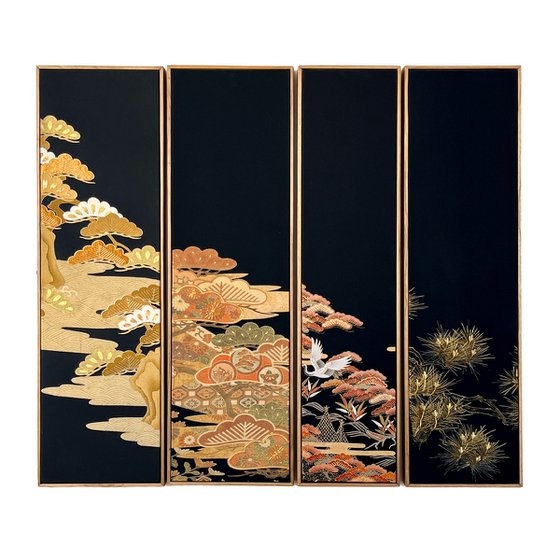
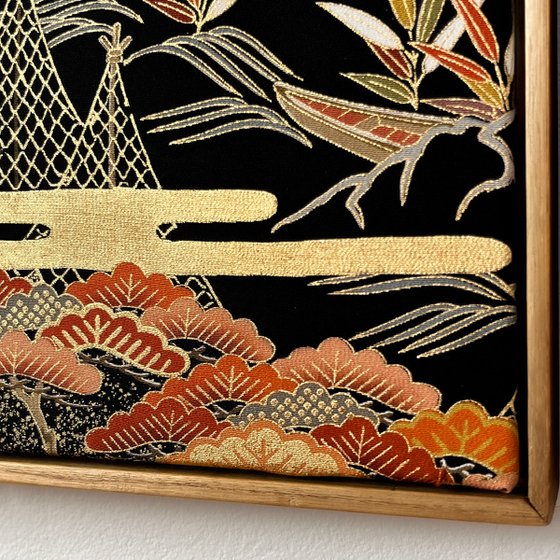
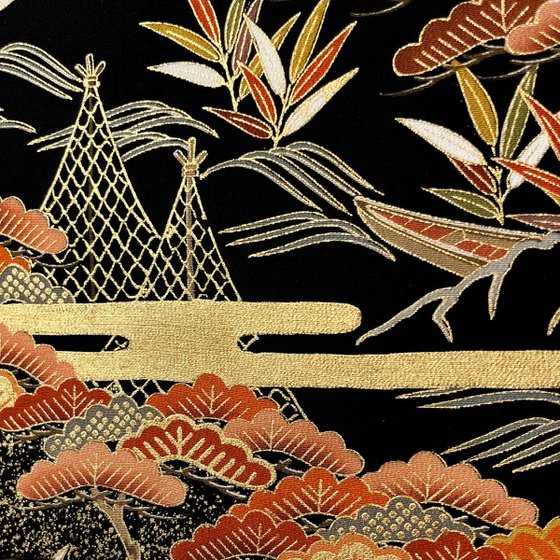
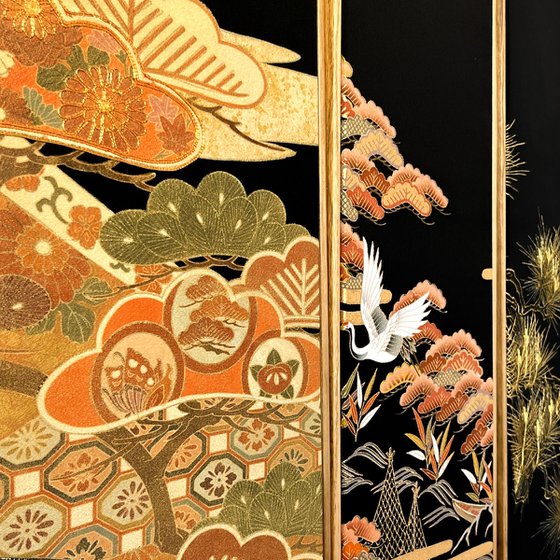
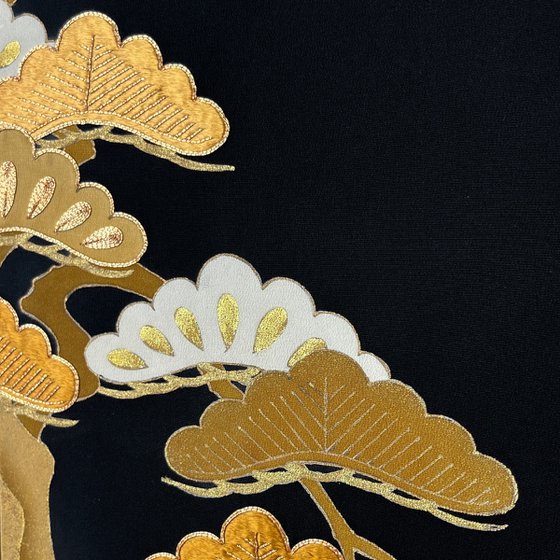
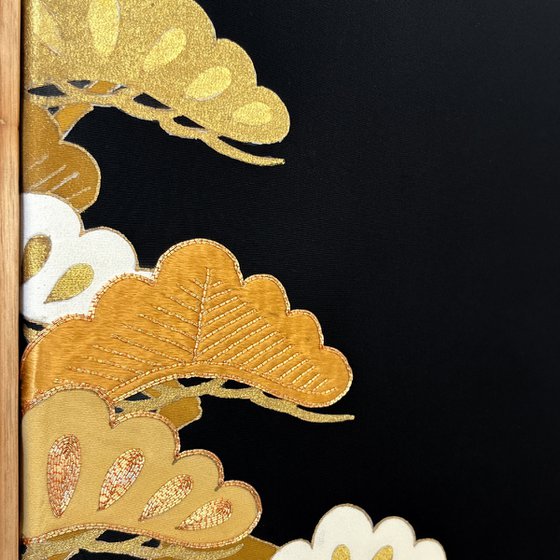
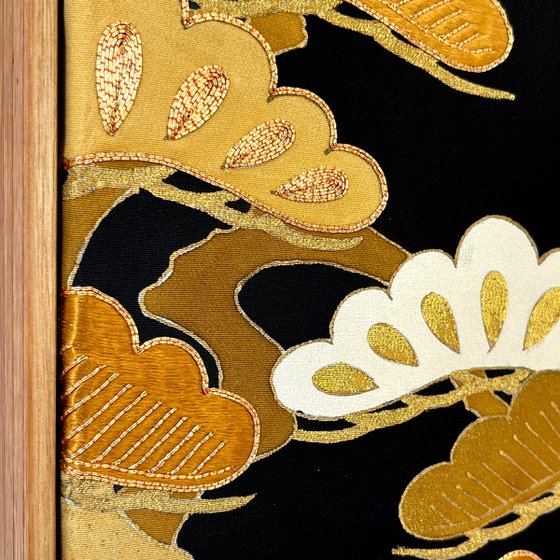
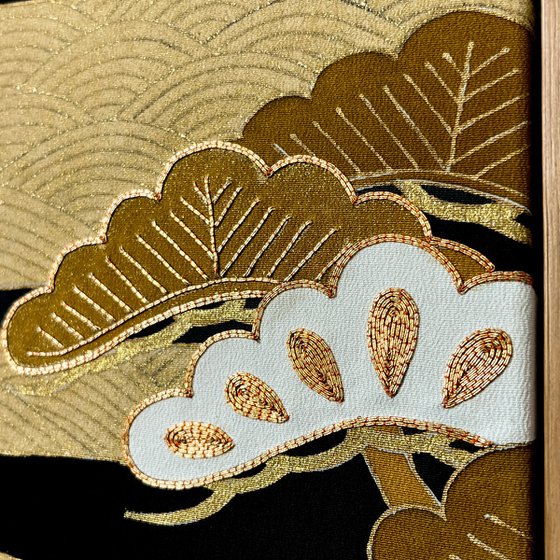
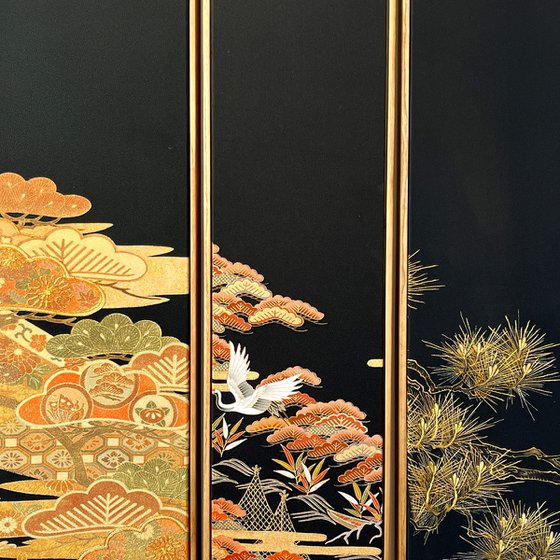
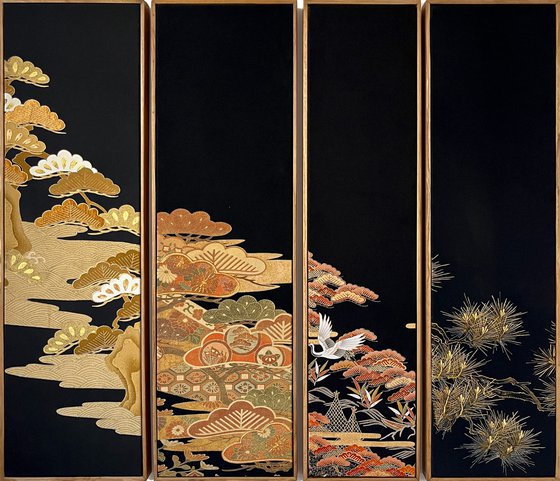
This artwork is created from four different vintage kuro-tomesode (festive kimono), each carrying its own history, craftsmanship, and memory. Traditionally worn only for the most formal occasions, kuro-tomesode often remain preserved and unworn for decades. By uniting fragments from four garments into a single composition, the work reflects the meeting of separate lives, stories, and eras.
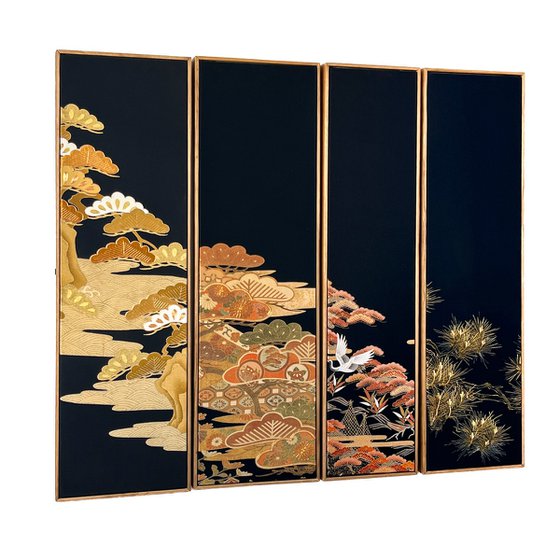
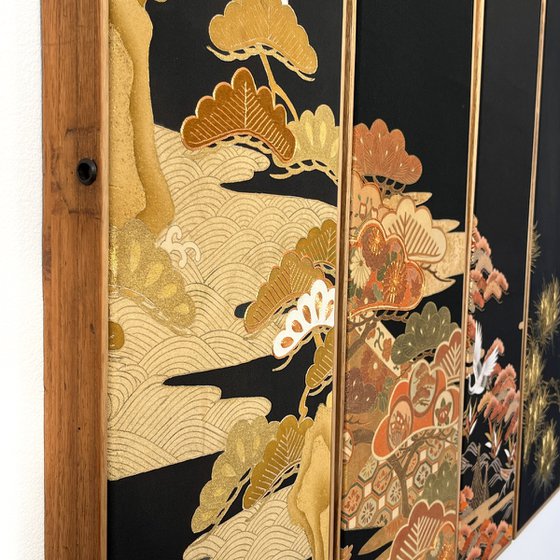
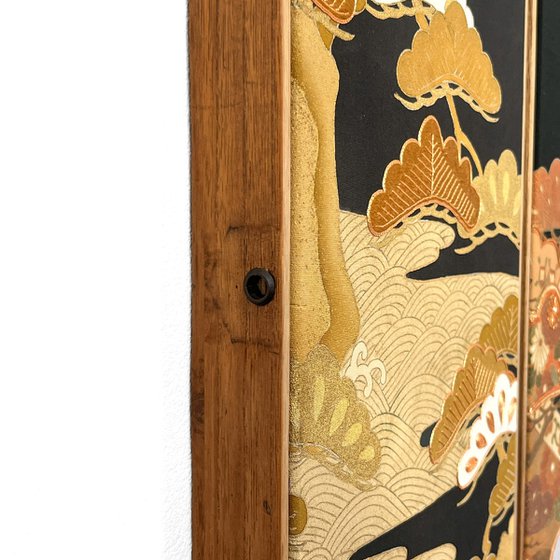
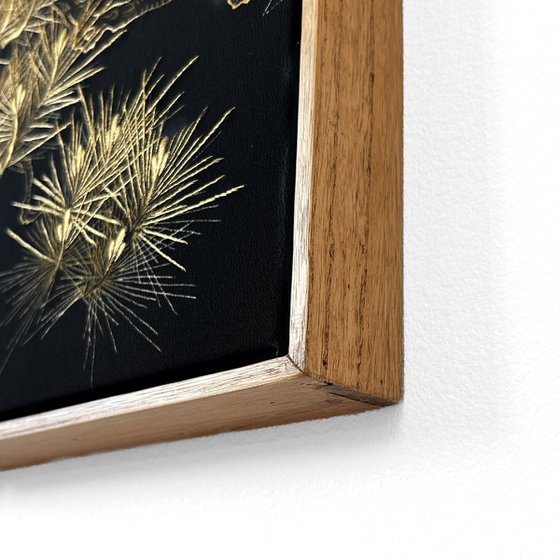
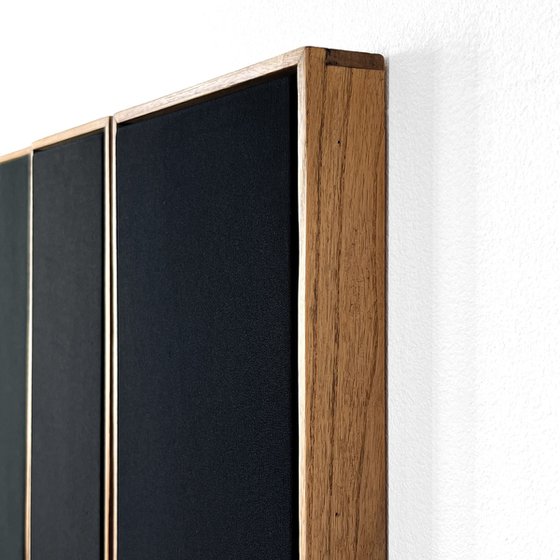
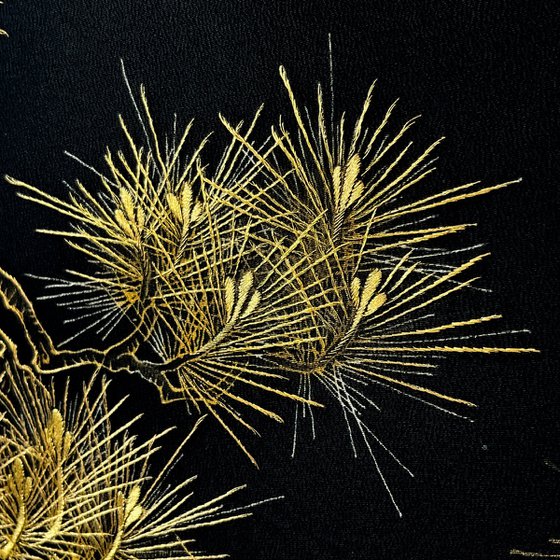
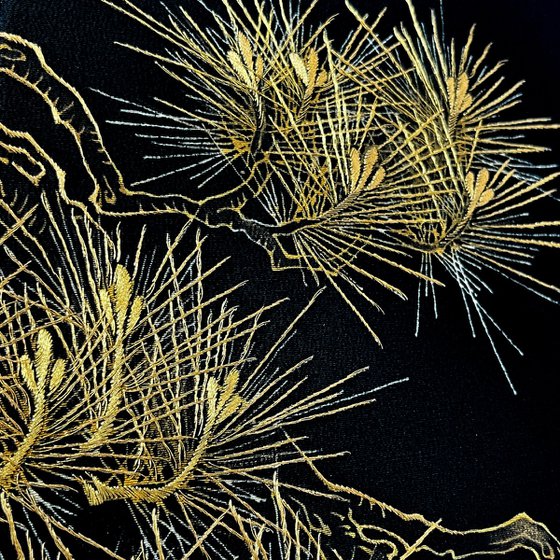
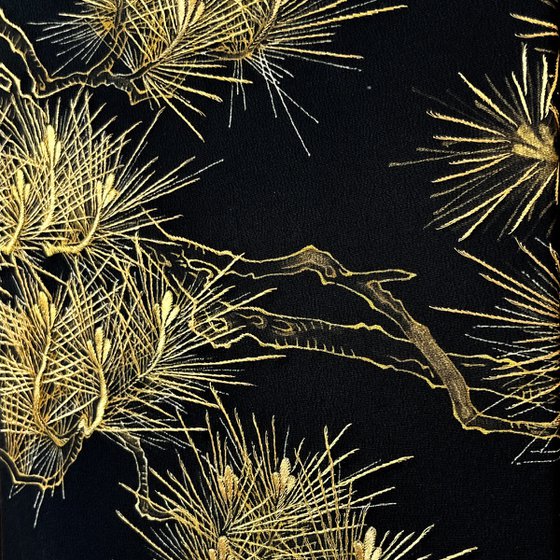
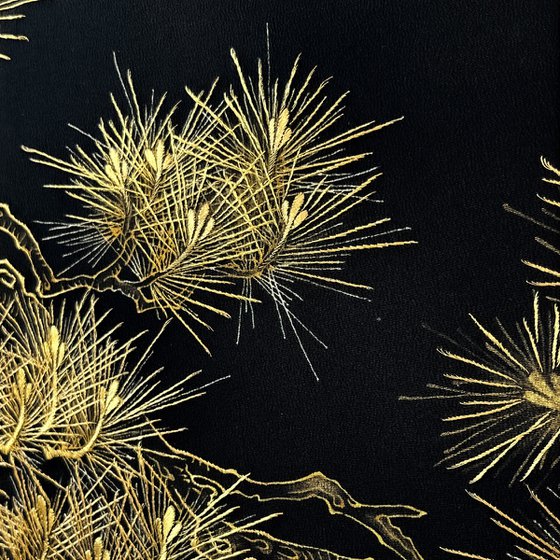
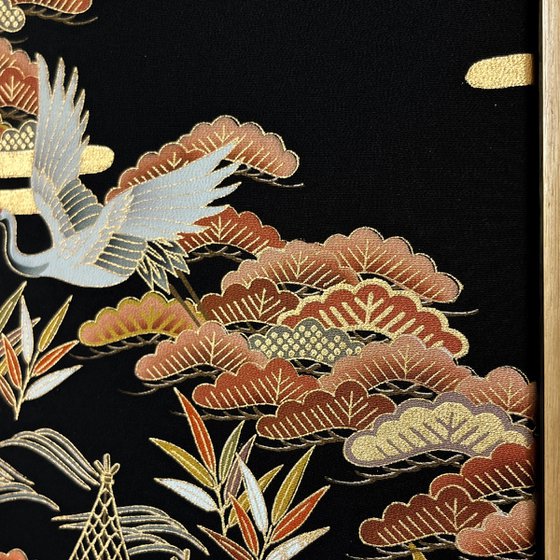
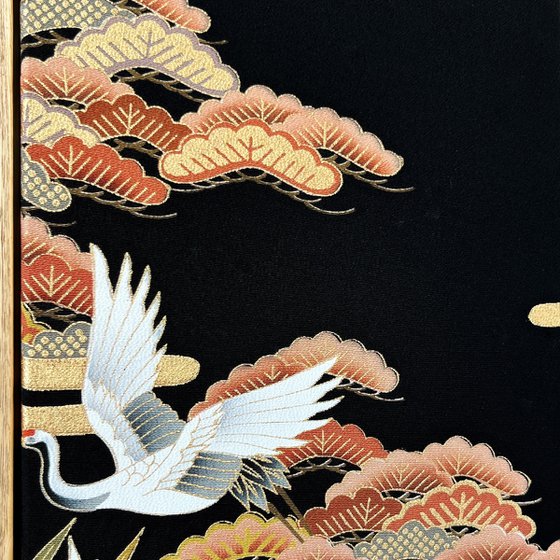
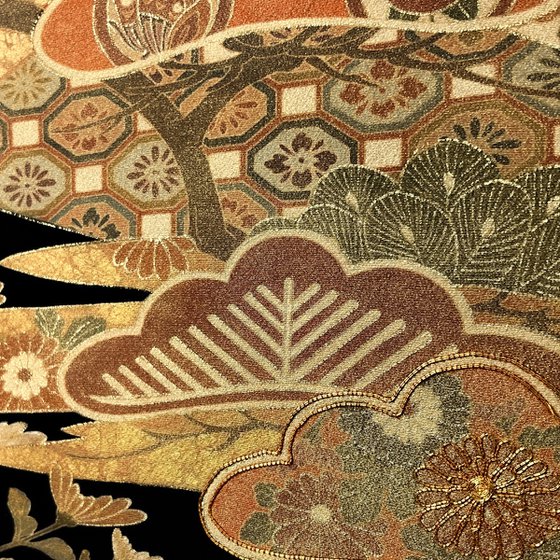
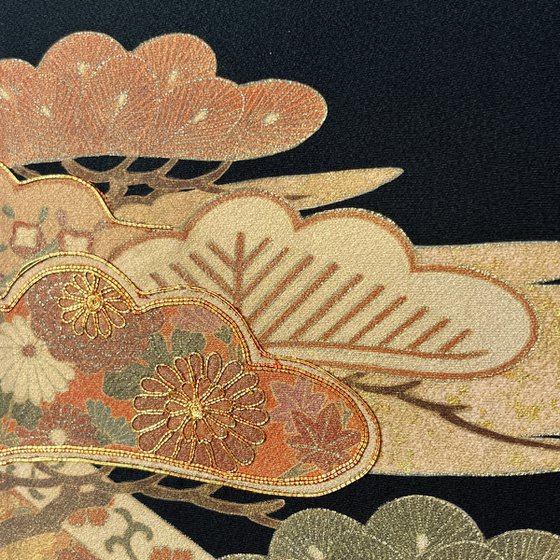
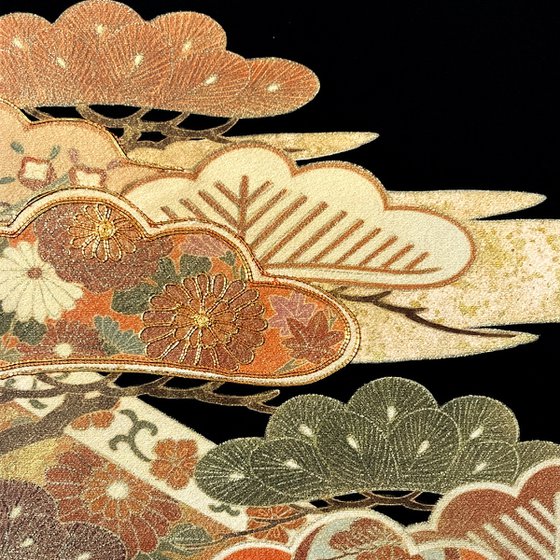
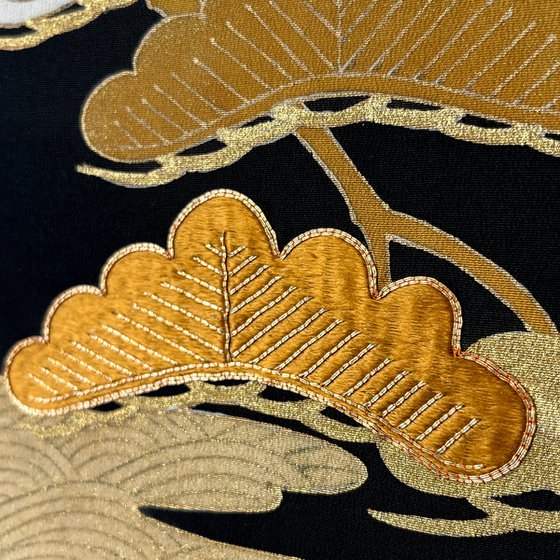
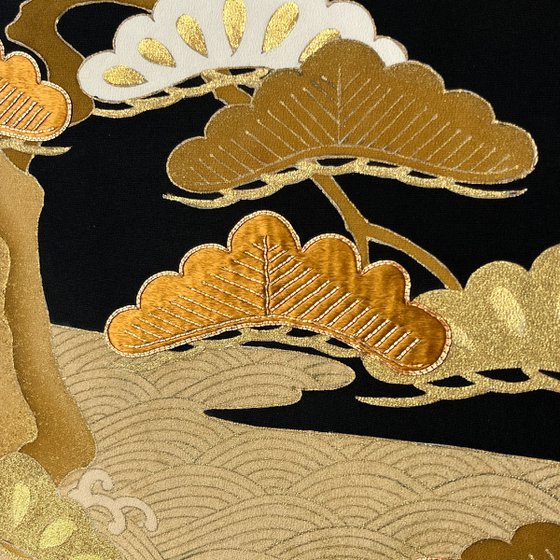
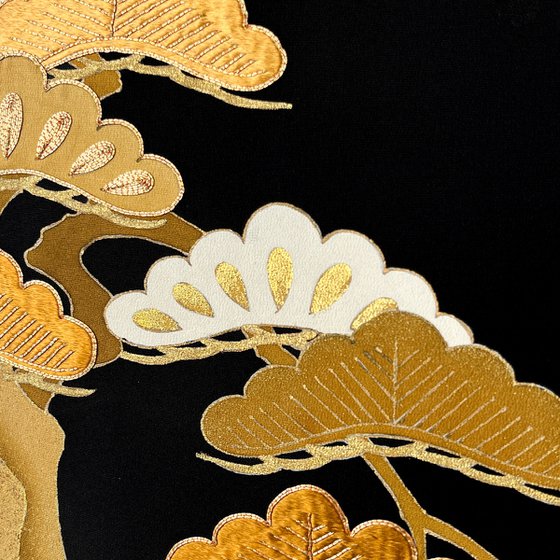
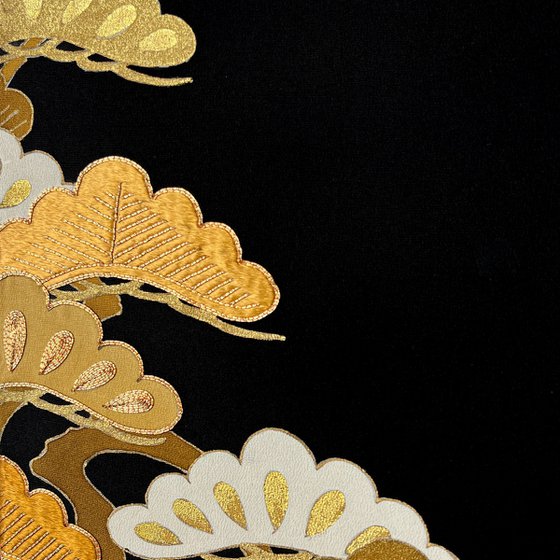
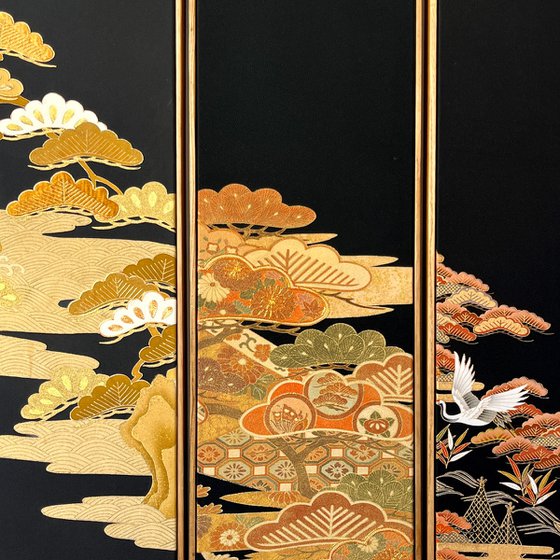
The composition is connected through the pine motif, expressed using different traditional textile techniques, color palettes, and decorative styles. These variations are carefully arranged into a continuous, fluid landscape across four panels. Each of the four panels represent one of the four seasons, suggesting the passage of time and the cyclical nature of life.
The concept reflects the transformation of tradition through continuity rather than preservation alone, allowing historical textiles to exist within a new contemporary context while maintaining their cultural essence.
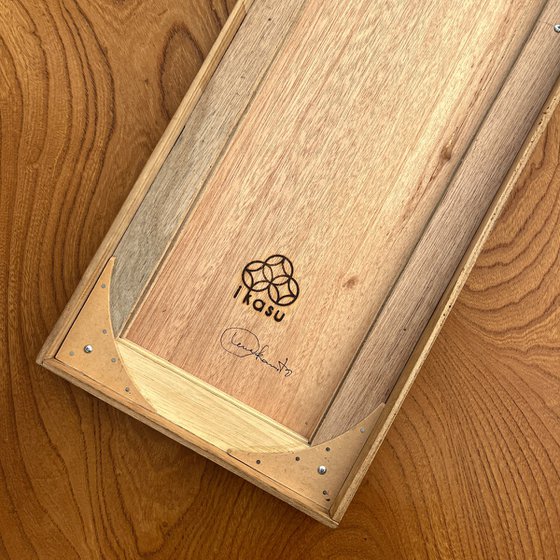
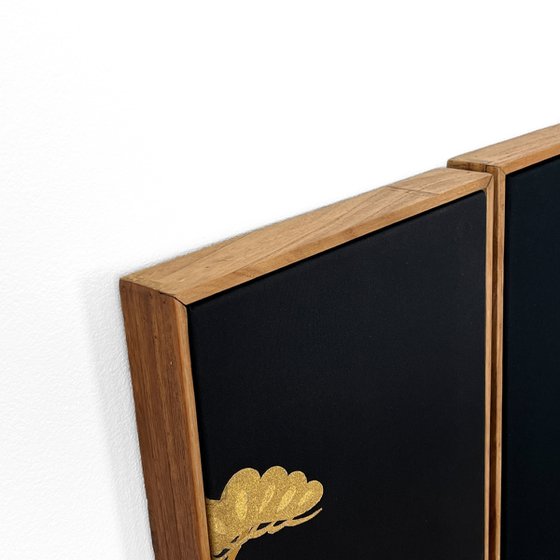
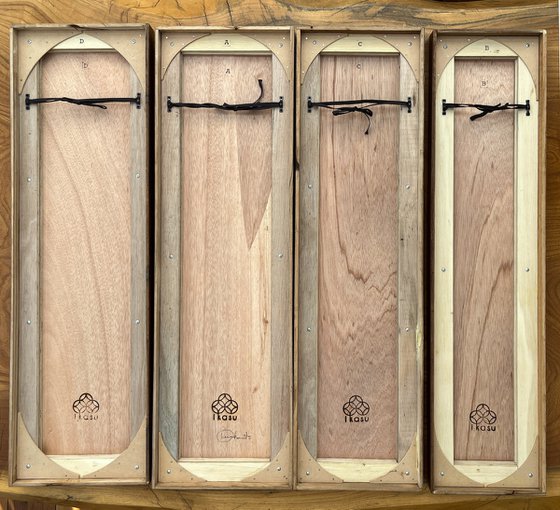
The artwork is framed in antique wood repurposed from traditional Japanese furniture - kiritansu, a chest-of-drawers for keeping kimono, preserving the authentic spirit of historical craftsmanship.
[Period / Story]
Showa period to early Heisei period (mid-20th century to late 20th century) vintage kuro-tomesode textiles.
[Meaning of patterns and colors]
In traditional Japanese culture, the pine motif is one of the most auspicious and enduring symbols.
Longevity and Strength:
Pine trees remain evergreen throughout all seasons, symbolizing endurance, stability, and long life. Their ability to thrive through harsh winters represents resilience and perseverance.
Continuity Through Seasons:
Because pine retains its vitality year-round, it is closely associated with the concept of timelessness. In this artwork, the pine motif bridges the four panels, reinforcing the idea of seasonal and generational continuity.
Protection and Good Fortune:
Historically, pine trees were believed to ward off misfortune and invite good luck. Their presence in ceremonial garments reflects wishes for protection and prosperity.
Harmony of Tradition and Nature:
The variation of pine representations - through embroidery, dyeing, and woven ornamentation - demonstrates the diversity of traditional Japanese decorative techniques while maintaining a unified symbolic language.
[About the Material]
Kuro-tomesode is the most formal kimono worn by married women, typically reserved for ceremonial occasions such as weddings. These garments are crafted from high-quality silk and decorated only below the waist, allowing elaborate landscapes and seasonal motifs to unfold across the hem.
Textiles used as a material for this artwork are highly valued for their refined dyeing techniques, delicate hand-painting, embroidery, and use of gold embellishments. Each textile reflects exceptional craftsmanship and cultural storytelling through fabric.
[About the Frame]
The artwork is framed in antique wood repurposed from traditional Japanese furniture - kiritansu, a chest-of-drawers for keeping kimono, preserving the authentic spirit of historical craftsmanship. The aged wood enhances the natural patina and depth of the textile while reinforcing the philosophy of reuse and cultural continuity.
[Decoration Advice]
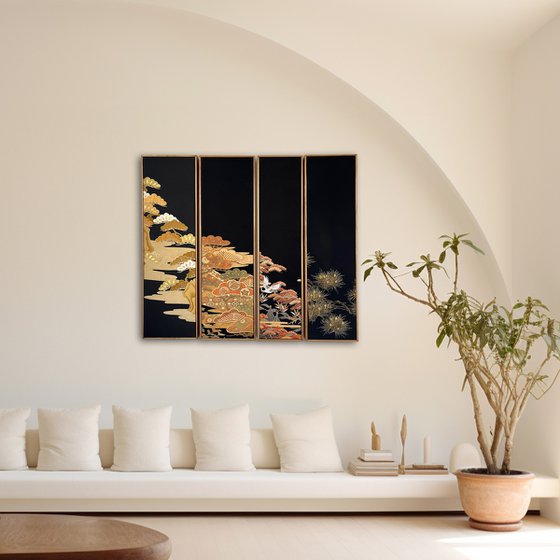
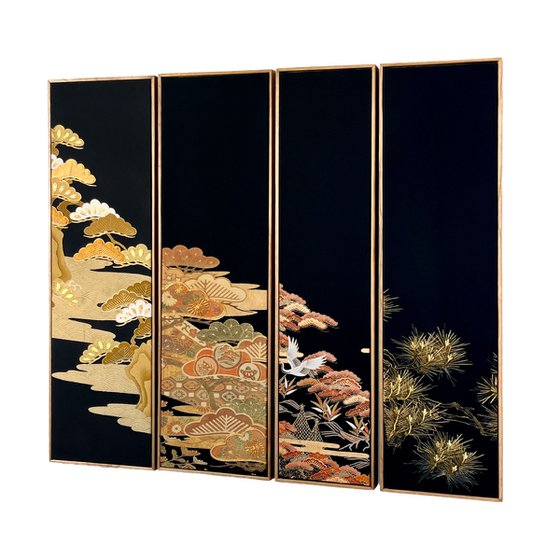
The four panels can be displayed together as a unified artwork or installed with slight spacing between each panel to emphasize the seasonal transition. Perfect for living spaces, entrance halls, hospitality interiors, or gallery environments. The work can be wall-mounted or displayed on custom supports.
Materials used:
wood silk
Details:
- Collage on Fabric
- One of a kind artwork
- Size: 100 x 90 x 4cm
- Ready to hang
- Signed certificate of authenticity
- Style: Collage
- Subject: Flowers and plants
Tags:
#japan#vintage#fabric#hotel#upcycle#craft#kimono#mixedmedia#sustainable#awarded artist#vintage 50s#hospitality art#antique art#japandi#textileart Free returns
14 day money back guaranteeLearn more
Original artwork description
[Size]
approx. 90cm x 100cm x 4cm
[Materials]
silk (outside-layer) , paulownia (wooden frame)
[Edition]
1/1 (one of a kind)
[Story behind the work]
This artwork is created from four different vintage kuro-tomesode (festive kimono), each carrying its own history, craftsmanship, and memory. Traditionally worn only for the most formal occasions, kuro-tomesode often remain preserved and unworn for decades. By uniting fragments from four garments into a single composition, the work reflects the meeting of separate lives, stories, and eras.
The composition is connected through the pine motif, expressed using different traditional textile techniques, color palettes, and decorative styles. These variations are carefully arranged into a continuous, fluid landscape across four panels. Each of the four panels represent one of the four seasons, suggesting the passage of time and the cyclical nature of life.
The concept reflects the transformation of tradition through continuity rather than preservation alone, allowing historical textiles to exist within a new contemporary context while maintaining their cultural essence.
The artwork is framed in antique wood repurposed from traditional Japanese furniture - kiritansu, a chest-of-drawers for keeping kimono, preserving the authentic spirit of historical craftsmanship.
[Period / Story]
Showa period to early Heisei period (mid-20th century to late 20th century) vintage kuro-tomesode textiles.
[Meaning of patterns and colors]
In traditional Japanese culture, the pine motif is one of the most auspicious and enduring symbols.
Longevity and Strength:
Pine trees remain evergreen throughout all seasons, symbolizing endurance, stability, and long life. Their ability to thrive through harsh winters represents resilience and perseverance.
Continuity Through Seasons:
Because pine retains its vitality year-round, it is closely associated with the concept of timelessness. In this artwork, the pine motif bridges the four panels, reinforcing the idea of seasonal and generational continuity.
Protection and Good Fortune:
Historically, pine trees were believed to ward off misfortune and invite good luck. Their presence in ceremonial garments reflects wishes for protection and prosperity.
Harmony of Tradition and Nature:
The variation of pine representations - through embroidery, dyeing, and woven ornamentation - demonstrates the diversity of traditional Japanese decorative techniques while maintaining a unified symbolic language.
[About the Material]
Kuro-tomesode is the most formal kimono worn by married women, typically reserved for ceremonial occasions such as weddings. These garments are crafted from high-quality silk and decorated only below the waist, allowing elaborate landscapes and seasonal motifs to unfold across the hem.
Textiles used as a material for this artwork are highly valued for their refined dyeing techniques, delicate hand-painting, embroidery, and use of gold embellishments. Each textile reflects exceptional craftsmanship and cultural storytelling through fabric.
[About the Frame]
The artwork is framed in antique wood repurposed from traditional Japanese furniture - kiritansu, a chest-of-drawers for keeping kimono, preserving the authentic spirit of historical craftsmanship. The aged wood enhances the natural patina and depth of the textile while reinforcing the philosophy of reuse and cultural continuity.
[Decoration Advice]
The four panels can be displayed together as a unified artwork or installed with slight spacing between each panel to emphasize the seasonal transition. Perfect for living spaces, entrance halls, hospitality interiors, or gallery environments. The work can be wall-mounted or displayed on custom supports.
Materials used:
wood silk
Details:
- Collage on Fabric
- One of a kind artwork
- Size: 100 x 90 x 4cm
- Ready to hang
- Signed certificate of authenticity
- Style: Collage
- Subject: Flowers and plants
Tags:
#japan#vintage#fabric#hotel#upcycle#craft#kimono#mixedmedia#sustainable#awarded artist#vintage 50s#hospitality art#antique art#japandi#textileart