- Michael E. Voss
- All Artworks
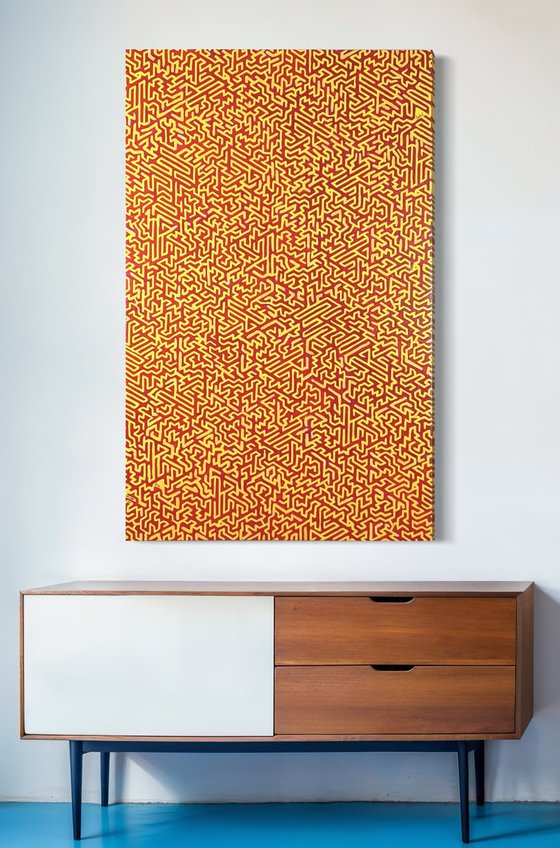
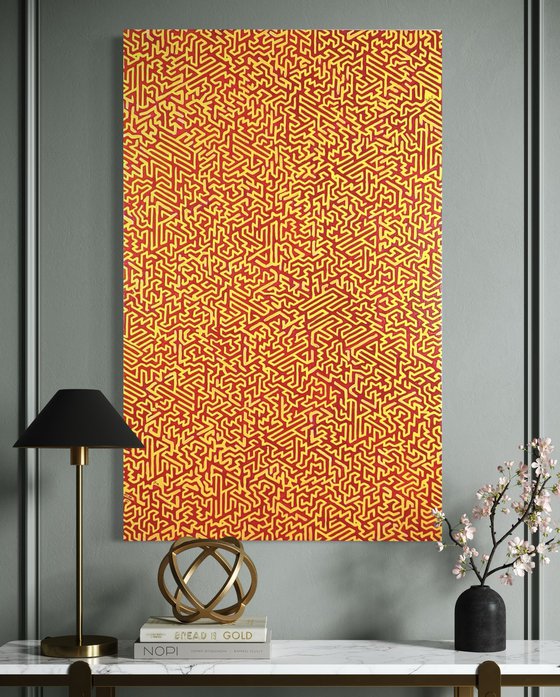
- Labyrinth #13
Artwork description
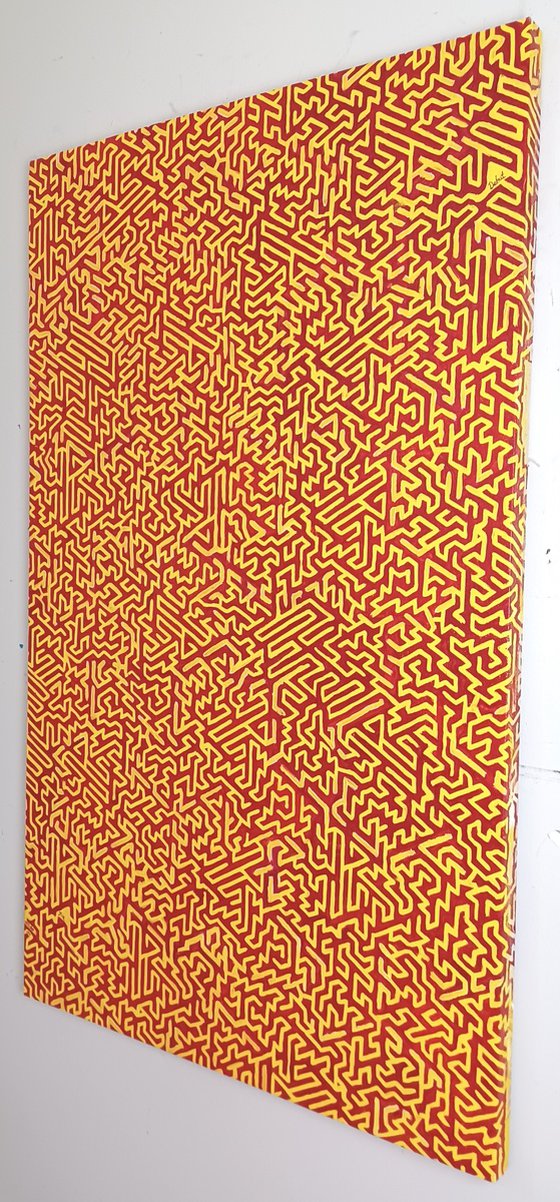
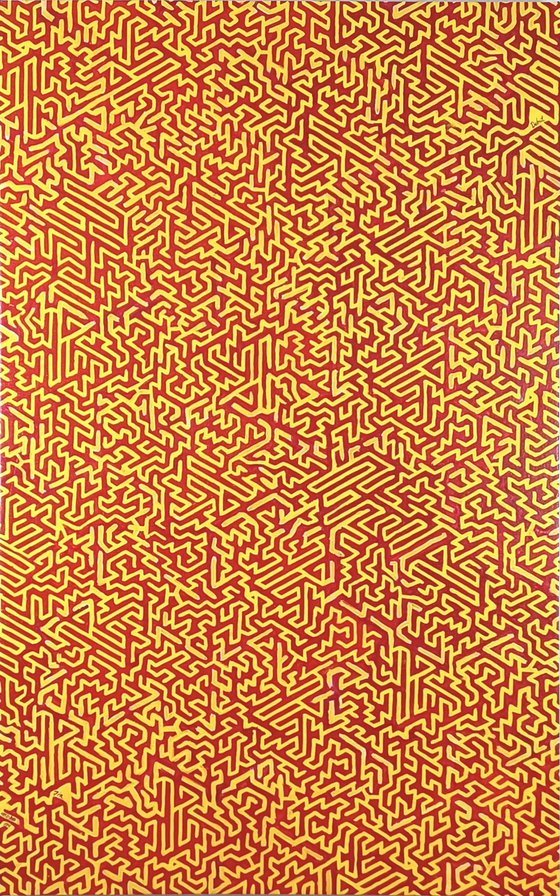
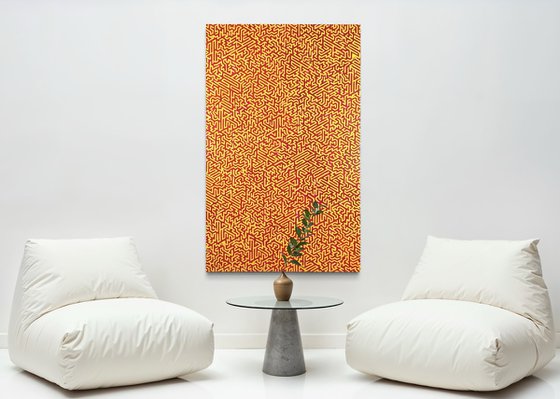
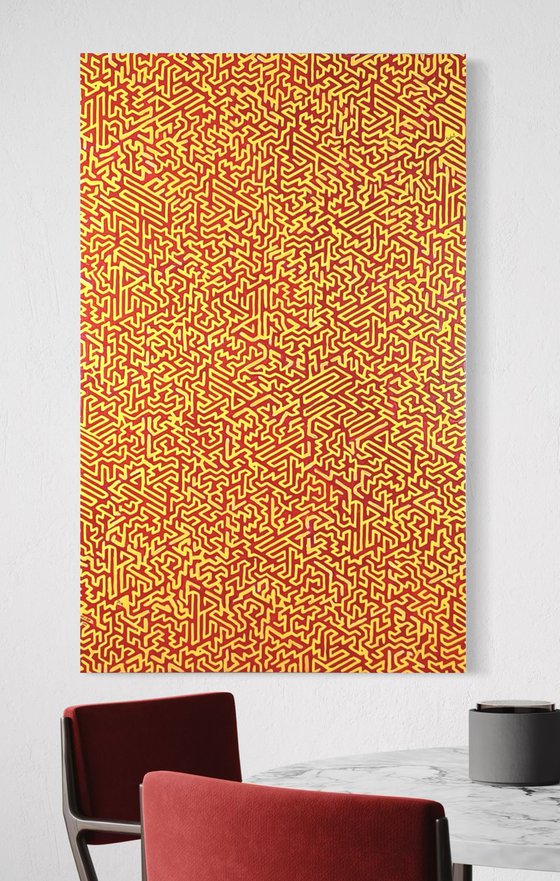
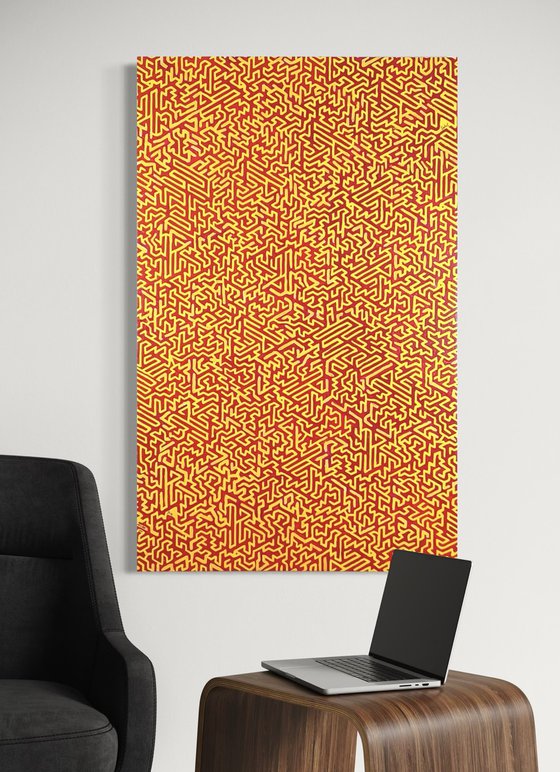
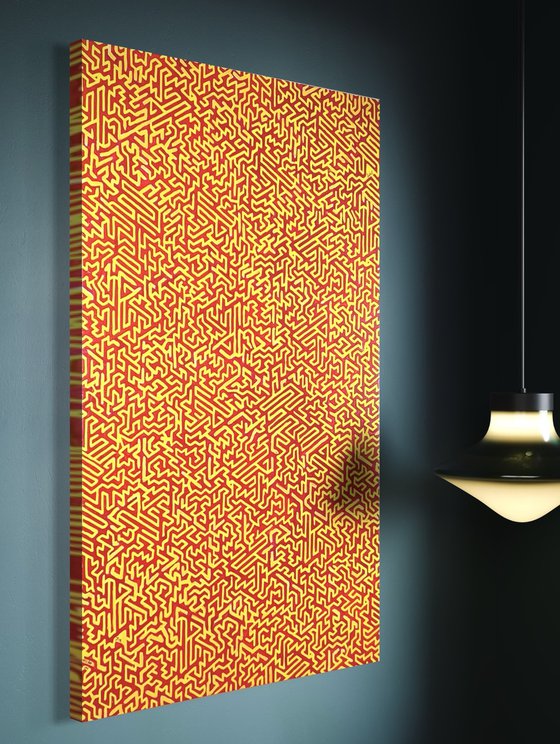
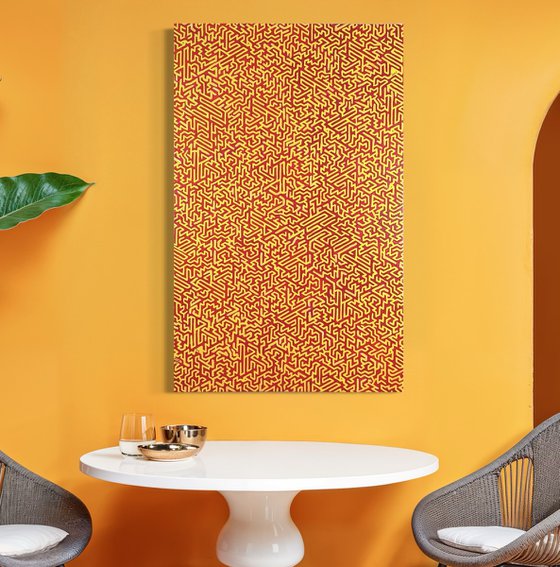
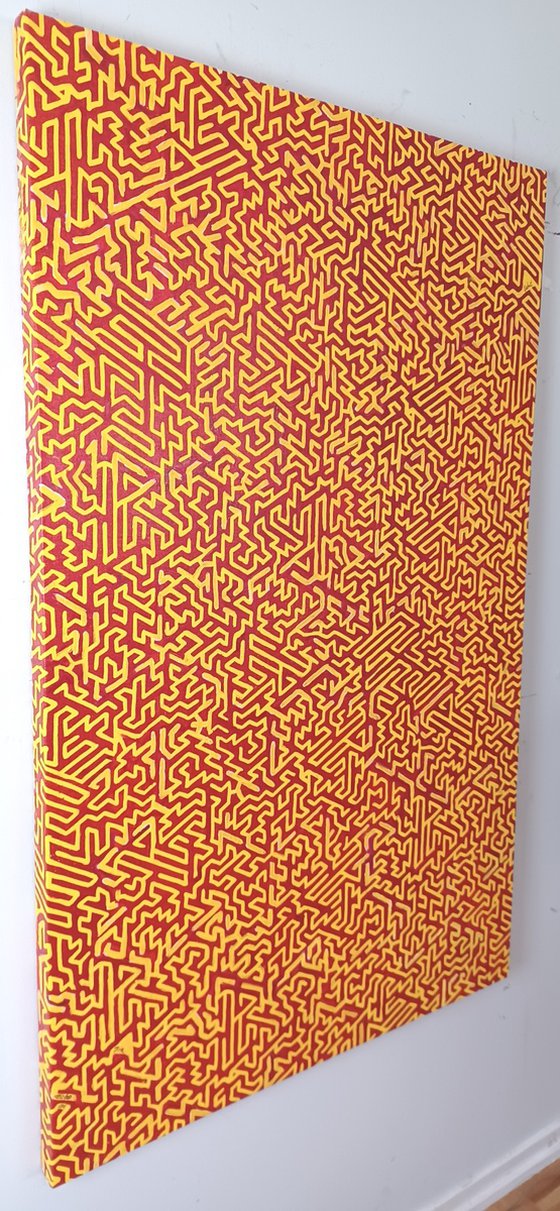
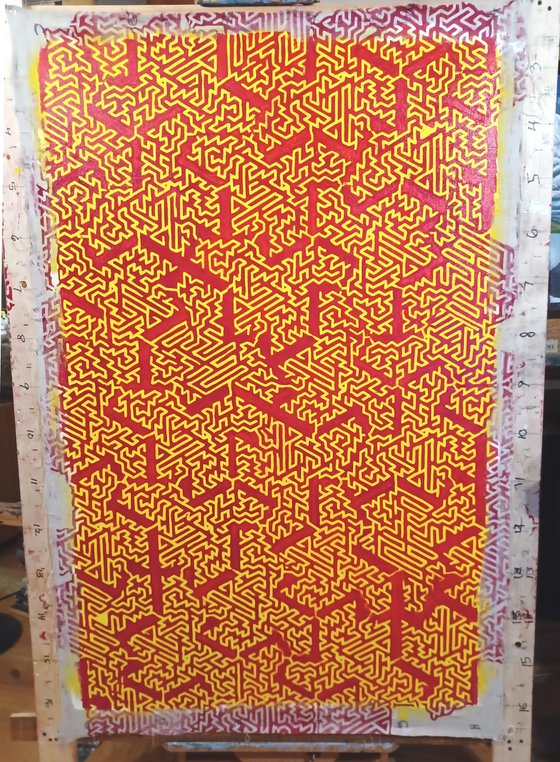
A large-format exploration of the intersecting and concentric lines that make up a maze.
Einstein tiles are a recently-discovered geometric shape, resembling a hat, that can perfectly cover an infinite plane without ever creating a repeating pattern.
"Einstein" does not refer to the physicist, but instead derives from the German "ein stein" (one stone).
This tile, discovered by math hobbyist David Smith in 2022, resolves a decades-long mathematical search for a single shape which can tile aperiodically (without repeating).
Tessellation is a mathematical art form that involves covering a surface with geometric shapes, tiles or plates to create a pattern without any overlap or spaces between them.
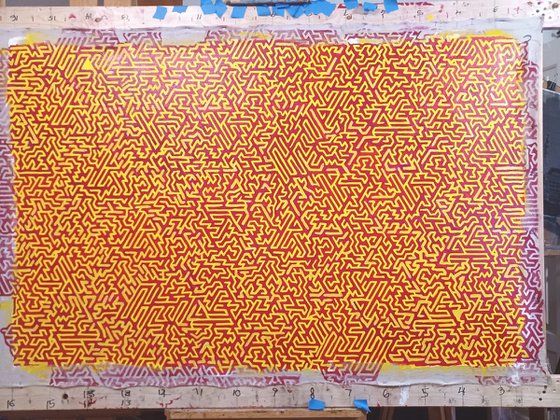
The pattern is created by rotating, translating (sliding), and/or reflecting (mirroring) the plates onto a triangular 30-, 60- and 90-degree grid. Each linoleum plate in the Labyrinth series has been cut to these gridlines no matter the plate orientation.
Materials used:
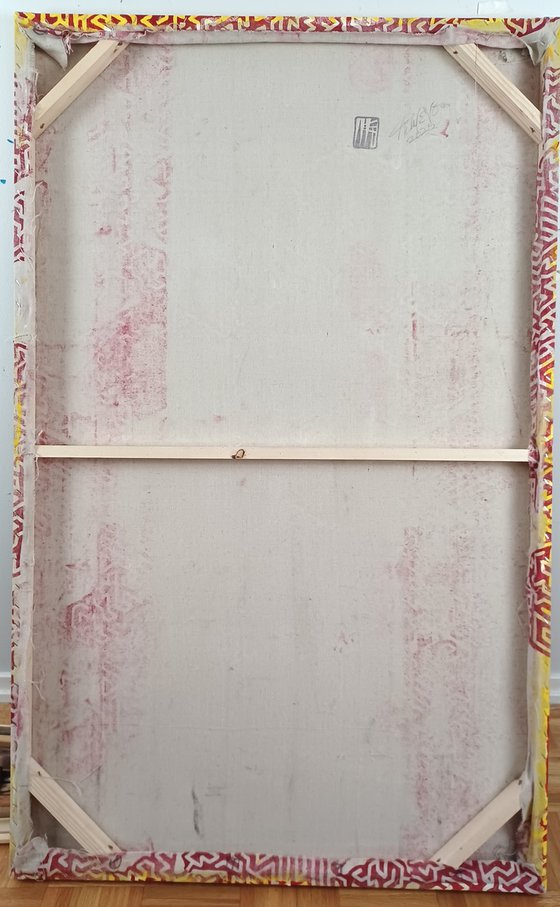
oil and canvas on stretchers
Details:
- Linocut on Canvas
- Size: 33 x 53 x 1.75" / 33 x 53" (actual image size)
- Ready to hang
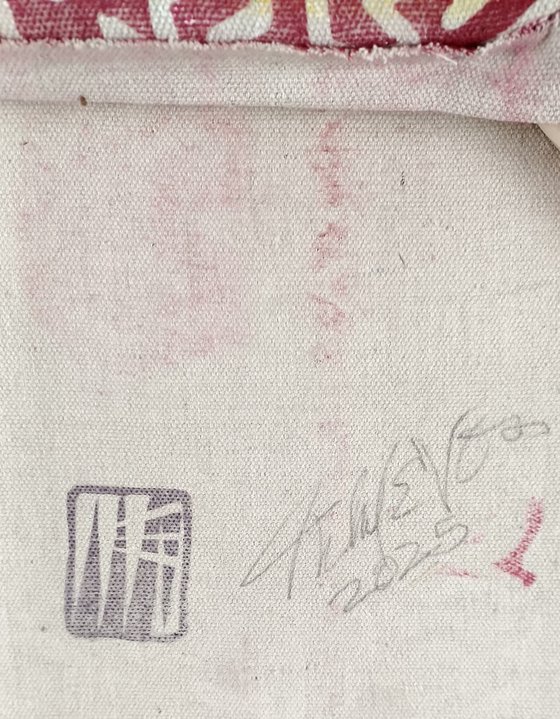
- Signed and numbered on the back
- Style: Geometric
- Subject: Abstract and non-figurative
- Hurry, only 1 left in stock
 Free returns
14 day money back guaranteeLearn more
Artwork description
A large-format exploration of the intersecting and concentric lines that make up a maze.
Einstein tiles are a recently-discovered geometric shape, resembling a hat, that can perfectly cover an infinite plane without ever creating a repeating pattern.
"Einstein" does not refer to the physicist, but instead derives from the German "ein stein" (one stone).
This tile, discovered by math hobbyist David Smith in 2022, resolves a decades-long mathematical search for a single shape which can tile aperiodically (without repeating).
Tessellation is a mathematical art form that involves covering a surface with geometric shapes, tiles or plates to create a pattern without any overlap or spaces between them.
The pattern is created by rotating, translating (sliding), and/or reflecting (mirroring) the plates onto a triangular 30-, 60- and 90-degree grid. Each linoleum plate in the Labyrinth series has been cut to these gridlines no matter the plate orientation.
Materials used:
oil and canvas on stretchers
Details:
- Linocut on Canvas
- Size: 33 x 53 x 1.75" / 33 x 53" (actual image size)
- Ready to hang
- Signed and numbered on the back
- Style: Geometric
- Subject: Abstract and non-figurative
- Hurry, only 1 left in stock
