Main Navigation
About lucia dibi
Biography
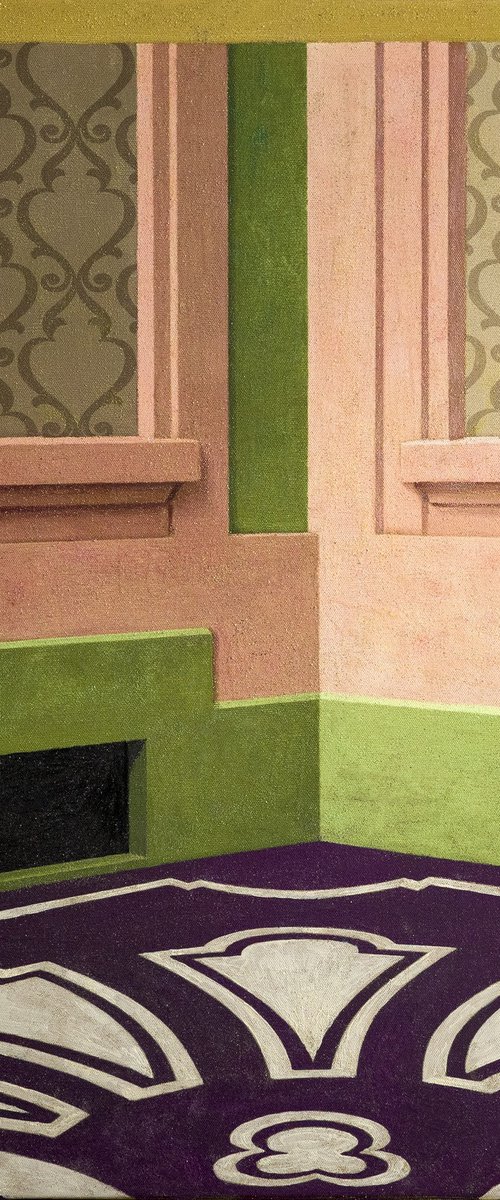
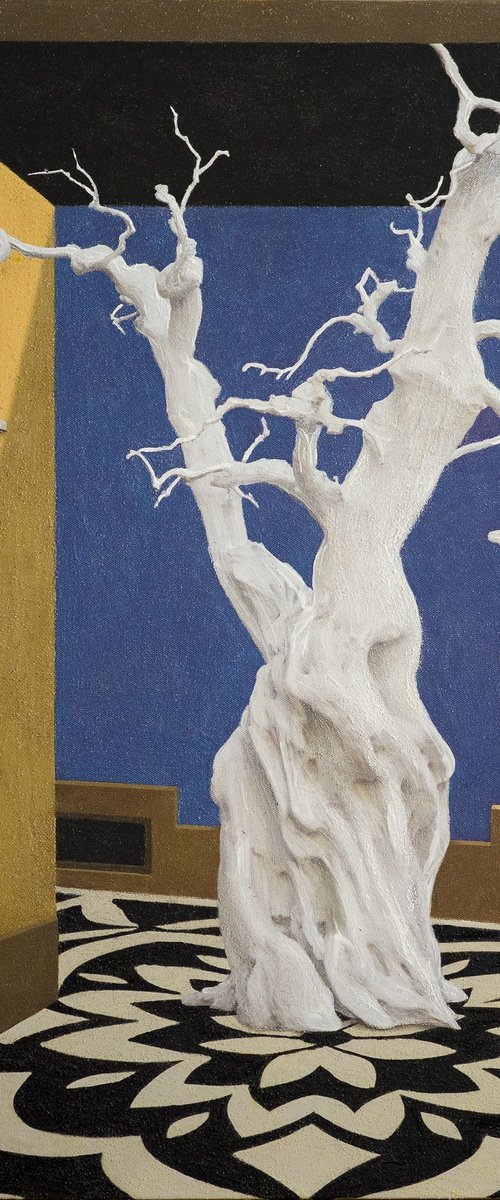
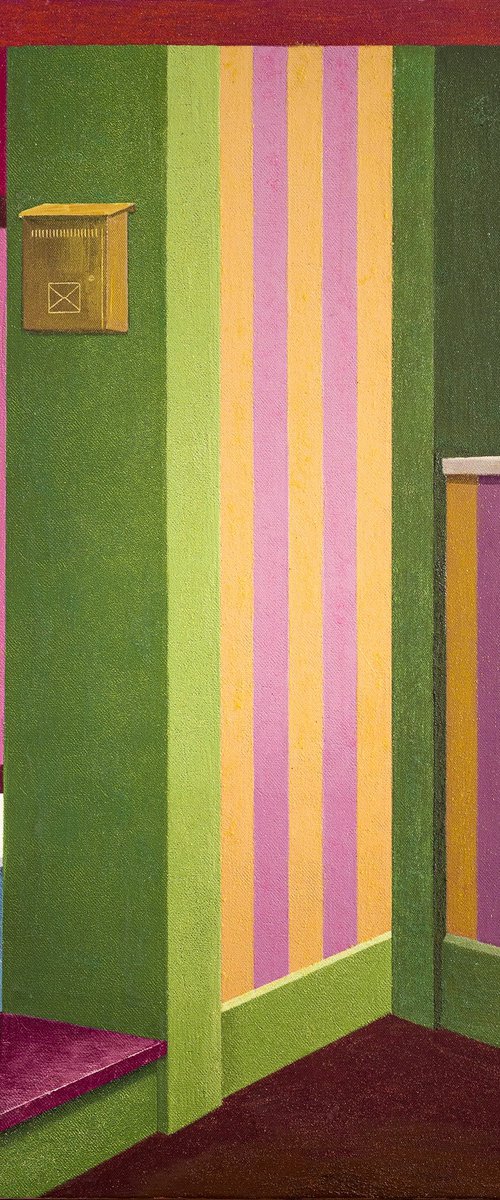
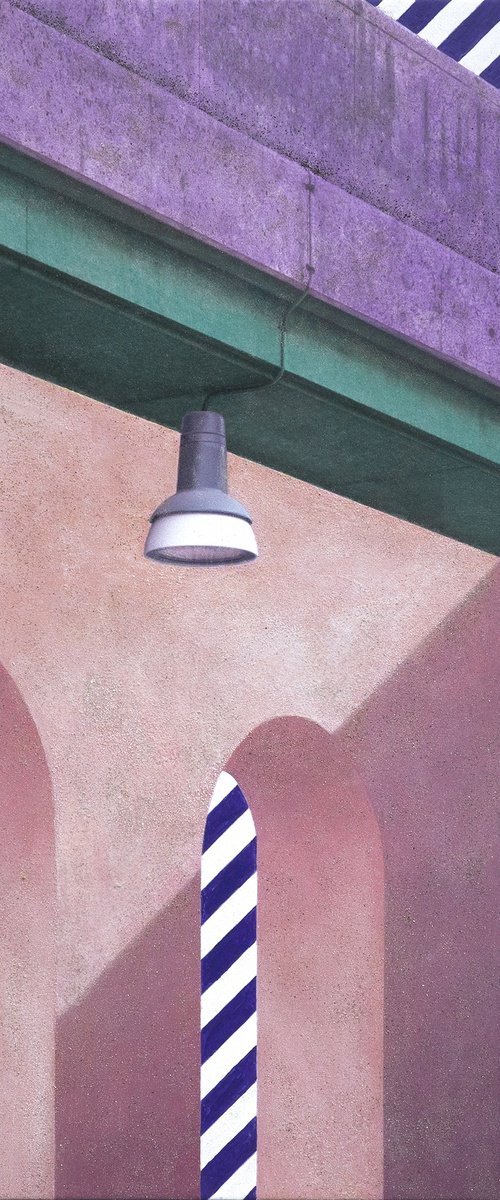
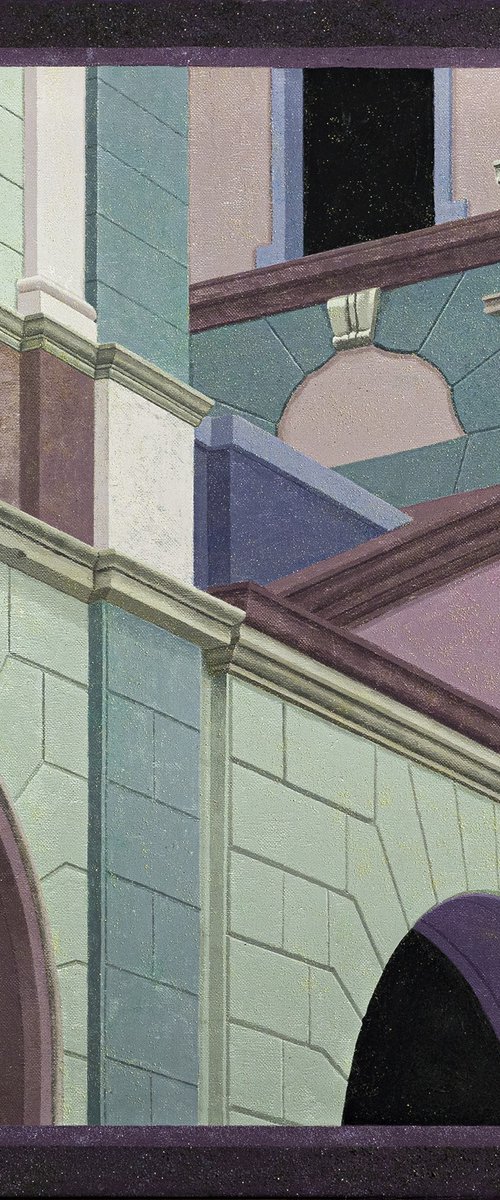
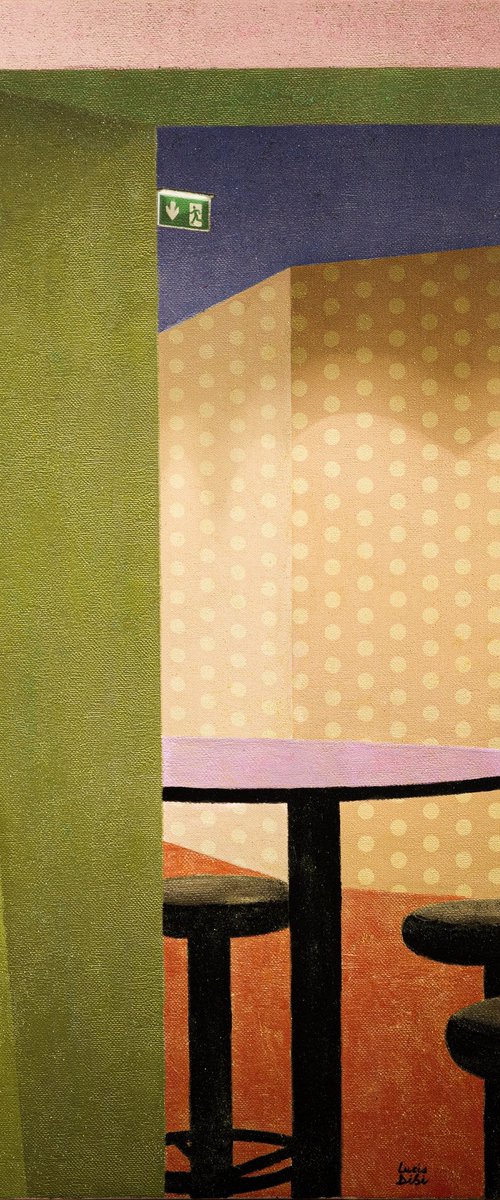
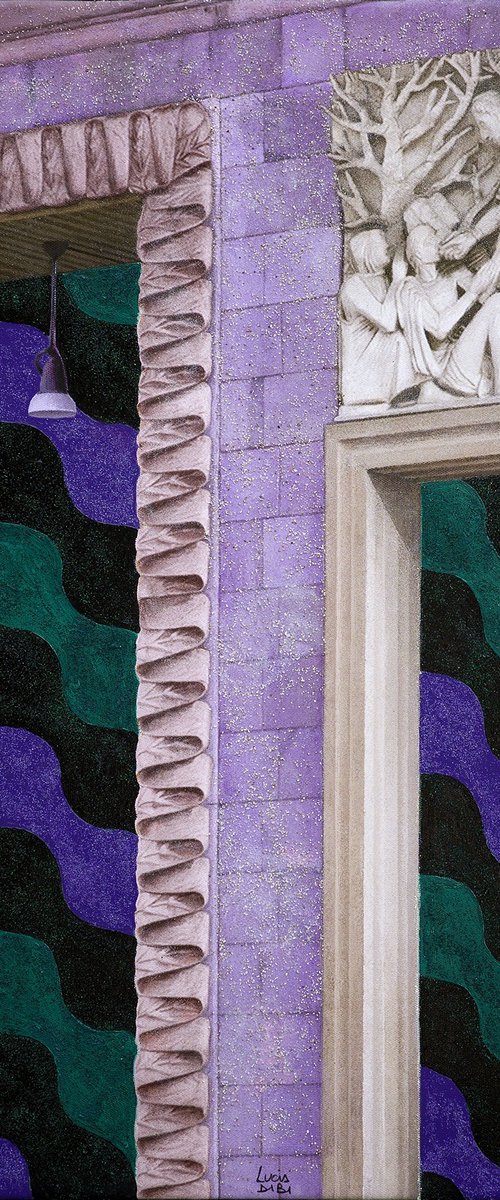
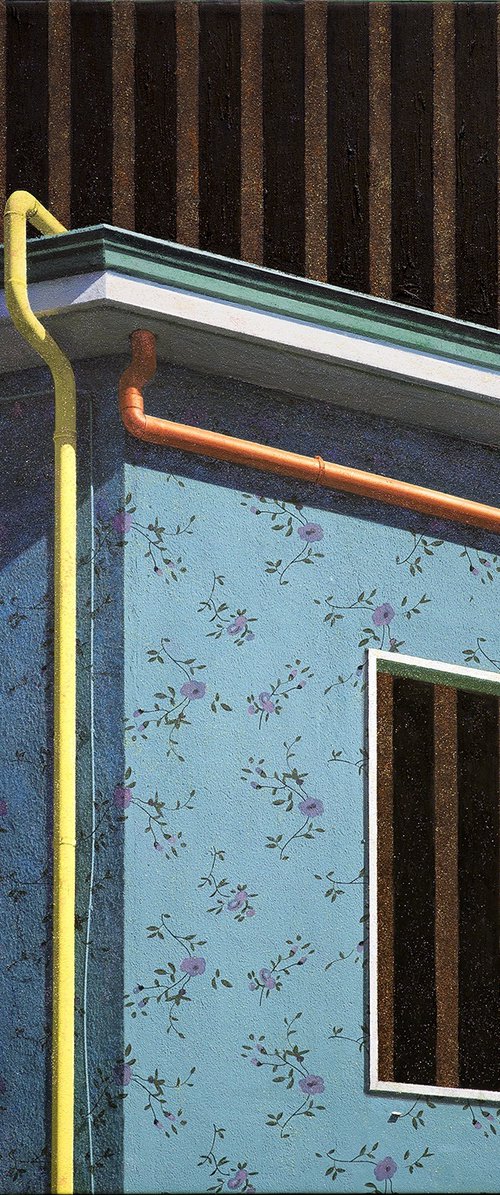
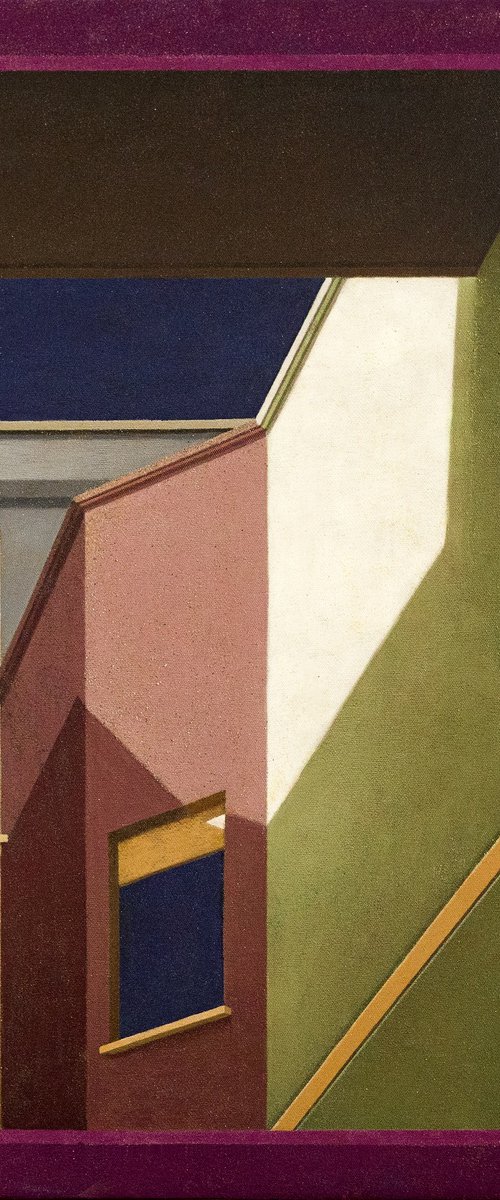
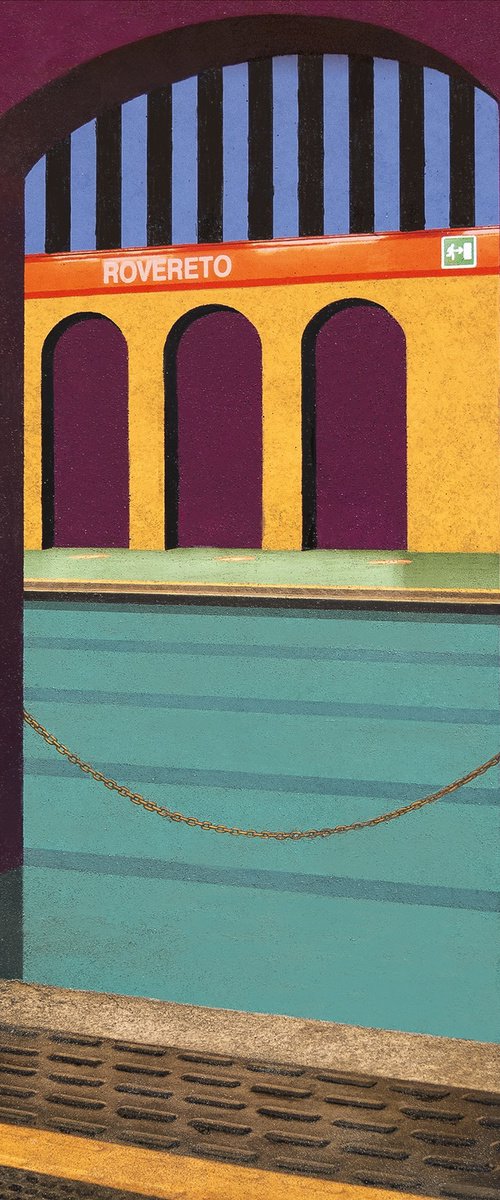
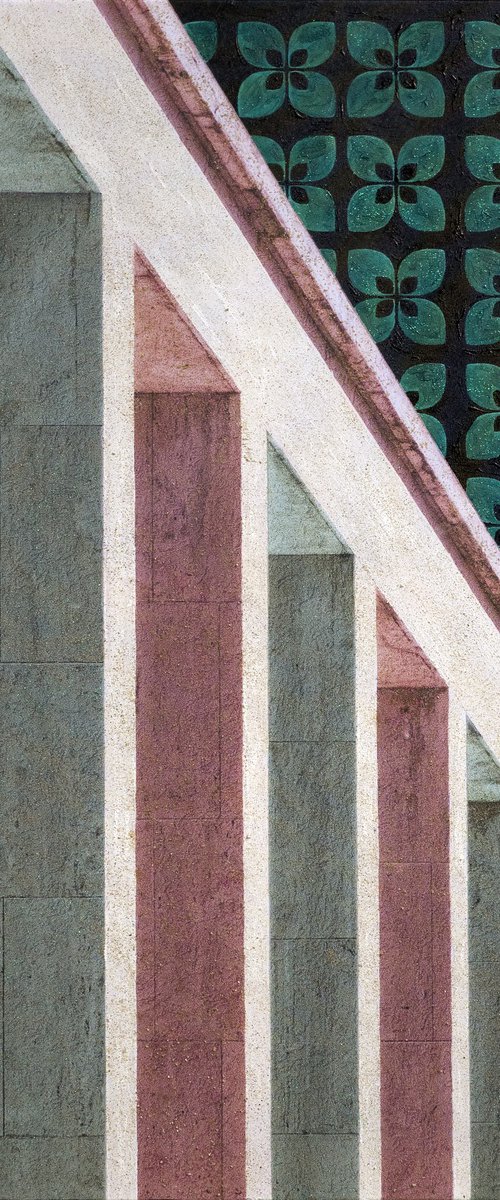
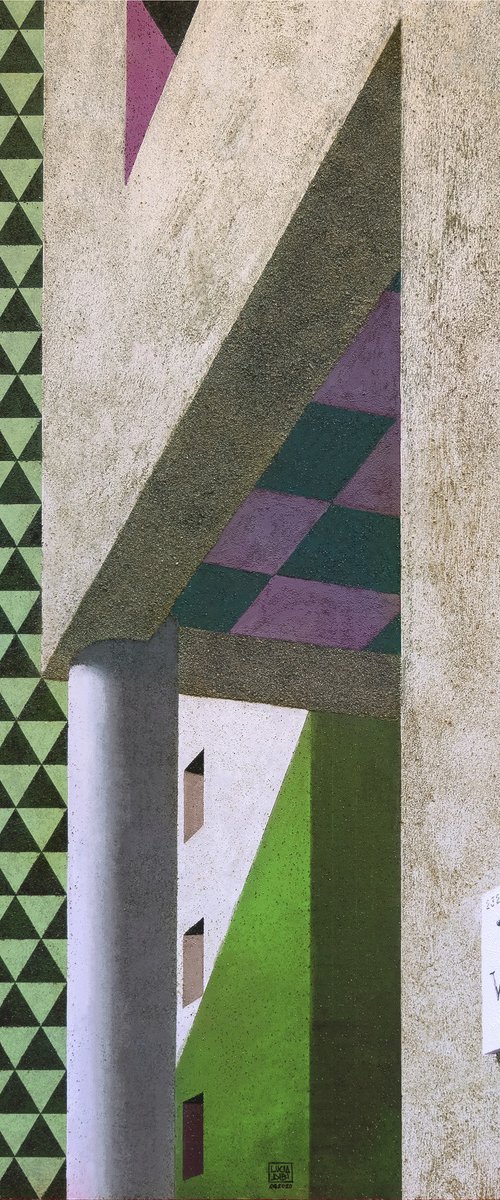
In my work, I create what I call "Architectures of Presence". My practice focuses on fragments and details of urban architecture, such as walls, corners and peripheral areas, isolated from their original context. The human figure never appears in my paintings. This absence is not loneliness, but an open space: viewers can enter it and inhabit it with their own stories.
I paint to hold on to a moment. Everything around us changes quickly, and I look for a point of stillness, something that remains. This is a form of urban resilience: I find beauty and order in places that may seem insignificant, in the corners we pass every day without truly seeing them. They are places we all know, yet almost no one really looks at.
Among my influences are Hopper, de Chirico, Rauschenberg and Mattioli, artists from whom I have learned to read space and materiality rather than simply tell a story.
I want to offer the viewer an experience, not just an image. I want to create a moment in which to slow down, recognize a corner of one's own city, and feel the same sense of wonder I experience when I discover it. It is a pleasure that comes from the act of making, and one I want to share with those who choose to live with my work every day.
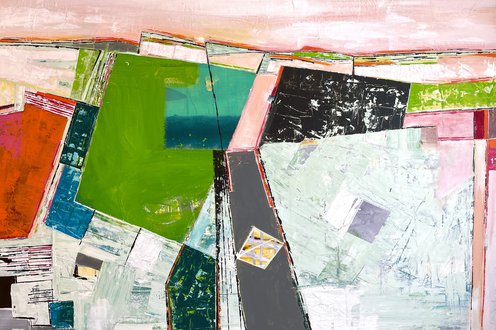
My process unfolds in three stages. I begin with digital photography, which allows me to capture a fragment of urban history. I then work on the image as if it were already a painting: I break it down, simplify it and reduce it to its essential elements. This is when I choose the colours, the longest and most complex stage of the entire process. I do not use colour to describe reality, but to reinterpret it: I work with bold tones, a vivid pink or an emerald green, colours that the wall or corner I am depicting may never have had in reality. Finally, I paint on canvas using acrylic colours mixed with earth and sand. This textured surface gives physical substance to the moment I have chosen to preserve, making it present, tangible and real.
I paint to hold on to a moment. Everything around us changes quickly, and I look for a point of stillness, something that remains. This is a form of urban resilience: I find beauty and order in places that may seem insignificant, in the corners we pass every day without truly seeing them. They are places we all know, yet almost no one really looks at.
Among my influences are Hopper, de Chirico, Rauschenberg and Mattioli, artists from whom I have learned to read space and materiality rather than simply tell a story.
I want to offer the viewer an experience, not just an image. I want to create a moment in which to slow down, recognize a corner of one's own city, and feel the same sense of wonder I experience when I discover it. It is a pleasure that comes from the act of making, and one I want to share with those who choose to live with my work every day.
My process unfolds in three stages. I begin with digital photography, which allows me to capture a fragment of urban history. I then work on the image as if it were already a painting: I break it down, simplify it and reduce it to its essential elements. This is when I choose the colours, the longest and most complex stage of the entire process. I do not use colour to describe reality, but to reinterpret it: I work with bold tones, a vivid pink or an emerald green, colours that the wall or corner I am depicting may never have had in reality. Finally, I paint on canvas using acrylic colours mixed with earth and sand. This textured surface gives physical substance to the moment I have chosen to preserve, making it present, tangible and real.
Biography
In my work, I create what I call "Architectures of Presence". My practice focuses on fragments and details of urban architecture, such as walls, corners and peripheral areas, isolated from their original context. The human figure never appears in my paintings. This absence is not loneliness, but an open space: viewers can enter it and inhabit it with their own stories.
I paint to hold on to a moment. Everything around us changes quickly, and I look for a point of stillness, something that remains. This is a form of urban resilience: I find beauty and order in places that may seem insignificant, in the corners we pass every day without truly seeing them. They are places we all know, yet almost no one really looks at.
Among my influences are Hopper, de Chirico, Rauschenberg and Mattioli, artists from whom I have learned to read space and materiality rather than simply tell a story.
I want to offer the viewer an experience, not just an image. I want to create a moment in which to slow down, recognize a corner of one's own city, and feel the same sense of wonder I experience when I discover it. It is a pleasure that comes from the act of making, and one I want to share with those who choose to live with my work every day.
My process unfolds in three stages. I begin with digital photography, which allows me to capture a fragment of urban history. I then work on the image as if it were already a painting: I break it down, simplify it and reduce it to its essential elements. This is when I choose the colours, the longest and most complex stage of the entire process. I do not use colour to describe reality, but to reinterpret it: I work with bold tones, a vivid pink or an emerald green, colours that the wall or corner I am depicting may never have had in reality. Finally, I paint on canvas using acrylic colours mixed with earth and sand. This textured surface gives physical substance to the moment I have chosen to preserve, making it present, tangible and real.
I paint to hold on to a moment. Everything around us changes quickly, and I look for a point of stillness, something that remains. This is a form of urban resilience: I find beauty and order in places that may seem insignificant, in the corners we pass every day without truly seeing them. They are places we all know, yet almost no one really looks at.
Among my influences are Hopper, de Chirico, Rauschenberg and Mattioli, artists from whom I have learned to read space and materiality rather than simply tell a story.
I want to offer the viewer an experience, not just an image. I want to create a moment in which to slow down, recognize a corner of one's own city, and feel the same sense of wonder I experience when I discover it. It is a pleasure that comes from the act of making, and one I want to share with those who choose to live with my work every day.
My process unfolds in three stages. I begin with digital photography, which allows me to capture a fragment of urban history. I then work on the image as if it were already a painting: I break it down, simplify it and reduce it to its essential elements. This is when I choose the colours, the longest and most complex stage of the entire process. I do not use colour to describe reality, but to reinterpret it: I work with bold tones, a vivid pink or an emerald green, colours that the wall or corner I am depicting may never have had in reality. Finally, I paint on canvas using acrylic colours mixed with earth and sand. This textured surface gives physical substance to the moment I have chosen to preserve, making it present, tangible and real.
There are no upcoming events
Events
There are no upcoming events