- Lena Okamoto
- All Artworks
- Through the Plum Garden ~Hope~ (Kimono)
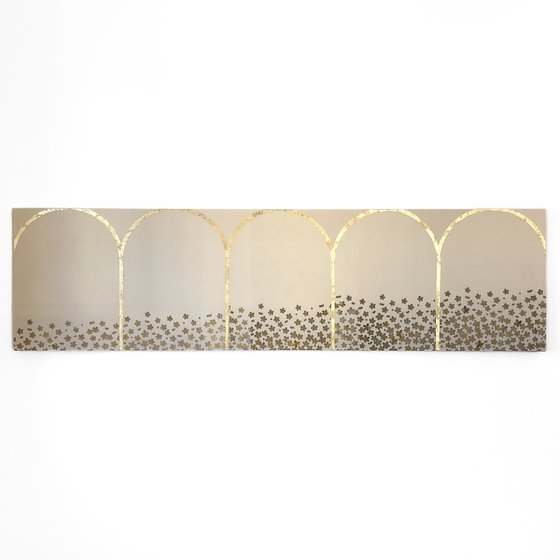
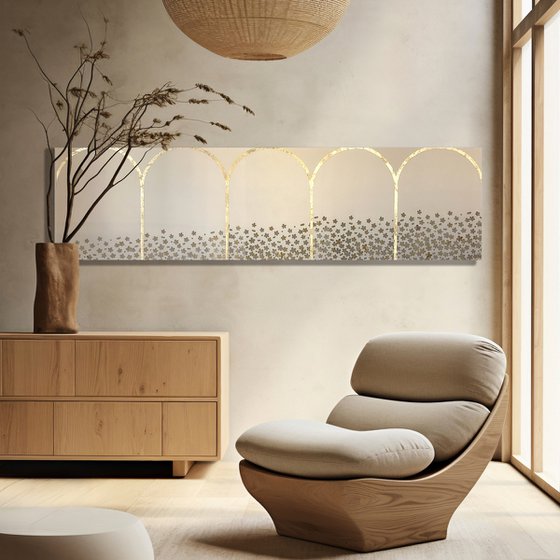
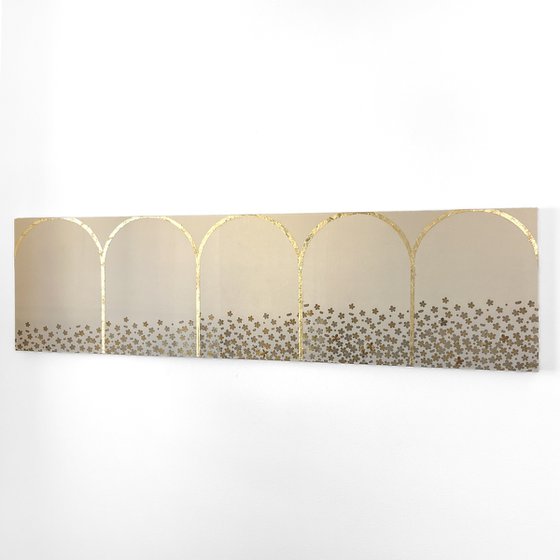
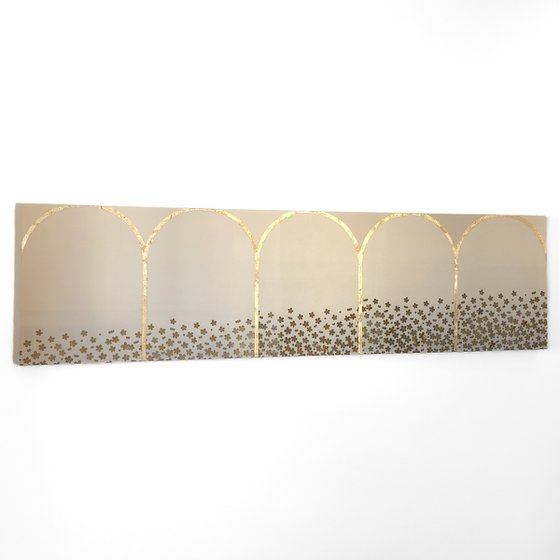
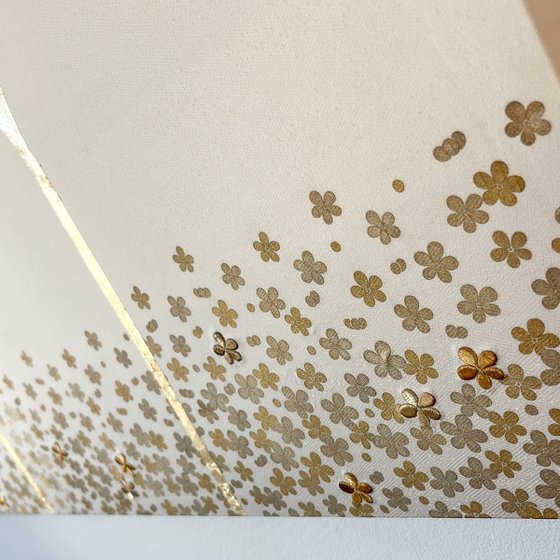
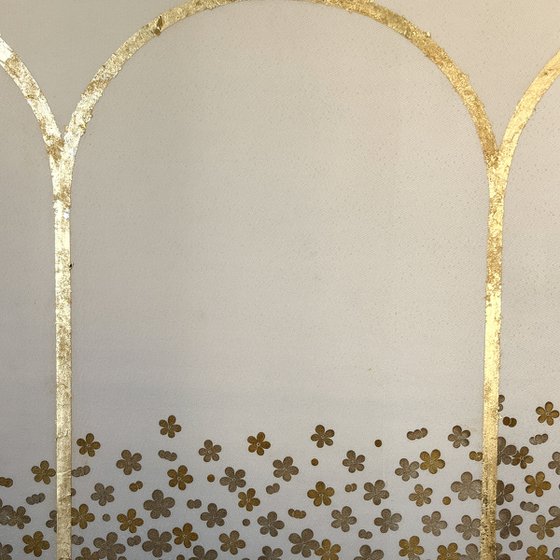
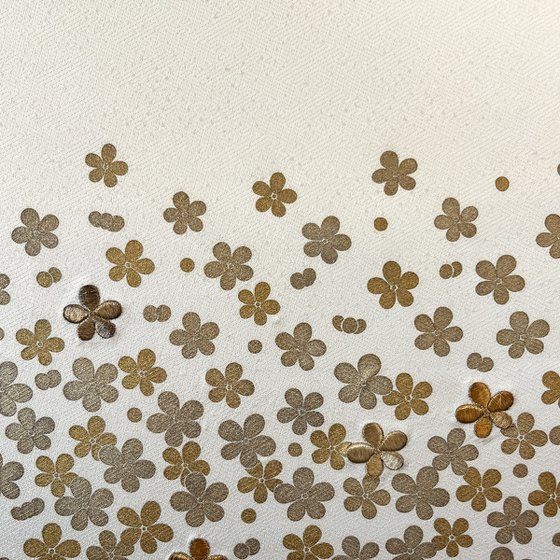
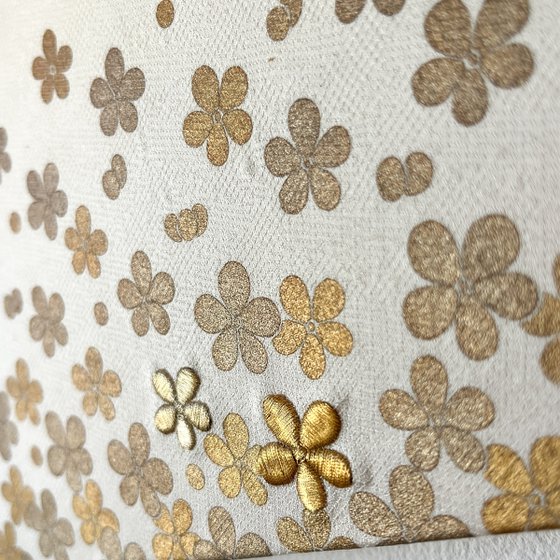
Through the Plum Garden ~Hope~ (Kimono) (2026) Original Mixed-media Painting by Lena Okamoto
59.06 x 15.75 x 1.97" (unframed)
$2,400Sold
Do you like this artwork?
This artwork has sold, but the artist is accepting commission requests. Commissioning an artwork is easy and you get a perfectly personalised piece.
Original artwork description
Certified Kimono Meister work / Certificate of Authenticity included.
One-of-a-kind Japanese textile art made from vintage kimono fabrics.
Sustainable artwork for modern interiors, collectors, boutique hotels, and lovers of Japanese aesthetics.
[Size]
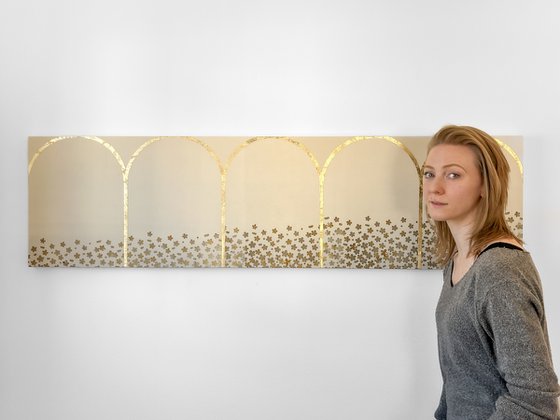
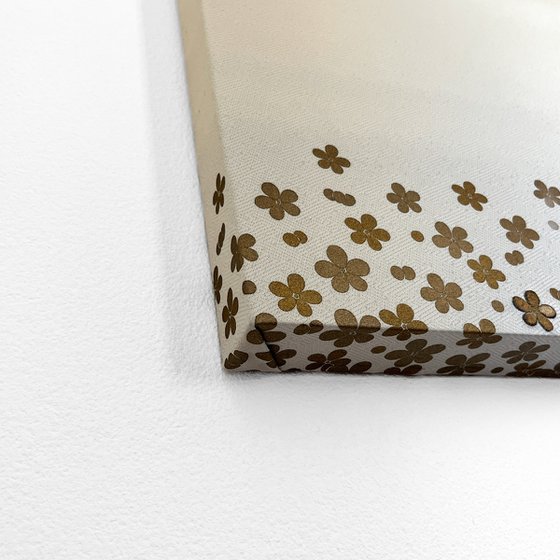
40cm x 150cm x 5cm
[Materials]
vintage silk kimono fabric, gold leaf on wood
[Story behind the work]
Through the Plum Garden ~ Hope ~ is part of ikasu’s textile art collection for a boutique hotel, created from vintage Japanese kimono textiles.
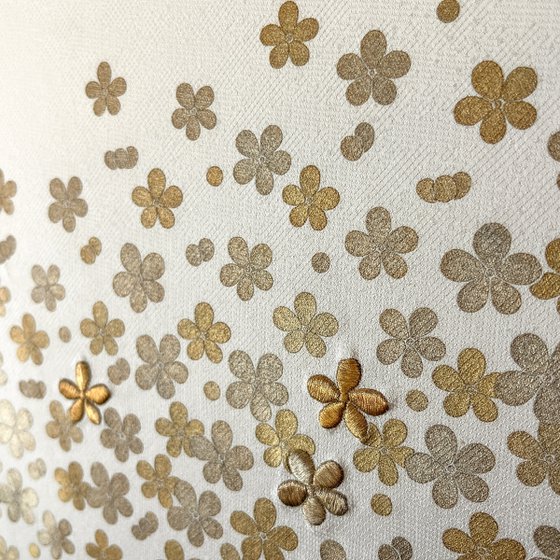
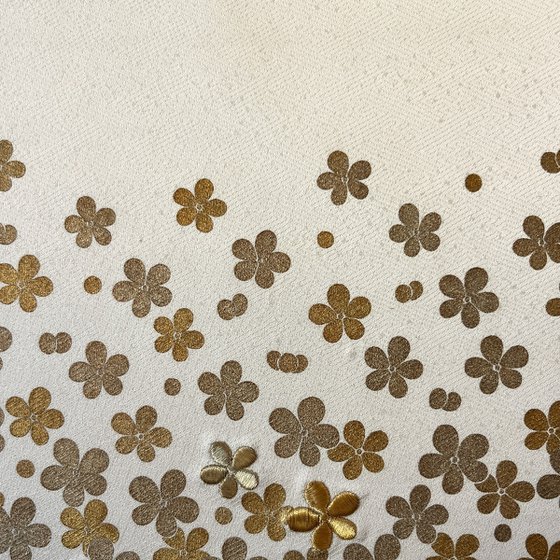
When I first discovered this kimono fabric, I was drawn to the quiet rhythm of the ume blossoms scattered across its surface. Unlike cherry blossoms, which are often celebrated for their fleeting beauty, ume blooms while winter still lingers. For me, it has always symbolized resilience, hope, and the promise that spring will return.
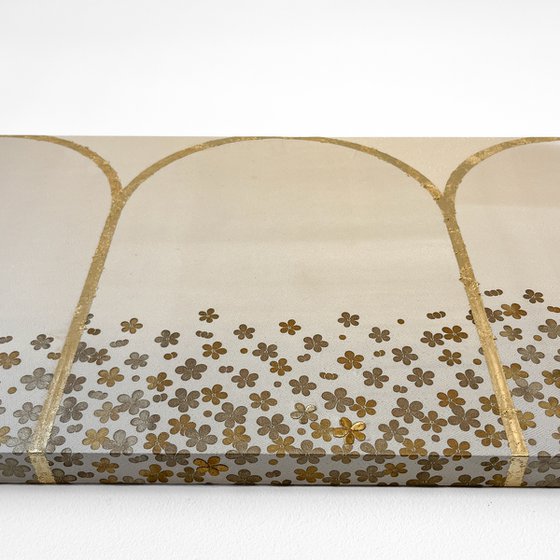
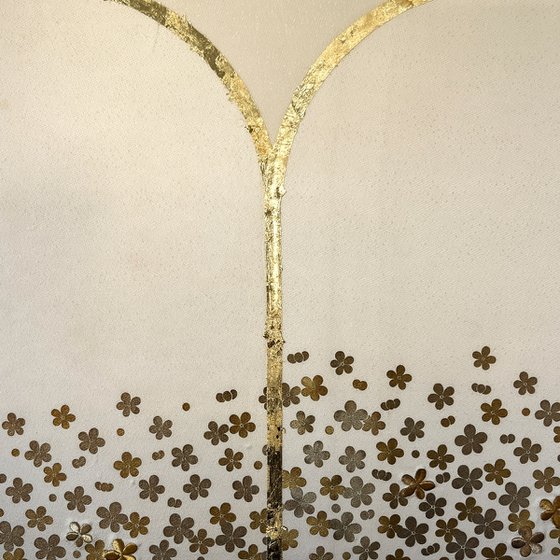
As I worked with the textile, I began to imagine the blossoms growing beneath a series of illuminated passages. I introduced the arches using gold leaf, allowing them to flow across the composition like gateways or moments of transition. They became a visual journey - a reminder that life moves through seasons, and that periods of uncertainty are often followed by renewal.
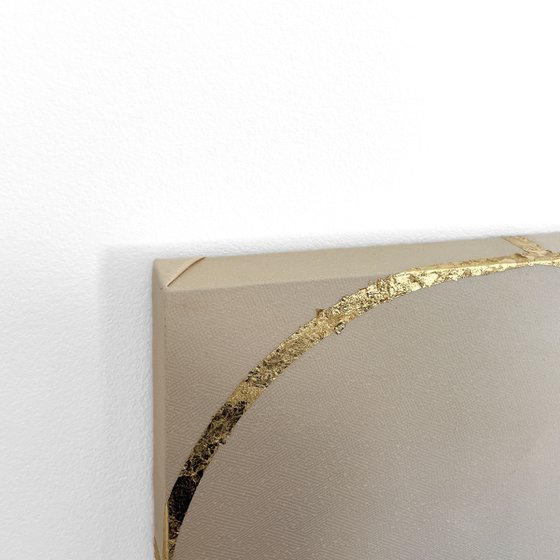
The gold was applied in a kintsugi-inspired spirit. Rather than highlighting perfection, it celebrates connection, continuity, and transformation. As light changes throughout the day, the arches catch and reflect it differently, creating a subtle sense of movement across the artwork.
The original kimono once belonged to another life and another era. By transforming it into contemporary textile art, I wanted to preserve not only the beauty of the material but also the optimism carried by the ume blossoms themselves - the quiet belief that growth begins long before it becomes visible.
Through the Plum Garden ~ Hope ~ is an invitation to slow down, reflect, and appreciate the small signs of change that eventually lead to new beginnings.
[Period]
The artwork uses vintage kimono textile, around 1960ies.
[Meaning of Patterns and Colors]
The palette of ivory and warm gold reflects traditional Japanese aesthetics rooted in harmony, subtlety, and natural elegance.
Gold has long symbolized light, sacredness, prosperity, and refinement in Japanese art and architecture. The soft neutral background creates a sense of calm and openness, allowing the delicate motifs and reflective surfaces to become part of the visual experience.
The repeating arches create a rhythm of movement and continuity across the composition. Their form suggests passageways, transitions, and the journey through different stages of life. The open spaces within the arches introduce balance and stillness, inviting contemplation.
In Japanese culture, ume (梅, plum blossoms) carry a meaning distinct from cherry blossoms. Blooming while winter still lingers, they symbolize perseverance, resilience, hope, and renewal. For centuries, ume has been admired as a reminder that beauty and growth often emerge through adversity.
Together, the arches and blossoms create a visual dialogue between endurance and transformation, celebrating the quiet optimism found in new beginnings.
[About the Material]
The textile used in this artwork features a refined vintage kimono silk selected for its subtle texture and elegant luminosity.
The ume motifs originate from traditional Japanese kimono design, where seasonal flowers were often chosen not only for their beauty but also for their symbolic meaning. Ume has been especially cherished as an auspicious motif representing strength, longevity, and the promise of spring.
As light moves across the silk surface and gold leaf elements, the artwork reveals changing reflections and layers of depth. This interplay between material and light creates a quiet sense of movement, encouraging slow observation and contemplation.
The combination of vintage silk and gold leaf reflects a uniquely Japanese aesthetic sensibility — beauty revealed gradually through proximity, light, and attention.
[Collectors Notes]
- One-of-a-kind artwork created from authentic vintage Japanese kimono textile.
- Features ume (plum blossom) motifs, symbols of resilience, hope, and renewal.
- Hand-applied gold leaf creates a continuous architectural rhythm across the composition.
- Explores themes of transition, growth, and new beginnings through a minimalist contemporary language.
- The panoramic 150 × 40 cm format is particularly suited for architectural interiors and hospitality spaces.
- A distinctive example of ikasu’s approach to transforming historic Japanese textiles into contemporary collectible art.
[Decoration Advice]
Hanging on a wall requires picture rails, hooks, tacks or nails. It can also be displayed propped up on an easel.
Ideal for a room makeover, housewarming gift, present, or souvenir for a loved one.
[Precaution]
All the works are made from real kimonos, antiques and vintages. For this reason, the fabric may have traces of long-term use and minor fabric damages.
Materials used:
vintage silk kimono fabric, gold leaf, wood
Details:
- Mixed-media painting on Other
- One of a kind artwork
- Size: 59.06 x 15.75 x 1.97" (unframed)
- Ready to hang
- Signed certificate of authenticity
- Style: Collage
- Subject: Abstract and non-figurative
 Free returns
14 day money back guaranteeLearn more
Original artwork description
Certified Kimono Meister work / Certificate of Authenticity included.
One-of-a-kind Japanese textile art made from vintage kimono fabrics.
Sustainable artwork for modern interiors, collectors, boutique hotels, and lovers of Japanese aesthetics.
[Size]
40cm x 150cm x 5cm
[Materials]
vintage silk kimono fabric, gold leaf on wood
[Story behind the work]
Through the Plum Garden ~ Hope ~ is part of ikasu’s textile art collection for a boutique hotel, created from vintage Japanese kimono textiles.
When I first discovered this kimono fabric, I was drawn to the quiet rhythm of the ume blossoms scattered across its surface. Unlike cherry blossoms, which are often celebrated for their fleeting beauty, ume blooms while winter still lingers. For me, it has always symbolized resilience, hope, and the promise that spring will return.
As I worked with the textile, I began to imagine the blossoms growing beneath a series of illuminated passages. I introduced the arches using gold leaf, allowing them to flow across the composition like gateways or moments of transition. They became a visual journey - a reminder that life moves through seasons, and that periods of uncertainty are often followed by renewal.
The gold was applied in a kintsugi-inspired spirit. Rather than highlighting perfection, it celebrates connection, continuity, and transformation. As light changes throughout the day, the arches catch and reflect it differently, creating a subtle sense of movement across the artwork.
The original kimono once belonged to another life and another era. By transforming it into contemporary textile art, I wanted to preserve not only the beauty of the material but also the optimism carried by the ume blossoms themselves - the quiet belief that growth begins long before it becomes visible.
Through the Plum Garden ~ Hope ~ is an invitation to slow down, reflect, and appreciate the small signs of change that eventually lead to new beginnings.
[Period]
The artwork uses vintage kimono textile, around 1960ies.
[Meaning of Patterns and Colors]
The palette of ivory and warm gold reflects traditional Japanese aesthetics rooted in harmony, subtlety, and natural elegance.
Gold has long symbolized light, sacredness, prosperity, and refinement in Japanese art and architecture. The soft neutral background creates a sense of calm and openness, allowing the delicate motifs and reflective surfaces to become part of the visual experience.
The repeating arches create a rhythm of movement and continuity across the composition. Their form suggests passageways, transitions, and the journey through different stages of life. The open spaces within the arches introduce balance and stillness, inviting contemplation.
In Japanese culture, ume (梅, plum blossoms) carry a meaning distinct from cherry blossoms. Blooming while winter still lingers, they symbolize perseverance, resilience, hope, and renewal. For centuries, ume has been admired as a reminder that beauty and growth often emerge through adversity.
Together, the arches and blossoms create a visual dialogue between endurance and transformation, celebrating the quiet optimism found in new beginnings.
[About the Material]
The textile used in this artwork features a refined vintage kimono silk selected for its subtle texture and elegant luminosity.
The ume motifs originate from traditional Japanese kimono design, where seasonal flowers were often chosen not only for their beauty but also for their symbolic meaning. Ume has been especially cherished as an auspicious motif representing strength, longevity, and the promise of spring.
As light moves across the silk surface and gold leaf elements, the artwork reveals changing reflections and layers of depth. This interplay between material and light creates a quiet sense of movement, encouraging slow observation and contemplation.
The combination of vintage silk and gold leaf reflects a uniquely Japanese aesthetic sensibility — beauty revealed gradually through proximity, light, and attention.
[Collectors Notes]
- One-of-a-kind artwork created from authentic vintage Japanese kimono textile.
- Features ume (plum blossom) motifs, symbols of resilience, hope, and renewal.
- Hand-applied gold leaf creates a continuous architectural rhythm across the composition.
- Explores themes of transition, growth, and new beginnings through a minimalist contemporary language.
- The panoramic 150 × 40 cm format is particularly suited for architectural interiors and hospitality spaces.
- A distinctive example of ikasu’s approach to transforming historic Japanese textiles into contemporary collectible art.
[Decoration Advice]
Hanging on a wall requires picture rails, hooks, tacks or nails. It can also be displayed propped up on an easel.
Ideal for a room makeover, housewarming gift, present, or souvenir for a loved one.
[Precaution]
All the works are made from real kimonos, antiques and vintages. For this reason, the fabric may have traces of long-term use and minor fabric damages.
Materials used:
vintage silk kimono fabric, gold leaf, wood
Details:
- Mixed-media painting on Other
- One of a kind artwork
- Size: 59.06 x 15.75 x 1.97" (unframed)
- Ready to hang
- Signed certificate of authenticity
- Style: Collage
- Subject: Abstract and non-figurative

Lena Okamoto
Japan
About
Tokyo-based upcycled kimono textile artist and founder of ikasu, an art collective that uniquely breathes new life into antique kimonos. As a certified Kimono Meister and former advertising creative director,... Read more